Dan Barker – Scriptural Misinterpretations and Misapplications, part 10 of 14

The Castrati Kingdom?

Dan Barker wrote:

“What personal sacrifice for ‘the kingdom of heaven’ was Jesus talking about when he told his disciples, ‘He that is able to receive it, let him receive it’?…Castrate yourself. -No wonder we don’t hear sermons from the entire New Testament-how many preachers actually take this ghastly advice seriously?! Although some have prudently tried to interpret this as celibacy rather than castration, the early church father Origen read it literally and took a knife to himself. There were entire monastic orders, and church choirs in need of sopranos known as ‘castrati’ based on this teaching of Jesus. Literal or not, the face value of this verse is physical mutilation:
‘But he said unto them, All men cannot receive this saying, save they to whom it is given. For there are some eunuchs, which were so born from their mother’s womb: and there are some eunuchs, which were made eunuchs of men: and there be eunuchs, which have made themselves eunuchs from the kingdom of heaven’s sake. He that is able to receive it, let him receive it.’ (Matthew 19:11-12) The Scholar’s Version has: ‘There are castrated men who castrated themselves because of Heaven’s imperial rule. If you are able to accept this (advice), do so.’
Tragically, every year there are reported cases of Christian followers mutilating themselves because ‘the bible tells me so.'”1

By now it should be quite obvious that typically in order to refute the fallacious claims of Mr. Baker and other activists the only thing one has to do is simply read the text. Read for context, for content and without prejudice. The comment “No wonder we don’t hear sermons from the entire New Testament” does not prove that we, 2.5 billion Christians, do not hear sermons from the entire New Testament. It may prove that Dan Barker’s preaching style was partial or topical and it may be indicative of the churches that he has attended but many of us 2.5 billion, including yours truly, attend churches where the entire Bible, every book, chapter, verse and word are read, taught and dissected. But “how many preachers actually take this ghastly advice seriously?!” plenty, as we shall see.
Let us again take this claim by claim. Mr. Baker claims that Jesus commanded the personal sacrifice of castration which, note carefully, in a physical sense is a surgical or chemical procedure whereby the male tesets or female ovaries are made to cease from functioning-or “physical mutilation.” Dan Barker makes some reasonable statements regarding monasticism, I have dealt with this topic in two essays regarding Roman Catholicism: The Celibate Priesthood – God’s Will and Human Nature and Eternally a Virgin? (with regards to a dogma about Mary).

ethiopianeunuch-1382407

Now let us consider the text and the claim that “the face value of this verse is physical mutilation.” Recall our reference to simply reading the text for context, content and without prejudice. Dan Barker claims that the text refers to “physical mutilation.” But the text likens what Jesus is asking of his adult followers to “some eunuchs, which were so born from their mother’s womb.” Does Dan Barker expect us to believe that, somehow, the doctors of 2,000 years ago would perform castration upon a baby that was still in the womb? It perhaps should be pointed out that Dan Barker does “think abortion is a blessing” (hear his debate with John Rankin and my mention of it in my essay Atheism is Holier Than Theism). But in utero surgery is certainly not envisaged here. Indeed, the text is referring to what may be termed “impotency” since one can be born that way, or “celibacy” since that is what an adult would do.

Perhaps some have quite literally castrated themselves, although Dan Barker claims that “every year there are reported cases” he can offer only one example from the past 2,000 years. Yet, the text is clear.

Moreover, there is the reference to the reverentially entitled “Scholar’s Version.” Please note something that Dan Barker did not bother mentioning: “The Scholar’s Version” is the work of “The Jesus Seminar.” The oxymoronically named group may be entertaining, bombastic and even interesting but are also a group that has been discredited in every possible facet of scholarship (see here for an example). The University of South Florida’s Rabbi Jacob Neusner stated that the Jesus Seminar is “either the greatest scholarly hoax since the Piltdown Man or the utter bankruptcy of New Testament studies.”2

Thus, even if the text reads “There are castrated men who castrated themselves because of Heaven’s imperial rule. If you are able to accept this (advice), do so,” the point is: what is the text actually stating and how was it understood? We do not have one single example of any apostle, disciple or anyone in the New Testament physically mutilating their genitalia. This is either because they did not understand their own history, culture, language, etc. or because only now with the alleged erudite elucidation of Dan Barker and the Jesus Seminar can we see that they should have mutilated themselves.

Moreover, the greater context is sexual relations and marriage, verses 9-10 (just prior to Dan Barker’s quotation):

“‘And I say to you, whoever divorces his wife, except for sexual immorality, and marries another, commits adultery; and whoever marries her who is divorced commits adultery.’ His disciples say unto him, If the case of the man be so with [his] wife, it is not good to marry.”

Thus, we learn that the issue of being a eunuch was directly related to the discussion of sexual morality.

Furthermore and lastly, the word “eunouchous” is Strong’s number 2135 as refers to:

“1) a bed keeper, bed guard, superintendent of the bedchamber, chamberlaina) in the palace of oriental monarchs who support numerous wives the superintendent of the women’s apartment or harem, an office held by eunuchsb) an emasculated man, a eunuch1) eunuchs in oriental courts held by other offices of greater, held by the Ethiopian eunuch mentioned in Ac. 8:27-39.c) one naturally incapacitated1) for marriage2) begetting children

d) one who voluntarily abstains from marriage”

So, “how many preachers actually take this ghastly advice seriously?!” plenty, by living celibate and or sexually pure lives of devotion to God.

Of further interest may be, Christopher Hitchens – On the Mutilation of Children’s Genitalia.

~~~~~~~~~~~~~~~~~~~~~~~~

A plea: I have to pay for server usage and have made all content on this website free and always will. I support my family on one income and do research, writing, videos, etc. as a hobby. If you can even spare $1.00 as a donation, please do so: it may not seem like much but if each person reading this would do so, even every now and then, it would add up and really, really help. Here is my donate/paypal page.

Due to robo-spaming, I had to close the comment sections. However, you can comment on my Facebook page and/or on my Google+ page.

Omni-Science

“One of the most pernicious falsehoods

ever to be almost universally
accepted is that the scientific method

is the only reliable way to truth”1
-Professor Richard H. Bube, Stanford University

Yes my friends, I am pulling the following quotation out of the holster – again. Scott C. Todd, Department of Biology, Kansas State University wrote:

“Even if all the data pointed to an intelligent designer, such a hypothesis is excluded from science because it is not naturalistic.”2

I have found, via certain comments from our readership, that Scott C. Todd’s statement tends to be shrugged of as being somewhat to the extreme. However, the more I thought of it the more I wondered if he was not, after all, accurately describing the point of view of a certain school of science and or atheistic activism. But let us engage in a bit of a circumlocution, then review the context of Todd’s statements and finally consider the greater subject at hand.

I am constantly astonished with how often and loudly atheist appeal to science (whatever that may mean to the individual at any given time) when seeking to support atheism and discredit theism. I am astonished because ultimately, science is of no advantage to atheists as implying their worldview. It seems as if in seeking science to be the all encompassing epistemic mode atheists are hoping that omni-science will become omniscience.

Perhaps atheists rely, or claim to rely, so heavily on science because Creationists and Intelligent Design (hereinafter C&ID) proponents have such a hard time applying the scientific method. For example, in a debate creationist Dr. Carl Wieland shrugged off the results of lab work that did not agree with his viewpoint by referred to “Simply going to laboratory setting, in a contrived laboratory setting…” to which Dr. Paul Willis, “Skeptic of the Year” recipient, retorted, “It’s valid in science, this is the best you can come to as far as experimental evidence is concerned. Surely, people should be commended for trying to emulate in a laboratory these sorts of things.”3
Oops, actually, I got that backwards: it was the atheist and alleged skeptic who besmirched the scientific method when the results did not fit his preconceived worldview and it was the Bible-thumping-fundamentalist-creationist who praised the method-who would’a’thunk’it?

bio-5471647

C&ID related issues have already made their way into the secular classroom yet, in the case of this example, not at the hands of C&ID proponents. The utterly secular and pro all things Darwinian college level textbook Biology by Neil Campbell and Jane Reece makes the following statement premised upon homology:

“Surely, the best way to construct the infrastructure of a bat’s wing is not also the best way to build a whale’s flipper. Such anatomical peculiarities make no sense if the structures are uniquely engineered and unrelated. A more likely explanation is that…all mammals [descend] from a common ancestor…The historical constraints of this retrofitting are evident in anatomical imperfections. For example, the human knee joint and spine were derived from ancestral structures that supported four-legged mammals. Almost none of us will reach old age without experiencing knee or back problems. If these structures had first taken form specifically to support our bipedal posture, we would expect them to be less subject to injury.”4

This argument, and its tone, is not worthy of important debates such as those related to C&ID issue. Moreover, it is certainly not worthy a textbook that sells for hundreds of dollars nor of the class in which it is taught that costs thousands of dollars spent by someone who wants to learn biology and not necessarily join the C&ID fray.There are a few points to make here. Notice the pushy tone implied in the terms “surely,” and the affirmative terms “make no sense” and “more likely.” Keep in mind this is not an anonymous posting on the internet, this is you and your (or you parent’s) hard earned money sitting before a brilliant professor. Instantly you understand that to disagree would be foolhardy and nonsensical, it would be to negate the “more likely” explanation.

References to the concepts of creation or design are implied in the terms “construct,” “build” and “engineered.” The reason that this is so clearly a very poor arguments is that according to it I should file a lawsuit against the company that claims to have designed/engineered my car since they obviously did not design/engineer my car. Why do I think that they did not do so? Because the fact is that even the best designed/engineered car will suffer from accidents as well as wear and tear. Since my car not only requires regular maintenance but is becoming un-drivable it must not have been designed/engineered but evolved from a three, two or one wheeled vehicle which in turn evolved from smooth rounded river rocks.

I wonder if in science atheism is not seeking its own secular faith. After all, under the generic term “science” we find somewhat of a grab-bag-like concoction of actual observation and reproducible experiments but also theorizing to the point of mythologizing, fallaciously far-reaching inferences, subjective interpretations, etc. Is atheism perhaps seeking an arcane and enlightened priesthood of scientists? Is atheism therefore willing to accept scientific claims that are against common sense, as if by secular-faith? Are they accepting arguments from authority? And do the activist coenobitical scientists exploit their authority as experts? I certainly can merely speculate. Yet, there are a few personages who have stated their opinions on these matters; the ones that I will quote here are Stephen Jay Gould, Richard Lewontin and proof of accepting an argument from authority even while besmirching others who do the same, by Christopher Hitchens.
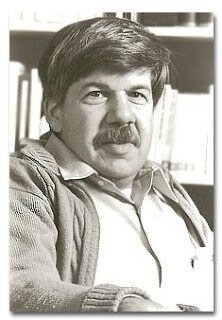
gould-6143992 Stephen Jay Gould

The late Stephen Jay Gould; who was a teacher of biology, geology and history of science at Harvard University:

“Science…is supposed to be an objective enterprise, with common criteria of procedure and standards of evidence that should lead all people of good will to accept a documented conclusion…But I would reject any claim that personal preference, the root of aesthetic judgment, does not play a key role in science…our ways of learning about the world are strongly influenced by the social preconceptions and biased modes of thinking that each scientist must apply to any problem. The stereotype of a fully rational and objective ‘scientific method,’ with individual scientists as logical (and interchangeable) robots, is self-serving mythology. Historians and philosophers of science often make a distinction between the logic and psychologic of a scientific conclusion-or ‘context of justification’ and ‘context of discovery’ in the jargon…The myth of a separate mode based on rigorous objectivity and arcane, largely mathematical knowledge, vouchsafed only to the initiated, may provide some immediate benefits in bamboozling a public to regard us as a new priesthood, but must ultimately prove harmful in erecting barriers to truly friendly understanding and in falsely persuading so many students that science lies beyond their capabilities…the myth of an arcane and enlightened priesthood of scientists….T.S. Kuhn referred to the shared worldview of scientists as a paradigm (see his classic 1962 book, The Structure of Scientific Revolutions). Such paradigms, in Kuhn’s view, are so constraining, and so unbreakable in their own terms, that fundamentally new theories must be imported from elsewhere (insights of other disciplines, conscious radicalism of young rebels within a field) and must then triumph by rapid replacement (scientific revolution), rather than by incremental advance.”5
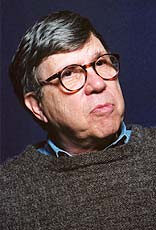
lewontin-9387257 Richard Lewontin

Professor of zoology and biology at Harvard University, Richard Lewontin, wrote:

“…scientists transgress the bounds of their own specialty they have no choice but to accept the claims of authority, even though they do not know how solid the grounds of those claims may be. Who am I to believe about quantum physics if not Steven Weinberg, or about the solar system if not Carl Sagan? What worries me is that they may believe what Dawkins and Wilson tell them about evolution…In the end we must trust the experts and they, in turn, exploit their authority as experts and their rhetorical skills to secure our attention and our belief in things that we do not really understand.”6

hitchens-7494860 Christopher Hitchens

In my essay The Quadripartite Equine Riders I critiqued a discussion between Daniel Dennett, Christopher Hitchens, Richard Dawkins and Sam Harris. One issue that they discussed was that of authoritarianism in science (see my section entitled “On Scientific Authoritarian Faith”). For our purposes here, I wished to quote Mr. Hitchens:

“I’ll take things you [Daniel Dennett] and Richard [Dawkins] say on the human and natural sciences, not without wanting to check, but I’m often unable to but knowing that you are the sort of gentlemen who would have checked. If you say, ‘the bishop told me it so I believe it’ you make a fool of yourself it seems to me, and one is entitled to say so.”

May we likewise state, “If you say, ‘the scientists tell me it so I believe it’ you make a fool of yourself it seems to me, and one is entitled to say so”?

Next, let us consider Scott C. Todd’s statements in greater detail.
Firstly, let us note that Todd’s statements are actually very well balanced for the most part. He does, as many do, confuse Creationism with Intelligent Design but does make some very valid points such as:

“Creationists, according to [Philip] Johnson, do not doubt that DNA encodes the features of an organism or that changes in DNA (mutations) give rise to variation in those features which are subject to selective pressures in nature. Mainstream creationists also accept that genetic and phenotypic changes could result in speciation. They consider evolution as a plausible model to account for the natural history of living things, but they see a great distinction between the empirically proven elements of evolution (micro-evolution) and the explanation of speciation and origins of life (macro-evolution).”

He then advises:

“…science educators everywhere must do a better job of teaching evolution. It must be made clear that the evidence supporting the mechanism of evolution is empirical and proven, but that speciation and natural history are derived from the admittedly weaker evidence of observation. The fact that one cannot reproduce the experiment does not diminish the validity of macro-evolution…one must question the interpretations of the observed phenomena and discuss the weaknesses of the model.”

Lastly, he states:

“Most important, it should be made clear in the classroom that science, including evolution, has not disproved God’s existence because it cannot be allowed to consider it (presumably). Even if all the data point to an intelligent designer, such an hypothesis is excluded from science because it is not naturalistic. Of course the scientist, as an individual, is free to embrace a reality that transcends naturalism.”

I thought to draw out Todd’s comments since from what I understand, having studied Darwinian evolution for over a dozen years, he actually makes very valid points. Incidentally, I would imagine that the overwhelming majority of C&ID proponents have studied it for a minimum of a dozen years.

C&ID are neither anti-science nor anti-evolution but only anti-having-overreaching-speculation-being-passed-off-as-empirical-science. This may seem very basic but it is very, very important to note: C&ID proponents are perfectly willing to accept evidence but cautious, to the point of rejection, of speculation (speculation being what it is, a mixture of observation and opinion, interpretation or schools of thought).
Imagine that, C&ID proponents interested in actual scientific evidence, who would’a’thunk’it? I jest slightly since I am aware that many believe that it is not so cut and dry since they consider that C&ID are actually ignoring or manipulating certain evidences (to which C&ID would surely retort, “Ditto”).
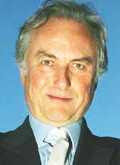
dawkins-8546260Richard Dawkins

Moreover, certain scientists, such as Prof. Dawkins, do not agree that “evolution, has not disproved God’s existence” nor that “it cannot be allowed to consider it (presumably)” and while Prof. Dawkins may, when pressed, agree that “the scientist, as an individual, is free to embrace a reality that transcends naturalism” he certainly belittles them for doing so, not only as individuals but as thinkers and as scientists. Prof. Dawkins actually goes as far as to refer to certain scientists as belonging to, “the Neville Chamberlain school of evolutionists.” Chamberlain is most well known for his attempt to avoid war with Hitler by means of appeasement. Prof. Dawkins makes particular reference to scientists (the philosopher of science Michael Ruse in this case) who stated that evolutionists “must realize that the enemy of our enemies is our friend. Too often evolutionists spend time insulting would-be allies…Atheists spend more time running down sympathetic Christians than they do countering creationists.”7 These sorts of statements Prof. Dawkins likens to appeasing Hitler. But what do these evolutionists betray? Actual science or his atheistic worldview?
provine-2338012William Provine

This question brings us to the “schools of thought” to which I referred as well as the question of “science or activism.” Certain scientists such as Prof. Dawkins, William Provine, et al, infer much more from their studies and observations than surely anyone could logically infer, certainly much more than what they are observing implies. They, being both scientists and activists for their particular worldviews, employ certain aspects of Darwinian evolution as a backdoor way to push atheism into the classrooms.

What Todd seemed to be getting at in his statement, “it cannot be allowed to consider it (presumably)” is an interesting fallacy that certain atheists commit: first they will claim that science does not deal with the supernatural and then claim that science disproves the supernatural. But how would it, or could it, disprove something with which it does not deal? It does not. However, these certain atheists would tell you that science disproves the supernatural by discovering evidence of how things, the universe, the earth, life and everything, can come about by purely materialistic processes. Of course, science has done no such thing with regards to anything much less everything. Science has discovered how certain preexisting things function, period. We may be able to tell how an organism proceeded forth from a previously existing organism but not how all organisms originated in the first place. We may have discovered that the universe had a beginning but not how it came to be, what banged? What, if anything, was there before the bang? Etc.

As an aside to the interested reader I wish to point out two essays:
Cosmology, Part I: Atheists and Scientists Avoid the Pre Big Bang Scenario at All Cost
Cosmology, Part II: Book, Chapter and Multi-Verse

universe-1640756

To the issue of life’s origins: yes, there are various failed speculations (some which are enumerated here). I am personally a bit torn on this issue since on the one hand, materialistic-scientific attempts to reproduce life from non-life are failing like so many ducks being shot in a row. In this case materialistic-scientific may finally punch itself out even while shadow boxing, ultimately proving itself incapable of producing anything within the realm of observation or reproducible experimentation. On the other hand, if life ever is produced from non-life in a laboratory I am afraid that it will not be evidence for how life originated but will only be able to point to the realm of could have/might have. Moreover, any such successful experiment will, in reality, only prove intelligent design.

Why is this? Because the experiment would require a team of trained scientists who will utilize their highly intelligent brains to design an experiment that will employ their specialized education. They will utilize laboratory equipment that was designed by very intelligent and specifically educated engineers. They will combine preexisting organic matter that will be consciously manipulated within a designed and purposefully controlled environment and with a specific result in mind. Thus, all that they will ever prove is that a group of scientists can make something do something.

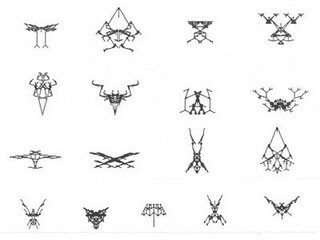
In my essay, The Wizard of Biomorph Land I pointed out that Prof. Dawkins believes that he demonstrated materialistic-evolution utilizing a computer program. However, Prof. Dawkins wrote the program and so he is the creator god of his “biomorphs,” “my” as he calls them. He created a world, its laws/rules, and its life. His chosen ones were selected for further evolution, a process that the creator manipulated towards his ends since he knows the beginning and the end. He even admits that the biomorphs were predestined, “There is a definite set of biomorphs, each permanently sitting in its own unique place in a mathematical space.”8 He inferences materialism even while he denies, or fails to see, evidence of intelligent design when he, himself, played the part of intelligent designer.
biomorph-8105290

Prof. Dawkins’ creations: the Biomorphs

Now a comment on the statements such as “Even if all the data pointed to an intelligent designer, such a hypothesis is excluded from science because it is not naturalistic.” Again, scientists such as Prof. Dawkins reject the concept that science does not, or cannot, deal with the supernatural. Yet, at the moment this seems mere semantics. If ever “all the data” (whatever “all” may mean, “all” is a very tall order) “pointed to an intelligent designer” surely science itself would evolve in order to accommodate the study of such a designer. I fully know that many of the readership will respond with words to the effect of, “Certainly, and we will change our worldview to fit the evidence that comes to light at such a time.” Fair enough.

However, this does bring up the issue of certain people putting far too much trust and faith in “science” whatever that may mean to them at any given time. In fact, Prof. Dawkins urged little unsuspecting children thusly, “Put your trust in the scientific method, put your faith in scientific method.”9 Some people, such as Stephen Jay Gould and Prof. Dawkins, have taken a method which was meant to observe and experiment and turned it into a catechism for the materialistic worldview and lifestyle.

Yet, the evidence gained from the scientific method is one sort of evidence and does not amount to the alpha and omega of episteme. Unless you are quite pleased to revise your whole worldview, or significant portions of it, on a semi-regular basis then you should never base your beliefs, your worldview, or lifestyle on science. Firstly, because science is mere tiny portion of the stuff of life. Secondly, because science does not deal with truth but seeks to ascertain the best guesses we have thus far and it is therefore necessarily tentative. Attempt, just for a moment to seriously consider studying biology and inferring that no god(s) exists anywhere inside, outside or in betwixt the universe and you will readily detect the fallacy.

It appears to me that so many atheists rely on science both for attempts at validation of their worldview and refutation of those worldviews with which they disagree due to their own brand of faith. This faith is not like the biblical faith which basically means drawing a logical inference but a faith which is a crossed fingered hope that somehow the absolutely materialistic worldview will be validated. I have previously posted an essay entitled Look Both Ways Two Atheistic Logical Fallacies the point of which was to categorize two basic fallacies which I termed: the fallacy of validation by projection and the fallacy of validation by regression. To quote from that essay, the point was, in part, as follows:

“In order to validate their beliefs atheists look both ways, up and down, the corridors of time-to the inaccessible past and future. When, for example, atheists appeal to quaint Victorian era concepts of abiogenesis in order to explain life’s conception they must deal with the fact that abiogenesis (abiotic synthesis) is not observed anywhere and is not producible in any experiments. What is their answer? They can imagine a time, long, long ago in the Earth’s past, when everything happened just so and abiogenesis was possible. What about filling the various gaps in our knowledge? They can imagine a time in the distant future when their beliefs will be proven true. Thus, atheism is validated by projection and regression. Herein lies the fallacies: they merely regress to an unknown past in which they can imagine thing occurring that do not occur today and they can project into an equally unknown future at which time we will discover that absolute materialism is true. As long as they can imagine it, it must be true.”

According to this worldview the supernatural is simply impossible. If ever evidence was uncovered of the supernatural the response would simply be that once our understanding of natural causes increases surely such an alleged supernatural event will be explainable through materialistic means. Therefore, we can know that there is no supernatural realm because there is no evidence for a supernatural realm and there is no evidence for a supernatural realm because we know that there is no supernatural realm.

Thus, this worldview is gap filler that allows the atheist to fill the gaps in our knowledge with time, chance, matter, luck, imagination and their brand of faith (I have detailed this in my essay The Gap Filler). This, it seems to me after some musing, is what Prof. Dawkins refers to as being an intellectually satisfied atheist: it means that he is quite satisfied concocting tales about how things could have occurred materialistically. And as long as he can concoct such a tale then that is good enough. Thus, Prof. Dawkins can declare that life originated by “luck” and be quite pleased to have merely employed the secular equivalent of “miracle.”

Lastly, I wish to point out that Prof. Lewontin, has stated in no uncertain terms that in the sciences the case is not only that evidence derived at by pure unbiased observation is then interpreted materialistically, or manipulated to fit a materialistic mold, but that the system is premised upon deriving materialistic results:

“Our willingness to accept scientific claims that are against common sense is the key to an understanding of the real struggle between science and the supernatural. We take the side of science in spite of the patent absurdity of some of its constructs, in spite of its failure to fulfill many of its extravagant promises of health and life, in spite of the tolerance of the scientific community for unsubstantiated just-so stories, because we have a prior commitment, a commitment to materialism. It is not that the methods and institutions of science somehow compel us to accept a material explanation of the phenomenal world, but, on the contrary, that we are forced by our a priori adherence to material causes to create an apparatus of investigation and a set of concepts that produce material explanations, no matter how counter-intuitive, no matter how mystifying to the uninitiated. Moreover, that materialism is absolute, for we cannot allow a Divine Foot in the door. The eminent Kant scholar Lewis Beck used to say that anyone who could believe in God could believe in anything. To appeal to an omnipotent deity is to allow that at any moment the regularities of nature may be ruptured, that miracles may happen.”10 [italics in original, bold mine]

~~~~~~~~~~~~~~~~~~~~~~~~

A plea: I have to pay for server usage and have made all content on this website free and always will. I support my family on one income and do research, writing, videos, etc. as a hobby. If you can even spare $1.00 as a donation, please do so: it may not seem like much but if each person reading this would do so, even every now and then, it would add up and really, really help. Here is my donate/paypal page.

Due to robo-spaming, I had to close the comment sections. However, you can comment on my Facebook page and/or on my Google+ page. You can also use the “Share / Save” button below this post.

Atheism – the Living Dead

Nica Lalli1 (USA Today blog columnist, writer, educator and former PTA member) never fails to fail. She tries, really tries hard, to paint herself as a member of the happy face sect the positive public image sect of atheism yet, it never quite seems to pan out for her.

In her latest installment she writes that, “Demographers are already salivating ahead of the upcoming U.S. Census, which will no doubt show…the fastest-growing religious group in our country…None. As in, no religion at all.”

She writes, “atheists like me are just content to be able to be religion-free without the social stigma that has been attached to ‘my kind’ the irreligious minority in this country.” But what about “my kind”? Well, in the previous sentence she wrote about “God-fearing Americans” how is that for stigma?

In the past she declared her atheistic individuality in attempting to describe her particular, and peculiar, concept of what atheistic ecumenism:

I am more interested in dialogue, and I hope that conversation will get us to respect and understanding. I cannot see dialogue happening with someone who tells you that your core beliefs are wrong, so I refrain from telling anyone what to believe…With that in mind, let’s invite more of everyone to participate in the discussion…
Once we start, we might see that we have more in common than we all think. Once we all agree to disagree, one we set the rules that no side is trying to convince the other of its rightness or wrongness, once we clarify that we are simply trying to understand each other – and then move on to other topics of common interest – then the conversation about religion and its place in our society can really begin.2

Note that her brand of ecumenism, which claims to include “more of everyone,” would exclude by its “rules” anyone who is “is trying to convince the other of its rightness or wrongness.” Yet, since she is trying to convince us of the rightness of her position as to who will be excluded from “everyone” and why they will be excluded she excludes herself and the project fails before it begins.

As to the none/no religion at all fastest-growing group in our country; every few months someone on this blog writes a flummoxed comment expressing some level of annoyance at the title “Atheism is Dead”-it is not dead, atheism is growing, etc., etc., etc. As I have explained in the past if you cut the head off of a chicken it is, for all intents and purposes, dead yet, you may still find it scampering, beep-bopping and scattin’ about. Someone who did not know anything about chickens or earthly bio-functions in general might beam down from a spaceship and back up in 5 second only to see this headless chicken gesticulating and would surely surmise that the chicken was alive and well indeed. Yet, it is all but dead.

Meanwhile, atheists are singing the praises of the little corner of reality known as materialism which, so they surmise, has rendered theism dead (or “religious belief,” or “faith,” or “God,” or, or, or) while the overwhelming majority of the planet’s population believes in god(s)-yes, the majority who are, in the atheist estimation: uneducated, superstitious, gullible, etc. (the word “gullible” is not even in the dictionary).

I wonder if other believers will agree that we should only expect atheism to become more and more popular.This is due to a few factors which tie into one which is good old fashioned spiritual warfare:1) Falling away from the truth of God’s revelation and the embracing of a lie.2) The ultimate outworking of the popularizing of rebellion against God.

3) The good old fashioned appeal to the flesh in the form of Stephen F. Uhl’s book “Imagine No Superstition: The Power to Enjoy Life With No Guilt, No Shame, No Blame”-talk about having your cake and eating it, and then eating someone else’s also.

In fact, Nica Lalli wrote, “For years, non-believers have been considered undesirable, untrustworthy and essentially reviled.” For support of her claim to reviling, which are surely not altogether fallacious, she relies on the, surely, unbiased reportage of positiveatheism.org (of whom I have posted, see here) who quote the “then-Vice President George H.W. Bush said, ‘I don’t know that atheists should be considered as citizens, nor should they be considered patriots.'” For whatever it is worth to whomever this was from a private interview with Rob Sherman and while George H.W. Bush has apparently not had much, if anything, to say about it Rob Sherman’s story seems to have evolved, or devolved, over time.3 This is the same Rob Sherman who wanted to make silence unconstitutional.
Overall, I could not agree more with her sentiments as for years, believers have been considered undesirable, untrustworthy and essentially reviled by non-believers.She also writes that “Atheists can tell you that they have faced problems – some at work, some with family members or friends – once their non-belief is stated publicly.”

Again, I could regale you wish stories facing problems – some at work, some with family members or friends – once their belief is stated publicly.

Furthermore, she notes,

Some atheists out there might wish to de-convert believers, pull them away from their faith or disprove their gods, and it is true that those are the atheists who write the books that make the best-seller lists…But many of us – dare I say most of us – would prefer coexisting over combat…whenever I have published anything about being an atheist, I have had to stop reading my e-mails from people of faith who – oh, the irony – say things that are very hateful. Yet as anyone in my shoes knows, the discomfort and challenges of not believing are most difficult in your own family.

Again, I could not agree more with the sentiment. Keep in mind that her perspective is that “Nothing a devout person tells me is going to change my mind.” Thus, I may say that some theists out there might wish to de-convert un-believers, pull them away from their atheism or disprove absolute materialism, and it is true that those are the theists who write the books that make the best-seller lists or post to obscure blogs…But many of us – dare I say most of us – would prefer coexisting over combat, if “coexisting” allows for reasoned discourse…whenever I have published anything about being an theist or contra-atheism, I have had to stop reading my comments from people of no faith who – oh, the irony – say things that are very hateful. Yet as anyone in my shoes knows, the discomfort and challenges of believing are most difficult in your own family.

Obviously, the point is that this sort of thing goes both ways in general. As just noted if the majority of atheists are not anti-theists but only care to coexist likewise the majority of genuine lovers of God care to coexist and are not hateful (although this is a generic term that is meaningless without an appendage definition).

Jesus said to them, “A prophet is not without honor except in his own country, among his own relatives, and in his own house.” (Mark 6:4)

~~~~~~~~~~~~~~~~~~~~~~~~

A plea: I have to pay for server usage and have made all content on this website free and always will. I support my family on one income and do research, writing, videos, etc. as a hobby. If you can even spare $1.00 as a donation, please do so: it may not seem like much but if each person reading this would do so, even every now and then, it would add up and really, really help. Here is my donate/paypal page.

Due to robo-spaming, I had to close the comment sections. However, you can comment on my Facebook page and/or on my Google+ page. You can also use the “Share / Save” button below this post.

Sam Harris and Bertrand Russell: The Dynamic Duo of Demonstrably Deleterious Delusion

In my essay To Lie, or Not To Lie: That is the Question I pointed out that three atheists – Dan Barker, Matthew Davis and Reginald Finley – have, in lockstep, promulgated the same logical fallacy, one that originated with Dan Barker. In the writings of Sam Harris we find that he too offers support for another logical fallacy, one originating with Bertrand Russell.

Sam Harris writes that Bertrand Russell:

“had it right when he made the following observation: ‘The Spaniards in Mexico and Peru used to baptize Indian infants and then immediately dash their brains out: by this means they secured these infants went to Heaven.
No orthodox Christian can find any logical reason for condemning their action, although all nowadays do so. In countless ways the doctrine of personal immortality in its Christian form has had disastrous effects upon morals_'”1

If this is what Bertrand Russell got right one would be frightened to death to see where he went wrong. If this is what Sam Harris considers right we can only mourn for him as it is sadly obvious that his is a mind so tragically flummoxed by enmity that he has lost the ability of basic rational thought processes.
What Bertrand Russell and Sam Harris presented was nothing but cynicism attempting to pretend that it is somewhere near the realm of rational, intellect and logic. But let us not fall into the same emotionally charged traps that serve as replacements for logic that Sam Harris and the other New Atheists are constantly laying out for us. Rather, let us see if we can muster some intellect and at least attempt a response.

Here we go.

But first, we have been forewarned: Bertrand Russell, with Sam Harris’ endorsement, has assured us that “No orthodox Christian can find any logical reason for condemning their action.”Firstly, let us note the extremism and absolutism of the statement: not one single orthodox Christian can find any, not one single, logical reason-period.

Secondly, we should ask just how Bertrand Russell and Sam Harris can make such absolutists statements since if there was one single orthodox Christian who finds any, even one, logical reason they would be proved wrong.

Well, I will declare that I am an orthodox Christian. Now, with all due respect to those more learned than myself – of which the world is saturated – I wish to throw my hat into the ring and see if I, employing all of my scant intellectual faculties, can come up with one, just one, logical reason.

Here we go.

Actually, before we jump into the fray we should wonder if a trap is being set here. Bertrand Russell and Sam Harris point the statement at orthodox Christians. But could it be that if an orthodox Christian quotes the Bible they would be said to be providing an illogical reason? What would be categorized as a logical reason?
In fact, while the claim is that no orthodox Christian can find any logical reason for condemning it is admitted that all nowadays do so. Now we learn, as if we did not know, that all Christians nowadays condemn the actions. Is the claim that they are doing so illogically? Have Bertrand Russell and Sam Harris conducted some great survey of “all” Christians and ascertained, on a case by case basis, that each and every one of their reasons are illogical?

I suppose that we could make our attempt and see where it takes us.

Here we go.

“Don’t murder.”

There it is. We are done.

That is our logical reason for condemnation and it took all of two words. Although, in most translation of the Bible this, one of the Ten Commandments, is rendered as four words “Thou shalt not murder.”

For all practical purposes, we are done; having provided a two word counterargument. Yet, anyone that would put forth, defend and promulgate such a fallacious statement as Bertrand Russell and Sam Harris did may not be able to conceptualize such basic logic.

“Murder” is the taking of an innocent life-it is illegal and immoral while “killing” is the taking of a life due to self-defense, fighting a just war, etc.-it is legal and moral. Although the terms are sometimes used interchangeably the context will bare out what the terms mean. Since we are commanded not to murder, those children should not have been murdered-that was a manmade, not a divine, command.

If the point was to get people who are heaven bound to heaven asap then maybe a global taskforce could be established the purpose of which would be to ask people if they believe that they are heaven bound. If the answer is “Yes” then their brains could be dashed out on the spot. Why not save some resources?

It should be mentioned that based on the Bible itself and not on subsequent tradition; infant baptism is not a valid practice. While much could be stated with regards to this topic this essay is not the place for it. Succinctly, I will mention that once a study has been conducted of all the texts that mention baptism not only is an infant never baptized but baptism always requires the ability to hear the Gospel, understand it, accept it and only then get baptized. Once such a survey has been conducted it seems that Acts 18:8 encapsulates the whole of references to baptism, “many of the Corinthians, hearing, believed and were baptized.” They heard, they believed and then they were baptized.

It should also be mentioned that based on the Bible itself and not on subsequent tradition; baptism is not for the purposes of salvation. Again, much could be stated in this regard but again, this essay is not the place for it. Let us note that the text that does refer both to baptism and salvation is, in fact, not correlating them:

“There is also an antitype which now saves us, baptism (not the removal of the filth of the flesh, but the answer of a good conscience toward God), through the resurrection of Jesus Christ” (1st Peter 3:21).

Note that baptism is not here defined as the physical act of getting one’s body wet but as the conscience decision that is being made.

Now that I think about, with my limited abilities, I seem to recall that Jesus’ great commission was stated thusly:

“Therefore go and teach all nations, baptizing them in the name of the Father and of the Son and of the Holy Spirit, teaching them to observe all things, whatever I commanded you. And, behold, I am with you all the days until the end of the world. Amen” (Matthew 28:19-20).

The great commission states that they, let us call them missionaries, are to teach, baptize and teach. First, teach the Gospel, the initial message, baptize them when they have heard it, understood it and accepted it. Then baptize them and then teach them about the life of a believer. Not baptize and dash their brains out. In fact, you cannot teach, baptize and teach again to an infant. You may get them wet, if you want to call that baptism. But you cannot teach and teach.

Moreover, what appears to be Jesus’ opinion regarding children and their care? Jesus stated:

“And whoever shall receive one such little child in My name receives Me. But whoever shall offend one of these little ones who believes in Me, it would be better for him that an ass’s millstone were hung around his neck, and he be sunk in the depth of the sea” (Matthew 18:5-6 also in Mark 9:41-42 & Luke 17:1-2).

“Then little children were brought to Him, that He should put His hands on them and pray. And the disciples rebuked them. But Jesus said, Allow the little children to come to Me, and do not forbid them; for of such is the kingdom of Heaven” (Matthew 19:14 also in Mark 10:14 & Luke 18:16).

We must also ask whether Jesus, the apostles or the disciple did any such thing or taught that any such thing should be done. The answer is; absolutely not.

We may have happened upon another thought: since God has given us life, this life in the here and now world, we are to live that life and let others live it themselves.

Let us conceptualize a school that guarantees that any child that enrolls will end up attending college. Now let us imagine that the children file into class on the first day of their kindergarten class and the teacher states, “You are all guaranteed college attendance therefore, you will immediately be shuttled from kindergarten to the local university.”

It would be interesting to state Bertrand Russell’s statement in the following manner:

“The Spaniards in Mexico and Peru used to baptize Indian infants and then immediately dash their brains out: by this means they secured these infants went to Heaven. No atheist can find any logical reason for condemning their action, although all nowadays do so (except when they support abortion).”

I should admit that I have not conducted a great survey and yet I have an advantage in make a statement that is as broad brushed as Bertrand Russell’s. Christianity consists of absolute morals but atheism is amoral. Note that I am not stating that it is immoral but amoral-not necessary breaking morals but lacking them. Individual atheists may take it upon themselves to condemn such actions but they cannot offer any absolute standards for doing so (they can make epistemic statements but not ontological). They may say that we ought to harm none or cause the least amount of harm or various other generalities yet they cannot claim that these are universal or absolute.

What should be asked of atheists is, “If it is in fact true that infants were baptized and immediately murdered, why is that wrong?” If you they claim that it is wrong then they must be basing their condemnation upon a moral law in which case there must be a moral law author and administrator. If not it is merely keep up with Judeo-Christian morality based semantics.

If this seems to be merely a biased argument let us consult with Sam Harris himself who believes that:

“Some propositions are so dangerous that it may even be ethical to kill people for believing them. This may seem an extraordinary claim, but it merely enunciates an ordinary fact about the world in which we live.”2

Moreover, we may consult with Prof. Richard Dawkins who made the following statement:

“There is no logical connection between what is and what ought. Now, if you then ask me where I get my ‘ought’ statements from, that’s a more difficult question. Firstly, I don’t feel so strongly about them. If I say something is wrong, like killing people, I don’t find that nearly such a defensible statement as ‘I am a distant cousin of an orangutan’. The second of those statements is true, I can tell you why it’s true, I can bore you to death telling you why it’s true. It’s definitely true. The statement ‘killing people is wrong’, to me, is not of that character. I would be quite open to persuasion that killing people is right in some circumstances.”3

“[Nick Pollard:] Suppose some lads break into an old man’s house and kill him. Suppose they say: ‘Well, we accept the evolutionist worldview. He was old and sick, and he didn’t contribute anything to society.’ How would you show them that what they had done was wrong?
[Prof. Richard Dawkins:] If somebody used my views to justify a completely self – centred lifestyle, which involved trampling all over other people in any way they chose roughly what, I suppose, at a sociological level social Darwinists did – I think I would be fairly hard put to it to argue on purely intellectual grounds. I think it would be more: ‘This is not a society in which I wish to live. Without having a rational reason for it necessarily, I’m going to do whatever I can to stop you doing this.’ I couldn’t, ultimately, argue intellectually against somebody who did something I found obnoxious. I think I could finally only say, ‘Well, in this society you can’t get away with it’ and call the police. I realise this is very weak, and I’ve said I don’t feel equipped to produce moral arguments in the way I feel equipped to produce arguments of a cosmological and biological kind. But I still think it’s a separate issue from beliefs in cosmic truths.”4

“I don’t think racism is a good thing. I think it’s a very bad thing. That is my moral position. I don’t see any justification in evolution either for or against racism. The study of evolution is not in the business of providing justifications for anything.”5

Thus, there is no biological, Darwinian evolutionary, nor intellectual grounds for condemning racism nor killing (here obviously “murder”). Yet, this does not stop Prof. Richard Dawkins, nor Sam Harris and Bertrand Russell for that matter, from breathing down brimstone and condemnation.

Simply stated, our lives have been established to follow a chronological progression. This is the natural and normal state of being.

~~~~~~~~~~~~~~~~~~~~~~~~

A plea: I have to pay for server usage and have made all content on this website free and always will. I support my family on one income and do research, writing, videos, etc. as a hobby. If you can even spare $1.00 as a donation, please do so: it may not seem like much but if each person reading this would do so, even every now and then, it would add up and really, really help. Here is my donate/paypal page.

Due to robo-spaming, I had to close the comment sections. However, you can comment on my Facebook page and/or on my Google+ page. You can also use the “Share / Save” button below this post.

Atheism : Another Attempt at a, Positive, Face Lift

“Seattle Atheists” president Paul Case is the latest to attempt to put a “positive face on atheism.” And he is the latest to whom I say, “Mazel tov!” (as I did with regards to the Atheist Alliance International, see here). Let us consider the matter and then review the ads.

Background and Observations
Paul Case stated,

As an atheist, it will be nice to see in a public setting a message that aligns with how I feel about the existence of God…It just needs to be out there that not everyone believes in God.

Certainly, the public square is what it is and everyone wants a say therein. But as to it being out there that not everyone believes in God-who does not know this; especially in a first world country where any atheist not making their living from expressing prejudice on TV, radio, books, lectures, etc. is obviously doing something wrong? Perhaps some people have been living under a rock, with another rock on top of it. But I suspect that this is a victim mentality based statement. Name any group and you can find statements by them as to their victimhood or underdog status: Christians, atheists, Latinos, the vertically disadvantaged, blonds, the calorically well endowed, Croatians, etc.
In fact, (and it is difficult to discern sarcasm in printed text) the Seattle Weekly‘s Neil Estep noted,

A group of local atheists are launching a Metro bus campaign to try to bring this mostly-godless city around even further to their cause.1

Neil Estep further notes the, quite understandable, consternation of Paul Case for having the Seattle Atheists confused for Dan Barker’s Freedom From Religion Foundation with regards to the malicious, fallacious and positive affirmation of God’s none existence sign that was placed at the Capitol building in Olympia (apparently, Dan Barker did not know the definition of “atheism”– further info on the sign fiasco here).

The Olympia sign “was a sh** storm for us,” says Case, a representative of the group. “Someone drops a sign and takes off, and we ended up getting a lot of complaints, even though it wasn’t us. That sign wasn’t pro-critical thinking and it wasn’t pro-questioning the status quo. That’s not who we are.” (expletive censored)

As to the genuine Seattle Atheists bus ads, Neil Estep, noted,

The ironic choice of April Fool’s day as the launch date is a throwback to a running joke about it being the “atheist’s holiday.”

Part of the Seattle Atheist catechism is to “gather to discuss topics such as how to raise children in a secular, moral way.” I hope that they do have a positive spin because it is frighteningly popular for atheists to refer to do this as “child abuse”-at least when it is religious parents raising their child in their faith.

Also of interest is the, sadly, typical and by necessity, self-centered (or anthropocentric) atheist concept of morality as expressed by a member of Seattle Atheists,

My philosophy of life is: If I can make the world a better place for you, then it automatically becomes a better place for me.

Thus, the reason for making the world a better place is not because it is intrinsically necessary or merely out of selfless concern for other but it is “My Name is Earl” watered down karma-I do it because it will benefit me.

The AdsThe ads are come nowhere near placing a happy face on atheism-at least not if you ever want your atheism to be about something besides besmirching religion. Let us review three ads:First up is Thomas Jefferson who would have been sued by the ACLU, Dan Barker, the atheist religionist Michael Newdow, etc. for attending a Christian church who worshipped God in the Capitol Building.

atheismandseattleatheistsandmetrobusadsandthomasjefferson-3262796

This was from correspondence to nephew Peter Carr to whom he also wrote, “A strong body makes the mind strong. As to the species of exercise, I advise the gun.”

Whilst advising Peter Carr as to the study of religion Thomas Jefferson proposed a very Biblical view in stating:

Fix reason firmly in her seat, and call to her tribunal every fact, every opinion. Question with boldness even the existence of a god; because, if there be one, he must more approve of the homage of reason, than that of blindfolded fear…Your own reason is the only oracle given you by heaven.

Paul Case and the Seattle Atheists may think themselves clever by falsely dichotomizing belief in God versus reason but had they know that against which they heap criticism they would have know that the Bible states, “‘Come now, and let us reason together,’ Says the LORD” (Isaiah 1:18).
Moreover, they would have known about the skepticism enjoined upon us by the Bible,

Paul praises the Bereans for not taking his word for it but for double checking his claims (Acts 17:11).

Thomas requests to view the same physical evidence that the other apostles had already witnessed (John
20:24-28 – I discussed Richard Dawkins debacle in this regard here).

“test the spirits” (1st John 4:1).

“Let two or three prophets speak, and let the others judge” (1st Corinthians 14:29).

In fact, “Test all things” (1st Thessalonians 5:21).

“You shall love the LORD your God with all your_mind” (Matthew 22:37; Mark 12:30; Luke 10:27).

Succinctly, the Bible is saturated with praises, as it where, of wisdom and learning which is why Jews and Christians have so naturally and consistently overwhelmed the fields of scholarship, philosophy, science, business, jurisprudence, academia, government, etc.

Thomas Jefferson certainly states that Peter Carr may conclude that “there is no God” (apparently, Thomas Jefferson did not know the definition of “atheism”) yet he states,

If you find reason to believe there is a God, a consciousness that you are acting under his eye, and that he approves you, will be a vast additional incitement; if that there be a future state, the hope of a happy existence in that increases the appetite to deserve it; if that Jesus was also a God, you will be comforted by a belief of his aid and love.

atheismandseattleatheistsandmetrobusadsandalberteinstein-7199345 This succinct quote by Albert Einstein is saturated with fallacy-since it is one that has been tackled already I will merely direct those who are so inclined to these essays:
The Red Light of Punishment

Is There a Common Misconception Regarding Absolute Moral Claims?

Do Any Atheists Have Pure Motives?Only Atheists Have Pure Motives

atheismandseattleatheistsandmetrobusadssusanb-anthony-4846409
I could not agree more with Susan B. Anthony’s basic observatio since I distrust those people who lack belief in god(s) because I notice that the consoling delusion of lack of ultimate accountability and absolute autonomy always coincides with their own desires. Perhaps Susan B. Anthony ought to consult with the hundreds of thousands of Christians who are murdered as martyrs each year (as well as other theists).

Addendum and Conclusion
It would be fascinating to see a “positive face on atheism” and I do not mean a happy face but that atheists would manage to come up with an atheist that is for something rather than defining themselves as anti-god, anti-religion, anti-bible, anti-church, etc.

Paul Case and the Seattle Atheists have a lot of work to do when we consider that the line up for the advertisement on their website for the “Northwest Freethought Conference in March” stars keynote speakers whose published works include non-confrontational smiley face atheist titles such as, “The God Strategy,” “God Willing? Political Fundamentalism in the White House,” “Superstition: Belief in the Age of Science,” “Voodoo Science: The Road from foolishness to Fraud.”

Moreover, their book club includes lists of books categorized thusly,

Books that address the fallacies of religionBooks that explore the pros/cons of some aspect of religion(s)Books on what attracts people to religionBooks about current developments in a religious movementBooks describing how to effectively approach these topics with others

Books related to the history of the seperation [sic] of church and state

Books about the relationship between religion and government

Their past books of choice include,

The End of Faith (Sam Harris)The God Delusion (Richard Dawkins)The Root of All Evil? (Richard Dawkins)God is Not Great (Christopher Hitchens)The Demon-Haunted World (Carl Sagan)The Dark Side: How Evangelical Teachings Corrupt Love and Truth (Valerie Tarico)Infidel (Ayaan Hirsi Ali)Atheist Universe: The Thinking Person’s Answer to Christian Fundamentalism (David Mills)The Audacity of Hope (Barack Obama)Dissecting a Bible: A Critical Analysis of the Holy Scriptures (DG Van Curen,)Dogs of God: Columbus, the Inquisition, and the Defeat of the Moors (James Reston)The Fundamentals of Extremism: The Christian Right in America (Kimberly Blaker)Imagine No Superstition: The Power to Enjoy Life With No Guilt, No Shame, No Blame (Stephen F. Uhl)Leaving the Fold: A Guide for Former Fundamentalists and Others Leaving Their Religion (Marlene Winell)Letting Go of God (Julia Sweeney)Liars for Jesus: The Religious Right’s Alternate Version of American History, Vo. 1 (Chris Rodda)Religion Without God (Ray Billington)Why I Am Not a Christian (Betrand Russel)

Atheism: The Case Against God (George H. Smith)

And my personal favorite, “Imagine No Superstition: The Power to Enjoy Life With No Guilt, No Shame, No Blame (Stephen F. Uhl)” I think that it was endorse by Marx, Lenin, Mao, etc. Joseph Stalin wrote, “Been there, done that!”

Moreover, the Constitution and bylaws for Seattle Atheists – Article 1 – Organization reads, in part, that their goals are:

1.2.3 To educate the general public on the fallacies and superstitions of religion and other irrational beliefs, and their detrimental effects on culture, politics, and society in general.

1.2.4 To encourage all freethinkers to become outspoken and actively supportive of the goals of SEATTLE ATHEISTS [which are to point out the fallacies, superstitions, irrationality and detrimental effects].

1.2.5 To foster friendly and productive relations with other freethought groups around the country and around the world, in order to broaden the scope, meaning, understanding, acceptance and influence of freethought [influence people as to the fallacies, superstitions, irrationality and detrimental effects].

1.2.8 To defend freethinkers from persecution and fight for freedom from religion.

Lastly, note this photo, apparently from an event of theirs and who is that in the background but a mockery of all things theistic-the Flying Spaghetti Monster.

atheismandflyingspaghettimonsterandseattleatheistsandbusads-3026827

I cannot help but conclude that the Seattle Atheists are an anti-Christian support group who are playing the under dog victim while the media is too lazy to do what I just did above and call them on it when they place a happy face facade on their rebellion against God.

Well, mazel tov to the Seattle Atheists and hope that they can find an identity that is not premised upon criticizing something in which you do not believe.

Do Any Atheists Have Pure Motives?

Some atheists argue that Christians have ulterior motives for “doing good deeds” since these are based on fear of God. They claim that, in counter distinction, atheists are the only people who have pure motives since they do not believe in any higher power (they themselves being the highest power), they thus do “good” for its own sake.

This was the premise behind the recent waste of money during a time of worldwide recession as the American Humanists Association bought bus ads reading “Why believe in God? Be good for goodness’ sake” (discussed here).

The primary thing to keep in mind when considering any and every atheist condemnation of anything at all is that the only basis upon which they premise their condemnation is personal preference, arguments from outrage, arguments from self-righteousness, arguments from aire of superiority and virtual heaps of assertions piled one atop another. In other words, the atheist essentially states, “Don’t let God tell you how and why to be moral let me tell you.”

Yet, this concept is based upon various fallacious presumptions: It begins by assuming that theists are doing good due to fear of God, fear of punishment, thus assuming no other motivation (except for the inverse; doing good for the expectation of reward).It moreover, assumes that atheists do good for its own sake and not for any ulterior motive.Yet, it is possible for both theists and atheists to do good due to good old fashioned selflessness, due to seeking self-esteem, recognition, peer approval, guilt, to get something back, to be thought of as good, to be able to say “I’m good,” to be able to say, “Unlike Christians, I am of pure motivation,” or any other number of reasons both pure and impure.It is plainly faulty to judge, or assume, that Christians really have no heart for doing good and no pure intentions. In fact, most religions are based on a works based salvation system. This faulty concept generally envisages good deeds being weighed against bad in the cosmic scales.In counter distinction, Christianity teaches that salvation is by grace and not by works-grace is a free gift and works is something that gains you a wage. Thus, if by grace then not by works and if by works then not by grace.

Then where is the boasting? It is excluded.Through what law? Of works?No, but through the law of faith. Therefore we conclude that a man is justified by faith without the works of the Law (Romans 3:27-28).

But if by grace, then it is no more of works; otherwise grace is no more grace. But if it is of works, then it is no more of grace; otherwise work is no more work (Romans 11:6).

In Christianity good deeds are to be done for what may divided into three reasons (which combine into one):
1) Because there are good things that must be done, since people need good deeds done to and for them.
2) Because God has predestined us to do good deeds, in other words, He places us in situation where we can do good.
3) In order to demonstrate that our profession of faith is not a mere emotional or a merely intellectual position but that it can be demonstrated by good deeds. For instance, I claim to love my wife, I tell her that I love her and I demonstrate my love-otherwise no profession would suffice.The following texts bear this out:

If there is among you a poor man of one of your brothers inside any of your gates in your land which the LORD your God gives you, you shall not harden your heart nor shut your hand from your poor brother. But you shall open your hand wide to him, and shall surely lend him enough for his need, that which he lacks.Beware that there is not a thought in your wicked heart, saying, “The seventh year, the year of release, is at hand,” and your eye may be evil against your poor brother, and you give him nothing. And he may cry to the LORD against you, and it is sin to you.

You shall surely give to him, and your heart shall not be grieved when you give to him, because for this thing the LORD your God shall bless you in all your works, and in all that you put your hand to. For the poor shall never cease out of the land. Therefore, I command you saying, You shall open your hand wide to your brother, to your poor, and to your needy, in your land (Deuteronomy 15:7-11).

Success will allow one to continuously help others so that you do not become poor yourself and the shoe ends up on the other foot. What if I said, “If you give that poor person $100.00 I will give you $1,000.00”? Well, you would give the first poor person $100.00 and then be able to help ten more poor people.

But I say to you who hear: Love your enemies, do good to those who hate you, bless those who curse you, and pray for those who despitefully use you. And to him who strikes you on the one cheek, also offer the other. And to him who takes away your garment, do not forbid your tunic also…For if you love those who love you, what thanks do you have? For sinners also love those who love them.And if you do good to those who do good to you, what thanks do you have? For sinners also do the same.And if you lend to those of whom you hope to receive, what thanks do you have? For sinners also lend to sinners, to receive as much again.But love your enemies, and do good, and lend, hoping for nothing in return.

And your reward shall be great, and you shall be the sons of the Highest. For He is kind to the unthankful and to the evil (Luke 6:27-29, 32-35).

God is kind to the unthankful and to the evil so give to them without expectation of reciprocity.

My brothers, what profit is it if a man says he has faith and does not have works? Can faith save him? If a brother or sister is naked and destitute of daily food, and if one of you says to them, “Go in peace, be warmed and filled,” but you do not give them those things which are needful to the body, what good is it?
Even so, if it does not have works, faith is dead, being by itself. But someone will say, “You have faith, and I have works.” Show me your faith without your works, and I will show you my faith from my works…But will you know, O vain man, that faith without works is dead?…You see then how a man is justified by works, and not by faith only…For as the body without the spirit is dead, so faith without works is dead also (James 2:14-26).

But what of this matter of a believer’s “fear” of God. It was actually from a personal experience that I believe that I can understand the point. For some years I studied martial arts under a teacher who was at once a very friendly, well humored and a very knowledgeable and skilled martial artist.All of the students respected him as a friend and as our instructor. But something happened anytime that he would ask for volunteers upon whom to demonstrate a fighting application-we were all very hesitant.But why?It was not that we did not trust him. It was not that were thought that he would hurt us. I think that we had a fear of him, a reverential fear of him, a respectful awe of him and his skill.

The various words that are translated in the Bible as fear, such as, yare’, pachad, dechal, mean to fear, to revere, to frighten, to stand in awe, to be formidable.

This may an odd statement to make but it seems that some people need good old fashioned fear in order to motivate them to good behavior. Some people do not commit crimes and they are not motivated by morality but for fear of being caught that the consequences that would come with. Criminals often spend quite a bit of time planning how to commit a crime and how to not get caught.Atheists with not ontological basis upon which to build an ethos self-righteously condemn perfectly moral people. Moreover, it is certainly a quaint utopian fantasy to think that sans God everyone one would just be good for goodness sakes. Yet, any viable ethos must consider the real world and real people and not merely ethereal concepts with which to express prejudice.What if you are in a bad mood at work but you know that you have to provide some customer service? You pretend that you are in a good mood, you put on a smile, soften your mannerisms and take on a pleasant tone with your voice. If you do this long enough you will likely feel better and actually put yourself into a good mood. If there actually are people who are moral due to fear of God or of punishment we should not besmirch them but be pleased enough that they are moral and that they may be in a process of maturing or-evolving.Moreover, consider another verse from the Bible,

I will praise You; for I am fearfully and wonderfully made; Your works are marvelous and my soul knows it very well (Psalm 139:14).

Is the Psalmist stating that he is scared, he is frightfully made, he is terrified of the way that he is made? Certainly not, quite obviously the meaning is reverential awe.
The fact is that the Bible teaches that good is to be done for its own sake and so that you can continue doing it. Therefore, if a Christian is performing good deeds for ulterior motives they are to be criticized. But, rightly criticized for taking actions that are against the biblical mandates and not fallaciously criticized for fallacious presumptions regarding their motivations.
There are some biblical statements about God blessing, either in this life or in the next, the person who does good deed. Yet, it would be an even more egregious presumption to imagine that someone is doing good in order to be greedy in heaven.

For example, some have a confused concept of the mention of the reception of crowns. Yet, these are not only for the twenty-four elders but what do they do with them? They lay them at the feet of Jesus. Would you blame me if I work overtime just to get more money so that I could buy my wife an even more wonderful gift that I could have otherwise given her?Moreover, if God chooses to reward those who do good this still does not prove poor motivation for doing good.As atheist motivations for good deed in certain cases we need not presuppose or assume what their motivations may be since some atheists have told us quite clearly:

Dan Barker, of the Freedom From Religion Foundation,

if you wish to be…a healthy person” [meaning mentally healthy].if you wish to be labeled ‘ethical’ by other people.if you wish to be viewed by your society as ‘a good person.’

if that’s something you wish.1

The Humanist Society of Scotland,

It’s best to be honest because… I’m happier and feel better about myself if I’m honest.”2 [emphasis and ellipses in original]

“Humanist” Paul Kurtz:

…he or she does not have to refer to God. If Johnny hits Mary and Johnny’s mother says, “Don’t hit Mary,”…why should he not his Mary, it is because God exists? No; if you hit Mary she will hit you back, she won’t like you, and you won’t have any friends if you continue this. In other words, a child needs reasons for growth and development and that is who and what we are as moral beings.

Reginald Finley (aka The Infidel Guy) and Matthew Davis,

“if one does horrible things to people, that person will eventually have horrible things happen to him.”3

A member of the Seattle Atheists,

My philosophy of life is: If I can make the world a better place for you, then it automatically becomes a better place for me.

These are all examples of self-centered motivations; good is not to be done for its own sake or because people need good done to them but in order to receive benefit back. This is basically watered down “My Name is Earl” style karma.

atheismandkarmaandmynameisearl-8666413

Overall, the atheist argument is another example of a very, very popular but very, very fallacious bumper-sticker-one-liner atheism. It is really a deep-in-the-box-thinking atheist quip, an elbow your atheist buddies in the ribs whilst winking and proclaim atheist superiority.

Related topics have been posted as:

The Red Light of Punishment

Is There a Common Misconception Regarding Absolute Moral Claims?.

Atheism and the Continuing Public Image Shim Sham Shimmy: the Atheist Community of Topeka Give it a Shot

Sometimes, actually, quite often, I wonder if I am misreading or making too much of something> But then again I think that sometimes some atheist are such the deep-within-the-box thinkers and so busy elbowing each other in the ribs at the expense of Christians that they think that they are making sense when they are not or have discovered something that is widely known-such as when it was discovered that the universe had a beginning and Judeo-Christians said, “Thanks for catching up.”

The Promulgations:
For example, President of the “Atheist Community of Topeka,” Lee Tibbetts whose “near-weekly events draw upwards of 30 people” said,

It’s about opening up the dialogue and letting the nonreligious people know they are not alone and getting the religious people to know that not everyone has the same beliefs1

Show of hands: does any religious person, particularly in a first world country complete with cable TV, the internets, newspapers, etc. not know that not everyone has the same beliefs?
Anyone? Anyone?

Jan Williams, a member of the Atheist Community of Topeka, examples a very sad story,

As a young girl, the ACT member believed in a God with the power to change lives. She waited patiently for him to work through her depressed mother, to lift her up and heal whatever ailed her mentally.
‘I thought if I were a Christian, if my mother were a Christian, we would be good and that would help my mother. It didn’t,’ she said.

As sad as the story is and as emotive as it is and as empathy inspiring as it is it ought not remove truth and common sense from our minds as they are they are flooded with emotions.Her statement actually tells it all; did you note her qualifying term? She stated, “I thought.” Now, why was this something that she thought?Was it simply a common sense conclusion? Perhaps.

Was it poor preaching of the health wealth, name it and claim it, blab it and grab it sort? Perhaps.

We simply do not know. However, the notion that if I were a Christian, if my mother were a Christian, we would be good and that would help my mother is simply not a part of Christian theology. Thus, on a purely logical and theological level Christianity should not be rejected for not delivering on a promise that it never made.

Consider that, without much detail, we learn that Paul the apostle wrote,

lest I should be exalted above measure by the abundance of the revelations, a thorn in the flesh was given to me, a messenger of Satan to buffet me, lest I be exalted above measure.Concerning this thing I pleaded with the Lord three times that it might depart from me.And He said to me, “My grace is sufficient for you, for My strength is made perfect in weakness.”Therefore most gladly I will rather boast in my infirmities, that the power of Christ may rest upon me.

Therefore I take pleasure in infirmities, in reproaches, in needs, in persecutions, in distresses, for Christ’s sake. For when I am weak, then I am strong (2nd Corinthians 12:7-10).

We certainly do not know the circumstances in which Jan Williams and her dear mother found themselves and so I do not directly correlate them with Paul. However, it is specifically this sort of biblical teaching, Christian preaching, that are a defeater to the “I thought if_” concepts.

But why choose the unbiblical, unChristian, illogical route then? I certainly do not know.
Why not be like Job’s wife who urged him thusly,

Do you still hold fast to your integrity? Curse God and die! (Job 2:9).

Moreover, consider the following syllogism:
1) if I were a Christian, if my mother were a Christian, we would be good and that would help my mother.
2) But it didn’t.3) Therefore, God does not exist.

Yet, since the first premise is erroneous the syllogism is fallacious.

Yet, consider the syllogism again and then ask yourself what results from it. No, I do not mean that it results in fallacy or in a lack of belief in God. I mean; what does it accomplish?Did rejecting God cause her mother to be healed?No.Did embracing atheism result in her mother’s healing?

No.

Thus, her mother is still ill and now Jan Williams does not even have God to blame anymore.
So what was the result? It is no longer evil that her mother suffers-it just is-a bio-organism is malfunctioning and will someday simply cease to move about.

Atheism, being merely an ethereal idea, does nothing about evil but only either makes it worse or pretends that it does not exist. The fact of evil in the world is one of the best reasons for rejecting atheism.

And now we see that the difficulty in dealing with the “problem of evil” is not that it is logically, theologically, philosophically difficult but emotionally difficult-I just had the unpleasant task of pitting tangible and empathy inspiring emotions versus ethereal concepts, logical as they may be.

Rejecting the God of the Bible for unbiblical reasons is actually a common trend. For example, “Seattle Atheists” President, Paul Case (of whom I wrote here),

began questioning the claims church leaders made: that they were visited by prophets and that they had cured a man with AIDS.2

As for being cured of AIDS; if someone was then praised be Jesus and if there is medial evidence then all the better. Of course, if someone was cured of AIDS they could care less that atheists demand evidence.
Yet, what caught my attention what that he questioned that the church leaders were visited by prophets. Indeed, the Bible enjoins him to question such things and he should not have rejected the Bible or the God of the Bible because the church leaders were making unbiblical or non-biblical claims.

Jan Williams further stated that,

breaking from what was a “very religious family” was difficult. Pressure, whether external or internal, was strong. The Topeka group is in stark contrast to that. Williams said despite a wide spectrum of where members are in their beliefs, everyone is “totally accepted.” “You don’t have to act a certain way or be a certain way,” she said. “Whoever I am is fine.”

I can only imagine that this statement will die the death of one thousand qualifications. “You don’t have to act a certain way or be a certain way_Whoever I am is fine.” Really, so at the meetings she could say, “Hey, what are you guys snacking on today? Donuts! Oh, ok, that is fine for you. What? Me? Oh, I am cannibalizing a baby.”

Atheist Community of Topeka President Lee Tibbetts,

said as a young man, he began researching numerous religions but never found evidence sufficient to warrant his belief.

Yet, he has found evidence that a serendipitous chain of accidents that resulted in the Big Bang and, eventually, the formulation of the bio-chemical thought that there is no sufficient evidence to support any religious claim-fascinating!

Another fascinating fact is that while many atheists seek to establish a one world atheist religion they may not have to put much, or any, effort into it. Consider that “Rev.” Michael Jamison, of Unity “Church” of “Christianity,”

Granted, he said his church isn’t in the mainstream. He said atheists’ views of God are closer to his than most Christians’ “goofy” idea of God as a single entity or person. For him, God is science and nature. “Even though they say they don’t believe in God, what do they believe in is in fact God,” Jamison said.

Note that Mike Williams, husband of Jan Williams, presents us with a virtually picture-perfect-poster-boy (literally)-image of many, many atheists as it is reported that he,

remembers being 4 years old and his mother saying to him that God is everywhere, he created everything. “I didn’t have the vocabulary to argue, but even then I thought it was utter nonsense,” he said.

Indeed, his intellect, rationale, thinking, logic, reason, philosophy, theology and science have not evolved beyond the 4 year old level.
Perhaps, his mother could have rephrased “God is everywhere”; is it perhaps more accurate that God is not restricted by locality as natural theology, or general revelation, and inferences derived from scientific observations suggest.

What Saith They?
Lee Tibbetts,

said his group can play a vital role in shedding light on what he said was a taboo subject. So taboo, in fact, that numerous members contacted for this story didn’t want to talk for fear of the stigma.

He and Mike Williams,

said the group doesn’t seek to ‘deconvert’ people but rather to raise an awareness of the growing numbers_of Americans with “no religion.”

That certainly is an interesting way of putting it, “Hey, no, no, no, maaaaan; I do not want you to deconvert but do want you to know that what you believe is utter nonsense-peace out!”

As usual, their website says it all:
The “A” for the Richard Dawkins militant-atheist-activist “Out Campaign.”

A photo of the Freedom From Religion Foundation‘s “Imagine No Religion” billboard-do not have to image but only have to read the history of the last century (see here).

News of a group of Germany atheists “trying to change a religious holiday to ‘Evolution Day.'”

They typical list of tolerant and compassionate books, Christopher Hitchens’ “God is Not Great,” Richard Dawkins’ “The God Delusion,” etc., etc., etc.

And an ad for our old friend “Sam Singleton Atheist Evangelist” (see bottom of this post for details).

Sorry to say but another attempt at public relations atheism has given up the ghost.

~~~~~~~~~~~~~~~~~~~~~~~~

A plea: I have to pay for server usage and have made all content on this website free and always will. I support my family on one income and do research, writing, videos, etc. as a hobby. If you can even spare $1.00 as a donation, please do so: it may not seem like much but if each person reading this would do so, even every now and then, it would add up and really, really help. Here is my donate/paypal page.

Due to robo-spaming, I had to close the comment sections. However, you can comment on my Facebook page and/or on my Google+ page. You can also use the “Share / Save” button below this post.

John Loftus Makes Some Videos

NOTE: This post comes to you courtesy of IrishFarmer who’s internet access reliability is tentative.

John Loftus, of Debunking Christianity fame, has recently decided to make his way onto YouTube with a small number of videos (here). I won’t bother with his video entitled ‘Bizarre Beliefs: Where is Jesus Now?’, partially because it’s little more than argument from ignorance, and also because the other video, Do I Look Like the Devil?, was a bit more interesting.

Interesting, not because it was thought provoking, but because it involved sloppy reasoning from someone who should (at this point in his life) know better. So, without further delay – because I don’t have much more time 🙂 – I’ll hop right into the video.

Starting at 0:20, John says, “…wrong beliefs lead to bad voting patterns, and bad behavior [unintelligible]. I think people would be better off without the Christian faith.”

Which is a pretty interesting statement coming from an atheist. I had asked John, and other atheists, on another blog I used to run called Exposing Atheism, how they know things are actually better without religion. That is, where do they derive their understanding of “good”, “bad”, “better”, “worse” and so on. In fact, I took the question a step further and wondered why atheists even bother. Eventually human life will be snuffed out and the universe will “die” some sort of “death”; our actions, our lives, our very existence will lead to the same outcome if atheism is true. So why care? Even if Christianity is false, it doesn’t change a thing, and I fail to see how an atheist could argue (outside of subjectivism) that one set of affairs is better than another.

John then goes on to say, “And when I say ‘Christians’, I’m most often referring to conservative, bible-believing…exclusivist Christians. Christians who believe that they, and they alone, are right. Everyone else is wrong. I find that odd, although I at one time accepted that as well. It’s odd because there are so many things that we disagree with in a free, Democratic society…that it’s amazing to me that, uh, on this issue they’re [Christians] so adamant…I’m a human being and I disagree. I think I’m helping people…Now, Christians think they’re right, and everyone else is wrong. Well, don’t I think I’m right? And everyone else is wrong? But there’s a huge difference between what I do and what I believe, and the Christian…There’s a difference between denying beliefs and affirming them.”

I’m cutting out a bit of fluff, but John really spends quite a bit of time on this subject. I think because he knows he’s treading on dangerous ground – that is, he’s accusing exclusivists of being wrong for being exclusive, despite that he himself is quite exclusive. I think you can see where he’s going with this – that he isn’t being exclusive because he’s not saying he’s absolutely right about what he believes, but I’ll continue with the quote before I dissect the video further. “Christians…are absolutely certain that they’re correct, whereas I am not absolutely certain that I’m correct.”

Which seems to me to be pretty misleading. John is criticizing some Christians for being absolutely certain when he himself is willing to admit that he might be wrong. Which is fantastic. If I admit that I can’t be 100%, philosophically certain does that give me some sort of edge in the debate? Perhaps John doesn’t realize that he’s all but admitting that he believes it’s an absolute certainty that you shouldn’t be absolutely certain about anything. Which is self-defeating. Sorry John, but everyone is absolutely certain about something.

At 4:19, John begins with, “See, I think that, uh, we really don’t know why there is something, rather than nothing at all…we begin with a brute fact: either the Triune God who became a man, died for our sins, and is coming again to send people to heaven or hell. Or, you know, we believe that the brute fact is, that the universe just exists.”

This is another example of the sloppiness that I really wouldn’t expect out of Loftus. Perhaps it was a careless mistake, but clearly we aren’t left with two simple options of Conservative Christianity or Basic Atheism. That John isn’t willing to consider even deism, which itself is obviously incompatible with his brand of atheism, is interesting. Though I imagine that further elaboration on the issue might prove that John didn’t quite mean what he said.

Regardless, John’s seems to imply that one must make a blind choice on the matter, without considering other factors like logical necessity – which I happen to think is one of the strongest arguments against Basic Atheism. I would hope that a philosopher such as Loftus, would stay abreast of current discussions on this matter, instead of recycling worn-out commentary that many of us have already heard before.

Time and again, in the video, John brings up the tendency in some Christians to demonize people who disagree with them. Which is a terrible characteristic of every ideology, and makes me wonder why such a thing is worth musing about when atheists are guilty (in their own way) of the same thing. Humans tend to dehumanize those who disagree with, or are different from, themselves. It’s an interesting phenomenon, and I’ve been guilty of it myself, but John seems mostly interested in setting himself (as well as his fellow atheists) up as some sort of victim. As if only atheists are characterized in simplistic, inhuman ways.

Because, if my memory serves me, Christians have never been characterized as anti-intellectual, dangerously stupid and ignorant, and on and on, right? Get over it, John.

NOTE: From Ken Ammi- thought that I would end IrishFarmer’s post with a quote from one time atheist C. S. Lewis that seemed relevant:

“If you are a Christian you do not have to believe that all the other religions are simply wrong all through. If you are an atheist you have to believe that the main point in all the religions of the whole world is simply one huge mistake. If you are a Christian, you are free to think that all these religions, even the queerest ones, contain at least some hint of the truth. When I was an atheist I had to try to persuade myself that most of the human race have always been wrong about the question that mattered to them most; when I became a Christian I was able to take a more liberal view.”

C. S. Lewis, Mere Christianity (New York: The MacMillan Company, 1960), p. 29

~~~~~~~~~~~~~~~~~~~~~~~~

A plea: I have to pay for server usage and have made all content on this website free and always will. I support my family on one income and do research, writing, videos, etc. as a hobby. If you can even spare $1.00 as a donation, please do so: it may not seem like much but if each person reading this would do so, even every now and then, it would add up and really, really help. Here is my donate/paypal page.

Due to robo-spaming, I had to close the comment sections. However, you can comment on my Facebook page and/or on my Google+ page.

Twitter: #Atheism, #JohnLoftus, #Christianity
Facebook: #Atheism, #JohnLoftus, #Christianity

Dan Barker – Scriptural Misinterpretations and Misapplications, part 6 of 14

Child Stoning? Dan Barker commits another common fallacy which he shares in common with both Prof. Richard Dawkins and Sam Harris. Dan Barker wrote,

“How should parents treat a stubborn and rebellious son?…He should be stoned to death.”1

I have written on this subject in greater detail in my essay Planting God More Firmly on His Throne and the “Back Talking” portion of Sam Harris’ Mythunderstandings. The bottom line here is that apparently hermeneutics is simply unknown to Dan Barker, Sam Harris and Prof. Richard Dawkins.

Stoning offenses do not mean that if you saw someone committing a stoneable offense you just executed them on the spot. Beginning at Exodus 18:13-26 we see a careful judicious system being established. Reference to the two or three witnesses that were required is found in Deuteronomy 17:6, 19:15, Matthew 18:16, 2nd Corinthians 13:1, 1st Timothy 5:19 and Hebrews 10:28. These are a part of a very careful and restrictive system. The complex issues interacting here are, for example, social order and deterrence.

Let us focus for a moment on the emotionally charged (as well it should be) reference to what Richard Dawkins refers to as “disobedient children,” Sam Harris refers to as children that “talk back to us,” but the Bible refers to as stubborn, rebellious, disobedient, gluttonous, drunkards who “smiteth” and curse their parents and have already been chastened (Exodus 21:15, Leviticus 20:9 and Deuteronomy 21:18). The Talmud (Sandedrin 71a) basically makes the point that such severe restrictions were placed on the commandments that “There never was, and never will be, a wayward and defiant son” or “stubborn and rebellious son.”

Dan Barker – Scriptural Misinterpretations and Misapplications, part 12 of 14

“Christians Should Not Tithe-Unless…”
Dan Barker offered another answer to his own question “According to Jesus, what must you do to have eternal life?” His other answer reads thusly:

“Attend church regularly and tithe ten percent of your income to God. -Christian tithing is difficult to support biblically. In Old Testament times, when church and government were united, the tithe was the state tax, often used to support the non-working Levites (priests). But there is no consistent explanation of tithing in Hebrew scripture or in other nations. Babylonians used the tithe as a secular tax for royal purposes. In America, where state and church are separated, Christians should not tithe-unless they want to be doubly taxed! There is nothing in the New Testament to support tithing. Jesus mocked the scribes and Pharisees who tithed (Matthew 23:23). The writer of Hebrews affirmed that the tithe was to be paid to the Levites, admitting that times are different now: ‘For the priesthood being changed, there is made of necessity a change also of the law.’ (Hebrews 7:5,12)1

Note the confusion of his own making, he states that “According to Jesus” you must “_tithe ten percent” but then immediately states that “Christian tithing is difficult to support biblically.” Which is it? Is tithing something that, according to Jesus, we must do to have eternal life or is tithing difficult to support biblically? These are the sort of problems that one concocts in seeking solely to besmirch rather than simply comprehend.

Notice the illogic behind his comment that “In America…Christians should not tithe-unless they want to be doubly taxed!” It is because the “Babylonians used the tithe as a secular tax for royal purposes.” Do I understand this correctly: the Babylonians had a secular tax and America is a secular country therefore Christians are already paying a secular tithe to the government and so they should not tithe to the church-unless?

Did you wonder why Dan Barker referred to Matthew 23:23 but did not quote it? I wondered, and I do not know why but I do know that quoting the verse would have nullified what he wants you to think about it. He wrote, “Jesus mocked the scribes and Pharisees who tithed (Matthew 23:23).” But what is this supposed to mean? That “Jesus mocked the scribes and Pharisees” because they “tithed” or that “Jesus mocked the scribes and Pharisees” who, incidentally “tithed”? Let us see what the verse states:

“Woe to you, scribes and Pharisees, hypocrites! For you pay tithes of mint and dill and cummin, and you have left undone the weightier matters of the Law, judgment, mercy, and faith. You ought to have done these and not to leave the other undone.”

widow27smite-5496591

What the verse is telling us, as opposed to what Dan Barker claims that it is telling us, is that Jesus “mocked” the scribes and Pharisees because they were merely jumping through religious hoops. They were making sure that they followed the letter of the law and paid very precise tithes of various products. Yet, when it came to their personal behavior, particularly their interactions with others, they fell far short. Mere religious observance without a demonstration in our daily lives is useless. But for the purposes of our discussion please consider the last sentence of this verse, “You ought to have done these and not to leave the other undone.” Jesus did not tell them not to tithe but rather He encouraged them to not do one without the other. Of course, Dan Barker is way off here in any account since Jesus was not addressing Christians attending “church” but was addressing Jews attending the Temple and supporting its priests.

The concept of deciding for ourselves how much we give is reinforced in 2nd Corinthians 9:5-8,

“Therefore I thought it necessary to exhort the brethren to go to you ahead of time, and prepare your generous gift beforehand, which you had previously promised, that it may be ready as a matter of generosity and not as a grudging obligation. But this I say: He who sows sparingly will also reap sparingly, and he who sows bountifully will also reap bountifully. So let each one give as he purposes in his heart, not grudgingly or of necessity; for God loves a cheerful giver. And God is able to make all grace abound toward you, that you, always having all sufficiency in all things, may have an abundance for every good work.”

Much may be stated regarding the New Testament concept of tithing. Certainly, there are churches that claim that a ten percent tithe is biblically mandated, something that I believe is unsupportable. I happen to attend a church that does not pass collection plates but has boxes around the property into which you can place any amount you want whenever you want. In fact, the only time that collection plates (actually, fried chicken buckets) are passed around is during community events. For instance, the Easter sunrise service takes place in the city’s football stadium. When the buckets are passed around an announcement is made to the effect of: if you do not attend our church please do not give your money since this is a free service to the community and the only reason that buckets are being passed around is because some people attend this service instead of what would be the regular Sunday service.

Yet, the whole of the New Testament’s statements regarding Christian tithing seems to be Acts 5:4. A husband and wife sold piece of property and they appear to have come to the apostles in order to make a public show of their generosity in claiming that they were giving away all of the money they had just made while actually keeping some for themselves. In verse 4 Peter tells them “While it remained, was it not your own? And after it was sold, was it not in your own authority?” When they owned it, it was theirs-to do with as their pleased and when they sold it, the money was theirs-to do with as they pleased. The problem was lying and self-aggrandizement in the process.