Is the Bible Skeptical About Miracles? – Show Yourselves

In this segment we will consider instances in which people were healed of some malady and were told to go to people who would have known of their malady so that they may see that they had been miraculously healed.

Legion: the Gadarene DemoniacIn Mark chapter 5 (and Luke 8:27-39 and Matthew 8:28-34) Jesus had traveled to the country of the Gadarenes which is opposite Galilee. Jesus is confronted by two demon possessed men one of whom is known as Legion (“for we are many”). This is quite a tragic story:

Legion made “his dwelling among the tombs; and no one could bind him, not even with chains, because he had often been bound with shackles and chains. And the chains had been pulled apart by him, and the shackles broken in pieces; neither could anyone tame him. And always, night and day, he was in the mountains and in the tombs, crying out and cutting himself with stones (v. 3-5).

This was an extreme case of demonic possession. Jesus exorcized him and when He went to leave Legion (the now ex-Legion) “begged Him that he might be with Him. However, Jesus did not permit him, but said to him, ‘Go home to your friends, and tell them what great things the Lord has done for you, and how He has had compassion on you'” (v. 18-19).

jesusgadarenedemoniac-5989056
Blind From Birth
In John chapter 9 Jesus encounters “a man who was blind from birth. And His disciples asked Him, saying, ‘Rabbi, who sinned, this man or his parents, that he was born blind?'” (v. 1-2).
As we saw in the last segment, this is odd and fallacious theology as Jesus explains, “Neither this man nor his parents sinned, but that the works of God should be revealed in him (v. 3). And how could the man have sinned in order to have been born blind? He either sinned in the womb or he was a Hindu or Buddhist. Apparently, there was a non-biblical concept of a baby being able to sin in the womb.

Jesus heals him and sends him to “wash in the pool of Siloam,” Jesus had placed mud mixed with saliva on his eyes.

“So he went and washed, and came back seeing.Therefore the neighbors and those who previously had seen that he was blind said, ‘Is not this he who sat and begged?’Some said, ‘This is he.’ Others said, ‘He is like him.’He said, ‘I am he.’Therefore they said to him, ‘How were your eyes opened?’He answered and said, ‘A Man called Jesus made clay and anointed my eyes and said to me, ‘Go to the pool of Siloam and wash.’ So I went and washed, and I received sight.”Then they said to him, ‘Where is He?’He said, ‘I do not know'” (v. 7-12).

Note that he was seen by those who knew that he was blind and that some, in quite a natural response, questioned whether it was really him, “He is like him.”

Next:

“They brought him who formerly was blind to the Pharisees. Now it was a Sabbath when Jesus made the clay and opened his eyes. Then the Pharisees also asked him again how he had received his sight. He said to them, ‘He put clay on my eyes, and I washed, and I see.’Therefore some of the Pharisees said, ‘This Man is not from God, because He does not keep the Sabbath.’Others said, ‘How can a man who is a sinner do such signs?’ And there was a division among them” (v. 13-16).

This goes to who the dead, dry as dust, heart of “religion”-they are more concerned about administrating laws than praising God for healing a blind man.

jesushealsablindman-3716505Thus:

17 They said to the blind man again, ‘What do you say about Him because He opened your eyes?’ He said, ‘He is a prophet.’But the Jews did not believe concerning him, that he had been blind and received his sight, until they called the parents of him who had received his sight. And they asked them, saying, ‘Is this your son, who you say was born blind? How then does he now see?’His parents answered them and said, ‘We know that this is our son, and that he was born blind; but by what means he now sees we do not know, or who opened his eyes we do not know. He is of age; ask him. He will speak for himself.’ His parents said these things because they feared the Jews, for the Jews had agreed already that if anyone confessed that He was Christ, he would be put out of the synagogue. Therefore his parents said, ‘He is of age; ask him.’So they again called the man who was blind, and said to him, ‘Give God the glory! We know that this Man is a sinner.’He answered and said, ‘Whether He is a sinner or not I do not know. One thing I know: that though I was blind, now I see'” (v. 17-25).

This is fascinating and quite logical: those who did not know him did not believe that he had been healed. Quite logically, they called for his parents to ask them whether he had been born blind and how he now sees. Their answer is likewise quite logical: they knew he was blind and that he now sees but nothing about what happened in between so why not ask him.His answer is the same he knew that he was blind and that he now sees but nothing about how the change occurred. It is almost as if the man and his parents are to deny the fact of the change from blindness to sight because they cannot provide a scientific account. Yet, they could care less-they are just happy that the man can see. This reminds me of complaining about the poor design of a Panda’s “thumb” while the Panda is saying, “Let’s see you try to strip thousands of bamboo leaves from branches. I’m doing just fine, Mr. Opposable.”

A disputation ensues between the Pharisees and the ex-blind man, and he is basically excommunicated. Finally, we get a glimpse into the point of this parabolic action as Jesus moves from physical blind/sightedness to spiritual blind/sightedness:

“Jesus heard that they had cast him out; and when He had found him, He said to him, ‘Do you believe in the Son of God?’
He answered and said, ‘Who is He, Lord, that I may believe in Him?’And Jesus said to him, ‘You have both seen Him and it is He who is talking with you.’Then he said, ‘Lord, I believe!’ And he worshiped Him.And Jesus said, ‘For judgment I have come into this world, that those who do not see may see, and that those who see may be made blind.’Then some of the Pharisees who were with Him heard these words, and said to Him, ‘Are we blind also?’Jesus said to them, ‘If you were blind, you would have no sin; but now you say, ‘We see.’ Therefore your sin remains'” (v. 35-41).

The LeperIn Matthew 8:1-4 (also Luke 5:12-14) we find a leper engaging Jesus.

The “leper came and worshiped Him, saying, ‘Lord, if You are willing, You can make me clean.’Then Jesus put out His hand and touched him, saying, ‘I am willing; be cleansed.’ Immediately his leprosy was cleansed. And Jesus said to him, ‘See that you tell no one; but go your way, show yourself to the priest, and offer the gift that Moses commanded, as a testimony to them.'”

The priests would have been acquainted with the leper since it was they who would have diagnosed him. They would have followed a systematic process of diagnosis and quarantine which had been in place for millennia (see Leviticus chapter 13).

These are some of the examples of people who knew the demon possessed men, their own son and a diagnosed leper and witnessed the change in them.

Historical Jesus – Three Centuries Worth of Citations

The question as to how many early ancient texts there are which refer to Jesus is often proposed.

So, how many early references are there?

The logical question is: how many have been found and or how many do we know about? In other words, we do not know how many references there are since we may discover more manuscripts of ancient works tomorrow and do not know how many undiscovered or destroyed writings there actually have been. This seems like an obvious consideration but it seems particularly important to note considering that Jerusalem, the nexus of Jesus’ activity, was destroyed in 70 AD.

James H. Charlesworth, “Jesus did exist; and we know more about him than about almost any Palestinian Jew before 70 C.E.”1

Ed Parish Sanders, “We know a lot about Jesus, vastly more than about John the Baptist, Theudas, Judas the Galilean, or any of the other figures whose names we have from approximately the same date and place.”2

A. E. Harvey, commenting particularly on the crucifixion, “It would be no exaggeration to say that this event is better attested, and supported by a more impressive array of evidence, than any other event of comparable importance of which we have knowledge from the ancient world.”3

How much do we know about anyone who lived 2,000 years ago or 1,000 or less even?

Consider Tiberius Caesar. He was the Roman Emperor from 14-37 AD. How many non-Christian references do we know of which mention him within 150 years of his life? Nine.

Let us consider from whence our knowledge of Alexander the Great comes. Alexander lived 356-323 BC and we only know about him from two sources written circa one century after his death. Most of what we claim to know about him dates to 300 to 500 years after his death.

Below I will present a list of the names of texts and range of dates that they were written. This is not a complete list. I am calling upon the assistance of anyone who may read this and is aware of any that I may have missed, please do inform me of any that you note. Also, I have, more or less, followed the date range as suggested by the website Early Christian Writings, if you can provide different of more definite dates, please do inform me.

The list below attempts to cover references to “Jesus,” “Christ,” “Jesus Christ,” or references to Jesus Christ which are obvious within the context by titles such as “Lord,” “Savior,” or “Son,” or “Son of God,” etc.

The list will cover a period spanning from pre 70 AD to 280 AD. Note also that the list totals 236 texts. This number refers to the texts themselves and not to the number of times that Jesus is referenced in each text. Counting each reference would take us well beyond the 236 total. Furthermore, the number refers to the texts and not to each manuscript behind each text. Counting each manuscript would also take us well beyond the 236 total.

1) The Gospel of Matthew

2) The Gospel of Mark

3) The Gospel of Luke

4) The Gospel of John

5) The Book of Acts

6) Romans

7) 1st Corinthians

8) 2nd Corinthians

9) Galatians

10) Ephesians

11) Philippians

12) Colossians

13) 1st Thessalonians

14) 2nd Thessalonians

15) 1st Timothy

16) 2nd Timothy

17) Titus

18) Philemon

19) Hebrews

20) James

21) 1st Peter

22) 2nd Peter

23) 1st John

24) 2nd John

25) Jude

26) Book of Revelation

These texts make up the body of the New Testament (the only one that is not represented here is 3rd Letter from John). These were all written prior to 70 AD with the possible exception of Revelation which is dated to circa 95 AD. These represent the very best attested documents of antiquity. Any other documents would represent vastly inferior works.

At the end of the list of references I will provide some links to further research materials.

27) 50-75 AD : Thallus (works preserved by others, such as Julius Africanus who wrote about 221 AD)

28) 50-120 AD : The Didache

29) 50-140 AD : Papyrus Oxyrhnchus #1224

30) 50-140 AD : The Gospel of Thomas

31) 50-200 AD : The Sophia of Jesus Christ

32) 70-120 AD : Papyrus Egerton #2

33) 70-160 AD : The Gospel of Peter

34) 70-200 AD : Testaments of the Twelve Patriarchs

35) 70-200 AD : Fayyum Fragment

36) 70-255 AD : Letter of Clement of Alexandria on Secret Mark

37) 73-200 AD : Mara bar Serapion (referred to the Jews’ wise King)

38) 75-160 AD : Gaius Suetonius Tranquillus (in the section of his writing on Emperor Claudius who ruled 41-54)

39) 80 AD : Phlegon (preserved by Origen and Julius Africanus)

40) 80-120 AD : The Epistle of Barnabas

41) 80-140 AD : The First Epistle of Clement to the Corinthians

42) 80-150 AD : The Gospel of the Hebrews

43) 90-95 AD : Flavius Josephus4

44) 100-150 AD : The Preaching of Peter

45) 100-150 AD : The Apocryphon of James

46) 100-150 AD : The Apocalypse of Peter – The Ethiopic Text

47) 100-160 AD : The Gospel of the Ebionites

48) 110 AD : Ignatius to Polycarp

49) 110-140 AD : The Epistle Of Polycarp

50) 110-140 AD : Fragments Of Papias From The Exposition Of The Oracles Of The Lord.

51) 110-160 AD : Papyrus Oxyrhynchus #840

52) 110-160 AD : The Traditions of Matthias

53) 112 AD : Pliny the Younger (Plinius Secundus) “Epistles 10.96”

54) 115 AD : Cornelius Tacitus (in his “Histories” (preserved by Sulpicus Severus) and “Annals”.

55) 120-130 AD : Quadratus, Bishop of Athens

56) 120-130 AD : The Apology Of Aristides

57) 120-140 AD : The Naassene Psalm

58) 120-160 AD : Valentinus – Myth according to Irenaeus

59) 120-160 AD : Valentinus – The Divine Word Present in the Infant

60) 120-160 AD : Valentinus – Fragment A

61) 120-160 AD : Valentinus – Fragment B

62) 120-160 AD : Valentinus – Fragment E

63) 120-160 AD : Valentinus – Jesus’ Digestive System: Epistle to Agathapous

64) 120-180 AD : The Apocryphon of John (aka The Secret Book of John or The Secret Revelation of John)

65) 120-180 AD : Gospel of Mary aka The Gospel According to Mary Magdalene

66) 120-180 AD : The Dialogue of the Savior

67) 120-180 AD : The (Second) Apocalypse of James

68) 120-180 AD : Trimorphic Protennoia

69) 170 AD : Lucian of Samosata “The Death of Peregrine 11-13”

70) 130-140 AD : Marcion – The Gospel of the Lord

71) 130-140 AD : Marcion – Antitheses

72) 130-140 AD : The Gospel of Marcion, Section I

73) 130-140 AD : The Gospel of Marcion, Section II

74) 130-140 AD : The Gospel of Marcion, Section III

75) 130-140 AD : The Gospel of Marcion, Section IV

76) 130-140 AD : The Gospel of Marcion, Section V

77) 130-140 AD : The Gospel of Marcion, Section VI

78) 130-160 AD : Second Clement

79) 130-170 AD : The Gospel of Judas

80) 130-200 AD : The Epistle To Diognetus

81) 140-150 AD : The Epistula Apostolorum

82) 140-160 AD : Clement’s Quotations of Isidore

83) 140-160 AD : Ptolemy’s Commentary On The Gospel of John Prologue

84) 140-170 AD : Infancy Gospel of Thomas

85) 140-170 AD : Infancy Gospel of James

86) 140-180 AD : The Gospel of Truth

87) 150-160 AD : The Martyrdom Of Saint Polycarp, Bishop Of Smyrna

88) 150-160 AD : Justin Martyr – Fragments Of The Lost Work Of Justin On The Resurrection

89) 150-160 AD : Justin Martyr – Justin’s Hortatory Address To The Greeks

90) 150-160 AD : Justin Martyr – Dialogue With Trypho

91) 150-160 AD : Justin Martyr – The Second Apology Of Justin For The Christians – Addressed To The Roman Senate

92) 150-160 AD : Justin Martyr – The First Apology Of Justin

93) 150-180 AD : Fragments of Heracleon

94) 150-180 AD : Excerpts of Theodotus

95) 150-200 AD : Acts of Andrew

96) 150-200 AD : Acts of Paul

97) 150-200 AD : Acts of John

98) 150-200 AD : Acts of Peter

99) 150-200 AD : The Ascension of Isaiah

100) 150-225 AD : The Book of Thomas the Contender

101) 150-225 AD : Acts of Peter and the Twelve Apostles

102) 150-255 AD : “The Acts of Pilate” – The Report of Pilate to the Emperor Claudius

103) 150-255 AD : “The Acts of Pilate” – The Descent of Christ into Hell

104) 150-255 AD : Melchizedek

105) 150 AD : Numenius (preserved by Origen in Contra Celsum)

106) 150-160 AD : Trypho (preserved by Justin Martyr in Dialogue with Trypho)

107) 160-170 AD : Tatian’s Address to the Greeks

108) 160-180 AD : Claudius Apollinaris

109) 160-180 AD : Julius Cassianus

110) 167-167 AD : Marcus Aurelius

111) 165-175 AD : Fragments of Melito of Sardis

112) 165-175 AD : Fragments of Hegesippus

113) 170-175 AD : Diatessaron

114) 170-200 AD : Treatise on the Resurrection

115) 170-200 AD : The Muratorian Canon

116) 170-200 AD : The Dura-Europos Gospel Harmony

117) 170-220 AD : Letter of Peter to Philip

118) 175-180 AD : Athenagoras of Athens

119) 175-185 AD : Irenaeus – Book I

120) 175-185 AD : Irenaeus – Book II

121) 175-185 AD : Irenaeus – Book III

122) 175-185 AD : Irenaeus – Book IV

123) 175-185 AD : Irenaeus – Book V

124) 175-185 AD : Irenaeus – Fragments From The Lost Writings Of Irenaeus

125) 175-185 AD : Irenaeus – Fragments of Irenaeus in Eusebius

126) 178 AD : Letter from Vienna and Lyons

127) 177-178 AD : Celsus’ view of Christians and Christianity (preserved by Origen in Contra Celsus)

128) 180 AD : The Passion of the Scillitan Martyrs

129) 180-220 AD : Kerygmata Petrou

130) 180-185 AD : Theophilus of Antioch – Book II

131) 180-185 AD : Theophilus of Antioch – Book III

132) 180-230 AD : Hippolytus of Rome – Treatise On Christ And Antichrist

133) 180-230 AD : Hippolytus of Rome – Expository Treatise Against The Jews

134) 180-230 AD : Hippolytus of Rome – The Extant Works And Fragments Of Hippolytus (Part I – Exegetical)

135) 180-230 AD : Hippolytus of Rome – Fragments From Commentaries On Various Books Of Scripture

136) 180-230 AD : Hippolytus of Rome – The Refutation Of All Heresies Book X

137) 180-230 AD : Hippolytus of Rome – The Refutation Of All Heresies Book IX

138) 180-230 AD : Hippolytus of Rome – The Refutation Of All Heresies Book VIII

139) 180-230 AD : Hippolytus of Rome – The Refutation Of All Heresies Book VII

140) 180-230 AD : Hippolytus of Rome – The Refutation Of All Heresies Book VI

141) 180-230 AD : Hippolytus of Rome – The Refutation Of All Heresies Book V

142) 180-230 AD : Hippolytus of Rome – The Refutation Of All Heresies Book IV

143) 180-250 AD : 1st Apocalypse of James

144) 180-250 AD : Gospel of Philip

145) 182-202 AD : Clement of Alexandria – Book III

146) 182-202 AD : Clement of Alexandria – Book IV

147) 182-202 AD : Clement of Alexandria – Book V

148) 182-202 AD : Clement of Alexandria – Book VI

149) 182-202 AD : Clement of Alexandria – Book VII

150) 182-202 AD : Clement of Alexandria – Fragments Of Clemens Alexandrinus.

151) 182-202 AD : Clement of Alexandria – Who is the Rich Man That Shall Be Saved?

152) 182-202 AD : Clement of Alexandria – To The Newly Baptized (aka Exhortation To Endurance aka To The Newly Baptized Precepts Of Clement)

153) 182-202 AD : Clement of Alexandria – Exhortation To The Heathen

154) 182-202 AD : Clement of Alexandria – The Instructor. [Paedagogus.] The Instructor Book I

155) 182-202 AD : Clement of Alexandria – The Instructor. [Paedagogus.] The Instructor Book II

156) 182-202 AD : Clement of Alexandria – The Instructor. [Paedagogus.] The Instructor Book III

157) 182-202 AD : Clement of Alexandria – The Stromata, or Miscellanies Book I

158) 182-202 AD : Clement of Alexandria – The Stromata, or Miscellanies Book II

159) 185-195 AD : Fragments of Polycrates

160) 188-217 AD : Talmud – Baraitha Bab. Sanhedrin 43a

161) 188-217 AD : Talmud – B. Yebamoth 49a, M. Yebamoth 4.13

162) 188-217 AD : Talmud – Sanhedrin 107b5

163) 189-199 AD : Victor I

164) 193-193 AD : Anonymous Anti-Montanist

165) 197-220 AD : Tertullian – To Scapula

166) 197-220 AD : Tertullian – The Chaplet, Or De Corona

167) 197-220 AD : Tertullian – The Shows, Or De Spectaculis

168) 197-220 AD : Tertullian – On Idolatry

169) 197-220 AD : Tertullian – Apology

170) 197-220 AD : Tertullian – A Treatise on the Soul

171) 197-220 AD : Tertullian – The Soul’s Testimony

172) 197-220 AD : Tertullian – An Answer To The Jews

173) 197-220 AD : Tertullian – The Prescription Against Heretics

174) 197-220 AD : Tertullian – The Five Books Against Marcion. Book I

175) 197-220 AD : Tertullian – The Five Books Against Marcion. Book II

176) 197-220 AD : Tertullian – The Five Books Against Marcion. Book III

177) 197-220 AD : Tertullian – The Five Books Against Marcion. Book IV

178) 197-220 AD : Tertullian – The Five Books Against Marcion. Book V

179) 197-220 AD : Tertullian – Scorpiace. Antidote For The Scorpion’s Sting

180) 197-220 AD : Tertullian – Against Praxeas

181) 197-220 AD : Tertullian – On The Resurrection Of The Flesh

182) 197-220 AD : Tertullian – On The Flesh Of Christ

183) 197-220 AD : Tertullian – Against The Valentinians

184) 197-220 AD : Tertullian – Against Hermogenes

185) 197-220 AD : Tertullian – Ad Martyras

186) 197-220 AD : Tertullian – On Prayer

187) 197-220 AD : Tertullian – On Baptism

188) 197-220 AD : Tertullian – Against All Heresies

189) 197-220 AD : Tertullian – On Repentance

190) 197-220 AD : Tertullian – On The Veiling Of Virgins

191) 197-220 AD : Tertullian – On The Apparel Of Women

192) 197-220 AD : Tertullian – Of Patience

193) 197-220 AD : Tertullian – The Passion Of The Holy Martyrs – Perpetua And Felicitas

194) 197-220 AD : Tertullian – To His Wife

195) 197-220 AD : Tertullian – On Exhortation To Chastity

196) 197-220 AD : Tertullian – On Monogamy

197) 197-220 AD : Tertullian – On Modesty

198) 197-220 AD : Tertullian – On Fasting

199) 197-220 AD : Tertullian – De Fuga In Persecutione

200) 200-210 AD : Apollonius

201) 200-210 AD : Fragments of Serapion of Antioch

202) 200-220 AD : Caius

203) 200-220 AD : The Treatise Of Eusebius, The Son Of Pamphilus, Against The Life Of Apollonius Of Tyana Written By Philostratus, Occasioned By The Parallel Drawn By Hierocles Between Him And Christ

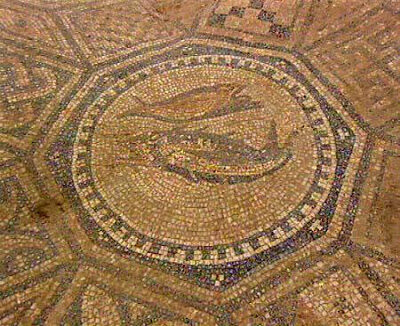
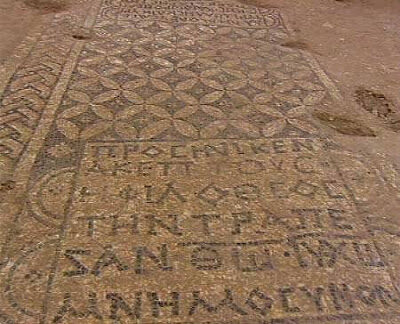
204) 200-250 AD : a church was been discovered in Megiddo, Israel. Excavations uncovered a large tile floor and wall remnants. There are mosaics of fish which were the original Christian symbol. Also found were some inscriptions inlaid into the mosaic one which reads, “Akeptous, the God-loving, offered this table for (the) God Jesus Christ, as a remembrance” (“Akeptous” is the name of the woman who offered this “remembrance”).
megiddochurchmosaic28129-2297227

megiddochurchmosaic28229-7235515

megiddochurch-2116458
205) 200-225 AD : The Acts of Thomas

206) 200-250 AD : Didascalia

207) 200-250 AD : Books of Jeu

208) 200-255 AD : Pistis Sophia – Book I

209) 200-255 AD : Pistis Sophia – Book II

210) 200-255 AD : The Apocalypse of Peter

211) 202-203 AD : Acts of Perpetua and Felicitas

212) 203-250 AD : Origen – Origen de Principiis: Preface

213) 203-250 AD : Origen – Origen de Principiis: Book I

214) 203-250 AD : Origen – Origen de Principiis: Book II

215) 203-250 AD : Origen – Origen de Principiis: Book III

216) 203-250 AD : Origen – Origen de Principiis: Book IV

217) 203-250 AD : Origen – A Letter from Origen to Africanus

218) 203-250 AD : Origen – A Letter from Origen to Gregory

219) 203-250 AD : Origen – Origen Against Celsus: Book I

220) 203-250 AD : Origen – Origen Against Celsus: Book II

221) 203-250 AD : Origen – Origen Against Celsus: Book III

222) 203-250 AD : Origen – Origen Against Celsus: Book IV

223) 203-250 AD : Origen – Origen Against Celsus: Book V

224) 203-250 AD : Origen – Origen Against Celsus: Book VI

225) 203-250 AD : Origen – Origen Against Celsus: Book VII

226) 203-250 AD : Origen – Origen Against Celsus: Book VIII

227) 203-250 AD : Origen – Prologue of Rufinus

228) 203-250 AD : Origen – Commentary on the Gospel of John: Book I

229) 203-250 AD : Origen – Commentary on the Gospel of John: Book II

230) 203-250 AD : Origen – Commentary on the Gospel of John: Book IV

231) 203-250 AD : Origen – Commentary on the Gospel of John: Book V

232) 203-250 AD : Origen – Commentary on the Gospel of John: Book VI

233) 203-250 AD : Origen – Commentary on the Gospel of John: Book X

234) 203-250 AD : Origen – Commentary on the Gospel of Matthew

235) 221 AD : Julius Africanus

236) 280 AD : Porphyry of Tyre (in Against the Christians – Life of Pythagoras)

Gary R. Habermas, Reinterpretations of the Historical Jesus

Paul L. Maier, Did Jesus Really Exist? and Josephus and Jesus

Wayne Jackson, The Historicity of Jesus Christ

J. P. Holding, Jesus – Shattering the Christ-Myth – The Reliability of the Secular References to Jesus and Fairy Castles Built on Sand and The Apostate Who Wasn’t All There

Mike Licona, A Review and Critique of Brian Flemming’s “The God Who Wasn’t There”

Gary R. Habermas, The Late Twentieth-Century Resurgence of Naturalistic Responses to Jesus’ Resurrection

Bede and Christopher Price, Did Jesus Exist? Bede’s Library

Bernard Muller, Review of Doherty’s “The Jesus Puzzle”

Bob and Gretchen Passantino, Doherty’s “Challenging the Verdict”: Appeal Denied

Christopher Price, Short Review of “The Jesus Puzzle”

Doxa website, Mythological Jesus

Patrick Narkinsky, The Jesus Mosaic

Preventing Truth Decay, Taking the “Jesus Puzzle” Apart Piece-by-Piece

GDon, “The God Who Wasn’t There” an Analysis

The Gary DeMar show, The Jesus Who Never Lived

“Joseph-era” Coins Found in Egypt, the Latest in Biblical Archeology-Well_Maybe

According to The Middle East Media Research Institute (MEMRI, “Leading Egyptian Daily ‘Al-Ahram’ Reports: Coins from Era of Biblical Joseph Found in Egypt,” September 24, 2009, No. 2561):

_the Egyptian daily Al-Ahram [September 22, 2009], by Wajih Al-Saqqar, archeologists have discovered ancient Egyptian coins bearing the name and image of the Biblical Joseph_

Its importance lies in the fact that it provides decisive scientific evidence disproving the claim by some historians that the ancient Egyptians were unfamiliar with coins and conducted their trade through barter_

many charms from various eras before and after the period of Joseph, including one that bore his effigy as the minister of the treasury in the Egyptian pharaoh’s court_

On the other hand some references to coinage have been known such as:

_texts from the time of the Third Dynasty_states that the Egyptian coin of the time was called a deben_Other texts from the time of the Third Dynasty, the Sixth Dynasty and the Twelfth Dynasty mention a coin named shati or sat_

Research team head Dr. Sa’id Muhammad Thabet had been looking for “coins used as charms or ornaments” yet, “what most archeologists took for a kind of charm, and others took for an ornament or adornment, is actually a coin.” Moreover, “the coins come in different sizes and are made of different materials, including ivory, precious stones, copper, silver, gold, etc.” and some were “scarab-shaped.”

It is also reported that one coin:

had an inscription on it, and an image of a cow symbolizing Pharaoh’s dream about the seven fat cows and seven lean cows, and the seven green stalks of grain and seven dry stalks of grain_
Joseph’s name appears twice on this coin, written in hieroglyphs: once the original name, Joseph, and once his Egyptian name, Saba Sabani, which was given to him by Pharaoh when he became treasurer. There is also an image of Joseph, who was part of the Egyptian administration at the time.

Let us dive into to some of the concerns: as of yet it seems that the only report about these coins, particularly the one depicting Joseph, has come from one news source which published a photo of various carved scarabs.

archeologyjosephcoinchristianapologeticsgodbiblejesus-1735945

archeologyjosephcoinchristianapologeticsgodbiblejesus-2943904

archeologyjosephcoinchristianapologeticsgodbiblejesus-4727279

Perhaps these are the “scarab-shaped” coins but none are shown to bear the image of Joseph-why not prominently picture this coin?

Some think that this is all a hoax and some that it is an attempt at an Islamic apologetic as along with reference to the coin of Joseph’s time in Egypt appeals are being made to verses from the Qur’an (Koran) which reference coin usage in Joseph’s day such as a reference to Joseph’s brothers selling him, “And they sold him for a low price, a number of silver coins (Surah 12:20).

Yet, note that since the Qur’an was not written until circa half a millennia after the time of Christ the Qur’an is alluding to the Bible which states, “sold him to the Ishmaelites for twenty shekels of silver” (Genesis 37:28).
The “twenty of silver” (the word “shekel” is not in the manuscripts) may be understood as the sliver having been in the form of coinage but could refer to the weight of the silver as “shekels” is a measure of weight which later came to be the name of coins.

Thus, it is advisable to wait and see what is to become of this-what corroboration, information and photos are to follow, if any.

Did Jesus Say “I am God”?

A friend and I were asked, “Show me where Jesus said ‘I am God.'” We pointed the inquirer to John 8:58 where Jesus states “before Abraham was I AM.”

The response was “he did not say ‘I am God.'”

Of course, that is precisely what Jesus was saying and the text makes it clear that the Jews understood this fact so well that they attempted to stone Jesus to death for blasphemy, for claiming to be God. In saying “I AM” He was claiming for Himself the name of God given to Moses from the burning bush in order to identify Him as the one God (see Exodus 3:14). Jesus also sent His apostles to baptize “in the name of the Father, the Son and the Holy Spirit.” Note that He did not say names (plural) but name (singular). He makes His name the same as that of the God whom the Jews worship.

Here is the problem; we must first determine whether the question being posed based upon an appropriate premise. A premise is a proposition (a plan or scheme proposed) supporting or helping to support a conclusion. A faulty premise will not end in an appropriate conclusion.

For example, the various skeptics want to hear Jesus say what they want to hear in the North American English grammar de jour (or whichever language in which the skeptic finds herself dealing). In this case, the person wanted to see the words “I-am-God,” those three words and in that order. Is that an appropriate premise? No, why should Jesus have to say something in the way that you particularly want to hear it said? If a Jehovah’s Witness states that Jesus never claimed to be God and you show them that He did, they will say “Well, He did not claim to be Jehovah God or God Almighty.” You see they want to hear it just how they want to hear it and any other grammatical construct is unacceptable.
Maybe Jesus should have stood up one day and said, “Just to make everyone happy, I declare that I am God, the Almighty, Jehovah, YHWH, Yahweh, Adonai, HaShem, Shaddai, Elohim, LORD, Yod Hay Vav Hay, Emet, I AM, etc, etc.” And still I’m sure that someone could come up with other names for God.

An appropriate premise, for example, could be “Did Jesus claim to be God? And if He did, how did He do so?” Now we can get somewhere because He claimed to be God in many ways that may not seem very straightforward in our North American English grammar de jour. He not only claimed to be God, people called him God and He was called God by God.1 He was called the creator.2 He was called the forgiver of sins.3 He was called the judge.4 He was called the Alpha and Omega.5 He was referred to as omnipotent,6 omnipresent7 and omniscient.8 He also allows Himself to be worshipped.9 He claimed to be the only way to the Father, to salvation.10

In any case, we showed where Jesus said “I AM,” and when they did not accept this as close enough to “I am God,” we asked “What if someone refers to Jesus as God and Jesus does not stop the person from doing so?” We pointed out where Thomas says to Jesus “My Lord and my God!” (John 20:28). The response was that Thomas was just surprised or astonished and he was simply expressing that emotion, just as if we won a football game and I turned to my teammate and said “My God, we won!” Certainly we would not be referring to our teammate as God. This is another faulty premise, just because saying “My God” could be a statement of excitement does not mean that Thomas was not calling Jesus God. Just because it could mean the former does not mean that it could not mean the latter.

Interestingly enough in his anti-Christian book, Rabbi Aryeh Kaplan quoted John 16:14; 5:17; 5:22; 10:30; 14:9 and stated, “From these quotes, it seems obvious that Jesus himself claimed to be G-d.”11 He has no problem understanding that Jesus did claim to be God even if the verses he sites do not have Jesus saying, “I-am-God.”

It seems to be a good idea to clarify and define terms before arguing or attempting to answer an illogical question or opposition.

“The Lost Tomb of Jesus”, part 1 of 10

This parsed post will consider, dissect and respond to the documentary “The Lost Tomb of Jesus.”
Hereinafter DSC denotes “The Discovery Channel.”

thelosttombofjesus-8178315
This parsed essay is divided into the following segments:

Part 1: Introduction and Utterly Absolute Unquestionable Certainty Part 2: Sensationalistic Claims – The Hype is Ripe Part 3: Let the Debate Begin…Without Us Part 4: Deoxyribonucleic Acid Part 5: Statistical Probability Part 6: Theological Considerations – The Resurrection and the Ascension Part 7: Odd and Unfounded Assertions Part 8: Some Academics Dare to Disagree Part 9: Erudite Elucidators?

Part 10: The James Ossuary and Concluding Musings

On March 4, 2007 AD “The Lost Tomb of Jesus,” a documentary produced by James Cameron and directed by Simcha Jacobovici, aired on the “The Discovery Channel” (hereinafter DSC) which describes it as, “Part archaeological adventure, part Biblical history, part forensic science, part theological controversy.”1

The documentary revolves around the discovery, in the 1980s, of a tomb that contained 10 ossuaries (bone boxes) that date to circa 2,000 years ago. The site was surveyed by archaeologist Shimon Gibson who also drew the layout plan. The ossuaries where described by L.Y. Rahmani in “A Catalogue of Jewish Ossuaries.” The ossuaries were found in the Talpiot region of Jerusalem, the “Talpiot Tomb,” or “Tomb of Ten Ossuaries,” included the following inscriptions:

Ossuary 80/500 – Mariamne e Mara

Ossuary 80/501 – Yehuda bar Yeshua

Ossuary 80/502 – Matia

Ossuary 80/503 – Yeshua bar Yosef

Ossuary 80/504 – Yose

Ossuary 80/505 – Maria

caskets-5344068James Cameron stated,

“It doesn’t get bigger than this. We’ve done our homework; we’ve made the case; and now it’s time for the debate to begin.”2

How does the documentary begin? By making this statement,

“Leading scientists and theologians have not reached agreement on the meaning of this archeological discovery and questions remain. We invite viewers to apply their own judgments and interpretive skills.”

Interesting, I thought that we were constantly told that making judgments and interpretations were bad things-but alas.

“The Lost Tomb of Jesus”, part 10 of 10 ›
