Is the Bible Skeptical About Miracles? – Moses as Skeptical Scientist

What would you do if you saw a burning bush? A bush that had every appearance of being on fire and yet, was not being consumed by it?

Would you instantly say, “Lord God Almighty!!!!!!!!!”

Would you say, “What a fascinating coincidence! The natural laws are interacting in a rather unexpected manner. Perhaps, someday we will find a materialist answer. S’mores anyone?”

Well, if you were like Moses you would do neither. Yet, in a way, he a bit of both (short of the s’mores).

In Exodus 3:2-3 we find Moses at Horeb and we learn that “Moses saw that though the bush was on fire it did not burn up. So Moses thought, ‘I will go over and see this strange sight-why the bush does not burn up.'”

mosesburningbush-4476414

Moses’ first reaction is to think critically, skeptically and scientifically: he thought about what he was seeing, he planed a course of action, he approached the phenomenon and he determined to examine it.

Then, “When the LORD saw that he had gone over to look, God called to him from within the bush, ‘Moses! Moses!_I am the God of your father, the God of Abraham, the God of Isaac and the God of Jacob.’ At this, Moses hid his face, because he was afraid to look at God” (Exodus 3:4, 6). The reference to looking at God is in reference to v. 2 which stated, “There the angel of the LORD appeared to him in flames of fire from within a bush.” Angel of the LORD being a term synonymous for God Himself. It is likely a reference to a Christophany, a pre-incarnate appearance of Christ. But this is theological minutia which goes beyond the scope of this essay.

Now, what would you do if God told you, very clearly, to go and do something?

Would you instantly say, “Yes, of course, here I go!”

Would you say, “Wow maaaaaan, I’m like sooooo hallucinating!”

Well, if you were like Moses you would do neither.

“‘I am sending you to Pharaoh to bring my people the Israelites out of Egypt.’ But Moses said to God, ‘Who am I, that I should go to Pharaoh and bring the Israelites out of Egypt?’ And God said, ‘I will be with you. And this will be the sign to you that it is I who have sent you: When you have brought the people out of Egypt, you will worship God on this mountain'” (Exodus 3:10-12).

Moses does not march off in lockstep but questions why he is chosen and for the task at hand. God recognizes that Moses, a sheep herding nobody, will need some evidence that it is God who is talking to him, sending him to confront Pharaoh who at the time was one of the, if not the, earth’s most powerful ruler. God states that Moses will succeed in bringing the Israelites out of Egypt and that they will enjoy the freedom of worshipping God at Horeb.
Thus, Moses will engage upon a scientific experiment, as it were. He engages upon an act knowing that he will either be unsuccessful or successful.

That he would be unsuccessful is most likely since Moses was one single man, who was a nobody, with no authority, and no army (and not even the support of the Jews, at that time). This would be evidence that God did not send him but that he just ate a bad falafel the night before which caused him to hallucinate.

That he would be successful would quite literally a one man against the world scenario. This would serve as confirmation that he had an encounter with God.

Next comes an exchange from which there is much to infer:

“Moses said to God, ‘Suppose I go to the Israelites and say to them, ‘The God of your fathers has sent me to you,’ and they ask me, ‘What is his name?’ Then what shall I tell them?’ God said to Moses, ‘I am who I am. This is what you are to say to the Israelites: ‘I AM has sent me to you'” (Exodus 3:13-14).

God declares that He is the I AM, “I am who I am,” or “I will be what I will be.” This is understood to mean the self-existent one, the one who is, the one who is not moved by any greater external force. God is known as the one who is, was and is to come, the beginning and the end, the Alpha and Omega.

tetragramaton-9337525

Consider that time, space and matter came into being at a particular point, at the very beginning of time, space and matter. The Bible’s very first verse states, “In the beginning, God created the heavens and the earth.”Look at it this way: “In the beginning [time], God created the heavens [space] and the earth [matter].”

Moreover, consider it this way: “In the beginning [time], God [a preexistent being] created [infused with energy, omnipotentlly designed] the heavens [space] and the earth [matter].”

Furthermore, it is reasonable to draw the following inferences:Since time came into being at a particular point-whatever existed “before” then was timeless, or eternal.Since space came into being at a particular point-whatever existed “before” then was infinite, or not restricted to locality.

Since matter came into being at a particular point-whatever existed “before” then was immaterial, or spirit and not affected by any natural laws.

marcchagallmosesburningbush-7153560

Moses’ skeptical and scientific inquisitive nature would come into play time and time again as is exampled in life his story as found in the Bible.

~~~~~~~~~~~~~~~~~~~~~~~~

A plea: I have to pay for server usage and have made all content on this website free and always will. I support my family on one income and do research, writing, videos, etc. as a hobby. If you can even spare $1.00 as a donation, please do so: it may not seem like much but if each person reading this would do so, even every now and then, it would add up and really, really help. Here is my donate/paypal page.

Due to robo-spaming, I had to close the comment sections. However, you can comment on my Facebook page and/or on my Google+ page. You can also use the “Share / Save” button below this post.

Trinity : A Consideration of Anti-Trinitarian Views, part 2 of 2

Having concluded a consideration of various biblical statements which demonstrate that God is a Triune being, a Trinity, as each member of the Trinity is identified by likewise attributes, each is a person, each is co-equal and co-eternal let us now consider various anti-Trinitarian views.

Jehovah’s Witnesses:
The Watchtower Bible and Tract Association-the Jehovah’s Witnesses-deny God’s Triune nature as we shall see (more information on Jehovah’s Witnesses is found here).
Reasoning from the Scriptures, p. 405

some Trinitarians emphasize their belief that Jesus Christ is God, or that Jesus and the Holy Ghost are Jehovah. Not a Bible teaching.

Make Sure of All Things (Brooklyn, NY: Watchtower Bible and Tract Society, 1953), p. 188

Not a triune god, which false doctrine would deny his almighty supremacy.

Mankind’s Search for God, p. 356-357

Christ Jesus as the Word was a spirit creation and came to earth in obedience to his Father’s will_The holy spirit is God’s active force, or energy in action, not a person.

In the view of Jehovah’s Witnesses Jehovah is the God (capital “G”) and Jesus is a god (lower case “g”). Thus, they are polytheists in that they affirm the existence of various gods even if they designate one as major and others a minor.
In the Jehovah’s Witnesses “translation” of the Bible, the New World Translation John 1:1 reads,

In [the] beginning the Word was, and the Word was with God, and the Word was a god.

That little word, that letter, “a” is enough to move from monotheism to polytheism.

Also, note how since they believe that Jehovah created Jesus they cannot allow the Bible to state what the Bible states. Consider how they insert brackets into the text of Colossians 1:15-17,

He is the image of the invisible God, the firstborn of all creation; because by means of him all [other] things were created in the heavens and upon the earth, the things visible and the things invisible, no matter whether they are thrones or lordships or governments or authorities. All [other] things have been created through him and for him. Also, he is before all [other] things and by means of him all [other] things were made to exist.

The bible sates that He, Jesus, created “All things…is before all things…all things were made to exist” but since their doctrine contradicts the words of the Bible they make the Bible say that Jesus created “All [other] things…is before all [other] things…all [other] things were made to exist.”

Christian Science:
Note immediately that Mary Baker Eddy’s Christian Science is neither Christian nor scientific but is akin to mind science or science of mind groups which promulgate various concoctions of eastern philosophy/mysticism packaged in Christian terminology.

Anecdote: very early in my Christian walk I heard about Michael Behe’s book Darwin’s Black Box.

Having never even heard of Christian bookstores I had no idea where such books were available. Yet, I recalled that in my neighborhood there was a “Christian Science Reading Room.” Ah yes, Michael Behe is a Christian and he was writing about science so…

Well, I went in to ask about the book and was told that they do not carry anything like that. Of course, the “Christian Science Reading Room” is a “Christian Science” study center-what did I know.

Mary Baker Eddy, Science and Health with Key to the Scriptures (Boston, MA: Published by the Trustees under the Will of Mary Baker G. Eddy, 1875), p. 331

God is individual, incorporeal. He is divine Principle, Love, the universal cause, the only creator, and there is not other self-existence. He is all-inclusive, and is reflected by all that is real and eternal and by nothing else.
He fills all space, and it is impossible to conceive of such omnipresence and individuality except as infinite Spirit or Mind. Hence all is Spirit and spiritual. Life, Truth, and Love constitute the triune Person called God, – that is, the triply divine Principle, Love. They represent a trinity in unity, three in one, – the same in essence, though multiform in office: God the Father-Mother; Christ the spiritual ideal of sonship; divine Science or the Holy Comforter.

Mary Baker Eddy, ibid., p. 256

The theory of three persons in one God (that is, a personal Trinity or Tri-unity) suggests polytheism.

Mary Baker Eddy, ibid., p. 361

Christ, as the true spiritual idea, is the ideal of God_The Christian who believes in the First Commandment is a monotheist_and recognizes that Jesus Christ is not God, as Jesus himself declared, but the Son of God.

Mary Baker Eddy, ibid., p. 332

The Christ is incorporeal, spiritual, – yea, the divine image and likeness, dispelling the illusions of the senses; the Way, the Truth, and the Life_The corporeal man Jesus was human.

Mary Baker Eddy, The First Church of Christ Scientist and Miscellany (Boston, MA: Published by the Trustees under the Will of Mary Baker G. Eddy, 1913), p. 261

Christ is the Truth and Life born of God – born of Spirit and not of matter. Jesus, the Galilean Prophet, as born of the Virgin Mary’s spiritual thoughts of Life and its manifestation.

Mary Baker Eddy, Miscellaneous Writings 1883-1896 (Boston, MA: Published by the Trustees under the Will of Mary Baker G. Eddy, 1896), p. 84

The spiritual Christ was infallible; Jesus, as material manhood, was not Christ.

By now, you can readily see how knowing the biblical statements about the Trinity, about God’s nature in general and about the attributes of the members of the Trinity in particular you can dispel false doctrines.

For example, “God the Father-Mother; Christ the spiritual ideal of sonship; divine Science or the Holy Comforter” not according to a study of the Bible.

Was Christ a “spiritual idea” or “incorporeal, spiritual” but a separate being named Jesus was “was human”?

Note that Luke 1:30 announces the birth of Jesus “behold, you will conceive in your womb and bring forth a Son, and shall call His name Jesus” and 2:10-11 goes on to state that this Jesus who was born was “born to you this day in the city of David a Savior, who is Christ the Lord.” Thus, Jesus who is the Christ was born to Mary and Joseph and not Jesus who took on the Christ nature later on in His life.

Early Church Fathers:
Let us conclude by noting what some early church fathers thought about Jesus’ divinity and the Trinity.

1st Clement AD 95-96,

For, as God liveth, and as the Lord Jesus Christ and the Holy Ghost live,-both the faith and hope of the elect, he who in lowliness of mind, with instant gentleness, and without repentance hath observed the ordinances and appointments given by God-the same shall obtain a place and name in the number of those who are being saved through Jesus Christ, through whom is glory to Him for ever and ever. Amen.

Ignatius AD 110,

Nevertheless, I have heard of some who have passed on from this to you, having false doctrine, whom ye did not suffer to sow among you, but stopped your ears, that ye might not receive those things which were sown by them, as being stones of the temple of the Father, prepared for the building of God the Father, and drawn up on high by the instrument of Jesus Christ, which is the cross, making use of the Holy Spirit as a rope, while your faith was the means by which you ascended, and your love the way which led up to God.

Ye, therefore, as well as all your fellow-travellers, are God-bearers, temple-bearers, Christ-bearers, bearers of holiness, adorned in all respects with the commandments of Jesus Christ, in whom also I exult that I have been thought worthy, by means of this Epistle, to converse and rejoice with you, because with respect to your Christian life ye love nothing but God only. For the Son of God, who was begotten before time began, and established all things according to the will of the Father, He was conceived in the womb of Mary, according to the appointment of God, of the seed of David, and by the Holy Ghost.

These things [I address to you], my beloved, not that I know any of you to be in such a state; but, as less than any of you, I desire to guard you beforehand, that ye fall not upon the hooks of vain doctrine, but that you may rather attain to a full assurance in Christ, who was begotten by the Father before all ages, but was afterwards born of the Virgin Mary without any intercourse with man. Some of them say that the Son is a mere man, and that the Father, Son, and Holy Spirit are but the same person, and that the creation is the work of God, not by Christ, but by some other strange power.

Polycarp AD 155,

Wherefore also I praise Thee for all things, I bless Thee, I glorify Thee, along with the everlasting and heavenly Jesus Christ, Thy beloved Son, with whom, to Thee, and the Holy Ghost, be glory both now and to all coming ages. Amen.

IrenaeusAD 160-180,

Wherefore, as I have already stated, no other is named as God, or is called Lord, except Him who is God and Lord of all, who also said to Moses, “I AM That I AM. And thus shalt thou say to the children of Israel: He who is, hath sent me unto you;” and His Son Jesus Christ our Lord, who makes those that believe in His name the sons of God. And again, when the Son speaks to Moses, He says, “I am come down to deliver this people.”
For it is He who descended and ascended for the salvation of men. Therefore God has been declared through the Son, who is in the Father, and has the Father in Himself-He who is, the Father bearing witness to the Son, and the Son announcing the Father.-As also Esaias says, “I too am witness,” he declares, “saith the Lord God, and the Son whom I have chosen, that ye may know, and believe, and understand that I am.”

Tertullian,

In various ways has the devil rivaled and resisted the truth. Sometimes his aim has been to destroy the truth by defending it. He maintains that there is one only Lord, the Almighty Creator of the world, in order that out of this doctrine of the unity he may fabricate a heresy. He says that the Father Himself came down into the Virgin, was Himself born of her, Himself suffered, indeed was Himself Jesus Christ.

Note also other historically significant references:
In 112 AD, while he was Governor of Bithynia in Asia Minor, Pliny the Younger (Plinius Secundus) wrote to Emperor Tarjan in Epistles 10.96,

the method I observe towards those who have been denounced to me as Christians is this: I interrogate them whether they were in fact Christians; if they confess it, I repeat the question twice, adding the threat of capital punishment; if they still persevered, I ordered them to be executed_they were in the habit of meeting on a certain fixed day before it was light, when they sang in alternate verses a hymn to Christ, as to a God.

Also, in 170 AD Lucian of Samosata wrote the following in, The Death of Peregrine 11-13,

The Christians, you know, worship a man_deny the gods of Greece, and worship the crucified sage.

These attest to early church belief in Jesus’ divinity.

Lastly, note that a church was been discovered in Megiddo, Israel which dates to 200-250 AD. Excavations uncovered a large tile floor and wall remnants. There are mosaics of fish which were the original Christian symbol. Also found were some inscriptions inlaid into the mosaic one which reads, “Akeptous, the God-loving, offered this table for (the) God Jesus Christ, as a remembrance” (“Akeptous” is the name of the woman who offered this “remembrance”).

In this regard my essays Historical Jesus – Three Centuries Worth of Citations and Flavius Josephus, the Historical Jesus and Pseudo-Skepticism Outdated By Four Decades may be of interest.

~~~~~~~~~~~~~~~~~~~~~~~~

A plea: I have to pay for server usage and have made all content on this website free and always will. I support my family on one income and do research, writing, videos, etc. as a hobby. If you can even spare $1.00 as a donation, please do so: it may not seem like much but if each person reading this would do so, even every now and then, it would add up and really, really help. Here is my donate/paypal page.

Due to robo-spaming, I had to close the comment sections. However, you can comment on my Facebook page and/or on my Google+ page. You can also use the “Share / Save” button below this post.

The Destroyed Bible – On How to Reconstruct the Bible, part 4

Extra-Biblical / Non-Biblical:

But what if the works of the church fathers were destroyed? What could we learn about Jesus and about Christians from sources outside of the Bible and outside the writings of the church fathers? (note that in what follows I am not even referencing history and archaeology affirming the Old Testament and much more that affirms the New Testament)

We could learn a number of claims regarding Jesus:

A person named Jesus (Yeshu, Yeshuah, etc.) existed. Jesus was from Nazareth. He had a brother name James. He was called a wise man. He was a teacher. He introduced new teaching contrary to Judaism. His teachings spread rapidly. He lived a virtuous life. He was followed by Jews and Greeks. He had the ability to prophecy. He was known to be worshipped as a God. He was regarded as the Son of God. He was referred to as the savior.

He was called Christ (Kristos, etc.).

He worked miracles. He was crucified during the reign of Tiberius in the Procuratorship of Pontius Pilate. Darkness and earthquake at the time of His death.

He was said to have resurrected on the third day.

Consider also that the various apocryphal/Gnostic gospels also confirm various New Testament doctrines and claims about Jesus. Let us consider one example; The Gospel of Judas affirms that Jesus existed, that He had apostles, that He preformed miraculous works, the He came as savior of humanity, that He had the ability to prophecy, that He was exalted as the son of our god, that He came from an eternal realm, that there is an afterlife, and that Judas received some money.

bibles2c20bible20versions2c20manuscript2c20apologetics2c20early20church20fathers2c20new20testament2c20old20testament-6941695

We could learn a number of claims regarding Christians:

They met together to sing hymns to Christ as to a God and encourage each other to moral behavior. They also met in order to partake of food—but food of an ordinary and innocent kind. They considered themselves brothers, followers of Jesus’ laws, and shared worldly goods as common property. They had deaconesses. They had contempt for death. They believed they were immortal. They refused to worship other gods, including worshipping Caesar’s idol, even threatened with death. They were falsely accused of various offenses. They endured persecution, mockery and torture of every sort, particularly under Nero. They had such an impact that pagan temples had been almost deserted, and the sacred festivals and sacrificial meat had lost much popularity.

They healed in Jesus’ name (referred to as Jeshua ben Pantera).

They spread rapidly.

They enounced material goods

This is to name a few that have been gleaned from Phlegon, Julius Africanus, Philopon, Thallus, Pliny the Younger aka Plinius Secundus, Emperor Trajan, Lucian of Samosata, Gaius Suetonius Tranquillas, Emporer Hadrian, Eusebius, Celsus, Flavius Josephus, Cornelius Tacitus, The Talmud, Tosefta Hullin, Mara Bar Serapion and as collected by F. F. Bruce in Jesus and Christian Origins Outside the New Testament and Gary Habermas in The Historical Jesus Ancient Evidence for the Life of Christ.

Please consider one very important fact that we ought to keep in mind when establishing what sort of early documentation we ought to expect from the New Testament: Jerusalem was sacked by the Romans in 70 AD. This devastating attack included the dismantling of the Temple stone by stone. We should carefully consider whether it is fair to expect a devastated city to preserve pristine documents for posterity. Can we really expect to have much of anything preserved? Can we really expect documents of any sort to survive the sacking of a city? Let us be patient and accept what we do have from as early on as we do have it.
When we consider that to this very date not only has the Temple not been rebuilt but that we do not even know the exact layout, it certainly does seem much too much to ask for a piece of papyrus or parchment from the heart of pre-70 AD Jerusalem to survive. Moreover, in 303 AD the Roman Emperor Diocletian sought to destroy the Christian scriptures. This means that there was such a thing as Christian scriptures, that they could be sought and found (i.e. they were recognizable). This also means that some manuscripts were lost.

Thus, there are various ways in which we could reconstruct the Bible and the fact that the Bible has not been destroyed means that each of these, and more, sources provide us with an astonishingly reliable document the likes of which the ancient world has never known and could never hope to match.

~~~~~~~~~~~~~~~~~~~~~~~~

A plea: I have to pay for server usage and have made all content on this website free and always will. I support my family on one income and do research, writing, videos, etc. as a hobby. If you can even spare $1.00 as a donation, please do so: it may not seem like much but if each person reading this would do so, even every now and then, it would add up and really, really help. Here is my donate/paypal page.

Due to robo-spaming, I had to close the comment sections. However, you can comment on my Facebook page and/or on my Google+ page. You can also use the “Share / Save” button below this post.
‹ The Destroyed Bible – On How to Reconstruct the Bible, part 3 up

Trinity : Are Jesus and the Archangel Michael the Same Personage?

This summary of scriptures relevant to the biblical statements that Jesus and Michael are different personages will be followed by the actual quotations:

Zechariah 3:2; Matthew 4:10, 16:23; Hebrews 1:6, 13, 2:7-8; Jude 9

Zechariah 3:2 “The LORD said to Satan, ‘The LORD rebuke you, Satan! The LORD, who has chosen Jerusalem, rebuke you!'”

Matthew 4:10 “Jesus said to him, ‘Away from me, Satan! For it is written: ‘Worship the Lord your God, and serve him only.””

Matthew 16:23 “Jesus turned and said to Peter, ‘Get behind me, Satan!_'”

Hebrews 1:6 “And again, when God brings his firstborn into the world, he says, ‘Let all God’s angels worship him.'”

Hebrews 1:13 “To which of the angels did God ever say, ‘Sit at my right hand until I make your enemies a footstool for your feet.'”

Hebrews 2:7-8 “You made him a little lower than the angels; you crowned him with glory and honor.”

Jude 9 “But even the archangel Michael, when he was disputing with the devil about the body of Moses, did not dare to bring a slanderous accusation against him, but said, ‘The Lord rebuke you!'”

The Destroyed Bible – On How to Reconstruct the Bible, part 1

This parsed essay will consider the various sources that we have for the Bible via a circumlocution whereby we will consider how we could reconstruct the Bible were it ever destroyed.1

The essay is parsed thusly: Part 1: Old Testament / Tanakh / Torah Part 2: New Testament

Part 3: New Testament (concluded) and Early Church Fathers

Part 4: Extra-Biblical / Non-Biblical

I will ask what would happen if all printed copies of the Bible were destroyed and will assert that in such a case we would rely on the manuscripts. I will then ask what would happen if all manuscripts of the Bible were destroyed and will assert that in such a case we would rely on the writings of the early church leaders. I will further ask what would happen if all of the writings of the early church leaders were destroyed and will assert that in such a case we would rely on extra-biblical, or non-biblical sources.

But what if all extra-biblical sources were destroyed? We would rely upon God’s inspiration; but that is another story…

As we progress I will provide various details with regards to each question and assertion. Take your time and if you are getting bogged down in the details just focus on ascertaining the main points.

What I mean by “destroyed” is as follows: Let us begin by imagining that the internet is dead and gone as well as all other electronic devices and so there are no electronic versions of the Bible at all—no iBible, no eBibles. From here we further imagine that the millions upon millions of Bibles in print have somehow all (and in the original Greek “all” means “all”—that is a little apologist humor) have been destroyed.
What now? We would gather up the manuscripts and seek to reconstruct the Bible.

ebible2c20e-bible2c20ibible2c20electronic20bible2c20bible2c20manuscript2c20apologetics2c20early20church20fathers2c20new20testament2c20old20testament-2804752

Old Testament / Tanakh / Torah:
Let us begin by considering the Old Testament for which we have over 10,000 manuscripts which date between 250 BC to 1,100 AD. Some of these are:

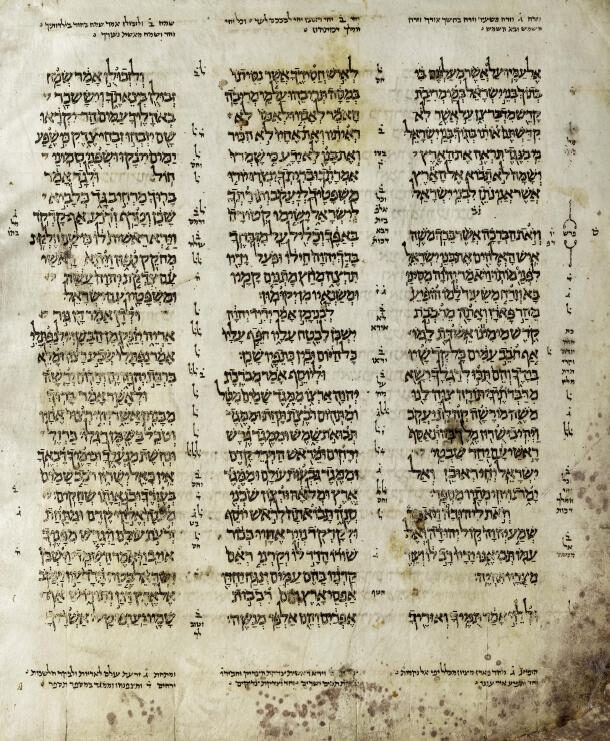
Oriental 4445 Manuscript dating from 820-850 AD.

Codex Cairensis dating from 895 AD.

Aleppo Codex dating from 930 AD.

aleppo20codex2c20bible2c20manuscript2c20apologetics2c20new20testament2c20old20testament-5202272

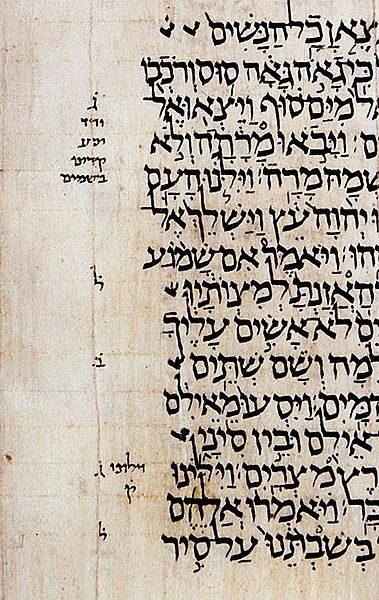
Codex Leningradensis (known as “L”) dating from 1008 AD.

leningrad20codex2c20bible2c20manuscript2c20apologetics2c20new20testament2c20old20testament-1592164

Cairo Geniza (or, Geneza) Mss. dating from 929-1121 AD.

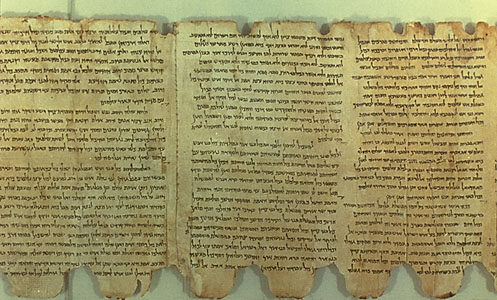
Dead Sea Scrolls some of which are:

dead20sea20scrolls2c20bible2c20manuscript2c20apologetics2c20new20testament2c20old20testament_0-9161013

Paleo Exodus (4Q22) from 250 BC.
Fragment of Samuel (4Q Samb) form 225 BC.
Leviticus Scroll (11Q1) form the late 2nd century BC.
Hosea Scroll (4Q166) form the late 1st century BC.
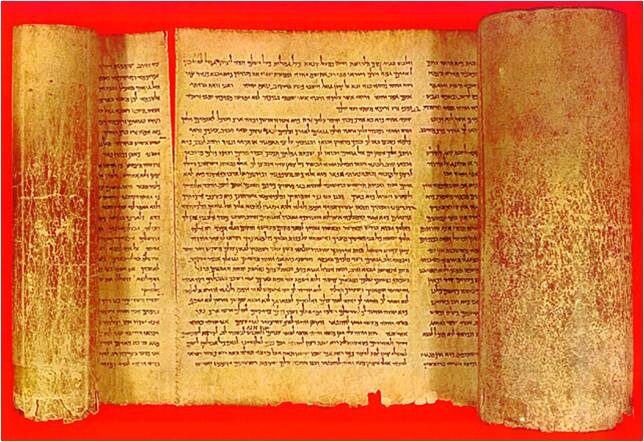
Isaiah Scroll (IQIsaa) from 100 BC.

isaiah2c20dead20sea20scrolls2c20bible2c20manuscript2c20apologetics2c20new20testament2c20old20testament-5725557

The conclusion of Old Testament source studies is that when we consider the manuscript evidence and compare our modern version versus the oldest manuscripts we find that with the passage of over 1,000 years we find only minor changes and no change to the message.
For example, we find an insignificant one word difference in Isaiah ch. 53’s circa 164 Hebrew words. Moreover, there are thirteen changes altogether in the entire book of Isaiah which consists of 66 chapters.

The bottom line is that for the Old Testament we have more manuscripts, earlier manuscripts, better copied manuscripts, and more reliably recorded history than any other book of its time. If we cannot trust the Old Testament we likewise cannot trust ancient history which is reconstructed from vastly inferior sources. Following is some scholarly attestation of this fact:

Millar Burrows; professor of biblical literature (The Dead Sea Scrolls, p. 304),

It is a matter of wonder that through something like a thousand years the text underwent so little alteration….Herein lies its chief importance, supporting the fidelity of the Masoretic tradition.

Gleason Archer; biblical scholar, theologian, educator, and author (A Survey of Old Testament Introduction, p. 19),

[Isaiah] proved to be word for word identical with our standard Hebrew Bible in more than 95% of the text. The 5% of variation consisted chiefly of obvious slips of the pen and variations in spelling.

F.F. Bruce; biblical scholar, manuscript expert (MLDSS, pp. 61-69),

It may now be more confidently asserted than ever before that the Dead Sea discoveries have enabled us to answer this question [of reliability of the OT text] in the affirmative with much greater assurance than was possible before 1948.

Nelson Glueck; Rabbi, academic, archaeologist and president of Hebrew Union College (Rivers in the Desert A History of the Negev, p. 31),

As a matter of fact, however, it may be stated categorically that no archaeological discovery has ever controverted a biblical reference. Scores of archaeological findings have been made which confirm in clear outline or exact detail historical statements in the Bible.

William F. Albright; archaeologist, biblical scholar, linguist, ceramics expert:
(Christian Century, Nov. 19, 1958),

The narratives of the patriarchs, of Moses and the exodus, of the conquest of Canaan, of the judges, the monarchy, exile and restoration, have all been confirmed and illustrated to an extents that I should have thought impossible forty years ago.

(Archaeology and the Religion of Israel, p. 176),

There can be no doubt that archaeology has confirmed the substantial historicity of the Old Testament Tradition.

(Christianity Today, Jan. 18, 1963),

In my opinion, every book of the New Testament was written by a baptized Jew between the forties and the eighties of the first century A. D. (very probably sometime between about 50 and 75 A. D.).

Jeffrey Sheler; a contributing editor of U.S. News & World Report (“Is the Bible True,” US News & World Report, October 25, 1999, p. 52),

In extraordinary ways, modern archaeology has affirmed the historical core of the Old and New Testaments—corroborating key portions of the stories of…the life and times of Jesus.

~~~~~~~~~~~~~~~~~~~~~~~~

A plea: I have to pay for server usage and have made all content on this website free and always will. I support my family on one income and do research, writing, videos, etc. as a hobby. If you can even spare $1.00 as a donation, please do so: it may not seem like much but if each person reading this would do so, even every now and then, it would add up and really, really help. Here is my donate/paypal page.

Due to robo-spaming, I had to close the comment sections. However, you can comment on my Facebook page and/or on my Google+ page. You can also use the “Share / Save” button below this post.

VIDEO: University “Safe Space” show (trigger free politically correct socially sensitive)

University “Safe Space” show (trigger free politically correct socially sensitive).

~~~~~~~~~~~~~~~~~~~~~~~~

A plea: I have to pay for server usage and have made all content on this website free and always will. I support my family on one income and do research, writing, videos, etc. as a hobby. If you can even spare $1.00 as a donation, please do so: it may not seem like much but if each person reading this would do so, even every now and then, it would add up and really, really help. Here is my donate/paypal page.

Due to robo-spaming, I had to close the comment sections. However, you can comment on my Facebook page and/or on my Google+ page.

Twitter: #SafeSpace, #MadTV, #trigger
Facebook: #SafeSpace, #MadTV, #trigger

Who was the real Honi the circle maker?

Honi Hama’gel (aka Khoni or Choni and also Onias as this is the Greek form of the name) lived in the first century BC (born circa 65 BC) and came to be known as the circle maker or circle drawer. Who he was and what he did will become a relevant portion of a consideration of pop-Churchianity.

I have explained to my children that every year the toy companies come up with another “it.” A few years ago the must have “it” was (the occult) Pokémon and every kids had to watch the show, go to the movie, get the figurines, buy the cards, the t-shirt, etc., etc., etc. Two years ago it was Angry Birds and all of the merchandizing that came along with. Last year it is Minecraft. This year it will be something else and next year something else still.

Well, it is the same in many religious circles, in this case pop-Christianity aka Chrurchianity. One year it was The Prayer of Jabez; pray this prescribed prayer numerous times a day for, like, ever and Jeeeeeeeeesssssssus will bless ya!!! Who prays that prayer now? No one! And there is always some “new” thing, a “new move” of the spirit, don’t cha know? And in order to get the anointed blessing just plant your seed faith offering; name it and claim it, blab it and grab it…and on it goes (on and on and on and on).
Of interest in this regard is Mark Batterson’s The Circle Maker which was a book turned into a curriculum turned into a video series, etc., etc., etc. The Christian pastor Mark Batterson claims to have gotten a new revelation from God about a new way to pray based on Honi the circle maker.
Well, before getting to Batterson and his claims, let us hearken back to get to know Honi Hama’gel.

One place to learn about Honi is the Babylonian Talmud, in this case Michael L. Rodkinson’s trans., Section Moed/Festivals; Tract Taanith (aka Taanit or Ta’anit); Book 4: Volumes VII. and VIII; Chap. III.

“It once happened that Honi Hama’gel (the circle-drawer) was asked by the people to pray for them, that rain might descend. Said he to them: ‘Go and bring in the Passover ovens that they may not be spoiled by the rain.’ [footnote: “The ovens were movable, and were used to roast the paschal lamb on the Passover. When not in use they were kept outside of the house.”] He prayed, but the rain did not descend. What did he then? He drew (marked out) a circle around him, and placing himself within it, prayed as follows: ‘Creator of the Universe! Thy children have always looked up to me as being like a son of Thy house before Thee. I swear, therefore, by Thy Great Name, that I will not move from this place until Thou wilt have compassion on Thy children.’ Whereupon the rain commenced to drop down gently. Said he: ‘It was not for this I prayed, but for rain sufficient to fill the wells, cisterns, and caves.’ The rain then fell in torrents, and he said: ‘Not for such rain have I prayed, but for mild, felicitous, and liberal showers.’ The rain then descended in the usual manner, until the Israelites of Jerusalem were obliged to seek refuge from the city to the Temple Mount, on account of the rain. They came and said to Honi: ‘Even as thou didst pray that the rain might descend, so pray now that it may cease.’ And he replied: ‘Go and see whether the stone To’yim is covered by the waters.’ [footnote: “This was the name of a high stone in Jerusalem, where the finders of lost articles would deposit what they had found, and then proclaim that they had found something. The owners would then come, and upon sufficient identification of the lost article it would be restored to them”]

Simeon b. Sheta’h sent him word, saying: ‘If thou wert not Honi, I would order that thou be anathematized. But what shall I do with thee, since thou art petulant towards God, and yet He forgiveth and indulgeth thee like a petted child who is petulant towards his father and is nevertheless forgiven and indulged? To thee may be applied the passage [Prov. xxiii. 25]: ‘Let thy father and thy mother rejoice, and let her that hath born thee be glad.’’”

Well, in typical Rabbinic fashion, this reference becomes a springboard for elucidating many fine points of Halakah (Rabbinic Judaism’s religious law). They also offer a commentary on the story:

“‘It once happened that Honi Hama’gel,’ etc. The rabbis taught: It once happened the greater part of the month of Adar had passed, and no rain had yet fallen. Honi Hama’gel was thereupon requested to pray for rain. He prayed, but no rain descended. So he marked out a circle around him, the same as Habakkuk did, as it is written [Habakkuk, ii. 1]: ‘Upon my watch will I stand, and place myself upon the tower,’ placed himself in the midst of it…”

Let us consider whether Honi being “petulant towards God” to the point almost being anathematized, drawing a circle in which to stay until YHVH answered and then directing YHVH as to how to get it right is like that which Habakkuk did beginning in chapter 1:

“The oracle which Habakkuk the prophet saw. How long, O Lord, will I call for help, And You will not hear? I cry out to You, ‘Violence!’ Yet You do not save. Why do You make me see iniquity, and cause me to look on wickedness?…”

Two verses later, YHVH answers to the effect that He is “raising up the Chaldeans” as a vehicle for judgment.
Then Habakkuk asks:

“Are You not from everlasting, O Lord, my God, my Holy One? We will not die. You, O Lord, have appointed them to judge; and You, O Rock, have established them to correct. Your eyes are too pure to approve evil, and You can not look on wickedness with favor.”

Yet he has difficulty understanding how and why YHVH uses “those who deal treacherously” for meting out justice and asks YHVH some questions along these lines. In chapter 2 Habakkuk states:

“I will stand on my guard post and station myself on the rampart; and I will keep watch to see what He will speak to me, and how I may reply when I am reproved. Then the Lord answered me and said…”

Thus, there correlation between Honi and Habakkuk is strained, at best, as their demeanors are very different, Habbakkuk is not “petulant towards God” as is Honi and does not draw a circle (which will become very important as we continue) but stood “on my guard post and station myself on the rampart” which he, apparently, did in order to keep a lookout for incoming Chaldeans and not as a location, or method, for more effective prayer.

Getting back to the Talmud; the story gets expanded as we are told that when “the rain commenced to drop down gently”:

“Said the disciples to him: ‘May it be that we may see thee and not die; for we think that the rain is merely dropping in order to release thee from thy vow.’ And he replied: ‘It was not for this I prayed, but for rain sufficient to fill the wells, cisterns, and caves.’ The rain then fell in torrents, each drop being as large as the mouth of a barrel, and the sages opined that each drop contained no less than a lug of water. The disciples again said to him: ‘Rabbi, may we see thee and not die! We believe that the rain is falling in order to destroy the world.’ He again said: ‘Not for such rains have I prayed; but for mild, felicitous, and liberal showers.’ The rain then descended in the usual manner, until the Israelites of Jerusalem were obliged to seek refuge from the city to the Temple mount on account of the rain. They then came to him and said: ‘Rabbi, even as thou didst pray that the rain might descend, thus pray now that it may cease.’ And he replied: ‘I have a tradition that it is not permitted to pray for a cessation of too much good. Still, bring me a praise-offering.’ It was accordingly brought to him, and putting both hands upon it, he said: ‘Creator of the universe! Thy people which Thou hast brought out of Egypt cannot be sustained either with too much evil or too much good. When Thou becamest angry with them, they could no longer bear it; and now that Thou hast showered too much good (rain) upon them, they cannot bear it either. Let it be Thy will that the rains may cease and the world become happy.’ Thereupon a wind came up, dispersed the clouds, the sun commenced to shine, and the people went out into the fields and brought back mushrooms.

Simeon ben Sheta’h then sent him word, saying: If thou wert not Honi, I would order that thou be anathematized; for were these years as those when Elijah said that no rain should fall and when he had the key to the rain, thou wouldst have merely desecrated the Holy Name; but what shall I do with thee, since thou art petulant towards God, and yet He forgiveth and indulgeth thee like a petted child who is petulant towards its father…”

We then learn that Rabbi Johanan tells of an occasion wherein Honi “slept for seventy years”; so, he was the first Rip Van Winkle. As it turns out, YHVH answered another of Honi’s prayer. No one believed that it was really him when he came around again, his son had already died, etc. and since “This caused him to become downcast and despondent…he prayed to God that he might die, and so he died. Said Rabha: ‘This illustrates the saying: ‘Give me the glory due me, or give me death.’”

Abba Helkyah was a grandson of Honi Hama’gel and the Rabbis would turn to him when rain was needed and his prayers were successful, although no mention of circles in made. On one occasion “two younger rabbis” were sent to him but Abba went about his day ignoring them. Finally, he said to his wife:

“‘I know that these rabbis came on account of rain. Come, let us go up into the attic and pray for rain, and should the Lord have mercy on His children and cause it to rain, it will not appear as if it came about through us.’ They went up into the attic, and he stood in one corner, while she stood in another. The rain-cloud appeared in the direction where the wife was standing.”

He then speaks to the Rabbis and pretends that since the rain just came on its own, or that YHVH granted it without his intercession, so that “ye no longer need Abba Helkyah’s favor” to which they say that they “know that this rain is come only on account of Master,” meaning Abba Helkyah, and ask:

“‘Why did the rain-cloud appear first in thy wife’s corner?’ ‘Because my wife is always at home, and when a poor man begs for a meal she always gives it to him readily, while I can but give him a Zuz and he must first go and purchase food for it. Thus her charity is more effective than mine.’”

We also learn that Hanan the Hidden was a son of the daughter of Honi Hama’gel and when rain was needed:

“the rabbis would send the school-children to him, who would surround him, take hold of his garments, and cry: ‘Father, father, give us rain!’ And he would say to the Holy One, blessed be He: ‘Creator of the universe! Cause rain to descend, for the sake of those who cannot distinguish between a father capable of giving rain and one who is not.’ Why was he called Hanan the Hidden? Because whenever he would do some good, he would hide himself so as not to be observed.”

Another reference to Honi comes from Flavius Josephus who was generally dismissive of miracle workers but had esteem for Honi who is known within Antiquities 14.2.1 by the Greek transliteration of Honi as Onias. Josephus offers a very different account of Honi’s death.
When Aretas, the King of Arabia attacked the Temple Onias/Honi, to whom Josephus refers as “a righteous man and beloved of God” was asked to “call curses down” but initially “refused and made excuses” but:

“was nonetheless compelled by the mob to supplicate, he said, ‘O God, king of the whole world! Since those that stand now with me are your people, and those that are besieged are also your priests, I beseech you, that you will neither hear the prayers of those others against these men, nor to bring about what is asked by these men against those others.’
Whereupon the wicked Jews that stood about him, as soon as he had made this prayer, stoned him to death. But God punished them immediately for their barbarity, and took vengeance on them for the murder of Onias.”

In the Babylonian Talmud, Sanhedrin chapter 6, there is a footnote by Rabbi Shlomo ben Yitzak (or, Solomon ben Isaac who is aka Rashi for short) about the disciple of “a contractor, who was wicked,” whose name, according to the Shulchan Aruch (accepted by some to be the Code of Jewish Law), was Bar Mayon and whose body was mistakenly buried “with great honor” in the place of “a great man in Israel” who had died the same day. We also find a question about Simeon b. Sheta’h (the one who bypassed anathematizing Honi) because, “There are many Israelitish women who occupy themselves with witchcraft in the city of Askalon, and Simeon b. Shetha, who is the head of the court, does not seize them.” It is stated that because of this, Simeon will take the wicked contractor’s place in Gehenna. Rashi brought this up because the text of the Talmud makes reference to Bar Mayon, it is noted that the story of the contractor and the great man is found within the Palestine Talmud, Tract Hagigah, Chapter II.

Simeon decides to do something about it and confronts the eighty witches, pretends to be a witch himself, “come to try how far you are skilled in it” and tricks them by pretending to have performed a magickal feat. The result is that “all of” the witches “were hanged.”

So, was Simeon b. Sheta’h zealous about prosecuting witches? He was not and was condemned for it by others. Yet, in order to save face, he did so. In any regards, all of this must be tied together as it pertains to the Christian pastor Mark Batterson who, as aforementioned, claims to have gotten a new revelation from God about a new way to pray based on Honi the circle maker. But that was in 2012 AD.

In the next segment, we will consider how all of this has specific relevance to Mark Batterson’s The Circle Makersee here.

~~~~~~~~~~~~~~~~~~~~~~~~

A plea: I have to pay for server usage and have made all content on this website free and always will. I support my family on one income and do research, writing, videos, etc. as a hobby. If you can even spare $1.00 as a donation, please do so: it may not seem like much but if each person reading this would do so, even every now and then, it would add up and really, really help. Here is my donate/paypal page.

Due to robo-spaming, I had to close the comment sections. However, you can comment on my Facebook page and/or on my Google+ page.

Rev. Dr. Mel White on Christian Homosexuality, part 16 of 21

When Widows Are “Ordered” to Have Intercourse
Rev. Dr. Mel White claims that Mark 12:18-27 teaches that,

“When a man died childless, his widow is ordered by Biblical law to have intercourse with each of his brothers in turn until she bears her deceased husband a male heir.”

This statement is indicative of the way in which Rev. Dr. Mel White deals with the Bible-he attempts to read his preconceived notions into it and attempts to make it sound as preposterous as possible. In this case he commits many errors and presents a gross (figuratively and literally) retelling of what the Bible actually states. There are a few points to make: if you did not check what he said against what the Bible says you would think that the Bible actually orders poor grieving widows to go from one brother’s home to the next having sex with each one until she conceives by who knows which one of them.

In any case, let us see what the text actually states:

“Then the Sadducees came to Him, who say there is no resurrection. And they asked Him, saying, Teacher, Moses wrote to us, If a man’s brother die and leaves his wife, and leaves no children, his brother should take his wife and raise up seed to his brother. And there were seven brothers. And the first took a wife, and dying left no seed. And the second took her, and died; neither did he leave any seed. And the third likewise. And the seven had her, and left no seed. Last of all the woman also died. In the resurrection therefore, when they shall rise, whose wife will she be? For the seven had her as a wife. And answering Jesus said to them, Do you not err because of this, not knowing Scriptures, nor the power of God? For when they shall rise from the dead, they neither marry nor are given in marriage, but they are as the angels in Heaven. And as regards the dead, that they rise, have you not read in the book of Moses how God spoke to him in the Bush, saying, ‘I am the God of Abraham and the God of Isaac and the God of Jacob?’ He is not the God of the dead, but the God of the living. Therefore you greatly err” (Mark 12:18-27).

Two of the main Jewish sects in Jesus’ day were the Pharisees, who believed in the supernatural and the Old Testament as we know it and the Sadducees, who did not believe in the supernatural and considered only the first five books of the Old Testament, the Torah or Five books of Moses, to be inspired. The context of the text has nothing to do with marriage but has to do with the resurrection.

angelsbywilliamblake16-7407214
The Sadducees state a hypothetical scenario through which they seek to make Jesus look foolish for believing in the resurrection. They invent this story about a man who died with no children but did have seven brothers. The widow married the first brother but when he died she still had no children and so on, through all seven.

Next, the reason for their question comes out-since she was married to them all on Earth whose wife will she be in the resurrection? Jesus’ response is applicable to the Sadducees and to Rev. Dr. Mel White, “Do you not err because of this, not knowing Scriptures, nor the power of God?” He then formulates his answer by citing texts that they did consider to be scripture and He concludes by making another point to the Sadducees and to Rev. Dr. Mel White, “Therefore you greatly err.”

Rev. Dr. Mel White on Christian Homosexuality, part 18 of 21

Homosexuals Are a “Distinct Class” Rev. Dr. Mel White wrote that in 1864:

“German Karl Heinrich Ulrichs was the first social scientist to declare that homosexuals were a distinct class of individuals…We aren’t just heterosexuals choosing to perform same-sex behaviors…homosexuals had been around from the beginning of recorded time, that we were ‘innately different from heterosexuals,’ that our desire for same-sex intimacy and affiliation is intrinsic, natural, inborn and/or shaped in earliest infancy…The Biblical authors knew nothing of homosexual orientation as we understand it, and therefore said nothing to condemn or approve it…they should not be considered the final authority on sexual orientation any more than they are the final authority on space travel, gravity, or the Internet…since Jesus and the Jewish prophets were silent about any kind of same-sex behavior, I am persuaded that the Bible has nothing in it to approve or condemn homosexual orientation as we understand it.”

Note the confusion and the ubiquitous qualifiers “as we understand it…as we understand it.” No, the Biblical authors are not the final authority on space travel, gravity, or the Internet because they were not addressing gravity and because space travel and the Internet did not exist.

karlheinrichulrichs18-7863744Karl Heinrich Ulrichs

However, homosexuality did exist “from the beginning of recorded time” and the issue was addressed. The claim that it was not “as we understand it” is a circuitous fabrication.

Here Be Giants

I ran across Christine Dell’Amore’s article “Ancient Roman Giant Found—Oldest Complete Skeleton With Gigantism,” National Geographic News, November 10, 2012 AD.

here2bbe2bgiants-1911094

It makes a point about ancient Rome that I made about “giants” during biblical times:

It’s no tall tale—the first complete ancient skeleton of a person with gigantism has been discovered near Rome, a new study says.
At 6 feet, 8 inches (202 centimeters) tall, the man would have been a giant in third-century A.D. Rome, where men averaged about 5 and a half feet (167 centimeters) tall. By contrast, today’s tallest man measures 8 feet, 3 inches (251 centimeters)…

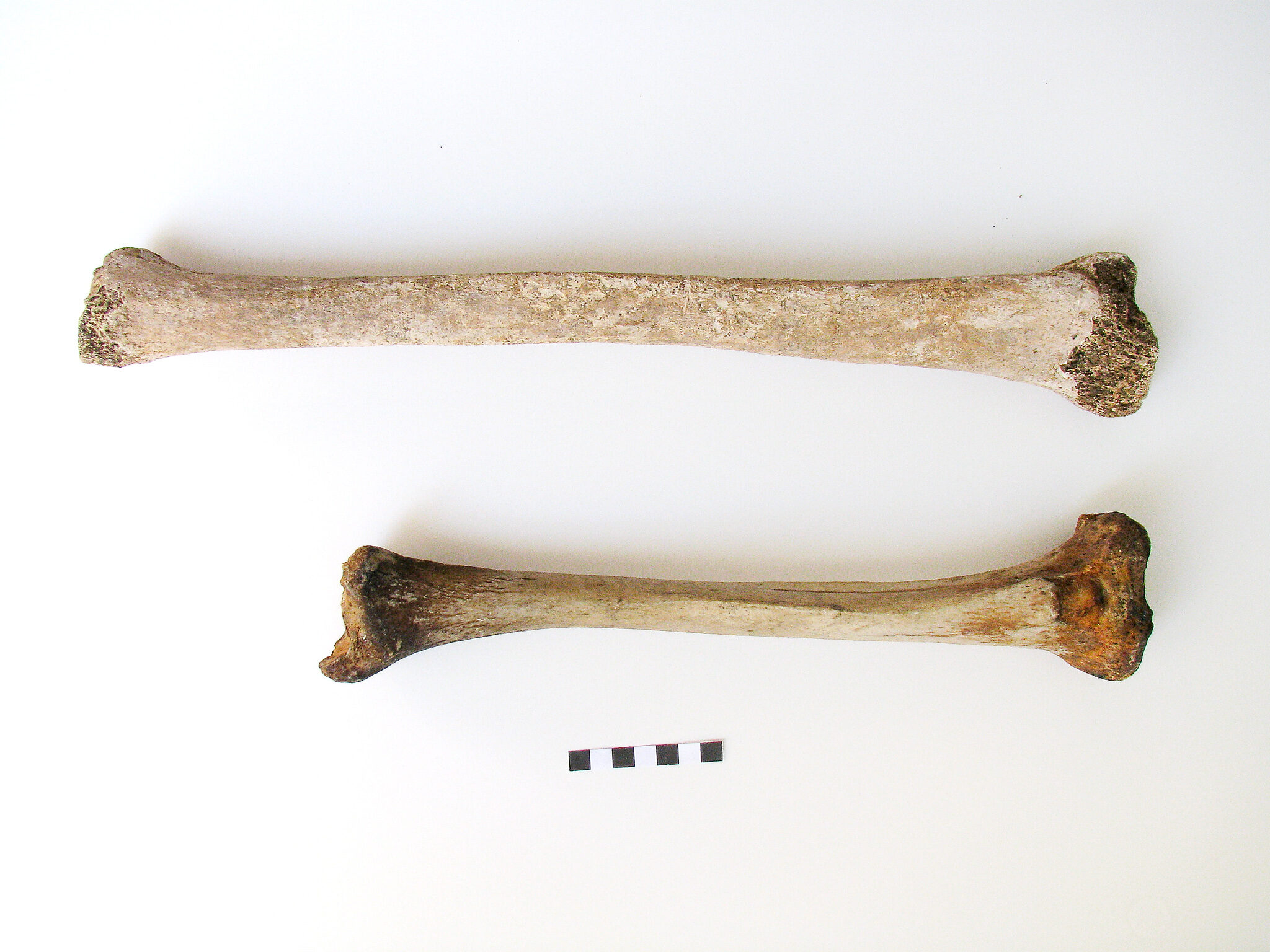
61059-5095516
The giant’s tibia, or shinbone, compared with that of a normal Roman male of the same period.”

Photograph by Simona Minozzi, Endocrine Society

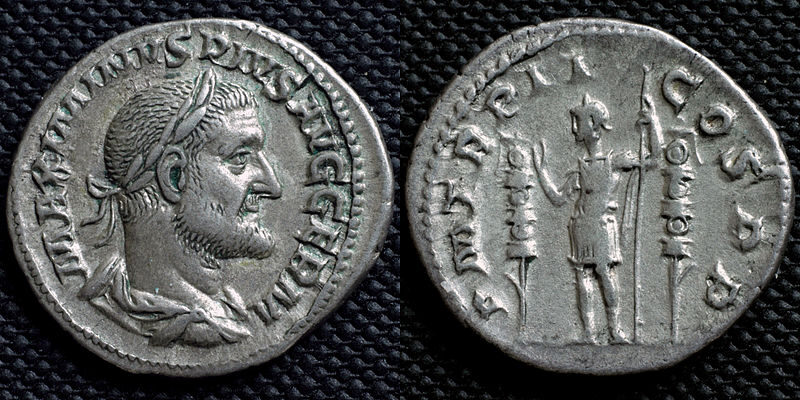
Dell’Amore points out that Maximinus Thrax aka Gaius Julius Verus Maximinus Augustus (173-238 AD) is “described in literature as a ‘human mountain’” which, of course, tells us nothing of his height.

Yet, he appears to have been taller than the average Roman of his time as per Historia Augusta, “Life of Maximinus,” 2:2 and Herodian’s Roman History, 7:1:2. Historia Augusta is considered historically unreliable so for what it is worth, at 6:8 it states, “he was of such size, so Cordus reports, that men said he was eight foot, six inches (c. 2.5 meters) in height.”
Note that there is no ancient author or work known as “Cordus” and so it seems to be one of many fictional pseudo-sources to which the text refers.

In any regard, this has him right in line with the tallest personages of whom we know: for example, no NBA pro basketball player quite makes it to 8 feet.

Herodian (7:1:12) was a contemporary of Maximinus notes, “He was in any case a man of such frightening appearance and colossal size that there is no obvious comparison to be drawn with any of the best-trained Greek athletes or warrior elite of the barbarians.”

800px-maximinus_thrax-4458141

Andre The Giant was seven feet, four inches tall.

Robert Pershing Wadlow died at the early age of 22 years (1918-1940 AD) is considered the tallest person on record: 8 feet 11.1 inches.

27-2635501

Reportedly Maximinus had oversized brow, nose and jaw which indicates that he had acromegaly which is an enlargement of body parts due to an excess of growth hormone.

In The City of God chap 23, Augustine of Hippo (354-430 AD) relates a Roman report of a Goth woman whose “gigantic size over-topped all others” but that “neither of her parents were quite up to the tallest ordinary stature.”

In an upcoming book I elucidate the issue of giants in the Bible regarding which is it important to keep a few things in mind: 1) Many Hebrew words are translated into English as “giant(s).” 2) The Bible generically refers to people who are “tall” and “very tall” yet… 3) The Bible only gives us a few specific heights and none of these go beyond 8 feet—with the possible exception of Goliath who is taller in Greek than he is in Hebrew.

4) Lastly, we are told the size of King Og’s bed but not of his body.

~~~~~~~~~~~~~~~~~~~~~~~~

A plea: I have to pay for server usage and have made all content on this website free and always will. I support my family on one income and do research, writing, videos, etc. as a hobby. If you can even spare $1.00 as a donation, please do so: it may not seem like much but if each person reading this would do so, even every now and then, it would add up and really, really help. Here is my donate/paypal page.

Due to robo-spaming, I had to close the comment sections. However, you can comment on my Facebook page and/or on my Google+ page. You can also use the “Share / Save” button below this post.