Bible.org site on Nephilim Giants

The admin of the site posted Who were the Nephilim? which notes:

NEPHILIM (Heb. nephi„li„m; Numbers 13:13)…clearly meaning the unnatural offspring that were on the earth in the years before the Flood, “and also afterward, when the sons of God came in to the daughters of men, and they bore children to them” (Genesis 6:4).

The mention of the great stature of the Nephilim, the sons of Anak, in the evil report that the ten spies brought of the land of Canaan (Numbers 13:33) together with the LXX rendering, gigantes, suggested the translation giants.

They were exceedingly wicked and violent so that “every intent” of the thoughts of men’s hearts “was only evil continually” (Genesis 6:5)…

The Nephilim are considered by many to be giant demigods, the unnatural offspring of the “daughters of men” (mortal women) in cohabitation with the “sons of God” (angels; cf. Genesis 6:1-4).

This utterly unnatural union, violating God’s created order of being, was such a shocking abnormality as to necessitate the worldwide judgment of the Flood.

Another view of the Nephilim is that they were particularly violent (the name is from a root, “to fall,” i.e., on other people), strong (“mighty”), and infamous (“men of renown”) people who predated the marriages of v. 2.

This viewpoint often explains the unions as intermarriage of the godly line of Seth (described in 4:25–5:32) with the ungodly line of Cain (4:1-24).

Note that Gen 6 is being manipulated since the admin commented, “were on the earth in the years before the Flood” and then mashed that into the middle of v. 4 to construct a biblically non-existent statement that they were, “on the earth…before the Flood ‘and also afterward’” and yet, at least the admin left in where the verse actually tells us to what days it’s referring and it’s not the flood rather, it’s, “in those days, “when the sons of God came in to the daughters of men, and they bore children to them” and so, “also afterwards” until the flood—in fact, the flood’s not even mentioned for the very first time until a full 13 vss. later.

Note that, “This…necessitate[d] the worldwide judgment of the Flood” so that makes post-flood Nephilim at any time and in any way, shape of from impossible since God didn’t fail, didn’t miss a loophole, the flood wasn’t much of a waste, etc., etc., etc.

Now, “giants” technically isn’t a translation but is a rendering. And, the admin seems to be using that vague, generic, subjective, and multi-usage modern English word to mean something about some subjectively, generic, vague, height above the parochial average (see how useless that word is?) which isn’t the usage of it in modern English Bibles wherein it merely renders (doesn’t even translate) “Nephilim” in 2 verses or “Repha/im” in 98% of all others and so never even hints at anything to do with any sort of height whatsoever.

Moreover, since, “The mention of the great stature of the Nephilim, the sons of Anak” is from, “the evil report that the ten” unreliable, “spies” whom God rebuked mere asserted, it’s utterly unreliable.

And, the evil report lacks any reference to the Anakim in the LXX version.

Thus, we’ve no reliable physical description of Nephilim and the only contextually relevant thing we’re told about Anakim (a clan of the Rephaim tribe) is that they were, “tall” (Deut 2) subjective to the average Israelite male who was 5.0-5.3 ft. in those days.

And, , “the LXX rendering, gigantes” has nothing to do with this since that merely means, “earth-born.”

The, “intermarriage of the godly line of Seth (described in 4:25–5:32) with the ungodly line of Cain (4:1-24)” is a late-comer of a view based on myth and prejudice since there’s no such thing as a, “godly line of Seth” (who weren’t godly since they were such terrible sinners that their sin served as the premise for the flood) not any such thing as an, “ungodly line of Cain.”

The website also contains an article titled Q. How are the Nephilim/giants mentioned in Scripture after the flood to be understood if one of the reasons of the flood was to destroy that unholy mixture of demons and the daughters of men recorded in Genesis 6? which consists of this question elucidated as:

I just ready your article about the Sons of God and daughters of men (https://bible.org/seriespage/7-sons-god-and-daughters-men-genesis-61-8). It was well written, thank you. Usually when someone supports that position, I have found the opinions that follow are pretty outlandish. I found your article fairly convincing.

My question is this (if you don’t mind): You referenced Numbers 13:33 and the sons of Anak. If at least part of the purpose of the flood is to destroy these hybrid giants, why would these giants still be around after the flood? Your quote is, “I therefore understand the Nephilim to be a race of super-humans who are the product of this angelic invasion of the earth”. Wouldn’t they have died off in the flood?

Robert L. Deffinbaugh (“graduated from Dallas Theological Seminary with his Th.M….pastor/teacher and elder at Community Bible Chapel in Richardson, Texas, and has contributed many of his Bible study series for use by the Foundation”) replied:

Right now I am reading a book by Michael S. Heiser, entitled, The Unseen Realm: Recovering the supernatural worldview of the Bible. It comes pretty highly recommended, but I’m reading cautiously. But he does make a point of showing how the Bible reflects the (largely) unseen spiritual realm (Psalm 82; Job 38:4-7; Ephesians 3:8-10). Thus, it is not surprising to read Genesis 6 in this light, and to see the “sons of God” as angelic beings (who did not keep their own domain — Jude 1:6).

Now, your question is, “How do we explain ‘giants’ (described by the same word Nephilim) later on, after the fall? My inclination is to understand the term Nephilim as meaning “giants” (human or supernatural). The Nephilim of Genesis 6 were angelic, and thus giants. Later on there were still “giants” in the land — those folks who were exceedingly large, like Goliath, his kin (1 Chronicles 20:5), and others like him (1 Chronicles 11:22-23). As I read the text, these were not supernatural beings, as found earlier in Genesis, which were destroyed by the flood, but simply a group of extra-large people. These appeared at various times in Israel’s history.

Dr. Heiser was credentialed and experienced but not infallible, his Nephilology wasn’t biblical, and he tended to create more problems than he solved—search online for these articles for examples:

Review of Amy Richter and Michael Heiser on four Enochian Watcher related women in Jesus’ genealogy

Rebuttal to Dr. Michael Heiser’s “All I Want for Christmas is Another Flawed Nephilim Rebuttal”

I also included him in my book, The Scholarly Academic Nephilim and Giants: What do Scholarly Academics Say About Nephilim Giants?

Heiser committed a very typical error in uncritically picking up one single non-LXX version of one verse, Num 13:33, running with it, applying it and, of course, it created all sorts of problems he sought to wiggle out of.

Note how useless it is to refer to, “the term Nephilim as meaning ‘giants’” since that merely begs the follow-up question: what’s your usage of that vague, generic, subjective, and multi-usage modern word?

That, “The Nephilim of Genesis 6 were angelic, and thus giants” is not only a merely asserted positive affirmation but is a non-sequitur: they were half-Angelic and what does that have to do with being giants (even if by “angelic” he actually thinks they were Angels)?

Note that he’s committing a typical English based error by uncritically chasing the English word giants around an ancient Hebrew Bible. He’s now using giants in reference to, “exceedingly large” which is not the English Bible’s usage.

Thus, “Later on there were still ‘giants’ in the land” is as meaningless as that, “Later on there were still ‘subjectively, generically, vaguely, taller by some unknown margin than the parochial average’ in the land” so, what of it?

As for Goliath well, okay, we could say he was exceedingly large and yet, exceedingly and large are just as vague, generic, subjective, and multi-usage as giants. Note that the Masoretic text has Goliath at just shy of 10 ft. Yet, the earlier LXX and the earlier Dead Sea Scrolls and the earlier Flavius Josephus all have him at just shy of 7 ft. (compared to the average Israelite male who was 5.0-5.3 ft. in those days) so that’s the preponderance of the earliest data.

At least he realizes that, “these were not supernatural beings, as found earlier in Genesis, which were destroyed by the flood.”

The site also contains an article titled 13. The Giant Of Discouragement (Num. 13:1-14:45) by Roger Pascoe (“President of the Institute for Biblical Preaching (IBP)…was the Director of The Stephen Olford Centre for Preaching and Leadership at Heritage Theological Seminary,” etc.).

That being part 13 of a series (ironic that it covers Num 13) we will pick up the most contextually relevant parts—to include what his usage if of the term, “Giant.”

Refreshingly, he specifies, “12 spies who were sent into the land of Canaan” and refers to, “The Reports” in the plural since there were two of them.

Indeed, “The two spies (Caleb and Joshua) brought back a good report…These 2 spies were characterized by courage and confidence in God.”

Yet, “ten spies brought back a bad report.” Oddly, at this point there’s a misstep in that Pascoe continued directly with, “They admitted that it was a good land but they saw danger and defeat. They said, ‘It’s a good land – it flows with milk and honey – but…’ (13:27-29)” yet, that’s from the report of the 2, not the 10.

He continued directly with, “‘But’ is usually a sign of unbelief. They saw giants, fortified cities, and all the ‘-ites’ (Amalekites etc.). Their conclusion? ‘We will be soundly defeated’ (13:31-33). These 10 spies were paralyzed by fear.”

Yet, it’s not the case that, “But” was followed by, “They saw giants, fortified cities, and all the ‘-ites’” (only a strictly English reader could refer to, “the ‘-ites’”) since the report of the two follows the but with, “the people who dwell in the land are strong, and the cities are fortified and very large. And besides, we saw” and they list who was seen: Anakites, Amalekites, Hittites, Jebusites, Amorites, and Canaanites (note no mention of Nephilim).

And, “Their,” Caleb and Joshua’s, “conclusion?” was, “Let us go up at once and occupy it, for we are well able to overcome it.”

Yet, “10 spies were paralyzed by fear.”

Then follows sermonizing and then, “The report of the ten spies was accepted but the report of the two was rejected” and it is so to this day amongst anyone—scholar or pop-Nephilologists—which all post-flood Nephilology including giants-Nephilology is based on siding with 10 unreliable guys whom God rebuked rather than with the God who rebuked them.

All post-flood-Nephilologists always begin by throwing God and His Word under the bus and implies that God failed, that He missed a loophole, that the flood was much of a waste, etc., etc., etc. Then, post-flood Nephilologists have to invent un-biblical fantasy stories about how Nephilim got past the flood, past God.

It’s noted that the 10 noted, “The land we passed through to explore is one that devours its inhabitants” which is a flat-out contradiction of the reliable report of the 2 which was of a good land which flows with milk and honey. Yet, incidentally, to Pascoe, this was about, “ferocious cannibals.”

In any case, he seems unaware of the LXX issue and so writes in terms of, “The size and strength of the men. ‘We also saw the descendants of Anak there… All the people we saw in it are men of great size. We even saw the Nephilim there—the descendants of Anak come from the Nephilim! To ourselves we seemed like grasshoppers, and we must have seemed the same to them’ (13:28b, 32b, 33). The implication? ‘We are puny, small, like grasshoppers in comparison.’”

We don’t even have reliable indication that something as generic as, “All the people we saw in it are men of great size” is accurate, see my article Were “all the people” in Canaan “of great height”?

It’s noted, “The ten spies died (14:36-37) because they complained against Moses and caused the people to sin” via their fear-mongering scare-tactic, “Don’t go in the woods!!!” style of tall-tale.

The rest of it is the likes of, “The giant of discouragement” that’s not contextually relevant to my purposes.

See my various books here.

~~~~~~~~~~~~~~~~~~~~~~~

A plea: I have to pay for server usage and have made all content on this website free and always will. I support my family on one income and do research, writing, videos, etc. as a hobby.

If you can even spare $1.00 as a donation, please do so: it may not seem like much but if each person reading this would do so, even every now and then, it would add up and really, really help out.

Here is my donate/paypal page.

You can comment here and/or on my Twitter/X page, on my Facebook page, or any of my other social network sites all which are available here.
Shredding The Veil site on Giants Rephaim, Zamzummim, Emim, Amorite, Anakim, Nephilim, Zuzim

The Shredding The Veil’s tagline is, “refuting the lies spread over God’s word.” Gina wrote an article titled Giants: Rephaim, Zamzummim, Emim, Amorite, Anakim, Nephilim, Zuzim.

She begins by noting, “It appears that the giants were called by many names” but the primary, key, issues are: What’s the usage of the vague, generic, subjective, multi-usage and modern English word “giants” in English Bibles? What’s Gina’s usage? Do those two usages agree?

She notes, “For the most part, the references are from Young’s Literal Translation as the generic translation of the King James loses some of the connotations regarding these giants.”

Referring to Gen. 14:5, she notes, “The Rephaim and the Emim were giants (tall people) that were occupying the lands after the flood.”

We now that the answer to the second question and so the third so I will offer the first.

The usage of the vague, generic, subjective, multi-usage and modern English word “giants” in English Bibles is that it merely renders (doesn’t even translate) “Nephilim” in 2 verses or “Repha/im” in 98% of all others and so never even hints at anything to do with any sort of height whatsoever.

Gina’s usage if, “tall” so the usages don’t agree. Also, tall is just as vague, generic, subjective, and multi-usage as giants.

Just in case, it’s, “The Rephaim and the Emim…were” only, “occupying the lands after the flood” since they didn’t even exist until centuries post-flood.

Having listed, “The Rephaim and the Emim,” she adds, “As the Zuzim are named with these two tribes, it is probably safe to say that these were also a tribe of giant people” so that tall has been replaced with giant but chasing the modern English word giants around an ancient Hebrew Bible leads to logical, bio-logical, and theo-logical problems.

And a huge problem came up in the very next sentence since she wrote, “that the giants were again in the land.  That means that Noah or his sons carried the DNA for these tall people, or they would not again be in the land after the flood.”

Let’s re-read that as she defined it, “that the tall people were again in the land.  That means that Noah or his sons carried the DNA for these tall people, or they would not again be in the land after the flood.”

See, it’s a non-sequitur since there’s literally zero correlation between being whatever subjectively tall compared to the parochial average and anything to do with Noah or the flood.

Now, the only contextually relevant this we’re told about Rephaim is that they were tall (Deut 2) which is subjective to the average Israelite male who was 5.0-5.3 ft. in those days. Also, FYI, Gina correlated, “Rephaim and the Emim…Zuzim” due to tallness (with the exception of the shortest person alive today, literally everyone is tall compared to someone else) and yet, note that Rephaim were a.k.a. Zamzummim or Zuzim and that Emmim and Anakim were like clans of that tribe.

Now, since tall is vague, generic, and subjective there’s no need to reference, “the DNA for these tall people” since there’s no indication any sort of special DNA was necessary for whatever height they were—above 5.0-5.3 ft.

Gina quotes, “Gen 15:18-21, ‘ 18 In that day hath Jehovah made with Abram a covenant, saying, `To thy seed I have given this land, from the river of Egypt unto the great river, the river Phrat,  19 with the Kenite, and the Kenizzite, and the Kadmonite,  20 and the Hittite, and the Perizzite, and the Rephaim,  21 and the Amorite, and the Canaanite, and the Girgashite, and the Jebusite.’”

Next Gina references, “Deu. chap. 1, Moses recalled the events that led the Israelite to spend forty years in the wilderness because the spies that had been sent into the land reported in fear of the giants”—stand by—quoting:

Deu 1:28, “ whither are we going up? our brethren have melted our heart, saying, A people greater and taller than we, cities great and fenced to heaven, and also sons of Anakim — we have seen there.”

Num. 13:22, “And they ascended by the south, and came unto Hebron; where Ahiman, Sheshai, and Talmai, the children of Anak, were. (Now Hebron was built seven years before Zoan in Egypt.)

The children of Anak were the Anakim, and they had lived in Hebron.

Num. 13:28-32,

28 only, surely the people which is dwelling in the land [is] strong; and the cities are fenced, very great; and also children of Anak we have seen there.

29 Amalek is dwelling in the land of the south, and the Hittite, and the Jebusite, and the Amorite is dwelling in the hill country, and the Canaanite is dwelling by the sea, and by the side of the Jordan.’

30 And Caleb stilleth the people concerning Moses, and saith, `Let us certainly go up — and we have possessed it; for we are thoroughly able for it.’

31 And the men who have gone up with him said, ‘We are not able to go up against the people, for it [is] stronger than we;’

32 and they bring out an evil account of the land which they have spied unto the sons of Israel, saying, ‘The land into which we passed over to spy it, is a land eating up its inhabitants; and all the people whom we saw in its midst [are] men of stature;

Well, “very tall” is just as vague, generic, subjective, and multi-usage as tall and giants. Interestingly, she noted, “Emim…Anakim” were, “tall people” based on Duet 2, but then took it up a notch, “Emim, or Rephaim, and Anakim were tribes of very tall people” and, “viewed as giants by the rest of mankind.” Yet, biblically contextually, “viewed as giants” means, “viewed as Rephaim” by any other name.

She notes, “The King James calls it the valley of the giants in Josh. 15:8; 18:16 where Young’s has Rephaim” which makes that point.

Besides, this was Moses relating the evil account, then quoting the reliable account, and then quoting half of the evil account. The evil account was by 10 unreliable guys whom God rebuked so there’s no reason to believe them and, in fact, we can’t even verify something as generic as that, “all the people whom we saw in its midst [are] men of stature,” with reference to, “Anakim…Amalek…Hittite…Jebusite…Amorite…and the Canaanite” see my article Were “all the people” in Canaan “of great height”?

Based on, “Deu 3:11, ‘for only Og king of Bashan had been left of the remnant of the Rephaim; lo, his bedstead [is] a bedstead of iron; is it not in Rabbath of the sons of Ammon? nine cubits its length, and four cubits its breadth, by the cubit of a man,’” Gina notes, “Og was one of the Rephaim…if Og’s bed was 9 cubits long x 4 cubits wide, then Og had to be able to fit within that length and width…somewhere under 13.5 feet tall in order to lie down on his bed.  If we use the long measure, then Og could have been as tall as 16 feet.”

Yet, that’s a non-sequitur since it’s a mere assumption that the bedstead is something on which he slept and note that she’s forced to refer to it since we’re never told his height.

The fact is that the bedstead was a ritual object so attempting to determine his height based on it is the result of various mere assumptions, see my boo, The King, Og of Bashan, is Dead: The Man, the Myth, the Legend—of a Nephilim Giant?

And, when she writes, “Og was the last of the Rephaim, the same giants…” that biblically contextually means, “Og was the last of the Rephaim, the same Rephaim…”

She then notes that, “2:9 describes the Amorite’s height as being ‘above the cedars’ and they were as strong ‘as the oaks.’”

Amos 2:9 says, “the Amorite…whose height was like the height of the cedars and who was as strong as the oaks; I destroyed his fruit above and his roots beneath.” He was clearly just saying they were big and strong and not implying conducting a one-to-one ratio based mathematical calculation. Plus, if they take it that incoherently literal then they have to conclude that Amorites had fruits and roots growing right out of their bodies.

Gina wrote:

Job 26:5, “The Rephaim are formed, Beneath the waters, also their inhabitants.”

The Vulgate translates this as “Behold the giants, and those who dwell with them, groan from under the waters.”

The Septuagint has it, “Are not the giants formed from under the waters, and their neighbors?”

The Chaldee has it, “Can the trembling giants be regenerated, when they and their hosts are under the water?”

And, the King James as, “Dead things are formed from under the waters, and the inhabitants thereof.”

The meaning is clearly of the state of the dead, and was referring to the wicked giants who were drowned in the great flood of Noah’s day.

It’s actually not that simple, thought it may be accurate. The issue is that the root rapha ranges in meaning from healing to dead so it could be referring to dead Nephilim or to dead Rephaim or just to some or another dead in general.

She actually notes:

Young’s translated the word “Nephilim”  in only one place, and that was in Numbers 13:33.  In that verse it is a clear reference to giants.  Moses sent the spies into the land of Canaan to bring back a report, and they gave an account of the Nephilim, sons of Anak.

Num 13: 33, “and there we saw the Nephilim, sons of Anak, of the Nephilim; and we are in our own eyes as grasshoppers; and so we were in their eyes.’”

The name “Nephilim” was of the same people called the “Anakim”, sons of Anak.  Young’s only has it this one time.  He did not use it in Gen 6:4; where the King James has “giants”, Young’s has “fallen ones.”  The best reasoning for this difference is that the word “nephilim” is from the root word “nephal,” meaning he fell.

Nephilim is the transliteration of Strong’s Heb 5303, “נְפִילִים” ; and Strong’s concordance has “Or nphil {nef-eel’}; from naphal; properly, a feller, i.e. A bully or tyrant — giant.”  Source: Biblehub

Now, Num 13:33 is the evil account was by 10 unreliable guys whom God rebuked so there’s no reason to believe them. And that, “In that verse it is a clear reference to giants” merely means that they made up a tall-tale and the dirty little secret is that since we’ve no reliable physical description of Nephilim then their height is a non-issue and that alone debunks 99% of un-biblical Nephilology—the modern branch of which is just un-biblical neo-theo sci-fi tall-tales—I’ve written some dozen research based Nephilology books.

Gina actually misrepresents Num 13 since she generically wrote, “Moses sent the spies into the land of Canaan to bring back a report, and they gave an account of the Nephilim, sons of Anak” but that’s not the case: he sent 12 but it was the 10 unreliable ones who merely asserted having seen Nephilim.

Note that, “Nephilim, sons of Anak, of the Nephilim” is somewhat circular since it has it that Nephilim refers to Anakim and that Anakim come from Nephilim but that’s literally impossible since God didn’t fail, didn’t miss a loophole, the flood wasn’t much of a waste, etc., etc., etc. and now, post-flood Nephilologists have to invent un-biblical tall-tales about how they got past the flood, past God.

Also, she’s exclusively relying on non-LXX versions since that version’s version of that verse lack any reference to Anakim—just as in Deut 1 Moses related this event but lacks any reference to Nephilim: he was too practical, he was concerned about the real dangers on the ground, not about some fantasy tall-tale.

Ergo, the only reason to think that, “The name ‘Nephilim’ was of the same people called the ‘Anakim…Numbers 13:33 was discussing a tribe of giant people called by two names, Nephilim and Anakim’” is one single non-LXX sentence by unreliable guys who presented an unreliable report and were rebuked by God.

By the point that Gina states, “The giants had become bullies and wicked people most probably because their height” her reader has to work to attempt to figure out to whom she’s referring since she uses the term giants to mean more than one thing.

She then goes back to Gen 6, quoting:

Romans 8:13-14, “for if according to the flesh ye do live, ye are about to die; and if, by the Spirit, the deeds of the body ye put to death, ye shall live;  14 for as many as are led by the Spirit of God, these are the sons of God;

We have a clear definition of sons of God in Romans chapter 8.  They are the ones who follow after and are led by God’s spirit.

Yet, that is traveling millennia into the future and into another context of another language which only results in that the ones who follow after and are led by God’s spirit were not the ones who follow after and are led by God’s spirit since they were such terrible sinners that their sin served as the premise for the flood.

Job 38:7, as one example, shows us that “sons of God” can refer to non-human beings (which the LXX has as “Angeloi”: plural of “Angelos”) since they, at the very least, witnessed the creation of the Earth.

Thus, she asserts, “There is no other acceptable conclusion” mind you, “than that the sons of God in Gen 6:2 were the faithful men of God who unwisely chose women of the unfaithful, and wicked men who lived according to the flesh” so they didn’t follow after and are led by God’s spirit nor were faithful men of God.

She then takes aim at what was the original, traditional, and majority view among the earliest Jewish and Christians commentators, starting in BC days, the “Angel view” as I proved in my book, On the Genesis 6 Affair’s Sons of God: Angels or Not?: A Survey of Early Jewish and Christian Commentaries Including Notes on Giants and the Nephilim.

She notes:

To argue otherwise, that the sons of God in Gen 6:2, and 6:4 were fallen angels is to say that sons of God are not led by the spirit of God.  This is a contradiction of the scriptures!  They cannot be fallen angels, led by lusts of the flesh, and at the same time be sons of God led by the spirit of God!

Genesis chap 6 was not discussing fallen angels, but fallen, wicked, earth-born men.  Wicked men, wicked mankind is the subject matter of Genesis 6.

That is the point, those, “sons of God in Gen 6:2, and 6:4 were…not led by the spirit of God” in the Gen 6 affair, as I term it and does not contradict the scriptures for already elucidated reasons to include that even those led by the spirit of God aren’t sinlessly perfect. Also, they’re only called sons of God until they sin and thereafter, no longer.

As for, “Genesis chap 6 was” about exclusively about, “fallen, wicked, earth-born men…” well, Angels and Nephilim and humans are all referred to as man/men so it was a group deal: all were involved in the corruption.

Gina notes:

The King James should not have used the word “giants” in Gen 6:4, and the NIV should not have used the transliterated word “Nephilim.”

The NIV and other English translations which use “Nephilim” in Gen. 6:4 are not translating it.  They should have translated it as fallen mankind so that we would have the full connotation of that word as sinful, earth-born wicked men and women!  The correct translation is Young’s as “the fallen ones.”

It would seem that the King James used the word “giants” since the LXX rendered Nephilim as gigantes—yet, note two key issues: 1. that means earth-born and 2. for some reason, the LXX also renders gibbor/im and also Repha/im as such so be very mindful of context when chasing either a modern English word or an ancient Greek word around an even more ancient Hebrew Bible.

in Gen 6:4, and the NIV should not have used the transliterated word “Nephilim.”

The NIV and other English translations which use “Nephilim” in Gen. 6:4 are not translating it.  They should have translated it as fallen mankind so that we would have the full connotation of that word as sinful, earth-born wicked men and women!  The correct translation is Young’s as “the fallen ones.”

She notes, “The so-called Book of Enoch is a fabrication.  It contradicts God’s word” indeed: it’s Bible contradicting folklore from centuries, if not millennia, after the Torah. It has Nephilim as being MILES tall which is great folklore but poor reality. , See my book, “In Consideration of the Book(s) of Enoch

Gina then claims, “The DNA for tall or giant people is still carried throughout the blood line of mankind.  Goliath, at 6 cubits and a span, was about 9-1/2 ft tall. (1 Sam. 17:4)” yet, for some reason, she didn’t note that The Masoretic text has Goliath at just shy of 10 ft. Yet, the earlier LXX and the earlier Dead Sea Scrolls and the earlier Flavius Josephus all have him at just shy of 7 ft. (compared to the average Israelite male who was 5.0-5.3 ft. in those days) so that’s the preponderance of the earliest data.

So, what, “DNA for tall or giant people” is being referenced?

Nephilim: no reliable physical description.

Rephaim, by any other name: taller than 5.0-5.3 ft.

Amorites: subjectively tall.

Og: no physical description.

Goliath: just shy of 7 ft.

Now, let us review some comments posted to the article:

A certain Benjamin Tyke Fenwick noted:

Noah and His sons Shem and Japeth did not carry Giant DNA. Noah’s second wife Nama did however and so did their son Ham. OG road on top of the ARK and Noah fed him and kept him alive. Good and Evil will exist util the time of the end. The parable of the “wheat and the tares” as explained by Yahusha (jesus) explains this.

That is purely un-biblical folklore from millennia after the Torah and it’s as incoherent as it is anachronistic.

He also uses the term Giant, it’s folklore that Nama was her name, Og wasn’t even born until centuries post-flood, God told us five times who survived the flood but Og’s not on any of those lists (Genesis 7:7, 23; Hebrews 11:7; 1 Peter 3:20; and 2 Peter 2:5), ergo, the parable has literally nothing to do with any of this.

Right on point, Gina replied, “that story of OG is a Jewish legend. It is not scripture. The Bible says that eight (8) souls were saved (1 Pet. 3:20). Og was not there” about which I will say: BOOM!!!

A certain WoundedEgo noted and asked, “Of course, Jude also apparently alludes to Testament of Moses. If we discount Jude perhaps the Scrolls of Enoch lose some of their intertextuality and thus their credibility. How married are you to the divine origin of Jude?” The premise seems to be some sort of modern day North American paranoid Evangelical concept of that no one can ever quote anything in scripture that’s not scripture which is preposterous on it’s face: the Bible quotes Satan and that’s enscripturated but his statements are certainly not trustworthy. Likewise, Jude quotes apocryphal and/or pseudepigraphic text and Paul quotes Geek poets so, what of it?

In short, Gina noted, “I believe Jude does no violation to God’s word, nor do I find any contradiction with the rest of God’s word.”

WoundedEgo also note:

“sons of God” is a standard Hebrew idiom referring to angels. It is special pleading to suggest that in this one case it refers to a Johannine or Pauline concept. It is unconvincing to imagine that Jude did not have this in mind in verse 6.

The idea that “the sons of God” going into “the daughters of men” is referring to godly men going into ungodly women is no improvement on the understanding of the text. And if it were so, to what incident was Jude referring?:

6And the angels who did not keep their positions of authority but abandoned their proper dwelling—these he has kept in darkness, bound with everlasting chains for judgment on the great Day. 7In a similar way, Sodom and Gomorrah and the surrounding towns gave themselves up to sexual immorality and perversion. They serve as an example of those who suffer the punishment of eternal fire.

Do you not believe that angels left their first estate (in the sky) and mated with human women?

Those are excellent points. The one about, “godly men” who weren’t godly after all, is actually a late-comer of a view based on myth and prejudice: it’s called the Sethite view.

And indeed, if not the Gen 6 affair, “to what incident was Jude referring?” and I will add 2 Peter 2 since Jude and 2 Peter 2 combined refer to a sin of Angels, place that sin to pre-flood days and correlate it to sexual sin which occurred after the Angels, “left their first estate,” after which they were incarcerated, and there’s only a one-time fall/sin of Angels in the Bible.

Gina replied:

…The implication of Matt. 22:30 is that the angels cannot procreate, as they are not given in marriage. But, we have to consider which angels? Remember that English is not the original language of the Bible. The word “angelos” had the meaning of a messenger or agent. Anyone that was working for / on behalf of God, carrying out a duty for God was His messenger or angel.

Jude 1:6 appears in the middle of two other examples of “human” wickedness. A jump from mankind to heavenly angels and back to mankind does not seem to me to fit with the examples. The text in vs. 5 speaks of the wickedness of the tribes of Israel whom He led out of Egypt, and the text in vs. 7 is speaking of the wickedness of mankind that were destroyed in Sodom and Gomorrah. Heavenly angelic beings does not keep with the previous example, nor the following example of those wicked held for judgment.

Vs. 5 ends with a semi-colon, which indicates that vs. 6 is a continuation of vs. 5. Therefore, the “angels” of vs. 6 were of the same people He led out of Egypt in vs. 5, but were of a higher office. Young’s Literal Translation uses “messengers” in Jude 1:6 and in 2 Pet. 2:4. Messengers that left their “principality” were those He established to be a royal priesthood (Ex. 19:6), and a holy nation; but then rebelled from pride and disbelief… they left the principality / office / estate which He gave them.

No, I do not believe this verse speaks of angels in heaven. Rather it an example of the rebellion of wicked men, sandwiched between two other examples of rebellion of wicked men. I believe these were men who held a particular office, maybe of the Levitical priesthood, or some other special assignment, but then chose to disobey.

Note that Gina generically asserted the all-encompassing statement, “the” all of them, “angels cannot procreate, as they are not given in marriage” which is also fallacious since that they can’t procreate because they’re not given in marriage is a non-sequitur: procreation can happen outside the bonds of marriage.

Conversely, Jesus’ Matt. 22:30 statement was very detailed, very nuanced, He employed qualifying terms, “the angels of God in heaven.” So, not all Angels at all times in all places but the loyal ones, “of God” and “in heaven” which is why those who did marry are considered sinners since they, “left their first estate,” as Jude put it, in order to do so.

Contextually, “which angels?” well, not “Anyone,” as in humans, since we do marry and are given in God ordained marriage.

Indeed, “Jude 1:6 appears in the middle of two other examples of ‘human’ wickedness” but the more important point is that he wasn’t writing chronologically and yet, 2 Peter 2 was and he puts the sin of Angels to pre-flood days.

Thus, Jude does write of, “Heavenly angelic beings” just not in a linear manner—interestingly, Gina had previously noted to WoundedEgo, “English translators, and English readers get carried away with ‘literal’ linear thinking. The Western mindset does not allow for the poetical and metaphorical Eastern mindset” and yet, when Jude plainly doesn’t write in a linear manner that’s used against the Angel view.

Oddly, she actually argues from a punctuation mark in one modern English version, “Vs. 5 ends with a semi-colon, which indicates that vs. 6 is a continuation of vs. 5” which, she says, means, “the ‘angels’ of vs. 6 were of the same people He led out of Egypt in vs. 5.” and yet, Jude goes on to specifically reference, “the archangel Michael” who’s no mere human.

She also wrote:

…again see Matt. 22:29-30. The implication of marriage is the only approved and sanctioned method for sexual relations. The fact that Christ said the angels in heaven are not given in marriage means that they cannot procreate. They cannot procreate whether they are in heaven, or on earth. That particular belief of fallen angels mating with earthly women is a travesty of human misunderstanding of the word of God, and is fantasy.

Indeed, “marriage is the only approved and sanctioned method for sexual relations” and that’s marriages between humans, at that, so that’s part of why the Angels are considered sinners.

And, again, there’s literally no indication, “that Christ said the angels in heaven are not given in marriage” and this time she has the reverse of the previous non-sequitur about how non-marriage equals cannot procreate. Yet, this time she invented the concept that, “They cannot procreate whether they are in heaven, or on earth.”

Well, considering that her view is a late-comer, it would seem that the original, traditional, and majority view among the earliest Jewish and Christians commentators, starting in BC days, fell into, “a travesty of human misunderstanding of the word of God, and…fantasy” because way down the line someone invented a myth based on prejudice.

See my various books here.

~~~~~~~~~~~~~~~~~~~~~~~

A plea: I have to pay for server usage and have made all content on this website free and always will. I support my family on one income and do research, writing, videos, etc. as a hobby.

If you can even spare $1.00 as a donation, please do so: it may not seem like much but if each person reading this would do so, even every now and then, it would add up and really, really help out.

Here is my donate/paypal page.

You can comment here and/or on my Twitter/X page, on my Facebook page, or any of my other social network sites all which are available here.

The Chalcedon Foundation’s Rev. R.J. Rushdoony on Nephilim Giants

The Chalcedon Foundation site posted The Spies (Numbers, 13:1-33) which is a reprint from Numbers (Vallecito, CA: Ross House Books, 2006, pp. 133-139) by Rev. R.J. Rushdoony (1916–2001), “a leading theologian, church/state expert, and author of numerous works on the application of Biblical law to society” who, “started the Chalcedon Foundation in 1965.

Rushdoony rightly identified a bifurcation of the, “Twelve men were chosen” to of the, “spies were sent in to spy out the land” of Cannan before the Israelites entered it in whole.

He notes, “Of the twelve spies, two were godly and faithful men, Caleb, of the tribe of Judah (v. 6), and Joshua (or, Oshea), of the tribe of Ephraim (v. 8). The other ten men proved to be cowardly and faithless.”

He points out, “The names of some of the peoples who lived in Canaan are given in vv. 28-29” who were (as per the ESV, “the descendants of Anak…Amalekites…Hittites…Jebusites…Amorites…And the Canaanites” (note no mention of Nephilim).

Rushdoony notes, “The Anakim are referred to in various texts as a very tall people” but very is something he added and tall is a vague, generic, subjective, and multi-usage term. It’s found in Deut 2 to described Anakim and subjectively merely means taller than the parochial average with the average Israelite male having been 5.0-5.3 ft. in those days.

In any case, he points out that, “In v. 33, the reference to ‘men of great stature,’ the Nephilim, means peoples of a giant race.” Yet, since giant is just as vague, generic, subjective, and multi-usage as very and tall we must ask: what’s the usage of the vague, generic, subjective, multi-usage and modern English word “giants” in English Bibles? What’s Rushdoony usage? Do those two usages agree?

In those English Bibles which employ it, it merely renders (doesn’t even translate), “Nephilim” in 2 verses or, “Repha/im” in 98% of all others and so never even hints at anything to do with any sort of height whatsoever.

His usage was something about un-specifically generically vague about subjectively unusual height.

Do those two usages agree?

No.

He further notes, “The reputation of Canaan in antiquity was one of exceptional fertility. It is described as a land flowing ‘with milk and honey’ (v. 27)” and note that this is contradicted by the second, the evil report which has it that, “The land, through which we have gone to spy it out, is a land that devours its inhabitants.”

And that was, “The report of the ten faithless spies” and yet, when he elucidates that it, “had four aspects” he mashed the two reports in that chapter together: the first, original, report which his accepted as is and is reliable and the second, evil report, which is utterly unreliable and consists of five mere assertions.

He has it that, “First, they reported on the amazing fertility of the land. They brought back with them…” but that was the first report.

Second, these faithless spies had another motive in bringing back so huge a bunch of grapes, and so superior a kind of pomegranate and fig. They were in effect saying, If you think these are big, wait until you see the size of the people!” but that was also the first report and there’ no need to read that into they’re show of bountiful grapes, pomegranates, and figs especially since that was to illustrate that, “It flows with milk and honey, and this is its fruit.”

He then notes, “Not all the people of Canaan were ‘men of great stature’ (v. 32)” which is form the second, evil, report and indeed such is the case—see my article Were “all the people” in Canaan “of great height”?

Yet still, he’s quite correct in that, “this is what they stressed in order to intimidate the people even as they themselves had been.”

Then, “They reported, ‘And there we saw the giants [Nephilim], the sons of Anak, which came of the giants [Nephilim]: and we were in our own sight as grasshoppers, and so we were in their sight’ (v. 33)” about which he notes, “This is vivid imagery, and very deceptive.”

Rushdoony’s next point is what I noted above about the contradiction, “Third, there is a strange statement in v. 32” which, “does not jibe with the description of Canaan as a land flowing with milk and honey…This was a false report” by, “these ten cowardly spies.”

Next is, “Fourth, in v. 28, we read that the spies reported that the walled cities were impregnable” well, the first report just reports that and Moses’ statement of it seems to imply that such was a styled out of doing what God commanded them but via the discouragement of the 10.

See my various books here.

~~~~~~~~~~~~~~~~~~~~~~~

A plea: I have to pay for server usage and have made all content on this website free and always will. I support my family on one income and do research, writing, videos, etc. as a hobby.

If you can even spare $1.00 as a donation, please do so: it may not seem like much but if each person reading this would do so, even every now and then, it would add up and really, really help out.

Here is my donate/paypal page.

You can comment here and/or on my Twitter/X page, on my Facebook page, or any of my other social network sites all which are available here.

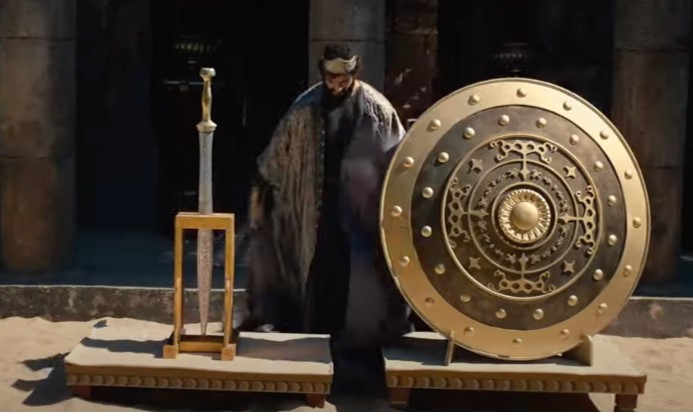
House Of David director Jon Erwin on Goliath and Nephilim Giants

Toby Adeyemi’s Rolling Out site’s interview with Jon Erwin, “the director of House Of David, which is now officially the second highest viewed series on Amazon Prime Video” is titled Jon Erwin joins the Director’s Chair to talk House Of David.

The key point I will focus on is when Toby asked:

I want to get your thought on a scene that kind of went above about a lot of people’s heads. In my opinion, when the Philistine King went to find Goliath, he went to the Land of the Giants. So what is your view on the belief of giants, or Nephilim walking the earth?

I don’t watch that show so, apparently, a Philistine King sought out Goliath for the infamous task.

The first answer to that question should have been, “You jumped from the modern generically subjective English one ‘giants’ to the specific ancient Hebrew word ‘Nephilim’ so what’s the usage of the vague, generic, subjective, multi-usage and modern English word ‘giants’ in English Bibles? What’s Toby Adeyemi’s and Jon Erwin’s usage? Do those two usages agree?”

That’s especially important to ask since biblically contextually, “giants, or Nephilim” means, “Nephilim, or Nephilim.”

Jon Erwin replied:

Well, what I love is that there’s this term called Emotional archeology that I like. And so a lot of times, if you read the Bible through that lens of what would the characters have been feeling, you get all these clues.

And one of the things that you start to confront is, why in the world, would this character, Goliath, strike so much fear into the army of Israel?

Well, when you do that, you go all the way back to Moses, and when Moses spies, into the land, those spies came out and said, There’s walled cities. There’s really tall people. And the sons of Anak there, the Nephilim were there.

And so no matter what you believe, what Israelites at the time would have believed sitting around campfires was that Goliath was basically a son of the Nephilim and a demigod.

And what we play is that that’s what Goliath believed about himself as well. So, you know, we play with the Ministry of it. We play with the the myth of it.

But I do think it’s absolutely consistent with the Bible that the whole reason that Israel walked around the wilderness for 40 years is because they were afraid of people just like Goliath, and that is the fear he would have struck into the army of Israel.

house-of-david-director-jon-erwin-on-goliath-and-nephilim-giants

Well, I’m more interested in what the text actually does and does not say rather than, “what would the characters have been feeling” in terms of, “clues” regarding biology and theology.

The text tells us, “why in the world, would this character, Goliath, strike so much fear into the army of Israel”: he was a, “champion” a trained, experienced and successful warrior who was the go-to guy and he was subjectively tall.

The Masoretic text has Goliath at just shy of 10 ft. Yet, the earlier LXX and the earlier Dead Sea Scrolls and the earlier Flavius Josephus all have him at just shy of 7 ft. (compared to the average Israelite male who was 5.0-5.3 ft. in those days) so that’s the preponderance of the earliest data.

What Jon Erwin did was to mash together two reports from Num 13 and in doing so, he misrepresented the narrative and both reports.

It wasn’t, “those spies came out and said, There’s walled cities. There’s really tall people. And the sons of Anak there, the Nephilim were there.”

The, “There’s walled cities” part is a paraphrase from the first, original, accepted as is report apparently by Caleb and/or Joshua who said, “the cities are fortified and very large”—specific reference to walled cities is actually from Deut 1.

The, “There’s really tall people. And the sons of Anak there, the Nephilim were there” is not only from the second, “evil report” by 10 guys whom God rebuked, but it’s from non-LXX versions since that version lacks reference to Anakim in that version’s version of that verse.

Thus, we’ve zero reliable correlation between Anakim and Nephilim.

And that merely supposed correlation based on one single sentence from non-LXX versions of an, “evil report” by unreliable guys whom God rebuked creates a lot of problems such as:

Post-flood-Nephilologists always begin by throwing God and His Word under the bus.

They imply that God failed, that He missed a loophole, that the flood was much of a waste, etc., etc., etc.

And, just how did Jon Erwin get Nephilim past the flood, past God?

Moreover, “tall” is just as vague, generic, subjective, multi-usage as, “giants” and there’s not even any indication that all of the inhabitants of Cannan were even, taller than 50-5.3ft.—see my article Were “all the people” in Canaan “of great height”?

So, perhaps due to mere scare-tactic fear-mongering, “Don’t go in the woods!!!” type of fantasy tall-tale, such as the evil report was, “Israelites at the time” may, “have believed sitting around campfires was that Goliath was basically a son of the Nephilim and a demigod” but that’s illogical, ill-bio-logical, and ill-theo-logical—that’s actually why God didn’t let that whole generation, sans Caleb and Joshua, into the land but waited until they had all died out, the whole reason that Israel walked around the wilderness for 40 years.”

As for, “that’s what Goliath believed about himself” that’s unlikely since why would be believe some fantasy story?

Thus, it’s 100% inconsistent with the Bible—though, quite consistent with pop-Nephilology which is un-biblical tall-tales sold to Christians.

Now, I will answer the key questions:

What’s the usage of the vague, generic, subjective, multi-usage and modern English word “giants” in English Bibles?

It merely renders (doesn’t even translate) “Nephilim” in 2 verses or “Repha/im” in 98% of all others and so never even hints at anything to do with any sort of height whatsoever.

Such is why, “biblically contextually, ‘giants, or Nephilim’ means, ‘Nephilim, or Nephilim.’”

And biblically contextually, “the Land of the Giants” means, “the Land of the Rephaim”: Goliath was of the Anakim clan of the Rephaim tribe.

What’s Toby Adeyemi’s and Jon Erwin’s usage?

They seem to range from using it to wrongly use it to refer to Nephilim and something about un-specifically generically vague about subjectively unusual height.

Do those two usages agree?

No.

Incidentally, the dirty little secret is that since we’ve no reliable physical description of Nephilim then their height is a non-issue—and that alone debunks 99% of un-biblical Nephilology—since the only physical description of them that we have is from, you guessed it, on one single sentence from non-LXX versions of an, “evil report” by unreliable guys whom God rebuked.

See my various books here.

~~~~~~~~~~~~~~~~~~~~~~~

A plea: I have to pay for server usage and have made all content on this website free and always will. I support my family on one income and do research, writing, videos, etc. as a hobby.

If you can even spare $1.00 as a donation, please do so: it may not seem like much but if each person reading this would do so, even every now and then, it would add up and really, really help out.

Here is my donate/paypal page.

You can comment here and/or on my Twitter/X page, on my Facebook page, or any of my other social network sites all which are available here.

Nephilim giants in the Complete Companion Bible

The Complete Companion Bible is described as:

The KJV Online Study Bible in PDF [The Bullinger Bible in PDF]
The Companion Bible by E. W. Bullinger which is an trusted in-depth personal Bible study resource for those who seek to know and understand God’s Word in the trusted and familiar language of the King James Version (KJV).

Extensive marginal notes with appropriate Hebrew and Greek analysis provide alternate translations of critical passages and call attention to other relevant texts (brackets in original).

To show how unhelpful some study Bibles, companion Bibles, study resources, marginal notes can be.

It has Gen 6:4 as:

There were Nephilim in the earth in the days of Noah; after their destruction by the Flood, as well as before it, when the angels came unto the daughters of men, and they bare children to them, the same became might men which were of old, men of renown (emphasis in original).

The marginal note notes:

There was another irruption, the result being like those “of old.”

It has Num 13:33 as:

And there we saw the giants, the sons of Anak, which come of the Nephilim: and we were in our own sight as locusts, and so we were in their sight (emphasis in original).

The marginal note notes:

giants. Heb. nephilim. Those mentioned if Gen, 6. 4 were all destroyed in the Flood ; these came from a second irruption of fallen angels “after that” : i. e. after “those days” = the days of Noah.

Some will take issue that it renders bene ha Elohim/sons of God as Angels so, I will succinctly note that Job 38:7, as one example, shows us that “sons of God” can refer to non-human beings (which the LXX has as “Angeloi”: plural of “Angelos”) since they, at the very least, witnessed the creation of the Earth.

Jude and 2 Peter 2 combined refer to a sin of Angels, place that sin to pre-flood days and correlate it to sexual sin which occurred after the Angels, “left their first estate,” after which they were incarcerated, and there’s only a one-time fall/sin of Angels in the Bible.

The original, traditional, and majority view among the earliest Jewish and Christians commentators, starting in BC days, was the “Angel view” as I proved in my book, On the Genesis 6 Affair’s Sons of God: Angels or Not?: A Survey of Early Jewish and Christian Commentaries Including Notes on Giants and the Nephilim.

No, this was said to be the, “KJV Online Study Bible” but the KJV itself has that text as:

There were giants in the earth in those days; and also after that, when the sons of God came in unto the daughters of men, and they bare children to them, the same became mighty men which were of old, men of renown.

Thus, it’s oddly interesting that the KJV Online Study Bible/Bullinger Bible (referring to Heinrich Bullinger 1504-1575) artificially inserts, “Nephilimafter their destruction by the Flood” when, as we shall see, there’s no indication of any such thing.

Also, the flood’s not even mentioned for the very fist time until a full 13 vss later. Thus, this is a case of ignoring a verse’s context, reading ahead 13 vss and, in fact, all the way to Num, and then looping back to make the artificial insertion—which ends up damaging theology proper, as all post-flood Nephilology does.

Now, what indication is there of, “another irruption” of fallen Angels post-flood? Zero.

But, but, but Num 13:33 says or, Moses wrote or, the Bible says or, God revealed that statement—is how post-flood Nephilologists would authoritatively, and yet generically, put it.

Key question are: who said it, why was it said, was it accurate, what was the reaction to it, etc.?

Note also that the rendering is odd as well since it has it that who was seen upon reconnoitering the land of Cannan were, “the giants [Nephilim], the sons of Anak, which come of the Nephilim” so it’s circular: they saw Nephilim but Nephilim refer to Anakim and/but Anakim come from Nephilim so, really, Anakim are Nephilim.

Most versions have it that the statement is that they saw Nephilim, that incidentally Anakim are related to them, and that Nephilim are very, very, very tall.

Most versions also have it that Nephilim made the spies seem like grasshoppers: that’s how the KJV proper has it.

Yet, the locusts rendering comes form the LXX version. Yet, that verse lacks any reference to Anakim in that version’s version of that verse.

Thus, this is some sort of cut, rearrange, and paste job.

In any case, we may not have reference to, “a second irruption of fallen angels” but we do have post-flood Nephilim so that settles that.

Not so: recall the key questions. Well, this is just one version of one unreliable sentence from one unreliable “evil report” by 10 unreliable guys whom God rebuked so no one should believe them.

Caleb and Joshua didn’t believe them: and they were the other 2 spies.

Num 13 contains two reports: the first one is accepted as is and doesn’t note Nephilim but the second, evil report, was a fear-mongering scare-tactic “Don’t go in the woods!!!” style of tall-tale and took it up a notch by embellishing the original report and adding Nephilim into the mix.

So, indeed, “nephilim…were all destroyed in the Flood” we’re told who survived the flood five times (Genesis 7:7, 23; Hebrews 11:7; 1 Peter 3:20; and 2 Peter 2:5) but Nephilim aren’t on any of those lists.

Thus, some post-flood Nephilologists just invent other un-biblical fantasy stories about how they got past the flood: this resources just merely asserted, “a second irruption of fallen angels” as if God failed, He missed that loophole, and so the flood was much of a waste.

But what about, “‘after that’ : i. e. after ‘those days’ = the days of Noah” ergo, “in the days of Noah; after their destruction by the Flood.”

Gen 6:4 states, “Nephilim were on the earth in those days, and also afterward, when the sons of God came in to the daughters of man and they bore children to them. These were the mighty men who were of old, the men of renown.”

The question becomes: when were those days?

Well, Gen 6:1 told us, “When man began to multiply on the face of the land and daughters were born to them, the sons of God saw that the daughters of man were attractive. And they took as their wives any they chose.”

The next question becomes: when was afterward?

Since it was after those days then it was simply after, “When man began to multiply on the face of the land and daughters were born to them…”

Thus, the began doing it then and they continued to do it but that’s all pre-flood.

Such is how and why there’s literally zero reliable indication of post-flood Nephilim and only one unreliable sentence’s worth of indication of it from an unreliable evil report by unreliable guys whom God rebuked.

See my various books here.

~~~~~~~~~~~~~~~~~~~~~~~

A plea: I have to pay for server usage and have made all content on this website free and always will. I support my family on one income and do research, writing, videos, etc. as a hobby.

If you can even spare $1.00 as a donation, please do so: it may not seem like much but if each person reading this would do so, even every now and then, it would add up and really, really help out.

Here is my donate/paypal page.

You can comment here and/or on my Twitter/X page, on my Facebook page, or any of my other social network sites all which are available here.

Giants in the Bible: A Comprehensive Study of the Nephilim and Their Descendants

Giants in the Bible: A Comprehensive Study of the Nephilim and Their Descendants is the title of an article on the Unforsaken website.

Since it begins with

Giants are a fascinating and often mysterious part of biblical history, woven into the fabric of ancient texts and folklore around the world. In the Bible, the term Nephilim refers to the offspring of a union between divine beings and human women, described in Genesis 6. These giants and their descendants played significant roles in various biblical narratives and seem to be linked with specific people groups known for their formidable stature and strength.

I will note upfront that the author jumped from the modern generically subjective English word Giants to the specific ancient Hebrew word Nephilim so, the key questions are: what’s the usage of the vague, generic, subjective, multi-usage and modern English word “giants” in English Bibles? What’s the author’s usage? Do those two usages agree?

At this point, we’re given indication that the author’s usage has something to do with Nephilim but how so? Apparently, something unspecific to do with, “formidable stature”—which his just as vague, generic, subjective, multi-usage as giants.

It’s pondered, “how their existence might have been one of the main catalysts for the Great Flood.”

We’re told:

The earliest reference to giants in the Bible appears in Genesis 6:1-4:

“Now it came to pass, when men began to multiply on the face of the earth, and daughters were born to them, that the sons of God saw the daughters of men, that they were beautiful; and they took wives for themselves of all whom they chose. And the Lord said, ‘My Spirit shall not strive with man forever, for he is indeed flesh; yet his days shall be one hundred and twenty years.’ There were giants on the earth in those days, and also afterward, when the sons of God came in to the daughters of men and they bore children to them. Those were the mighty men who were of old, men of renown.” (Genesis 6:1-4, NKJV)

I will cut to the chase of one issue by noting that the original, traditional, and majority view among the earliest Jewish and Christians commentators, starting in BC days, was the “Angel view” as I proved in my book, On the Genesis 6 Affair’s Sons of God: Angels or Not?: A Survey of Early Jewish and Christian Commentaries Including Notes on Giants and the Nephilim.

A subsection is titled, “Nephilim as Giants” which notes, “Nephilim and their portrayal as giants. In Numbers 13:33, the Israelite spies report: ‘There we saw the giants (Nephilim)—the descendants of Anak came from the giants; and we were like grasshoppers in our own sight, and so we were in their sight’’ (Numbers 13:33, NKJV).”

If we’re (for whatever reason) thinking of Nephilim in terms of giants and giants in terms of Nephilim then we saw the usage of that modern English word in Gen 6 of the NKJV but without a description and then in Num 13:33 with a description.

Yet, what the author did is to generalize the narrative of Num 13 not only by merely quoting one single verse and not interacting with the narrative but by misrepresenting it.

That was not stated by, “the Israelite spies report” in general. Rather, there were 12 of them and 2 reports.

The first, original, report was accepted as is (and didn’t mention Nephilim amongst the many people groups that were seen) but the, without informing the readers, author is exclusively relying on:

1. one single sentence.

2. from a non-LXX version: since the LXX doesn’t mention Anakim in that verse.

3. of an unreliable, “evil report”—which is a fact the author didn’t quote.

4. by 10 unreliable guys.

5. whom God rebuked.

6. who just made up a fear-mongering scare-tactic tall-tale.

See my post Chapter sample: On the Post Flood Nephilim Proposal.

Thus, Gen 6 didn’t provide up a physical description and it’s the only reliable record so, the dirty little secret is that since we’ve no reliable physical description of Nephilim then their height is a non-issue and that alone debunks 99% of un-biblical Nephilology—the modern branch of which is just un-biblical neo-theo sci-fi tall-tales.

Thus, when the author concludes, “This verse clearly equates the Nephilim with beings of immense size…not merely tall individuals, but truly colossal figures, reinforcing the interpretation of Nephilim as giants” we know that’s based on merely uncritically picking up one single version of one single unreliable sentence from one single unreliable report by 10 unreliable guys and is therefore, instantly discredited.

The author also has to tell us how it is that God failed, missed a loophole, the flood was much of a waste and just how Nephilim got past the flood, past God.

Another subsection is, “The Famous Giants in the Bible” the first of which is Goliath but that shows the problems with chasing a modern English word around a Hebrew Bible since Goliath was a Repha, not a Nephil: we’re told that about him virtually every single time he’s mentioned.

The author notes, “Goliath is introduced in 1 Samuel 17. He was a champion” which is the impressive point of the record, “described as being ‘six cubits and a span’ tall, which translates to approximately nine feet and nine inches.”

Well, that’s myopic since it’s, “described as” such in the version that the author is reading since what wasn’t told to the readers is that the Masoretic text has Goliath at just shy of 10 ft. Yet, the earlier LXX and the earlier Dead Sea Scrolls and the earlier Flavius Josephus all have him at just shy of 7 ft. (compared to the average Israelite male who was 5.0-5.3 ft. in those days) so that’s the preponderance of the earliest data.

Yet, the author notes:

Goliath’s armor is…a bronze helmet and a coat of mail that weighed about 5,000 shekels of bronze, which is approximately 125 pounds (57 kilograms). His legs were protected by bronze greaves, and he carried a bronze javelin slung across his back. The shaft of his spear was as thick as a weaver’s beam, and the iron spearhead itself weighed 600 shekels, or about 15 pounds (7 kilograms).

Yet, what wasn’t noted is that he had a guy assisting with the equipment. Regular guy Benaiah took a spear like a weaver’s beam, just like Goliath’s, from a 7.5 ft. Egyptian and successfully wielded it against him in hand-to-hand combat (2 Sam 23). Also, you can search for strongman or weightlifting competition vids and see guys who are around 6 ft. lifting 1,000 lbs.

The next non-Nephilim listed as, “The Famous Giants in the Bible” is a guy for whom we’ve no physical description: King Og of Bashan so why list him when he’s not a Nephil, he was another Repha (again, which is something we’re constantly told about him) and we don’t know his height? Well, Deuteronomy 3:11 is quoted thusly, “For only Og king of Bashan remained of the remnant of the giants” which the author doesn’t seem to know means, “For only Og king of Bashan remained of the remnant of the Rephaim” since, in this case, that’s the English word behind this usage of, “giants.”

Also, “‘his bedstead was an iron bedstead’…approximately thirteen feet long and six feet wide, indicating his massive size.”

Yet, the author didn’t tell the readers that it’s a non-sequitur based on many mere assumptions to jump to that conclusion. Nor was it mentioned that the bedstead wasn’t something upon which Og slept but was a ritual object—see my book The King, Og of Bashan, is Dead: The Man, the Myth, the Legend—of a Nephilim Giant?

Another subsection is, “Tribes and People Groups of Giants” and I might as well answer the key questions at this point:

What’s the usage of the vague, generic, subjective, multi-usage and modern English word “giants” in English Bibles?

It merely renders (doesn’t even translate) Nephilim in 2 verses or Repha/im in 98% of all others and so never even hints at anything to do with any sort of height whatsoever.

What’s the author’s usage?

Something about un-specifically generically vague about subjectively unusual height.

Do those two usages agree?

No.

The subsection notes, “Several tribes and people groups in the Bible are associated with giants” such as:

The Anakim: The Anakim were a race of giants known for their intimidating stature. Numbers 13:33 records the report of the Israelite spies: “There we saw the giants (the descendants of Anak came from the giants); and we were like grasshoppers in our own sight, and so we were in their sight.” The Anakim were significant adversaries in the conquest of Canaan.

Note the exclusive reliance upon that one sentence, again, and the fact that note even Num 13:33 directly tells us anything about Anakim height since it was, “giants (Nephilim)—the descendants of Anak came from the giants; and we were like grasshoppers” so it’s about the fantasy non-existent Nephilim’s imaginary height: and noted that before the quote was, “giants (Nephilim)” but now only, “giants.”

But as for, “Anakim were a race of giants known for their intimidating stature” well, the only contextually relevant thing we’re told about them is that they were, “tall” (Deut 2) subjective to the average Israelite male who was 5.0-5.3 ft. in those days.

And, again, it wasn’t, “the” singular, “report of the” in general, “Israelite spies.”

Next up are the Rephaim:

Rephaim were considered giants. Deuteronomy 2:10-11 states: “The Emim had dwelt there in times past, a people as great and numerous and tall as the Anakim. They were also regarded as giants, like the Anakim, but the Moabites call them Emim.” The Rephaim appear to have been spread across different regions and were known by various names.

The author doesn’t realize that biblically contextually, “Rephaim were considered giants” means, “Rephaim were considered Rephaim” which is redundantly circular but the author is mistakenly thinking in terms of, “Rephaim were considered being vaguely, generically, subjectively taller than 5.0-5.3 ft.”

Note the citation of Deut 2 which I just cited regarding Anakim—stand by.

Next up are Zamzummim:

Deuteronomy 2:20-21 says: “That was also regarded as a land of giants; giants formerly dwelt there. But the Ammonites call them Zamzummim, a people as great, numerous, and tall as the Anakim.”

Indeed, “Rephaim appear to have been spread across different regions and were known by various names” since Zamzummim was just an aka for Rephaim and Anakim and Emmim were like clans of that tribe.

Moreover, “The Philistine Giants: Beyond Goliath, 2 Samuel 21:15-22 mentions battles between David’s warriors and other giants from Gath, showing that the Philistines harbored more than one giant in their midst.”

Biblically contextually, this reads as, “The Philistine Rephaim: Beyond Goliath, 2 Samuel 21:15-22 mentions battles between David’s warriors and other Rephaim from Gath, showing that the Philistines harbored more than one Rephaim in their midst.”

So, let’s review all of these giants:

Nephilim: no reliable physical description.

Rephaim/Zamzummim/Anakim/Emmim to include Goliath and Og: taller than 5.0-5.3 ft.

So, where are all of the giants of, “formidable stature…massive size…intimidating stature”?

Since the article is based on a fallacious usage of the term giants one can chase it beyond the Bibel and asset, “The Global Presence of Giants in Ancient Cultures” such as any and every story about whatever, “immense size” means.

Another subsection is titled, “Nimrod: A Mighty Man or a Giant?” and notes:

Nimrod, described in Genesis 10:8-9 as “a mighty hunter before the Lord,” has intrigued scholars for generations. Some have speculated that the term “mighty man” aligns with the language used for the Nephilim and their descendants, suggesting that Nimrod could have been part of this legacy…However, while there is no direct biblical evidence stating that Nimrod was a giant, the association with the term “mighty man” warrants consideration.

That was rather odd since it warrants consideration but wasn’t considered but left as an unexplored open question based on unnamed, unquoted and uncited, “Some have speculated.”

Bottom line: the mere term mighty man does not result in that God failed, missed a loophole, the flood was much of a waste, etc., etc., etc. and doesn’t tell us how He failed in terms of the loophole He missed so the flood was much of a waste.

That term is gibbor which is applied to Angels and Nephilim, sure, but also to Giddeon, some of David’s soldiers, Boaz and even God (facts that pop-Nephilologists will never bother telling you) so it’s a literal non-issue.

We now come to a point on which I’ve touched a few times which is the issue of what a subsection has as, “Giants and the Reason for the Flood” which, this time around, biblically contextually is really, “Nephilim and the Reason for the Flood.”

It’s noted:

The introduction of the Nephilim in Genesis 6 is immediately followed by God’s decision to bring the Great Flood…

The presence of the Nephilim, described as “mighty men who were of old, men of renown” (Genesis 6:4), is often linked to this corruption… These unions likely resulted in the corruption of the human gene pool…

Noah found favor in God’s eyes and why he and his family were chosen to survive the Flood…

…the presence of the Nephilim—played a significant role in necessitating the divine reset of the Flood. It was both an act of judgment and an act of preservation, ensuring that humanity could continue through Noah’s righteous and uncorrupted line.

Oddly, that section ends then and there without any elucidation of how it is that, if that is the case, there would be post-flood Nephilim which, by definition, would defeat God’s purposes, defeat God’s judgment, defeat the flood as being meant to preserve untainted generics, etc., etc., etc.

The next subsection is, “Giants in the Conquest of Canaan” and notes, “The conquest of Canaan involved battles with various tribes of giants” so, again, we have to do what the author ought to have done for the readers: biblically contextually, “various tribes of giants” means, “various tribes of Rephaim,” et al., actually sans Nephilim.

We’re told:

Joshua 11:21-22 notes: “And at that time Joshua came and cut off the Anakim…”…remnants of these giants continued to exist in regions like Gath, where Goliath later emerged.

Again, Rephaim,” et al., actually sans Nephilim and pertaining to personages who were, on average, taller than 5.0-5.3 ft.

That section contained nothing else so it actually ignored, “the descendants of Anak…Amalekites…Hittites…Jebusites…Amorites…And the Canaanites” who are mentioned in the reliable report in Num 13.

So, what has happened is that the reliable report in Num 13 has been completely ignored and the evil report has been fixated upon, actually believed, and has been (mis) applied—and turned into a worldview and hermeneutic.

The next subsection is, “Characteristics and Traits of Giants” which notes:

The biblical accounts of giants describe them as exceptionally large…Their physical descriptions imply a scale that dwarfed ordinary humans, as in the case of Goliath and Og…

But the one and only indication of any such thing is, you know it, that one unreliable sentence from an unreliable report by unreliable guys whom God rebuked—I mean, were we have reference again to Og as, “exceptionally large” since he’s of such, “physical descriptions” even though we’ve no physical description of him and with the greater context only telling us that he may have been taller than 5.0-5.3 ft. on average.

Jumping to subsection, “The Continuing Legacy of Giants” well, since we’re dealing with a vague, generic, subjective, multi-usage watered down concept then one can go from chasing a modern English word around a Hebrew Bible to chasing it anywhere it may be found such as, “folklore and archaeological curiosities…giant skeletons and ancient texts”: see my books, Nephilim and Giants: Believe It or Not!: Ancient and Neo-Theo-Sci-Fi Tall Tales and, The Apocryphal Nephilim and Giants: Encountering Nephilim and Giants in Extra-Biblical Texts.

The, “Final Thoughts” include, “The giants of the Bible, from the Nephilim to Goliath and beyond, represent more than just tales of larger-than-life beings” but we’ve seen there’s literally zero indication of that—keeping in mind that larger is just as vague, generic, subjective, and multi-usage as giants and is likely being used metaphorically.

See my various books here.

~~~~~~~~~~~~~~~~~~~~~~~

A plea: I have to pay for server usage and have made all content on this website free and always will. I support my family on one income and do research, writing, videos, etc. as a hobby.

If you can even spare $1.00 as a donation, please do so: it may not seem like much but if each person reading this would do so, even every now and then, it would add up and really, really help out.

Here is my donate/paypal page.

You can comment here and/or on my Twitter/X page, on my Facebook page, or any of my other social network sites all which are available here.