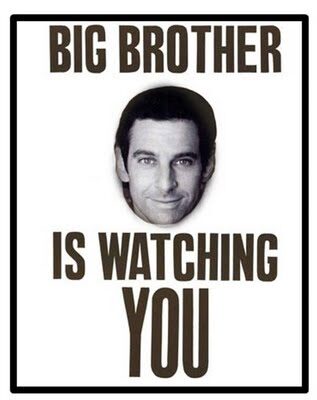
The “Atheist,” the “Muslim,” the “Christian” Murderers – and their victims: Stephen Tyrone Johns, William Long and George Tiller

It seems that recent events have taught us quite a few important lessons.

I am referring to:
The murder of Stephen Tyrone Johns by the “atheist” James von Brunn (some term his name James van Brunn).

The murder to George Tiller by the “Christian” Scott P. Roeder.

The murder of William Long by the “Muslim” Abdul Hakim Mujahid Muhammad.

And the media coverage and the internet hullabaloo including the statements of William F. Harrison.

Let us begin with the media coverage since it presented an interesting progression:
1) Scott P. Roeder murdered George Tiller and, being labeled a “Christian,” gave occasion to make reference to the American Christian Taliban, the right-wing extremists and such.

2) Abdul Hakim Mujahid Muhammad murder Private William Long and, being labeled a “Muslim,” shifted the focus from the American Christian Taliban to focus on religion as dangerous in general. This is even though this story has been very, very downplayed both by Barack Obama’s administration and the media in general.
Still, we get to besmirch “religion”—hoorah!

3) James von Brunn murdered Stephen Tyrone Johns and, being labeled an “atheist,” lead to…
Well, certainly no disparaging remarks about atheists or atheism in the media. In fact, you may be hard pressed to hear him referred to as such.

These events brought to mind something that I have been thinking about recently and that was the 1971 AD Psychology Professor Philip Zimbardo’s Stanford University psychological prison experiments. A prison atmosphere was set up and students played the roles of guards and prisoners. The surprising results were that since within a mere six days, including a riot on the second day, the guards had sadistically traumatized the prisoners and the experiment was terminated. The 24 middle class volunteers had been considered the most psychologically stable and healthy of the applicants.

Prof. Philip Zimbardo played the part of the superintendent and a research assistant was the warden.

Though various interpretations of the data have been proposed, one interesting aspect is that of the effects of authority: a-ethical authority (the only restraint placed on the guards what against physical abuse). Absolute freedom corrupts absolutely and it appears that anyone “atheist,” “Muslim” or “Christian” is subject to succumb. This seems to be so whether they consider themselves to have authority bequeathed by the struggle to survive as the fittest or by some god. Christianity has a basis upon which to restrain sadistic behavior.

Islam has some yet, the doctrine of abrogation may be problematic in claiming Qur’anically prescribed restraint.1

Atheism offers none whatsoever—anything goes; malevolence or benevolence are equally up for grabs.

Oh, right, I know: James von Brunn did not do what he did based on reason but was much more like a religious person and he, an atheist, was even a theist—as per Daniel Dennett’s claims that the atheist Joseph Stalin was a theist.
Yes, the Sam Harris sect’s dogma strikes again: the one word answer to all of the world’s problems is “religion,” any atheist who commits malicious acts is excommunicated and also labeled as being too much like a religious person—nice try.

This brings us to a piece of illogic that has been floating about on the internet for some time (since 2002 AD) written a “Dr.” William F. Harrison. It has alternately been posted as “Militant Religious Fundamentalism” and “9/11, Terrorism And Militant Religious Fundamentalism” (etc.?).

“Dr.” William F. Harrison is involved in the multibillion dollar money machine as an abortion provider. Some versions of his article have his opening line as “As a physician who openly provides abortion for my patients” and some “As a Gynecologist who…” Some versions have certain details that differ from others as well. Yet, the overall point is worth considering as the article is a good study in hypocrisy.

“Dr.” William F. Harrison makes his living by murdering beautiful, healthy, innocent and defenseless human babies in painful and brutal manners. Yet, like others of his “profession” and their supporters they complain about opposition. Some of these complaints are quite valid as, for example, the recent with the murder to George Tiller evidences bad theology gone worse—these issues are to be dealt with judiciously and litigiously.

“Dr.” William F. Harrison sought to point out where fundamentalism goes wrong and why it is so very dangerous. He is at least kind enough to refer to the Ku Klux Klan as being “ostensibly Christian” and goes on to write:

Militant religious fundamentalism, whether Islamic, Christian, Jewish, Hindu, Sikh or of some splinter sect origin, presents the greatest threat to peace and security in the world today. Fundamentalists seem to share certain widely recognized characteristics and attitudes. They are certain that they, and only they, possess “The Truth.” They all cite an external source for that “Truth”: religious dogma, the Bible or similar sacred texts, or a charismatic leader. They adhere to a good vs. evil belief system, all black or all white with no shades of gray – an “us versus them” mindset…

Fundamentalists usually express a justification for violence to oppose what they perceive as evil or to support what they “know” to be the good and true. They reject efforts to accommodate to inevitable social change and moral ambiguity…

They are authoritarian, self-righteous, and zealously oppose any critical or analytical thinking which might alter their attitudes since reasonable doubt and a healthy skepticism are among their greatest sins…

But it is only when religious fundamentalism is wedded to a militant and tyrannical agenda used by a ruthlessly ambitious political figure or party that it becomes truly dangerous to dissenting individuals and to the society within which it might flourish…

This is not an attack on religion…But if it is read as a rebuke of militant, exclusivist, hostile and violent or violence promoting religious bigots, of those who have just enough religion to kindle sectarian hatreds, but whose faith is not nearly sufficient to quicken love and respect for others simply because of their humanity, this is exactly how I meant it…

a struggle between those who promote reason, tolerance, freedom, and the basic human dignity of the individual, and religious fundamentalists who proclaim and follow lives committed to intolerance of the religious beliefs of others and a slavish devotion to a particular religious superstition…

Militant fundamentalists too often have demonstrated over hundreds of years a willingness to “kill or convert” those who subscribe to differing belief systems.

Clearly, this is one sided hypocritical malarkey. Why? Because he is doing exactly that which he besmirches.

Read it this way:

Abortionists seem to share certain widely recognized characteristics and attitudes. They are certain that they, and only they, possess “The Truth” that abortion is a virtue or as per Dan Barker, “a blessing.” They all cite an external source for that “Truth”: cultural dogma, evolutionary biology texts, or a charismatic scientist. They adhere to a good vs. evil belief system, all black or all white with no shades of gray – an “us versus them” mindset: the abortionists are right and everyone else is wrong

Abortionists usually express a justification for the violence that they commit, for money, in support of what they “know” to be the good and true. They reject efforts to accommodate to inevitable social change, moral absolutes and the right to life…

They are authoritarian, self-righteous, and zealously oppose any critical or analytical thinking which might alter their attitudes since reasonable doubt and a healthy skepticism are among their greatest sins and would get in the way of the multibillion dollar money machine…

But it is only when abortion is wedded to a militant and tyrannical agenda used by a ruthlessly ambitious political figure or party that it becomes truly dangerous to dissenting individuals and to the society within which it might flourish. Such as the agenda of Planned Parenthood which was established upon racist premises, the agenda of turning “women’s rights” into ensuring no rights for the babies, the politics of the abortion movement or the Chinese forced abortion policy…

This is a rebuke of militant, exclusivist, hostile and violent or violence promoting abortionists bigots, of those who have just enough “pro-choice” sentiments to kindle sectarian hatreds, but whose activism is not nearly sufficient to quicken love and respect for human babies simply because of their humanity, this is exactly how I meant it…

a struggle between those who promote true reason, tolerance, freedom, and the basic human dignity, even of human babies, of the individual, and abortionist fundamentalists who proclaim and follow lives committed to actual intolerance of the pro-life beliefs of others and a slavish devotion to a particular abortionists position…

Abortionists too often have demonstrated over hundreds of years a willingness to “kill” babies for money and declare themselves saints and those who argue for life as sinners.

Obviously, pop-culture, the media and internet personalities prefer thoughtless gut reactions, easy generic targets and emotive assertions but the fact is that, there is a lot more to it than that.

GUEST BLOGGER: The Neptune Delusion

Should Atheists Believe in Neptune?

Inaugurating True Freethinker’s guest blogger program is RD Miksa from the new and promising blog Miksa’s Musings.

Following is the guest essay:

Evidence. Evidence. Evidence. As I stood in the shower, this one word kept repeating itself in my mind, for I was thinking most intensely about the constant demand made by atheists to be provided some form of empirical evidence for God’s existence. And then, quite suddenly, the most peculiar question intruded upon my “deep” reflections: should atheists believe in Neptune? Although the shower’s running water may have you thinking that I am referring to the Roman god of the sea-and perhaps that was indeed the catalyst that made me think of Neptune in the first place-this is not the case, for I am speaking of Neptune in terms of the eighth, and furthest, planet in our solar system.

Now, I am also being a little disingenuous with my question, because I am not actually asking if atheists should believe in Neptune, but rather, should blind atheists believe in Neptune? Let me explain. As previously mentioned, when debating the existence of God many atheists continuously demand that theists provide them with some empirical evidence for their belief. Just show me a little empirical evidence, they say; just give me some objective sensory experience and I will believe in a God, they add. In these cases, therefore, it is the sensory evidence that atheists find lacking for God’s existence and it is this demand which is directly related to the question at hand. Should a blind atheist, demanding the same sort of empirical evidence as is so often asked for in the case of God, believe that the planet Neptune exists? The blind atheist will certainly never touch, hear, smell or taste Neptune and, being blind, this empirically minded atheist will obviously never see it either. So, with the blind atheist making a defiant stand against the Neptune delusion-at least until some hard empirical evidence is presented to him-how would a seeing atheist convince the blind atheist of Neptune’s existence?

Would the seeing atheist explain that various scientists have made calculations and predictions to show that Neptune exists-as they did when Neptune was first discovered in 1846 by mathematical prediction rather than direct observation? The blind atheist would simply reply that this is an appeal to authority for which no direct empirical evidence exists. Would the seeing atheist argue that millions of people believe in Neptune and have seen it? The blind atheist would simply retort that these are subjective experiences and are therefore invalid until hard empirical evidence is personally received. Would the seeing atheist simply state that if the blind atheist could see, then he would see that Neptune exists and could believe? Obviously, the blind atheist, seeking hard sensory evidence, would simply scoff at the blatant use of “if” and “could” and “would” and “believe”. In fact, should a blind, empirically-minded atheist even believe in the existence of the moon, the sun or any of the other planets?

Invoking Occam’s Razor, the blind atheist could state that, since he has seen no hard empirical evidence for these heavenly bodies, there is no need to unnecessarily complicate matters; the earth is a self-contained unit and it is all that is needed, required and is the only thing that empirically exists. The heat that the blind atheist feels on his face, which other people claim comes from the “sun”, could easily be postulated by the blind atheist to come from some earthly heat source rather than some floating sky-ball heat-lamp. And here we are only speaking of the sun, let alone such things as other galaxies! “Other galaxies”, the blind atheist would gasp, “what are you, supremely delusional!” Nor would he be off the mark for claiming this; indeed, there would be absolutely no need for the blind atheist to complicate his existence by adding invisible and non-empirically verifiable heavenly bodies that are as likely to him as fairies, unicorns or a flying-spaghetti monster.

To make matters even more bizarre, if the empirically minded seeing atheist has never seen Neptune through a telescope, why should he believe in its existence? At best, should the atheist not remain agnostic about the Neptune delusion until he does empirically verify its existence? At the same time, such an evidence based atheist should also remain agnostic about many other things until he personally experiences them with his own senses. Such events as the earth revolving around the sun should be an agnostic belief until the empirical atheist flies out into space and personally sees it happening-especially since common sensory and empirical experience from earth makes it seem that the sun actually revolves around the earth. Or, to give a specific example relating to Neptune, this time as a sea god, an atheist in a land-locked country should be wholly agnostic on the existence of seas and oceans until he gets some personal empirical evidence concerning them. But if he never does get said evidence, then he should never believe, regardless of how many people bring him cups of salted water from the so-called “sea”. Thus, there must be a vast number of commonly accepted scientific discoveries and occurrences that the evidence demanding, empirically minded atheist must honestly remain agnostic about because he has never personally verified them through empirical means.

With all this in mind, we can finalize by asking all atheists two major questions. First, should a blind atheist, asking for the same type of empirical evidence as is demanded for God’s existence, believe in the existence of the planet Neptune or any other “heavenly” bodies? And if such empirical evidence cannot be produced for the blind atheist, does this mean that only our subjective sensory realities are true for those demanding sensory evidence of God?

For the seeing atheist, the existence of Neptune is empirically true because he can state that he has personally seen it through a telescope. But for the blind atheist, the existence of Neptune is empirically false, because he will never (at least in this lifetime) see it or touch it or taste it or smell it or hear it. Therefore, is the existence of Neptune both true and false depending on an individual’s current, and thus subjective, sensory input? And if this is so-and here we arrive at the second question-then should not the evidence demanding atheist accept that an individual’s subjective sensory experience of God, such a seeing a vision or feeling God’s presence, is a perfectly valid reason, from an purely empirical sense, to justify belief?Yet perhaps even more important then these questions, are the implications that the Neptune delusion raises for atheism itself, for it inherently forces various atheists into different camps, all based on their subjective sensory input. Thus, the camp of blind atheists would claim that seeing atheists are delusional for both believing in God and for believing in such things as heavenly bodies, which to them are no more likely to exist than angels. Indeed, to a blind atheist, the seeing atheist Richard Dawkins is as delusion for believing in Neptune as the God believer is for believing in God. And these blind atheists could righteously chuckle at seeing atheists for their irrational belief in “orbiting space meat-balls”-to coin a term that relates to the so-called “flying spaghetti monster”.

At the same time, seeing atheists could state that blind atheists for delusional for not believing in these heavenly bodies. But the insanity is not finished yet, for deaf atheists could call both seeing and blind atheists delusional for believing in anything as irrational as “sound”. Certainly, it is more parsimonious for the deaf atheist to postulate that all non-deaf people simply use some type of hyper-fast lip-reading skills to communicate rather than believe in the existence of invisible sound waves. Invisible sound waves are just as likely as invisible fairies, these deaf atheists would say. Furthermore, atheists who are color blind could heartily laugh at anyone that could be so deluded as to believe in the existence of “redness” or “greenness”. And we have not even touched on atheists who do not possess any sense of smell or touch or taste.

Clearly, the Neptune delusion implies that there exist a great number of deluded atheists roaming the streets. In fact, the Neptune delusion creates a literal smorgasbord of atheistic delusions, with each different camp of empirically minded atheists positively affirming that the other is delusional in its beliefs; indeed, watching all these different atheist camps try to agree on the existence of anything would be quite interesting. And yet, each group of sensory specific atheists would be fully correct, empirically speaking, in claiming that the other groups of atheists are delusional. But does this, therefore, mean that all atheists are, in some serious ways, delusional? If a blind atheist can claim that Neptune does not exist and a seeing atheist can claim that it does and they are both empirically correct from their own points of view, then each can correctly claim that the other is delusional. Furthermore, does this mean that atheism itself is delusional, as you could never trust an atheist to not be in some way empirically deluded, thus substantially weakening atheism claim of being wholly rational and evidence based? Now, while I certainly do not wish to venture forth and answer this question, I can happily profess that after exploring the Neptune delusion, I am quite glad that I am not an empirical-evidence-only atheist!

So, the next time an atheist asks for personal empirical evidence for the existence of God, ask him if he has ever personally verified the existence of Neptune by empirical means or did he just take its existence on another person’s authority? If he has simply done the latter, then ask him if he should really believe in such a personally unverified-and therefore, from an individual perspective, non-empirical-delusion? Oh, and if the atheist just happens to be blind, then you are really out of luck!

StatGuy Strikes Again – On “Societies worse off 'when they have God on their side'”

Yes, StatGuy has struck again and dealt another portion of his Magic Statistic potion.

Adonais made us aware of Ruth Gledhill’s Times of London article, Societies worse off “when they have God on their side”, which serves as a summary of a study in the Journal of Religion and Society.

statguy-magicstatistics-9286784
The original study Journal of Religion and Society article by Gregory S. Paul who is a “freelance paleontologist, author and illustrator” whom the Council for Secular Humanism recommends for debates with young-earth creationists, can be found here HTML, or here PDF.

StatGuy’s critique proceeded forth From our bulging How not to do statistics file in which he writes, in part,

“_the [Journal] article does not say what Ms Gledhill reports_Ruth Gledhill’s news report in the Times misrepresents the content of Mr Paul’s study.”

However, StatsGuy also identified various flaws in the actual study itself:

“The plan of the study is to gather and compare data for countries he refers to variously as ‘prosperous developed democracies’ and ‘developing democracies’. The definition of these terms is never discussed_Eighteen countries are included for data comparison; among those omitted without clear explanation are: Italy, Greece, Finland, Luxembourg, and Belgium. Why are these left out? He mentions in passing that ‘[t]he especially low rates [of homicide] in the more Catholic European states are statistical noise due to yearly fluctuations incidental to this sample’, but no statistical evidence corroborating this assertion is provided_Mr Paul’s sample frame appears arbitrary. Obviously, in a sample of eighteen observations, inclusion or exclusion of only one or two observations can make a big difference in the results_At best, this is very sloppy statistical practice. If one were suspicious, one might point out that this makes cooking the results child’s play.”

Furthermore, our intrepid protagonist takes on the Mystery man.
mysteryman-gregorys-paul-journalofreligionandsociety-3473161

Furthermore, the StatMeister and George Gallup team up to fight the forces of misinformation as George Gallup vindicates StatGuy.

George Gallup notes:

“In order for the author’s bold claims against religious commitment contributing to society to hold true, he would have to refute the hundreds of volumes that have proven otherwise. From discussions on parenting and fatherhood, to mental and physical health, the weight of empirical evidence is against Paul’s assertions: religious commitment has notably positive effects on the individual and collective levels of human society.”

Julia Limb (in Study says belief in God may contribute to society’s dysfunctions) notes that Gary Bouma, Professor of Sociology at Monash University in Melbourne, stated that Gregory S. Paul,

“doesn’t stick to his field of palaeontology, he goes into the field of what I would call sociology without preparation or evidence or discipline and make some assertions about it.”

Also of interest may be David W. Virtue’s Gallup Organization Refutes Story Saying “Societies Worse Off ‘When They Have God On Their Side'”
All are fascinating reads to be sure.

Dennis McKinsey and the Fallacy of the Homicide Detective

Many interesting things surfaced during an exchange between James White and Dennis McKinsey of Encyclopedia of Biblical Errancy infamy, and fallacy. Their exchange is found as Letters to an Anti-Theist on James White’s Alpha and Omega Ministries website.

What interested me in particular was a statement found in the 2nd Reply to Dr. James White from Mr. McKinsey.

The issue at hand was what Dennis McKinsey refers to as “over 200,000 disagreements among these writings on what verses should say and what verses should he [sic] included.” Writings refers to the New Testament’s over 24,000 manuscripts.

Interestingly, Dennis McKinsey prefers the term “disagreements” while when he quotes “A General Introduction to the Bible” by Norman Geisler and William Nix (pp. 360-361) the appropriate term “variant” is employed:

“The multiplicity of manuscripts produces a corresponding number of variant readings, for the more manuscripts that are copied the greater will be the number of copyists’ errors…. The gross number of variants increases with every new’ manuscript discovery…. To date there are over 200,000 known variants and this figure will do doubt increase in the future as more manuscripts are discovered.” [as quoted by Dennis McKinsey]

He makes the point that “Apologists even go so far as to imply that the greater the number of variants the greater the precision” and again quotes Norman Geisler and William Nix (p. 366):

“At first, the great multitude of variants would seem to be a liability to the integrity of the Bible text. But, just the contrary is true, for the larger number of variants supplies at the same time the means of checking on those variants. As strange as it may appear, the corruption of the text provides the means for its own correction.”

He editorializes thusly,

“‘Strange is hardly the word; absurd’ is much better. Imagine a homicide detective saying his knowledge of what occurred grows as the number of conflicting testimonies increases. Twenty- four thousand manuscripts would provide a tremendous support if they agreed, but when they don’t, when over 200,000 disagreements exist, precisely the opposite occurs.”

My title meant to focus on this issue of the homicide detective. Indeed, imagine one saying that his knowledge grows as the number of conflicting testimonies increases. I was surprised to learn that Dennis McKinsey held a view example by the detective since it is such a fallacy and one that I would have thought would have been corrected my common sense, common knowledge, or by simply asking a question.

dennismckinsey-theencyclopediaofbiblicalerrancy-5730701

Well, I do not have access to a homicide detective in particular but I did ask a police officer of the law. I asked what would happen if he came upon and crime scene and got various conflicting accounts as to what events occurred. I specifically asked whether this would mean that he could not possibly come to an actual conclusion as to what had occurred. His answer was instant as he explained that he arrives at the crime scene expecting various conflicting accounts.

If all accounts were the same he would know that there was collusion. In fact, he will separate the witnesses so that they can retell their account while not being influenced by others and so that they do not have a chance to change their story in order to fit another account.

The conflicting accounts allow the officer to parse the individual perceptions from the facts of the matter. The officer gets a full picture of the events by recognizing the similarities in the various accounts. A vehicle may have been said to be blue, black or purple but one will not say that it was a sports car and another person that it was an eighteen wheeler. The strength of the variant accounts is that they are cross referenced and make certain connections with the others. Moreover, variations do not necessarily mean deception but different perspectives, differences in perception.

Thus, “Twenty- four thousand manuscripts would provide a tremendous support if they agreed” depending on what he means. If they agree word for word a pseudo-skeptic such as Dennis McKinsey would claim that the writers had a back room meeting to get their story straight in a collusive manner.
Yet, if by “agreed” we mean put forth the same message then this is what we have in the New Testament.

Let us conduct a thought experiment: Let us consider the most well attested set of books/letters of antiquity—the New Testament. Let us take the 24,000 manuscripts and destroy them (and also destroy all photographs of them, etc.). Let us now destroy all New Testaments. Now let us consider the writings of the early church fathers. Let us collect their quotations from the New Testament and compile them. What do we have? We have the entire New Testament with the exception of 11 verses that do not affect any major doctrine.

Thus, even destroying the New Testament published as it is, in one volume, and the manuscripts from which it is derived it can be reconstructed.

Of further interest may be:

Selling Snake Oil – A Select Review of C. Dennis McKinsey’s “Encyclopedia of Biblical Errancy” and C. Dennis McKinsey’s Encyclopedia of Biblical Errancy: Critique and Answer Key—J. P. Holding

Canonization Controversy—Ken Ammi

The Historicity of the Empty Tomb of Jesus—William Lane Craig

Support for the Authenticity of the Book of Matthew—Neil Altman

Shattering the Christ-Myth—J.P. Holding

Easter: Myth, Hallucination, or History—Edwin Yamauchi

Qumran Fragment 7Q5—Carsten Peter Thiede

Biblical Pool of Siloam Discovered—Thomas Maugh, II

The Resurrection as a Historical Problem—N.T. Wright

Early Traditions and the Origins of Christianity—N.T. Wright

Third Century Christian Church Discovered in Israel

Expert Doubts ‘Gospel of Judas’ Revelation—Richard Ostling

The Christian Canon—Don Closson

The Gospels as Historical Sources for Jesus—RT France

The New Testament Documents—FF Bruce

How Can We Know Anything About the Real Jesus—Mark D. Roberts

The Historical Veracity of the Resurrection Narratives—Greg Herrick

How Accurate is the Bible?—Kenneth Boa

Was Nazareth Invented by Christians?—Glenn Miller

Evidence of the Exodus from Egypt—IBSS Article

Jesus as Theos: Scriptural Fact or Scribal Fantasy—Brian Wright

~~~~~~~~~~~~~~~~~~~~~~~~

A plea: I have to pay for server usage and have made all content on this website free and always will. I support my family on one income and do research, writing, videos, etc. as a hobby. If you can even spare $1.00 as a donation, please do so: it may not seem like much but if each person reading this would do so, even every now and then, it would add up and really, really help. Here is my donate/paypal page.

Due to robo-spaming, I had to close the comment sections. However, you can comment on my Facebook page and/or on my Google+ page.

Daniel Dennett – Belief in Belief

On belief in unbelief
and unbelief in belief

In his book Breaking the Spell – Religion as a Natural Phenomenon, Daniel Dennett promulgates belief of “belief in belief’ in which he believes—believe me.

The basic concept behind “belief in belief’ is that beyond, for example, “belief in God” there is “belief in belief’ which is a position which considers “religious” beliefs to be essential for a healthy society and so attempts to protect such beliefs from philosophic, logical, scientific or criticisms of any sort.

Basically, the point is that what is believed is no longer as relevant as that someone would believe in something, anything, that equates to some form of transcendence. As long as you believe in something which purports to offer guidance and solace—that is good enough. Yet, belief in belief is not good enough for Daniel Dennett who, for example:

rules out deism, the view that God acts through natural laws, and incidentally Charles Darwin’s credo for much of his later life. “If what you hold sacred is not any kind of Person you could pray to, or consider to be an appropriate recipient of gratitude (or anger, when a loved one is senselessly killed), you’re an atheist in my book,” writes Dennett.

“If, for reasons of loyalty to tradition, diplomacy, or self-protective camouflage (very important today, especially for politicians), you want to deny what you are, that’s your business, but don’t kid yourself.”1

On this much I can agree, as did the ex-atheist C. S. Lewis decades prior as he referred to Life-Force philosophy, Creative Evolution, or Emergent Evolution:

One reason why many people find Creative Evolution so attractive is that it gives one much of the emotional comfort of believing in God and none of the less pleasant consequences. When you are feeling fit and the sun is shining and you do not want to believe that the whole universe is a mere mechanical dance of atoms, it is nice to be able to think of this great mysterious Force rolling on through the centuries and carrying you on its crest. If, on the other hand, you want to do something rather shabby, the Life-Force, being only a blind force, with no morals and no mind, will never interfere with you like that troublesome God we learned about when we were children. The Life-Force is a sort of tame God. You can switch it on when you want, but it will not bother you. All the thrills of religion and none of the cost.

Is the Life-Force the greatest achievement of wishful thinking the world has yet seen?2

Based on his concept of belief in belief one would have to conclude that Daniel Dennett seems unaware of religious polemics—by religious and unreligious people—throughout the millennia, or the Bible’s praise of honest skepticism (Acts 17:11 for example).

In any regard, Daniel Dennett has become one of the leading voices (as one of the discredited quadripartite New Atheists) of a movement of atheists who hold to belief in unbelief and unbelief in belief.

It would certainly be as fallacious as Dennett’s claim to lack of polemics in religious matter to assert that atheists, even the most militant activist sorts, do not accept and engage upon polemics regarding atheism. Yet, their belief in unbelief and unbelief in belief comes through in their shock at the fact that they have to bother responding, that they actually have to bother defending a conclusion as obvious as atheism.

This is part of the reason that their talks and books are so heavy on emotion and so light on well, anything else. They are quick to condemn, quick to assert arguments from personal preference, arguments from outrage, arguments to ridicule, arguments to embarrassment, etc. Yet, slow to provide premises that go beyond that which they personally prefer in general and slow to go anywhere beyond well-within-the-box-atheist-group-think-talking-points.

Consider mere examples from Sam Harris:
Sam Harris writes that “atheists are often among the most intelligent and scientifically literate people in any society,” they find religious claims “to be ridiculous.” Religious people possess “encyclopedic ignorance.”3 He looks forward to the day when raising one’s children according to ones religious faith will “be broadly recognized as the ludicrous obscenity that it is.”4 He makes reference to “scary religious imbeciles”5 and no, this was not in reference to extremist terrorists, for example, but to Intelligent Design theorists.
His ultimate goal is expressed in his looking forward to a time when “making religious certitude look stupid will be exploited, and we’ll start laughing at people who believe…We’ll laugh at them in a way that will be synonymous with excluding them from our halls of power.”6

And then he wonders why people are concerned that he wrote, “some propositions are so dangerous that it may even be ethical to kill people for believing them”7—capital punishment for thought crime.
Such sentiments could be multiplied ad infinitum – ad nauseam.

atheism2c20sam20harris2c20big20brother2c20true20freethinker-5511164

Belief in unbelief is often expressed in terms of considering atheism to be the default position. However, it is not. Rather, supernaturalism is the default position. Until such time as absolute materialism can and does account for all natural phenomena—from consciousness, to life in general, not to mention the whole universe and everything in it—supernaturalism can account for these phenomena (at the philosophic level of what, and perhaps why but not the scientific level of how—a level which is not at all advantageous to materialism). This is because, let us say partly scientifically and partly philosophically, materialism cannot account for said phenomena while supernaturalism can (hint of how this is so are found in the parsed essay On the Flying Spaghetti Monster, the Invisible Pink Unicorns, et al.).

Belief in unbelief, when it is considered the default position, is held to via “faith”-like adherence (here I am employing the fallacious atheist redefinition of faith as “belief without evidence” as opposed to the biblical definition of faith as trust aka: the conclusion of a syllogism). That is to say that this position asserts that there is nothing that is not, both epistemically and ontologically, accounted for under absolute materialism.
The assertion is that everything has a purely materialistic explanation and even if we do not know what the explanation is; some day—thy materialism come—it will be explained thusly. And even if it is not explained materialistically this view demands that one restrict their thinking and simply believe by “faith” that the explanation is materialistic—this is anti-freethought. Meanwhile, it may be of import to note; the theist can consider material explanations, ever mounting material causes for material effects, by noting that yes indeed; God created the material realm wherein there functions a system of material causes and material effects.

Belief in unbelief is also one of the consoling delusion aspect of atheism. Atheism consists of various consoling delusions which atheists generally seem to accept as psychological band-aids placed upon their reasons (or excuses) for rejecting God. They seem to think that something, or someone, does not exist because they do not believe it. They rejects God’s ethos, His prescription of certain actions and condemnation of others, and thus, they console themselves by thinking that they are absolutely autonomous and lack ultimate accountability.

Unbelief in belief is generally peppered, if not saturated with, confusion and misunderstandings of every sort. For example, responding to the question of whether “all faith claims are in some sense equivalent” Christopher Hitchens stated, “they’re all equally rotten, false, dishonest, corrupt, humourless and dangerous.”
In this regard, note the words of C. S. Lewis, one time atheist and later Christian scholar, who wrote:

If you are a Christian you do not have to believe that all the other religions are simply wrong all through. If you are an atheist you have to believe that the main point in all the religions of the whole world is simply one huge mistake.
If you are a Christian, you are free to think that all these religions, even the queerest ones, contain at least some hint of the truth. When I was an atheist I had to try to persuade myself that most of the human race has always been wrong about the question that mattered to them most; when I became a Christian I was able to take a more liberal view.8

That is to say that the unbelief believers paint with a broom and generically generalize anything which they consider in any way supernatural or superstitious into the same category: every “religion,” theology, ritual, etc.

Consider this criticism of Daniel Dennett:

like other evangelists of unbelief, he views the world through the conceptual grid of western monotheism. His view of religion itself proves this; he defines it as a social system “whose participants avow belief in a supernatural agent or agents whose approval is to be sought”. This may be commonplace as a perception of religion, but it is also highly parochial…[and] not found in most of the world’s religions… it is a mistake to assume that belief is the core of religion. This may seem self-evident to many philosophers, but in fact belief is not very important in most religions. Even within Christianity there are traditions, such as Eastern Orthodoxy, in which it has never been central. For the majority of humankind, religion has always been about practice rather than belief. In fixating on the belief-content of religion, Dennett emulates Christianity at its most rationalistic and dogmatic…. Dennett mocks those who say that life without faith has no meaning as “believers in belief”. Yet he displays a zealous faith in unbelief that is far more inimical to doubt, and there is more scepticism in a single line of the [Blaise Pascal’s] Pensees than in the whole of Dennett’s leaden tome.

Breaking the Spell approaches its subject with a relentless, simple-minded cleverness that precludes anything like profundity, and much of it seems designed to demonstrate the author’s intellectual ingenuity rather than to advance the reader’s understanding…

When Dennett delivers on the promise of the book – a naturalistic explanation of religion – the result is embarrassingly naive.9

Even Sam Harris, the Buddhist/mystic/atheist who does not like the term “Buddhist,” “mystic” or “atheist,” whose pursuit of Buddhist atheist mysticism is not approved of by other New Atheist, such as Richard Dawkins, promulgates just that: a strictly materialistic form of meditation (which is actually more in keeping with Buddhism’s atheistic roots).
Unbelief in belief even leads some atheists to prefer an answer which only leaves one asking more questions than to an answer which is philosophically more fulfilling. Such is that case with those who, for example, prefer to appeal to aliens as being the creators of our universe and or life. This does not answer the question of how they came about but merely pushed the question of origins further back in time. Meanwhile, a supernatural/theistic creator who is, as is logically and scientifically viable, outside/beyond time, space and matter is rejected (again, see On the Flying Spaghetti Monster, the Invisible Pink Unicorns, et al.). Anything to maintain unbelief in belief.

Let us end with some food for thought, some makings of a brain storming session:

Generally when atheists ask for evidence of God’s existence they do not seem to consider upon which premise the request such evidence. They generally do not define what they mean by “evidence.” When they do they are merely expressing their own theological views and demanding that we adhere to them—dogmatheistically. If they specify “scientific” and or “empirical” evidence they do not seem to consider that science/empiricism are a narrow fields which deals with a narrow bandwidth, as it where, of reality and thus, functions within parameters. Moreover, since there is no scientific/empirical evidence supporting the request for scientific evidence the request is self defeating. Do we look for wet evidence of a dry object? Do we look for physical evidence of something/someone who is not non-physical.

Such as, and others, are the ways of those who hold to belief in unbelief and unbelief in belief.

Questioning Camp Quest

Since Camp Quest is not anti-religion (right?) the Texas branch is being hosted by, get this, a “Church of Freethought.”

The little tikes whose parents want to ensure are raised as atheists will have quite the jam packed schedule at the first Camp Quest in Texas as the summer camp experience will consist of one single day.

Perhaps these kids are exceptional as it is claimed that on this one single day (which I imagine is not a literal 24 hour period) the camp seeks to:

provide children of freethinking parents a residential summer camp dedicated to improving the human condition through rational inquiry, critical and creative thinking, scientific method, self-respect, ethics, competency, democracy, free speech and the separation of religion and government guaranteed by the Constitution of the United States…learning about different animals, making pottery, and having lots of great fun.1

Granted, someone ought to alert Camp Quest of the difference between the Constitution’s establishment clause and a letter written by Thomas Jefferson but surely, they are more than qualified to teach the kids how to improve the human condition, rational inquiry, critical and creative thinking, scientific method, self-respect, ethics, competency, democracy, free speech and do it all, and more, in one day-right?!?!

Regarding Camp Quest’s concept, Rod Dreher reports,

The idea, [Richard] Dawkins said, is “to encourage children to think for themselves.” Yes, well, as long as they don’t think well of religion, tykes are welcome to join his herd of independent minds…

It’s hard to see the pleasure of sitting around the campfire, learning from grown-ups that the world is disenchanted after all. (No ghost stories for you, lad!)…

Hmm. One doesn’t quite know what to make of an atheist church. Most people, when they cease to believe in the Easter bunny, don’t hold monthly services to celebrate the non-existence of a peripatetic paschal rabbit. But you know Dallas: We’re so religious that even the atheists go to church. For the record, at their next service, the freethinkers will focus on invisibility. Ah, reason.
Most atheists I know don’t care for religion, obviously, but aren’t angry about it. Not so the True Unbelievers – the Dawkinses and their followers – who prove that you don’t have to be religious to be a fundamentalist…

John Gray, an English atheist political philosopher who, in his 2007 book Black Mass, argued that contemporary atheists have thrown off Christianity but still hold a religious faith in a secular utopia and the perfectibility of humanity…Though latter-day atheists would prefer to ignore it, their intellectual forebears, the 19th-century Positivists, passionately believed that there was nothing wrong with the world that suppressing religion and replacing it with science couldn’t fix.2

kalatheismatheistcampquest-9569357

This sounds like the Harrisian School of one word answers to all of the world’s ills. Sam Harris does not only blame “religion” for what people do in its name but he also blames “religion” for atrocities committed by atheists and blames “religion” for the taboo against rape.Sam Harris “argued” thusly,

I would argue that the taboos around rape that religion has given us, have perversely made rape a very common tool of psychological oppression and war. The reason why all those women were raped in the Bosnian conflict was that it was so stigmatising in the Muslim community to be raped, that you were essentially ruining the community from within by recourse to its own taboos. This has been the practice over and over again.3

If only “religion” (God actually) did not proclaim rape as evil then it would not be evil and militants would not think to rape women since their motivation was to stigmatize Muslim women-right?!?! Apparently, if it were not for God condemning rape the invaders of Bosnia could have raped at will and Sam Harris would have said, “there’s nothing more natural than rape.”

Rod Dreher also notes,

The religious sense – of awe, of mystery, of a need for meaning – is hard-wired into our species, which is why Gray, a nonbeliever, identifies a “funny sort of humanism that condemns an impulse that is peculiarly human.” He’s certainly correct to warn that the attempt to repress the religious instinct (as with the sexual instinct) only means it will reappear in some other, degraded form – the operatic pseudo-paganism of the Nazis, say, or the Soviet Stalinist cult, or even, more benignly, the faintly ridiculous idea of an atheist church.

Indeed, he terms is “pseudo-paganism,” I term it “neo-paganism” (as described here and here).

Camp Quest would fare better if they simply be upfront about their premise. Clearly, there is the public relations side of Camp Quest’s facade and there is the reality of their methods and goals.

~~~~~~~~~~~~~~~~~~~~~~~~

A plea: I have to pay for server usage and have made all content on this website free and always will. I support my family on one income and do research, writing, videos, etc. as a hobby. If you can even spare $1.00 as a donation, please do so: it may not seem like much but if each person reading this would do so, even every now and then, it would add up and really, really help. Here is my donate/paypal page.

Due to robo-spaming, I had to close the comment sections. However, you can comment on my Facebook page and/or on my Google+ page. You can also use the “Share / Save” button below this post.

The Desperation of the Deicidal, Memetic Eugenics and the Evolutionary Watchmen, part 1 of 2

True Freethinker has considered some statements made by Dan Barker during his debate with Peter Payne which I entitled Dan Barker and the Alien Rape Voyeurs.

Any ethical system that’s based on threats and promises is morally bankrupt…That is a morally bankrupt thing to do.

To begin with we must note that this is, of course, utterly arbitrary. Whether it makes good sense, whether you agree or not-it is arbitrary. This is, of course, Dan Barker’s personal opinion and we should not be the least bit bothered by it. Yes, he quickly moves from an argument from personal preference to an argument for ridicule and embarrassment (against any who would disagree or disregard him). Yet, these are, of course, impotent besmirchments.Note that, if we grant Dan Barker’s assertion, since any ethical system that is based on threats and promises is morally bankrupt virtually every law of every clan, tribe and government that there has ever been-regardless of chronology, geography, theology or lack thereof-has been morally bankrupt since the tendency of law is to carry along with it the threat of punishment (as well as some degree of promise; of continued freedom, for example). This also applies to family, to parents. Since virtually every parent there has ever been has relied on a system of threats and promises virtually all parents there have ever been have been morally bankrupt.

It seems rather evidence that this Barkerian concept-as his entire concept of deeming rape to not be absolutely immoral by appealing to alien rape voyeurs-has nothing to do with reality, it has no relation to the real world in which the ethos is meant to function. Dan Barker has called the police to deal with protesters at the Freedom From Religion Foundation headquarters.

But why so that the police could say, “Oh, come on guys go away please. Oh, man. Come on now can you just go somewhere else? “No” oh well, goodbye”? No, of course, he wanted the threat of arrest, incarceration, a criminal record or even the use of a billy-club and pepper-spray to weight upon the decisions of the protestors.

It, therefore, seems rather evidence that this Barkerian concept has been concocted in order to leverage one or two of atheism‘s consoling delusions: the consoling delusion of lack of ultimate accountability and the consoling delusion of absolute autonomy. Why else would be specifically direct this imaginary ethos towards Christianity, heaven, hell, etc.?

Let us briefly note that he is presupposing to know why people do what they do-which he does not know. Even if there is a threat of hell and promise of heaven within the system to which the person adheres-he does not know. Note also that he is exhibiting a tremendous lack of knowledge of Christian theology since it does not propose, as he supposes, a works based concept of salvation, “_by grace you have been saved through faith, and that not of yourselves; it is the gift of God, not of works, lest anyone should boast” (Ephesians 2:8-9).

Why should it matter to Dan Barker why someone refrains from actions which he personally prefers to consider immoral? Is it not enough that they are refraining? I personally do consider it important up what premise they refrain but why does he care why you love your neighbor?

I would argue that, for example, the Christian ethic is absolutely premised on the ethos itself, or the ethos Himself-God, and the fact of His creation of human beings. The premise does not change.

An atheist premises their morality upon their personal opinions (call them epistemic determinations, call them logical conclusions of observing physical and emotional suffering and joy, call them what you will). The premise is not only arbitrary but tentative.If I have good and absolute reasons for doing good then when I do not do good or do the opposite of good I am actually violating the absolute good, the absolute reasons, upon which I claimed to be good in the first place.

If I have no good or do have good but not absolute reasons for doing good then when I do not do good or do the opposite of good I am violating nothing at all.

[Let Dan Barker tackle other theologies as he will]Thus, if Christians violate their ethos they are not only violating something, someone, absolute but are accountable.Thus, atheists violate their morals they are not violating anything and are not accountable.

Bill Vallicella, the Maverick Philosopher, offered a very interesting and succinct observation in his post Are Atheists Evil? Bad Reasoning in Sam Harris (see that post’s comments section 5.22.2007 12:26pm):

Imagine a situation in which A is in a position to impose his will on B (by raping and murdering her, say) and that A will “get away with it.” (No one cares about B, they are far off in the wild, etc. We may imagine that A will die in a month from cancer.)In this situation, does A have a reason not to rape and murder B, a reason to not gratify himself? If there is no God, and no surivival [sic] of physical death, what reason could A have? Because it is wrong in the abstract for A to rape and murder? That will strike A as a joke.

“You are going to oppose to my real and furious lust an abstract moral demand that hangs in the air with no way of being enforced??” This is one way to focus the question that people like Harris and Shermer apparaently [sic] don’t grasp.

And let us add, “Barker.”

This is one of the ways in which atheism makes evil worse: not only does atheism do nothing about evil, atheism turns evil into a very positive endeavor since the evildoer gets to enjoy themselves and if they are not caught by the legal systems of this world, they simply get away with it while leaving their victims to suffer-atheism offers no ultimate justice nor absolute condemnation.

In the next segment we will consider what Dan Barker may be up to-au fond.

Richard Dawkins, Albert Einstein, God and Atheism

Christianity ————-

Atheism

————-

World Religions and Cults

————-

Science

(Science in general, Evolution, Cosmology, Creation Science, Intelligent Design) ————-

Movies & TV Shows

————-

Fringe-ology

(Transhumanism, Aliens/UFOs, Occult, Conspiracies) ————-

Misc. and Resources

(Nazis, Communism, Crusades, Morality / Ethics, Abortion, Rape, Homosexuality / Trans, Audio, Books, Debates, Videos, etc.)

~~~~~~~~~~~~~~~~

Nietzsche, the Death of God, and the Emerging Church Movement

Christianity ————-

Atheism

————-

World Religions and Cults

————-

Science

(Science in general, Evolution, Cosmology, Creation Science, Intelligent Design) ————-

Movies & TV Shows

————-

Fringe-ology

(Transhumanism, Aliens/UFOs, Occult, Conspiracies) ————-

Misc. and Resources

(Nazis, Communism, Crusades, Morality / Ethics, Abortion, Rape, Homosexuality / Trans, Audio, Books, Debates, Videos, etc.)

~~~~~~~~~~~~~~~~

The BOBA Digest, Part 2: Daniel Dennett's Desperation

I perceive that Professor of Philosophy Daniel Dennett is a pretty bright personage (pun intended). Unfortunately, when he gets into the neo-atheist mindset he appears to lose his wits, his cool and his erudition as a professor of philosophy.

dennett-6501261

With regards to accountability, or responsibility, Daniel Dennett wrote:

“Those who maintain religions, and take steps to make them more attractive, must be held similarly responsible for the harms produced by some of those whom they attract and provide with a cloak of respectability. Defenders of religion are quick to point out that terrorists typically have political, not religious agendas, which may well be true in many or most cases, or even in all cases but that is not the end of it. The political agendas of violent fanatics often lead them to adopt a religious guise, and to exploit the organizational infrastructure and tradition of unquestioning loyalty of whichever religion is handy. And it is true these fanatics are rarely if ever inspired by, or guided by, the deepest and best tenets in those religious traditions. So what? Al Queda and Hamas terrorism is still Islam’s responsibility, and the abortion-clinic bombing is still Christianity’s responsibility and the murderous activities of Hindu extremists are still Hinduism’s responsibility.”1

I must first point out that just as Prof. Richard Dawkins did, Daniel Dennett uncritically and without providing statistics, correlates Islamic terrorism with “Christian” abortion-clinic bombings. I will not give it away here for the sake of suspense but if you are interested in facts take a moment to consider the statistical relation between the two and then see my essay The Dawkins Correlation.

Note Daniel Dennett’s insistence that any and all Islamic terrorism is Islam’s responsibility, that any and all “Christian” abortion-clinic bombings are Christianity’s responsibility and that any and all Hindu extremist acts are Hinduism’s responsibility. Let us grant this for a moment and ask the logical question, “Is this only so regarding religions and their extremists who often are violating the very tenets which they claim to be upholding?” Now more directly, let us ask, “What about atheism? Does atheism somehow and for some unstated reason get a pass? Is atheism not responsible for the greatest body count that the world has ever known?” At least according to Christopher Hitchens, Sam Harris, Prof. Dawkins and Daniel Dennett, Austin Cline, Dan Barker, et al, the answer is clearly that atheism gets a pass and is not responsible.

But why do they get a pass and sidestep responsibility? Well, one answer provided by Daniel Dennett is quite intriguing. During his debate with Dinesh D’Souza entitled “Is God (and Religion) a man-made invention?” Daniel Dennett stated:

“_it occurred to me – let’s think about Stalin for a moment. Was he an atheist? You might say well of course he was an atheist. No, on the contrary. In a certain sense, he wasn’t an atheist at all. He believed in god. Not only that, he believe in a god whose will determined what right and wrong was. And he was sure of the existence of this god, and the god’s name was Stalin.”

stalin-4493239

So, now theism is not only responsible for everything and anything done in its name but theism is also responsible for everything and anything done in the name of atheism including the actions of those atheists who suppressed and oppressed theism. This is merely a hyper-convenient argument. Perhaps Daniel Dennett ought to curve his zealousness for his worldview and return to the realm of philosophy. However, granting his statement, if this is true of Stalin it is likewise true of all atheists. Thus, atheism is self-refuting circular logic since all atheists are theists.

Discarding supernatural god(s) atheists encounter the highest being in the universe, a materialistic god, in their mirrors. And claiming that atheists are not responsible for the atrocities committed in its premise because atheists are theists (nature-theists perhaps) is no way for anyone to argue much less a professor of philosophy.