Christianity ————-
————-
————-
————-
————-
(Transhumanism, Aliens/UFOs, Occult, Conspiracies) ————-
(Nazis, Communism, Crusades, Morality / Ethics, Abortion, Rape, Homosexuality / Trans, Audio, Books, Debates, Videos, etc.)
~~~~~~~~~~~~~~~~
Worldviews in view reviewed: Atheism, Theology, Occult, UFOs, Cultural Commentary, etc.
Christianity ————-
————-
————-
————-
————-
(Transhumanism, Aliens/UFOs, Occult, Conspiracies) ————-
(Nazis, Communism, Crusades, Morality / Ethics, Abortion, Rape, Homosexuality / Trans, Audio, Books, Debates, Videos, etc.)
~~~~~~~~~~~~~~~~
Lewis Wolpert, author of Six Impossible Things Before Breakfast: The Evolutionary Origins of Belief (reviewed here and here) is still a child at heart; at least as regards his atheism.
The cell biologist and vice president of the British Humanist Association has elucidated the reasonable reason which reasonably lead him to reason his way to atheism.
He has stated,
[I] stopped believing in God when I was 15 or 16 because he didn’t give me what I asked for.[1]
During an interview, he also stated:
I used to pray but I gave it up because when I asked God to help me find my cricket bat, he didn’t help.
When asked by Justin Brieley (Unbelievable show episode, “What Does Science Tell Us About God?”):
Right, and that was enough for you to prove that God did not exist.
He replied:
Well, yes. I just gave it up completely.
Certainly, this is the very opposite of a reasonable reason and yet, commensurate of a child’s reasons. Lewis Wolpert thus joins a long list of atheists who became atheists as children, for childish reasons and have not developed their reasons for rejecting God beyond a child’s level. But is that really so? Has Lewis Wolpert really not developed his rejection of God any further? Is he truly stagnant in this regards?
Perhaps not as he has, after all, continued rejecting God via a virtual one liner,
There is absolutely no evidence for the existence of God.[2]
Thus, he has matured from rejecting God because God did not give him that for which he asked to actually taking into consideration every supposed evidence for God and finding it wanting—apparently. We should, at this juncture, note that Lewis Wolpert is of the Circularity School of Atheism which “reasons” thusly: there is absolutely no evidence for the existence of God because God does not exist. We know that God does not exist because there is absolutely no evidence for the existence of God. And there actually cannot be any, nothing will ever count as evidence, because God does not exist.
In fact, Tom Price authored the following succinct mock retelling of a debate that took place between Lewis Wolpert and William Lane Craig:
Craig: God exists, here is the evidence.
Wolpert: God doesn’t exist, there is no evidence.
Craig: God exists, here is the evidence.
Wolpert: God doesn’t exist, who made God?
Craig: God does exist, he is an uncaused eternal being. Here is the evidence.
Wolpert: God doesn’t exist. He hasn’t done anything in the last 2,000 years.
Craig: That’s chronological snobbery. You don’t tell the time with an argument, you don’t tell if an argument is true or false, of if evidence is good or bad with a watch.
Wolpert: God doesn’t exist. We believe because we have a notion of cause and effect, this leads to toolmaking, and also to belief in God.
Craig: That’s the genetic fallacy. To confuse the origin of a belief with its truth or falsity. You need to deal with the arguments and evidence that I have presented.
Wolpert: God doesn’t exist. There is no evidence. Who made God?
Craig: Here is the evidence. God is an uncaused being. God does exist.
Wolpert: God doesn’t exist. There is no evidence.
Craig: God does exist. Here is the evidence.
Apparently, the adult, mature and erudite Professor Wolpert now has a much more adult, mature and erudite reason for rejecting God, “There is absolutely no evidence for the existence of God.” Now, note the response that Wolpert offered when he was asked the following question by Keith Ward,
Ward: What sort of evidence would count for you? Would it have to be scientific evidence of some sort?
Wolpert: Well, no… I think I read somewhere: If he turned the pond on Hamstead Heath into good champagne, it would be quite impressive…[3]
Well, what have we here? It turns out that the adult Wolpert is still “reasoning” like the child Wolpert.
The child rejected God because “he didn’t give me what I asked for” and the adult says “he didn’t give me what I asked for” when I wanted to see a pond turn into good champagne. It is still about what God will or will not do for the demanding Wolpert. This is a typical human error: we place ourselves in the position of making ourselves God’s god by demanding that He serve us and do what we please: He better! Or we will reject Him!
But what does “If he turned the pond on Hamstead Heath into good champagne” mean?
What if someone were to report to Lewis Wolpert that the pond turned into champagne? He may inspect the contents of the pond, determine that it was champagne but concoct a story about how someone could have drained the water and replaced it with champagne—the reported miracle would be denied.
Does it mean that Wolpert would examine the contents of the pond, determine that it contains only water, that there is not a champagne producer just uphill, would sit by, wait for the miracles and would thereafter inspect the pond again, etc. He may then become convinced of the occurrence of a miracle. This would convince him.
It would however, convince him despite materialistic explanations such as him experiencing a hallucination, manipulation by high-tech hologram projecting aliens, an rare and unexpected concoction of nature’s laws, the outworking on an as of yet unknown law of nature, or simply stating a tenet of dogmatheism: “we do not yet understand how it happened but as science develops we will surely find a materialistic explanation.”
This may be enough for him but what would he do next? Would he shout it from the rooftops? Well, in that case his claim may be denied by the next examiner who would concoct a story about how someone could have drained the water and replaced it with champagne—his report of a miracle would be denied.
Perhaps each person on Earth could make a demand and God would have to fulfill each and every request like a wish granting genie—my first wish is unlimited wished :o). Or perhaps, God would determine what is sufficient—such as oh, I don’t know the creation of the universe and everything in it including humans who reject him for not giving them what they want.
What else can we learn from Lewis Wolpert’s foundations for atheism? Even at the tender age of 15 or 16 he held to a very strict theology. All atheists are theologians—they hold, very rigidly to theologies, or atheologies, of their own authorship.
Wolpert’s theology declared that God would do what the young Lewis pleased. Since God did not do what the young Lewis pleased then, theo“logically,” God was not. Thus, God was rejected, as He often is, for violating a human’s concept of what God is and is not, does and does not do, should and should not, etc.
Moreover, note that atheists such as Lewis Wolpert do not exist in a vacuum. They do not come to ideas about what God does and does not do and only then emerge from their vacuums and take an unbiased look around to see if God is or is not doing thus and such. Rather, they become fairly certain of that which God does not do—such as granting a 15 or 16 whatever they ask (whatever that may have been)—and then, premised upon prior knowledge, determine that God is not.
Lastly, note that Lewis Wolpert a priori doubts his very own proposed theistic proofs. This is how the conversation between Wolper and Ward continued:
Wolpert: …If he turned the pond on Hamstead Heath into good champagne, it would be quite impressive . . .
Ward: A miracle would be sufficient?
Wolpert: But then you have to remember what David Hume said, that you wouldn’t believe in a reported miracle unless “the falsehood of [the] testimony would be more miraculous than the event which [it] relates.”
Ward: It’s one of his worst arguments, in my view.
Wolpert: Hume is the only philosopher I take seriously. I’m big against philosophy.[4]
Thus, evidence of God would be a miracle such as turning water into good champagne. But then, as I noted above, he would deny the very miracle which he himself suggested would constitute evidence of God’s existence. Therefore, Lewis Wolpert is a dogmatheist who will not allow even the possibility of considering that anything at all could, would or should count as evidence of God’s existence.
Overall, we seem to have gotten a fascinating window into the heart and mind of someone who rejected God due to selfish and childish reasons and has subsequently merely sought further un-matured reasons for continuing to justify their rejection of God. God answers all prayers by either saying “Yes” or “No” (and/or “Wait”). Many of you will know to be thankful for “unanswered” prayer as you look back and realize that you were being hasty, selfish, misunderstood the situation that caused you to pray in the first place, etc.
[1] Lewis Wolpert, “The Hard Cell,” Third Way, March 2007, p. 16
[2] Ibid., p. 17
[3] Ibid.
[4] Ibid.
[Note: I am reposting this as I have to move it from whence it was originally posted long ago]
Hereinafter is an interview with philosopher, apologetics researcher, lecturer and author Peter S. Williams—author of Sceptics’s Guide to Atheism: God is Not Dead (and other titles)—by the Evangelical Philosophical Society.1
An audio interview with Peter about his new book can be downloaded by clicking here.
What is unique about your book compared to other critical treatments on the “new atheists”?
The new atheism is characterised by the propositions that belief in God is false and evil. The new atheists believe that at the core of even the most outwardly benign theism is an immoral commitment to flouting one’s intellectual responsibilities. That means that the new atheism presupposes both an account of rationality and an account of morality. What’s unique about my book is that I examine those accounts and turn the results of this analysis against the new atheism. By systematically reviewing their major arguments, I show how the new atheism is grounded in incoherent accounts of knowledge and morality.
It’s not just that the new atheists are wrong to define ‘faith’ as ‘belief without evidence’ or ‘belief against the evidence’. It’s that their positive account of what it means to live up to one’s intellectual responsibilities is self-contradictory. I counter with an epistemology that isn’t self-contradictory, which frowns upon both ‘blind faith’ and belief despite overwhelming counter evidence, but which opens up the possibility of a faith in God that’s compatible with living up to one’s genuine intellectual responsibilities.
Then again, the new atheists put a lot of emphasis on arguments against belief in God, as opposed to arguments against the existence of God, and these arguments all have a moral dimension. For example, the argument that faith means being committed to ignoring one’s intellectual responsibilities presupposes that we have an objective moral responsibility to reason in a certain way. However, for the new atheists to invoke objective moral responsibilities is self-contradictory, since the naturalistic worldview of the new atheism excludes the reality of any objective moral values. For example, Dawkins says both that there are no normative facts, no good, no evil, and that faith is an evil that leads people to do evil things. These claims form an in consistent set.
Of all the different new atheist voices that are out there, who do you find to be the most compelling in their case against the existence of God?
Dawkins makes the most compelling case against the truth of belief in God; but that’s partly because, despite being such a poor logician, he is a good rhetoritician, and partly because the other new atheists are even worse on this issue! The God Delusion was the first new atheist book I read, and I thought at the time that it was a low point for atheistic apologetics. Dawkins clearly doesn’t even understand the theistic arguments he critiques, and his book is consequently full of embarrassing errors. When it comes to his ‘central’ argument against theism, it turns out to be an exercise begging the question. Dawkins’ engagement with natural theology is a litany of formal and informal logical fallacies; but he’s a zoologist and not a philosopher. I expected more from new atheists who are philosophers, and I was disappointed to discover that Dawkins is actually the high water mark for new atheist engagement with the question of God’s existence!
The new atheists spend very little time arguing against the existence of God, or trying to counter the arguments for God’s existence. Dawkins’ is the most sustained effort on offer. Dennett’s Breaking the Spell is crucially predicated upon the non-existence of God, but he only spends eleven paragraphs (from pages 240-245) on this issue! Like his compatriots, Dennett skims over straw-man presentations of a small sub-set of theistic arguments which he dismisses using long discredited counter-arguments.
Anyone who didn’t know better and was inclined to trust what the new atheist’s say would come away from their books with the false impression that the cosmological argument depends upon the premise that ‘everything has a cause’ (thus leading to the question ‘Who made God?’), and that the moral argument claims that people can’t discern or behave in accordance with the good unless they believe in God (or in the Bible as the inspired word of God). As far as I’m concerned, that’s an academic scandal.
What are some of the sociological, cultural-historical or philosophical factors that have empowered the new atheism to emerge now compared to, say, fifty years ago?
I think the explanation is multi-factorial. The terrorist attacks of September 2001 clearly put the issue of religiously motivated violence smack in the centre of Western public consciousness; but I don’t think we can simply point the finger at the actions of a certain type of Muslim and say that the new atheism is a secular reaction to their actions. For one thing, Christians shouldn’t let themselves off the hook here. Many atheists have legitimate cause to feel themselves an oppressed minority. In 2006 researchers at the University of Minnesota identified atheists as America’s most distrusted minority, and the American Sociological Review reported that it is generally thought socially acceptable in America to say that you are intolerant of atheists. I think that the Church must ask itself if it is ‘speaking the truth’ to atheists ‘in love’, or in fear and hate? Perhaps we’ve had a hand in creating a stick with which to beat out own backs.
Another factor is the way in which the new atheism offers an apparently meaningful and purposeful existence to its converts. Materialism is the metaphysics of nihilism par excellence (cf. my book I Wish I Could Believe in Meaning: A Response to Nihilism) but the new atheism dresses itself up in fake robes of meaning and purpose, like the fairy-tale about the Emperor’s New Clothes. The fake meaning comes in the guise of moral outrage at the (generalised) behaviour of theists. The fake purpose comes in the form of an intellectual-cum-socio-political crusade against theistic belief and for a metaphysically naturalistic worldview. The ‘new atheism’ thus offers an apparently valuable meaning and purpose to people’s lives, a daring intellectual identity and a community of like-minded fellow-pilgrims. And the Emperor’s new tailor appeared to offer him the finest new robes…
Where do you think the discussion is going between new atheists and theists in the years to come?
I suspect that the new atheism has already had its cultural hay-day. It has now lost something of that ‘lure of the new’ to which our media-saturated culture is so in thralled, and it seems unlikely that Dawkins et al can sustain their movement’s momentum even if they manage to write a new set of books to keep their ideas in the public eye.
Nevertheless, significant numbers of people have been profoundly influenced by the new atheism. If there’s one thing to be said for the new atheism it is that antipathy towards Christianity is better than apathy; and the new atheism means Christians will meet more antipathy, albeit an intellectually under-resourced antipathy. Christians must ‘speak the truth in love’ to those influenced by the new atheism, engaging them with the real reasons for the hope that we have (rather than the straw-men boldly eviscerated by Dawkins et al), but also engaging with them on a personal level as friends whom Christ loves. If the new atheism can lead to more disagreements that are not disagreeable, then it may be a blessing in disguise!
~~~~~~~~~~~~~~~~~
For a taste of Peter William’s philosophic stylings I recommend reading his, Sorting the Chaff from the Wheat – A Review of Julian Baggini’s Atheism: A Very Short Introduction
~~~~~~~~~~~~~~~~~~~~~~~~
A plea: I have to pay for server usage and have made all content on this website free and always will. I support my family on one income and do research, writing, videos, etc. as a hobby. If you can even spare $1.00 as a donation, please do so: it may not seem like much but if each person reading this would do so, even every now and then, it would add up and really, really help out. Here is my donate/paypal page.
Due to robo-spaming, I had to close the comment sections. However, you can comment on my Twitter page, on my Facebook page and/or on my Google+ page.
Twitter: #Atheism, #ChristianApologetics, #Books
Facebook: #Atheism, #ChristianApologetics, #Books
Children: Beatings, Stubbornness, Mockers and Sacrifice:In the section entitled “Children” we are told “Beatings don’t kill kids” (Proverbs 23:13). I suppose that, logically, if a beating does not kill a kid then a beating did not kill a kid. Let us keep in mind that when reading, quoting and interpreting the book of Proverbs we are dealing with, you guessed it, proverbs. A “proverb” is “a pithy maxim, usually of a metaphorical nature; hence a simile (as an adage, poem, discourse): a byword, like, parable, proverb, an aphorism, a similitude.” To begin with spanking, even with a switch or “rod” is a tool that many parents have found useful. Yet, we must recall what a proverb is. For instance, the beginning of ch. 23 states:
“When you sit down to eat with a ruler, look carefully at what is before you; and put a knife to your throat, if you are a man given to appetite. Do not desire his delicacies, for they are deceitful food”
Yet, there is no indication of Jews wearing knives so that they could hold them to their own throats in case they were called in to dine with a ruler-this is a proverb.
Ultimately, we must keep in mind that the historical context informs us that this was a culture well acquainted with shepherds. Consider Psalm 23, “The LORD is my shepherd, I shall not want_” Shepherds utilized two basic tools: the staff and rod. The staff was used to guide the sheep and the rod was used to fight off predators and to break the legs of the sheep who had a tendency to stray. The rod was thus used to drive away destructive evils-the predators, and to bring intimacy-while the sheep’s leg was healing the shepherd would carry it on his back and thus build a bond that the sheep would not break again.
The next subsection on children states “Execute stubborn kids” (Deuteronomy 21:18-21). This is certainly a favorite text from which the pseudo-skeptic builds enormous edifices of un-historical, un-contextual mockery. Notice Cliff Walker’s conveniently selective quotation:
“If a man have a stubborn and rebellious son…Then shall his father and his mother…bring him out unto the elders of his city…And all the men of his city shall stone him with stones, that he die.” [ellipses in poster]
He not only manipulates the text but fails to consider other texts that deal with the same issue. He is pushing the idea that stubborn kids are summarily executed. However the text actually explains what their stubbornness entails:
Verse 18 “_stubborn and rebellious son, which will not obey the voice of his father, or the voice of his mother, and that, when they have chastened him, will not hearken unto them.”
Verse 20 refers to the son as “stubborn and rebellious, he will not obey our voice; he is a glutton, and a drunkard.”
It is fascinating to note that when Prof. Richard Dawkins mentioned this text he referred to “disobedient children.”1 When Sam Harris mentioned it he referred to children who “talk back to us.”2 But, considering the immediate and greater context we note that the Bible refers to stubborn, rebellious, disobedient, gluttonous, drunkards who “smiteth” and curse their parents and have already been chastened (Exodus 21:15, Leviticus 20:9 and Deuteronomy 21:18). Thus, we are not dealing with little Johnny who refuses to put his toys away. Rather, the references are not to a little child but to someone who is stubborn in their rebellious, disobedience and is violently drunk to the point that they beat up their very own parents, lives off of their hard work in a gluttonous manner, then curses them, and has already been chastened. Moreover, stoning offenses does not mean that if you saw someone committing a stoneable offense you just executed them on the spot. Beginning at Exodus 18:13-26 we see a careful judicious system being established. For instance, reference to the two or three witnesses that were required are found in Deuteronomy 17:6, 19:15, Matthew 18:16, 2nd Corinthians 13:1, 1st Timothy 5:19 and Hebrews 10:28. These are a part of a very careful and restrictive system.
Furthermore, the Talmud (Sandedrin 71a) basically makes the point that such severe restrictions were placed on these commandments that “There never was, and never will be, a wayward and defiant son” or “stubborn and rebellious son.” Actually, Cliff Walker is well aware of this as he wrote, “The Pharisees, to their credit, interpreted this law so that it would be almost impossible to carry out_ I have not studied any era of Christian history where the orders of either Moses or Jesus were invoked to justify the execution of one’s own son!”3 However, and of course, he also condemns the interpretation, as I discuss in another essay that I wrote responding to Cliff Walker, which is entitled, Relative Ethics and Absolute Condemnations.
Next is “Kids killed for mocking hero” (2nd Kings 2:23-24) quoted as:
“Some small boys came out of the city and jeered at [the prophet Elisha], saying, ‘Go up, you baldhead! Go up, you baldhead!’ And _he cursed them in the name of the Lord. And two she-bears came out of the woods and tore fortytwo of the boys.”
There is much implied in these two verses and much to be gleaned. The term used to denote the mockers refers to significance, importance as well as stature or age. They were in some sense lesser than Elisha in either social standing, stature, age or any combination thereof. Based on various Old Testament references, the mockers were between 12 and 30 years old (Isaac in his early twenties Genesis 22:12; Joseph seventeen yrs Genesis 37:2; army men between twelve and thirty 1st Kings 20:14-15). Elisha is likely to have been near their age. Elisha had just demonstrated his willingness, and miraculous ability, to help the needy as God’s representative. This event took place somewhere between Bethel and Jericho where Baal was worshipped. A large gathering of young men may denote that they were some sort of what we would term, gang. Elisha could have been bald(ing?) for various reasons including purposeful shaving as a sign of grief over Elijah’s departure (assumption into heaven). They may have been mocking his grief and telling him to get lost or, from their perspective, die. In any regard, there are various ways to look at this event. One is that of the social order of the day, a social order that was difficult to establish considering the occasional tendency of the Israelites to worship false gods. Another, and one that relates, is something quite foreign to us moderns and that is honor and respect. The gang of young men was besmirching the God of the Bible and His prophet in a land overrun with the worship of false gods who demanded human sacrifice among other “sacraments.” I understand that none of this will seem the least bit relevant when compared to the emotionally charged gut reaction that the pseudo-skeptic, and even believer, may feel. Some appear to be of the opinion that God is the ultimate pushover whom we ought to slap around at will and have His only response be, “Oh, come on guys.”
Our attention is next drawn to the idea that “God orders child sacrifice” (Genesis 22:1-2). The reference is to God asking Abraham to offer Isaac as a burnt offering. This comment is either a scholarly hoax or the utter bankruptcy of what Cliff Walker has to offer in the way of biblical criticism. Cliff Walker neglects not only to understand the text but he again neglects historical/cultural context. The text states that God asked Abraham to sacrifice his son and then told him not to do it. Why? Did God change His mind? In Abraham’s time human/child sacrifice was a common commandment of various gods. The God of the Bible was making it clear that He did not want, and would not accept, human/child sacrifice. This is why Jews, Christians (and by extension, Muslims) have never offered human/child sacrifices to the God of the Bible (and by extension, the Qur’an). I also dealt with Prof. Richard Dawkins’ mishandling of this text in my essay, Planting God More Firmly on His Throne, part 8 of 10.
Wait just a moment because next up in Cliff Walkers poster is, “Daughter: a burnt offering” (Judges 11:30-32, 34, 39). I dealt with this text in quite a bit of detail in the aforementioned essay in part 9 of 10. The bottom line is that the text does not seem to state anything about Jephthah sacrificing his daughter and if he did, his actions were condemned annually (I also discuss this further in Relative Ethics and Absolute Condemnations).
If you are interested in a more detailed handling of human/child sacrifice in general see the section entitled “Child Sacrifice: Sanctioned and “the right thing to do”?” in my essay, Dan Barker’s Scriptural Misinterpretations and Misapplications.
~~~~~~~~~~~~~~~~~~~~~~~~
A plea: I have to pay for server usage and have made all content on this website free and always will. I support my family on one income and do research, writing, videos, etc. as a hobby. If you can even spare $1.00 as a donation, please do so: it may not seem like much but if each person reading this would do so, even every now and then, it would add up and really, really help. Here is my donate/paypal page.
Due to robo-spaming, I had to close the comment sections. However, you can comment on my Facebook page and/or on my Google+ page.
Christianity ————-
————-
————-
————-
————-
(Transhumanism, Aliens/UFOs, Occult, Conspiracies) ————-
(Nazis, Communism, Crusades, Morality / Ethics, Abortion, Rape, Homosexuality / Trans, Audio, Books, Debates, Videos, etc.)
~~~~~~~~~~~~~~~~
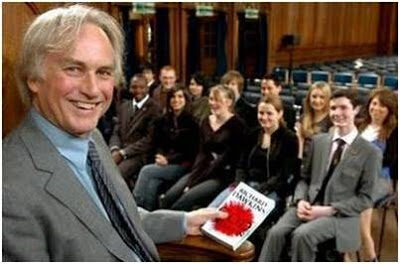
For some reason old news is new news when Richard Dawkins continues to insist that he knows how to raise your child better than you.
In “Dawkins: Faith schools are child abuse” Ian Dunt reports something that could escape notice, two objections to the article by commentators:
Why is Richard Dawkins described as an ‘infamous’ atheist?…
What do you mean by describing Professor Dawkins as “the infamous athiest [sic] and scientist,” Mr Dent [sic]? Why, “Infamous” exactly? Betraying some prejudice of your own, perchance? Well, let us get to the rather short article and see if we may discern a reason or two:
Some faith schools constitute an act of child abuse because of the way they rid children of freedom, Professor Richard Dawkins has said.
Speaking at a fringe meeting at the Liberal Democrat Conference in Bournemouth, the famous atheist and scientist told delegates that it was unacceptable to indoctrinate children into any religion or belief system.
“I’m in favour of religious education,” he said, responding to a question from the audience.
“I’m in favour of children learning about religion and its role in history.
“What I’m passionately against is indoctrination. That is wicked, that is evil, that is child abuse,” he continued.
“You would never describe a child as a Keynesian child, but we all ascribe to this anomaly where religion can be hung round the neck of a child.”
Professor Dawkins was promoting his new book, The Greatest Show on Earth: The Evidence for Evolution, at an event organised by the British Humanist Association (BHA).
To the interested reader: The Greatest Show on Earth: The Evidence for Evolution has been commented on here. Various such notions as those expressed by Richard Dawkins have been dissected, discredited and corrected various times and in various ways—see:
Atheist Child Rearing 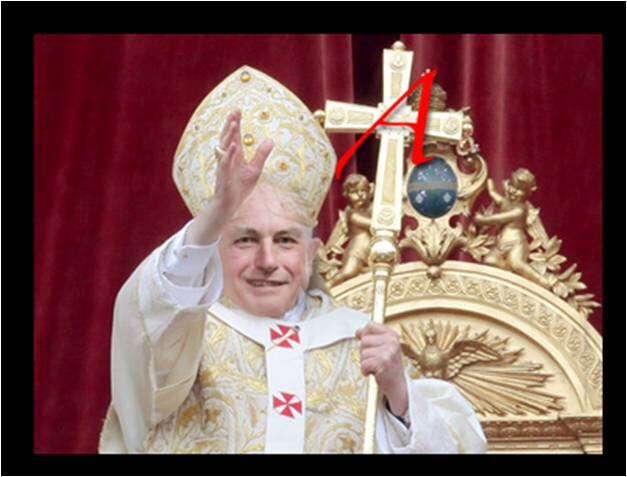
Now, the article does not refer to Richard Dawkins as “infamous” but as “famous.”
This author himself has some form of (self-diagnosed) dyslexia and this makes him empathetic to a person reading “infamous” for “famous.” One may even understand two people doing it.
But what one cannot understand—and the quotes were in their entirety for both comments—is that if one refers to Richard Dawkins as “infamous” then my oh my, it is the makings of outrage, it is prejudice!
Yet, Richard Dawkins referring to religious schools as wicked, evil and child abuse is simply erudite elucidations.
As has been demonstrated time and time again:
1) Richard Dawkins does not seem to consider that referring to children by their parent’s religion is a cultural phenomenon and not a theological one.
2) That therefore, religions have specific ceremonies for the child turn adolescent or adult makes their own decision to actually become part of the religion.
3) That Richard Dawkins asks whether there is “something to be said for society stepping in”[1] to stop you from raising your children ———according to your faith.
4) Lastly, that his ultimate goal is not merely the liberation of children from those wicked, evil and child abusing schools and parent but that his interference “might lead children to choose no religion at all.”[2]
So go on and be the human shield in front of Richard Dawkins, even when nothing was fired at him except your own misreading, and express all of the outrage that you wish. But in the meanwhile more and more sensible atheists are shunning the New Belligerent Atheists.
~~~~~~~~~~~~~~~~~~~~~~~~~~~~~~
[1] Gary Wolf, “The Church of the Non-Believers,” Wired Magazine
[2] Richard Dawkins, Now Here’s a Bright Idea
~~~~~~~~~~~~~~~~~~~~~~~~
A plea: I have to pay for server usage and have made all content on this website free and always will. I support my family on one income and do research, writing, videos, etc. as a hobby. If you can even spare $1.00 as a donation, please do so: it may not seem like much but if each person reading this would do so, even every now and then, it would add up and really, really help out. Here is my donate/paypal page.
Due to robo-spaming, I had to close the comment sections. However, you can comment on my Facebook page.
Twitter: #RichardDawkins, #Atheism
Facebook: #RichardDawkins, #Atheism
Atheism has a long history of bad PR yet, herein we are considering Atheism’s very own, self-authored, bad PR (see here for examples).
During the September 11, 2001 AD event, an 17-foot-tall cross section of steel beams broke off and impaled itself in the rubble in the form of a cross; the “World Trade Center cross.” Indeed, some interpreted the shape as a cross, and even a divine sign, and now seek to have it displayed as a part of the National September 11 Museum. The American Atheists organization (a watchgod group, an anti-Christian support group about whom you can learn here) have been fighting court battles in order to keep this from happening.
Since the Port Authority of New York and New Jersey owns the museum’s location; American Atheists concocted a claim that displaying the cross would be unconstitutional. At one of the hearings, Judge Reena Raggi stated:
“there are countless other religious artifacts on display at many museums. She asked the lawyer for the American Atheists if their goal was to censure history.”
The Judge asked Mark Alcott, lawyer for the 9/11 museum, whether an object could be added to the museum for Atheists to which he replied:
“There’s no constitutional requirement the cross has to be balanced by something else. The museum is not a proponent or opponent of religion.”
Well, for his part Ken Bronstein, of New York City Atheists, answered thusly:
“This is part of religious history. It’s an act of religious symbolism. It is a shrine now. That miracle cross should be moved back to St. Peter’s where it was for five years. What we have here is a definite consecrated religious object. It is not a historical artifact.”
So, you can have your cross and display it too…as long as it is not in the view of the secular public; keep it where you people congregate. You see, some Atheists take any and every public display of religion as a personal affront. Since they base their Atheist faith upon a negative affirmation (God does not exist or lack of belief in God; depending on the Atheist sect, see here) and emotionalism; they turn negativism into a worldview.
Fr. Brian Jordan, who served as the ground zero chaplain, noted:
“This was a sign of consolation. It’s was never meant to hurt anyone, hurt the atheists or anything like that. It is an artifact that should be included in the museum because it’s a history museum. This is a part of the memory of 9/11.”
Well, it seems that the World Trade Center cross is an Atheist symbol (learn about various Atheist symbols, and how American Atheists attempted to promulgate a universal one, here). After all, it represents the Atheist faith 99%. Generally speaking, it is safe to assume that Atheists, generally, believe, by faith, that life, the universe and everything came about uncaused by blind random chance when no one caused nothing to explode for no reason and made everything without meaning. Other Atheist sects believe, by faith, that an eternal, uncaused first case, dot of matter exploded and, voilà!, here we are to argue about it.
Well, the 9/11 event did occur to preexisting matter and it was purposefully caused by design, hence the 99% designation. Yet, thereafter it was all blind, unguided, goal-less, random chance, the working of the laws of nature, the laws of thermodynamics which resulted in the World Trade Center cross (by the way; Atheists deny that an omnipresent and omnipotent God rules the universe but affirm that omnipresent and omnipotent impersonal forces do so).
The cross got there virtually in the same way that life, the universe and everything got here and that is in the same way that Atheists, ultimately, answer every similar question; it just is, it just happened, it just happens to have happened that way, chance, coincidence, accident, time’did’it, matter’did’it, evolution’did’it, etc., etc., etc.
So, what American Atheists oppose is certain personages’ interpretation of a shape that came about randomly. American Atheists should simply affirm the 9/11 cross as symbolic of their faith in random chance.
~~~~~~~~~~~~~~
Sources:
Sarah Pulliam Bailey, “Court hears atheists’ challenge to Ground Zero cross,” Washington Post, March 6, 2014 AD
“American Atheists Work To Keep WTC Cross Out Of 9/11 Museum,” CBS Local, March 6, 2014 AD
Christianity ————-
————-
————-
————-
————-
(Transhumanism, Aliens/UFOs, Occult, Conspiracies) ————-
(Nazis, Communism, Crusades, Morality / Ethics, Abortion, Rape, Homosexuality / Trans, Audio, Books, Debates, Videos, etc.)
~~~~~~~~~~~~~~~~
With regards to the debate between Christopher Hitchens and Alister McGrath, I wanted to quote one statement by Christopher Hitchens and simply direct the interested reader, that is: the reader interested in actual factual truths, to the reference to the “The Liberation Tigers of Tamil Eelam” aka “Tamil Tigers”:
“The suicide bombing community is entirely faith based.”

~~~~~~~~~~~~~~~~~~~~~~~~
A plea: I have to pay for server usage and have made all content on this website free and always will. I support my family on one income and do research, writing, videos, etc. as a hobby. If you can even spare $1.00 as a donation, please do so: it may not seem like much but if each person reading this would do so, even every now and then, it would add up and really, really help. Here is my donate/paypal page.
Due to robo-spaming, I had to close the comment sections. However, you can comment on my Facebook page and/or on my Google+ page. You can also use the “Share / Save” button below this post.
This is a continuation of a long standing project covered the issue of atheists attempting to indoctrinate both their own and other children into atheism—see archive at this link.
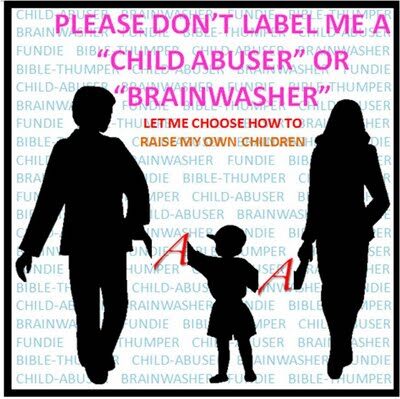
I thought to continue considering this issue as the latest round of atheist bus ads and atheist billboards has turned referring to the overwhelming majority of the world’s parents (throughout history) as “child abusers” and “brainwashers.”
Let us consider two articles one by the Internet Infidels and the second by the American Atheists.
With a premised of “An atheist friend of mine was worried that his children would turn out to be religious” the Internet Infidels wrote that “Children’s Education: Ideally it should start in early childhood.” Wow! What an insight! Children’s education should start in early childhood—tell us more Mr. Obvious :o)
Ok, I decided to begin his emotive and pointed topic with some humor—but they did state that!
Here is a fuller quotation as they did have a bit more to say on the matter,
Children’s Education: Ideally it should start in early childhood…most atheistic parents have the desire to educate their children to be atheists and since they know this education will not occur in the public schools, they think in terms of home education.
With the statement about public schools I most certainly disagree 100%. In public school not only are references to God illegal (with the exception of that which is in the Pledge) but the only reference to God they are likely to hear is in the negative; which is not only legal but virtually part of the curriculum. Indeed, by the time they graduate college they will have gone through the atheist catechism numerous times as positive references to God are litigiously removed from each and every subject.
In fact, atheists specifically weave atheist propaganda into “science” textbooks (see Protecting the Science Classroom for evidence); they preach atheism in the guise of teaching science. When asked, “What’s most important to you: advancing atheism or advancing the public understanding of science – or are they kind of one in the same for you?” PZ Myers stated, “They are inseparable.” Likewise, Richard Dawkins makes “evolution” and “science” synonymous with atheism.
The Internet Infidels continue:
However, although this home education in being an atheist is certainly desirable, it must done in such a way that children don’t rebel. Nothing should be forced or unpleasant or else atheist parents, to their dismay may find their children embracing evangelical Christianity.’
Perhaps the best sort of home education for children should not seem like education at all: Let them simply pick up the attitudes and ways of thought of their atheistic parents from causal conversations and day-to-day living…informal and unconscious education…
Subliminal education is more like it; this encourages atheist parents to be more outspoken against “religion” in front of their children with an aim at influencing/indoctrinating them.
Moreover, they encourage the reading of books that seek to discredit “seemingly supernatural and paranormal phenomena” some of which are “directly relevant to religion” so that kids who are not sufficiently prepared to think critically will, from a tender age, be indoctrinated to reject the supernatural while not realizing that the atheism of their parents, the atheism which they are supposed to inherit, is likewise premised upon supernaturalism in the form of metaphysics.
In this regard, they conclude that “Such books should aim to present the evidence and arguments for atheism and not present atheism as another dogma.” Although, they do not here define “atheism”: 1) if it is a positive affirmation of God’s non-existence then it is a dogma since it is un-evidenced and absolute 2) if it is a mere lack of believe in god(s) which asserts that we cannot know whether or not god(s) exist(s) then it is a dogma since it is un-evidenced and absolutely and positively affirms that we cannot know either way.
One recommendation was particularly hair-raising:
Children raised in atheistic homes should be exposed to religion…on TV…but initially only with the guidance of an atheistic parent who encourages the child to ask critical questions. For example, a family project might be to watch a TV preacher, see how many unsupported or dubious claims he or she makes, and consider what type of evidence, if any, could support or refute these claims.
Indeed! The very thought of my children watching a televangelist makes my skin crawl. Indeed, I would watch it with them and elucidate who very many of their views conflict with scripture. Note that it is unlikely that a televangelist would present evidence because 1) they are generally not conducting expository Bible studies but are cherry-picking those half verses here and there that purport to support their claims and 2) even more Bible based expositors on TV are preaching, quite literally, to the choir and are therefore presuppositional.
They could watch shows such as John Ankerberg’s apologetics/evidence based program (or others of which I am not aware since I do not have cable/satellite). Yet, the point of the Internet Infidels is to have the atheist parents lead their children towards the very same conclusions they have reached—conclusions to which many of them came in childhood and have not developed since.
As a part of “atheistic education at home” the Internet Infidels also recommend watching “Bill Nye: The [atheism disguised as] Science Guy.”
The Internet Infidels then go from the home to atheist Sunday Schools, summer camps and churches:
Home education is not the only type of atheistic education for children, however. There is also the equivalent of an atheist Sunday school. Here instruction takes place in some atheistic or rationalistic center. One good example of this is the work done at the North Texas Church of Freethought…This is a real church with community spirit, uplifting sermons, church socials, a singles group, and Sunday school—except that there is no mention of God…the church’s Youth Education Director and runs two Sunday school classes—one for children from infancy to 5 years old and another for children from 6 years to 14 years
One of the Sunday School lessons is to teach atheist children that Christians are their enemies thus, inculcating an us versus them, suspicion raising and prejudice based mentality as they are taught, “how atheistic boys should deal with being bullied by Christian boys.”
Another example of atheistic education for children outside the home is a humanist summer camp, called Camp Quest…The children are taught that there are no gods, devils, heaven or hell…
This is refreshingly honest as Camp Quest and its supporters have labored diligently to deny that it is an atheist camp to indoctrinate children; although the parents who send their children there are very honest about their aims (dig beneath the media campaign surface and see Camp Quest exposed for that which it is: here).
Let us end on this note:
The prospects for atheistic education are closely tied to the prospects of atheism movement as a whole. Although progress is being made too few atheistic groups have the equivalent of Sunday schools and adult education programs. Better and more children’s books need to written, and more extensive certification programs are needed. In short, atheistic educators have done well with limited resources. But they need our support to do more and better work.
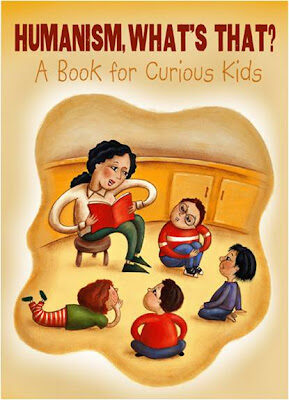
The American Humanists makes reference to an atheist book for children and state:
I read this book to the campers at the Mini Camp Quest session at the Atheist Alliance International Conference…As for whether the book will help normalize atheism, only time will tell….One way I think it will help is that kids from non-religious families can add a story about an atheist family to their bookshelves. Whether it helps normalize atheism in broader society will depend on it being carried by libraries and bookstores, and being read by families who do not identify as atheists…
Overall, so much for “Hey preacher, leave those kids alone.” I, for one, teach my children that other people do not believe like we and that we are to teat others as we want to be treated, that God created all people in His image and that therefore, we are to love all people and have no right to violate anyone.
On the following premise the American Atheists recommend how to go about raising atheists:
I often get requests for advice from parents who wish to raise their children without religion, or who at least want to provide a religion -free influence in the lives of their children…I have what I think are some pretty good ideas on raising nonreligious children…
Thus, they offer recommendations as to how to, “make raising an Atheist child easy” and ask for more recommendations, “Got more suggestions on raising an Atheist child? Send them up!”
Note the paint with a broom approach:
Address the issues of gods as common nouns. There is not one god, there are many. Thousands in fact, all the same and all fictional. Talk about Zeus, Qetzalcoatl, Thor, and Jesus. Explain how these gods were used in the past (to answer unknowns), how followers of these gods were absolutely positive of the god’s existence, and how they even killed in their names. As gods got old, new gods came along, for no real reason other than a need for change and the progress of science. Now, there are far fewer gods left, and many people still believe in them, for the same reasons they believed in ancient Tiki gods. In my house, I have a sculpture of Neptune on the wall. In the sculpture, Neptune is blowing on a ship, filling its sails. My four-year-old and I talk about it often. How silly those people were – to think that an old man in the sky was watching them, and blowing their ship along the ocean!
By equating all gods and mythologies in their minds, they will be more skeptical when someone tells them that one of them is real.
[6] Elizabeth Cady Stanton, Susan B. Anthony, Matilda Joslyn Gage and Ida Husted Harper, History of Woman Suffrage, p. 95
This is a very honest militant atheist sort of approach: tell the kids that regardless of the theistic claim, they are “all the same and all fictional”—this is logically and theologically bankrupt. It is urged that the kids become scared of those people, an emotive appeal to foster an us versus them prejudicial mentality, as “they even killed in their names.”
I could see it now, the four-year-old wants to eat crackers off of the floor or play with something and here comes good ol′ daddy stating:
Now son/daughter let us bask in our supreme erudition and laugh at those very dangerous and superstitious people—ha ha, and ha, ha, ha!
Oh, by the way; the universe and absolutely everything it is an accident which occurred when nothing caused an eternally existent uncaused piece of matter to exploded and made everything for no reason. You are nothing but a glorified animal whose purpose is to reproduce your DNA. Life came in to being, by chance or, as our hero Richard Dawkins states it “luck,” when lightning struck a swamp. Oh yeah, there are not ethical imperative but be nice. And when you die you are annihilated and your corpse will become worm food. Sweet dreams!
The key statement is “By equating all gods and mythologies in their minds, they will be more skeptical when someone tells them that one of them is real”; they are pre-programmed to place all metaphysic claims into one quaint and fallacious little box. Consider that theism and atheism are both ultimately metaphysically premised. Thus, by equating theism and atheism they will be more skeptical when someone tells them that one of them is real; fair enough. But this is not the point, the point is that this statement neglects to consider natural theology which is seeking to ascertain whether there is a cause, a creator, of the universe via science and philosophy—via our observation and musing. Through natural theology we can make a case for a creator, discern some of the creator’s characteristics and even discern between various supernatural claims: such as I did with the Flying Spaghetti Monster, the Invisible Pink Unicorns, et al.
The American Atheists continue:
Teach them magic tricks. As early as I can remember, my dad gave me magic tricks to astound my friends. I would tell them “There’s no trick – it’s Magic!” All the while, I knew those who believed it were being fooled. I learned that there is always a trick, always an explanation, even if I didn’t know what it was at the time. Sound familiar?
Yes it does: 1) this is a very good point but we must be careful to not fall into the trap of presupposing atheism, or absolute materialism, because this can lead to rejecting any and every claim to evidence of design by merely restricting our thinking, not following evidence where it leads and adhering to materialism by simply saying, “Someday, yes surely someday, we will uncover the materialistic explanation, and explain the explanation and the explanation of the explanation, scientists are working on it” and 2) as I explained in my essay Atheism and Science – The Magus an atheist can, metaphorically speaking, reverse engineer the trick but only far back enough to explain its mechanics while the theist can go further and seek to ascertain the trick’s conceiver—the creator’s intelligent design.
Also:
Get some hands-on, face-to-face charity in there. Show them how good it feels to help someone. Tell them this is the Atheist way (which is true) – hands that do are much better than lips that pray. On a related note, see if you can find people on TV who are praying instead of helping, and point it out.
If not before, by now you can see how very empty claims to merely being interested in getting kids to think critically turns into an activist atheist indoctrination in prejudice. Firstly, note that the motivation to help someone is not that they need help but that it will make you feel good. Yes, the person in need is being helped but it is a selfish and ulteriorlly motivated act (as I noted in detail here).
I did not know that there was any such thing as “the” “Atheist way” but certainly understand that atheists think that their—one and only, “the”—way is true and all others false. It is also being encouraged to think in a quaint little box of prepackaged atheist talking point inspired groupthink: “hands that do are much better than lips that pray” and hands that do, in conjunction with lips that pray, are much better than merely selfish hand that do and do for selfish reasons.
In fact, the American Atheists got this right out of the Bible:
What does it profit, my brethren, if someone says he has faith but does not have works? Can faith save him? If a brother or sister is naked and destitute of daily food, and one of you says to them, “Depart in peace, be warmed and filled,” but you do not give them the things which are needed for the body, what does it profit? Thus also faith by itself, if it does not have works, is dead. But someone will say, “You have faith, and I have works.” Show me your faith without your works, and I will show you my faith by my works. You believe that there is one God. You do well. Even the demons believe—and tremble! But do you want to know, O foolish man, that faith without works is dead?…
For as the body without the spirit is dead, so faith without works is dead also (James 2:14-20, 26).
Only praying and speaking to them about getting their needs filled is nothing without doing something.
Note also that while you are trying to poison your child’s mind with prejudice as you “see if you can find people on TV who are praying instead of helping” you can also say,
Oh, gee, I guess that if I were honest and if I were really and merely teaching critical thinking I would not be hypocritically watching TV, channel surfing, in order to point out that those people are praying instead of helping while watching TV instead of helping people.
Meanwhile, atheists collect tremendous amounts of money in order to purchase anti-Christian bus ads and billboards while those Christians whom they condemn are busy establishing, administering and funding homeless shelters, soup kitchens, disaster relief organizations, hospitals, adoption agencies, foster homes, addiction clinics, etc., etc., etc.
Lastly, note that the American Atheists state that the USA is a, note the terminology, a “Christian-dominated nation” and thus, kids will recognize that most people are not like them. Thus,
it’s important to set up ideals and role models for children to admire…Thomas Edison, Albert Einstein, and Susan B. Anthony come to mind.
Thomas Edison was a neo-Pagan atheist as he wrote the following in reference to an article about him,
You have misunderstood the whole article, because you jumped to the conclusion that it denies the existence of God. There is no such denial, what you call God I call Nature, the Supreme intelligence that rules matter.
There is certainly much about Edison to admire such as his view that “Nonviolence leads to the highest ethics, which is the goal of all evolution. Until we stop harming all other living beings, we are still savages.”[1] This he believed even whilst stating that “nature is not kind, or merciful, or loving.”[2] Thus, we see an early example of a neo-Pagan atheist who appointed himself arbiter of evolution (which continues today; see Memetic Eugenics and the Evolutionary Watchmen). Also, do not forget to quote to your kids Edison’s racist and anti-Semitic statements—which are not surprising considering that he believed that human beings [are] only an aggregate of cells and the brain only a wonderful machine.[3]
Albert Einstein stated:
I’m not an atheist. I don’t think I can call myself a pantheist. The problem involved is too vast for our limited minds. We are in the position of a little child entering a huge library filled with books in many languages. The child knows someone must have written those books. It does not know how. It does not understand the languages in which they are written. The child dimly suspects a mysterious order in the arrangement of the books but doesn’t know what it is. That, it seems to me, is the attitude of even the most intelligent human being toward God.[4]
Susan B. Anthony “made veiled, slippery racist comments…refused to speak out against lynching?…formed a separate ‘suffrage’ organization against the vote for African-American men…Anthony asked for censorship of all history that ‘reflected badly on others’ from her biography.”[5]
Anthony seemed to excuse racism or perhaps saw it as utilitarian as she once stated, “Why should we not accept all in favor of woman suffrage to our platform and association even though they be rabid pro-slavery Democrats?”[6]
We do not have to pretend that someone was perfect in order to admire them and be inspired by them. For example, the Bible presents both its heroes and villains with warts and all.
Now, after encouraging kids to develop a us (the erudite and helpful) versus them (the ignorant and helpless) bigoted mentality the American Atheists go on to state:
As far as those other kids are concerned, your main problem will be bigotry…teach them to combat it, either actively or passively…the purveyors of bigotry will only know that they should think Atheists are bad [or “Atheists are ‘evil’”]…Role playing helps. Pretend you’re the bigoted kid and write down what he might say and the corresponding answers.
Stick to the surface level what’s wrong with that? all you want; I notice that kids are being prepped to view theists as their enemies. Also, see what I meant about the atheist catechism (in part 1)? Role play: when they say this, you say that.
I appreciate honesty and the Internet Infidels and American Atheists are very honest, at least in the two articles we have considered in this parsed essay. When considering the surface level claims of concern for free thought and free choice of children as they seek to rescue them from “child abusers” or “brainwasher” remember that what lies beneath the surface is atheist doing the very same things which they condemn.
The jig is up! Actually, it was up before it even became a jig.
Go back to seventy years when:
Lewis, in his prophetic work The Abolition of Man, critiqued an English textbook, written in the 1940’s, which was designed for school children. Lewis found that more than English was being taught in this book, for the authors rejected objective truth and traditional values and proclaimed a type of moral relativism. Lewis expressed concern for two reasons.
First, the children who read this textbook would be easy prey to its false teachings. Second, this would lead to a culture built on moral relativism and the rejection of objective truth, something that, according to Lewis, has not existed in the history of mankind. [7]
Indeed, jump to virtually any period in history and there they are.
As previously reported both Internet Infidels and American Atheists (see links to previous parts below) make is very clear that their goal is not merely to oh so innocently inspire their children towards critical thinking but that they want them to become atheists (much more relevant evidence is found here).
If you consider commenting by authoring a tu quoque (properly pronounced by pinching one’s nose and in a whiny tone saying, “You-oooooooooo do it too- oooooooooo”) keep in mind that a tu quoque is just that—illogical. Atheists cannot shrug off the fact of the hypocrisy of those who cry “child abuse” and “brain washer” against religious parents when they do the same things.
Now further evidence has been uncovered as promulgated by Atheist Activist (group reported about under “Atheist Activist” – driving a wedge between decent people and road side memorials).
In their Actions page they list Raise Kids as Atheists which leads to the page “Raising Children as Freethinkers”—a “Freethinker” is an atheist who is ashamed to admit it :o)
Atheist Activist writes:
Many nontheists agree with Richard Dawkins that “‘Odious as the physical abuse of children by priests undoubtedly is, I suspect that it may do them less lasting damage than the mental abuse of having been brought up Catholic in the first place.”
If you choose to raise your children as freethinkers, there are plenty of resources available to you and your children.
These include, “Be an Atheist Parent,” “Godless Children…,” “Raising Secular Children,” “AtheistParents,” “Parenting Little Heathens,” (ok, I can relate to this one—on one level).
There is also, “Camp Quest” (which I exposed here), and “Mission of Scouting For All” which seeks to “advocate on behalf of its members and supporters for the restoration of the traditionally unbiased values of Scouting as expressed and embodied in the Scout Oath & the Scout Law, and to influence the Boy Scouts of America (BSA) to serve and include as participating members ALL youth and adult leaders, regardless of their spiritual belief, gender, or sexual orientation.”
So, please write to them and tell them to hide this page as they are giving up the goods.
Notes:
[1] Sarah Miller Caldicott, Michael J. Gelb, Innovate Like Edison: The Success System of America’s Greatest Inventor, p. 37
[2] Edward Marshall, ““No Immortality Of The Soul” Says Thomas A. Edison,” New York Times, October 2, 1910 [3] Ibid. [4] “What Life Means to Einstein: An Interview by George Sylvester Viereck,” The Saturday Evening Post, Oct. 26, 1929
[5] Art Lemasters, “Who’s Lying to You About Early Feminism? – Susan B. Anthony: Racist Manipulator,” MND, August 21, 2003
[6] Elizabeth Cady Stanton, Susan B. Anthony, Matilda Joslyn Gage and Ida Husted Harper, History of Woman Suffrage, p. 95
[7] Dr. Phil Fernandes, “The Death of God, Truth, Morality, and Man,” Institute of Biblical Defense – Upholding and Defending the Christian Faith referencing C. S. Lewis, The Abolition of Man (New York: Collier Books, 1947), pp. 16-17, 23, 28-29
