Month: November 2015
Oprah Winfrey – Priestess of Spirituality and Preacher of Strict Exclusivism, part 3
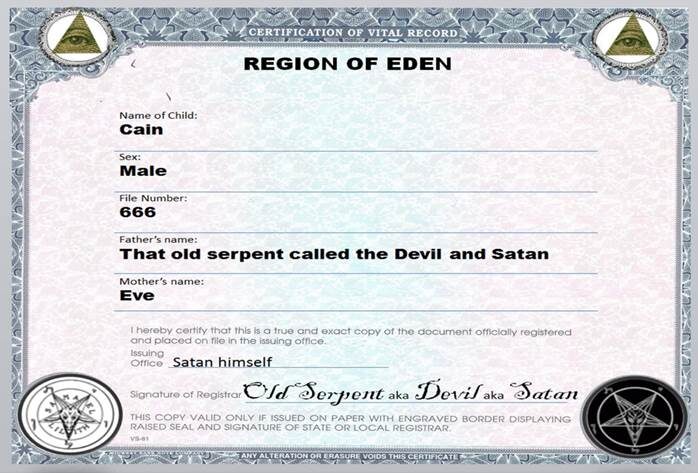
Open reply to Zen Garcia on Cain as serpent seed of Satan
I will open this reply with a big thank you to Zen Garcia for his continued and good natured correspondence on this complex and contentious issue.
I do not take such polemics lightly and replying to Zen has made me do a lot of research and writing on this issue to the point that I have now established a main page on my repository website devoted to this issue (with some more articles to yet come); see Serpent Seed of Satan.
To those unaware, the serpent seed of Satan theory asserts that Cain is the literal son of Satan as his birth resulted from Eve having sex with the serpent; Satan. My initial reply was posted as Reply to Zen Garcia on the serpent seed of Satan theory. Zen replied to the reply and so here we are.
Most odd is that Zen did not reply to my elucidation of that which serpent seed of Satan theorists claim is a great mystery only answerable via their theory; why Eve was cursed with increased pain in childbirth due to the sin of eating a fruit. They appeal to the biblical ethic of the punishment fitting the crime (eye for an eye) and that thus, since the punishment pertains to childbirth which results from sex, tree, fruit and eating must be metaphorical of sex, below we will see that Zen correlates “eating fruit from the tree of the knowledge of good and evil with the birth of Cain.” The Bible is actually very clear about whey Eve’s, and Adam’s for that matter, curses were that which they were; see my initial reply for my elucidation of these supposed mysteries.
Those who read my original reply (or who will hop skip and jump over to it now and then continue here) will note that Zen’s first point pertained to the meaning of modern day English punctuation marks, in this case a semicolon, within translations of languages to which they have not relation whatsoever. In granting his arguments, I noted that it ended up causing him quite a bit of trouble when I appealed to semicolonism within texts he employed to support the serpent seed of Satan theory.
Thus, Zen Garcia began his reply to me very much on point by noting:
Even without punctuation chapter and verse breaks this knowledge of Cain being the firstborn son of the serpent is plainly found all throughout the Old and New Testaments.
In this regard, he will eventually point us to “Genesis 3, Matthew 13, Matthew 23, Matthew 25, and John 8.”
Yet, beyond these texts with state is plainly, he also notes that “one will find many of allusions to it” within a “variety of wisdom texts” and you may recall that I dealt with some such citations within my first reply. In fact, in this regard, Zen noted:
It’s funny to me that even though you belittle the relevancy of the Targums and deny those parts which absolutely assert Cain being a child of the devil, you reference them when you feel they support your claim that the only thing which made Cain different from the other sons of Adam was his countenance, behavior, and aptness to sin rather than his being a literal physical seed of the nachash.
In truth his differentiation was based in part on his genetics as well as behavioral choices, both of which followed after his father the devil as he was sired by the wicked one as affirmed by Saint John but yet you deny this also.
Ironically, it seems that it is Zen himself who, conversely, will reference them when he feels they support his claim but belittle (or simply does not reference) their relevancy when they do not.
Zen is just misunderstanding me a little bit; my point was to 1) reply disapprovingly to the claims of the Targum. In this case we were dealing with the Targum of Palestine, Commonly Entitled the Targum of Jonathan Ben Uzziel, on the Book of Genesis aka Targum Pseudo-Jonathan which dates to the sixth century AD (no, not BC) thus, circa 1,500 to 2,000 years after the Book of Genesis was written (depending on when one dates Genesis).
I was then 2) granting his argument so as to show him where it leads him.
Thus, I overall 1) belittle the relevancy of the Targums and deny those parts which absolutely assert Cain being a child of the devil but then 2) reference them when you feel they support my claim so as to show Zen Garcia that the Targum is causing him trouble as well.
Also within my initial reply was a point and counterpoint between us with Zen asserting that the reason that Cain was a sinful murderer whilst Adam was not was that Cain was not Adam’s son but Satan’s. Thus, it was Cain’s literal Satanic genetics that made him a sinning murderer; something he would not have been had be had Adam’s genetics. My reply was, to restate it succinctly, that both Adam and Eve were sinners and they had 100% perfect genetics created by YHVH Himself. Thus, they were sinners even though YHVH is not and Cain was a sinner as was Adam and Eve, his parents.
Zen’s reference to “countenance, behavior, and aptness” and “behavioral choices” stem from the fact that, as I elucidated, the Bible tells us again and again and again that these were the reasons for Cain being a sinner and not genetics.
Now to an important point about scholarship as Zen Garcia wrote:
It’s my opinion that it is only because this knowledge has been lost to us and is not taught in most mainstream churches that outside sources may be needed to pique the interest of some such as myself, to revisit and look anew at the gospel we have been reading for years and that many of us thought that we were intimately familiar with.
If this knowledge were taught in the seminaries or in Sunday school by teachers world-wide there would be no question or contention in regards to it as revelation…
For my part, I readily discern that Zen has put very much research into his views, he does not come to them due to lack of information and he explains them peppered with citations and quotations (even if very partial and periphrastic at times). I appreciate his research but disagree with his conclusions.
For my part, I do not oppose the serpent seed of Satan theory due to it not being taught in most mainstream churches or lack of familiarity with the material. I base it on having done a lot of research (including many writing by proponents of the theory, as you can see at Serpent Seed of Satan), taking the Bible for what it states so as to not take a text out of context to make a pretext for a proof-text and taking wisdom literature (apocrypha, etc.) within their own historical, cultural and grammatical context.
Zen may be right that if seminaries and Sunday schools, world-wide, taught the theory it there would be no question or contention. Yet, then again, there are all sorts of questions and contentions regarding things taught in seminaries and Sunday schools and revelation is not based on majority view but on what the Bible actually states and this is the issue at hand.
Zen also refers to “overcoming the bias of the traditional beliefs systems.” Well, my initial interest and research of Genesis 3 was due to certain Catholic translations that have that it is “she” (Mary) who will crush the head of the serpent and not “he” (Jesus) for details on this, see: Mary in Roman Catholicism, part 9 – Will She “Crush Your Head”? Thus, researching the serpent seed of Satan theory is my extension of this research.
Therefore, he is certainly not referring to me when he states:
Most do not understand what He was referring to because so many do not read their bibles for themselves and rely upon the interpretations of usually their church pastors or others that they look up to, respect, or admire when it comes to understanding the scriptures.
Those that do read in this day and age where so many don’t, spend more time reading books written by those they believe understand and can interpret the scriptures for them, than they do in actually reading the Bible for themselves.
Now we come to the claim that “knowledge of Cain being the firstborn son of the serpent is plainly found all throughout the Old and New Testaments” with Zen Garcia noting:
I assert that those who understand eating fruit from the tree of the knowledge of good and evil with the birth of Cain is because this knowledge was emphasized by Christ Jesus Himself when imparting this same revelation in Matthew chapter 13.
Well, I wrote, specifically about parables within my initial reply and have also written more on it sense then so I will simply direct interested readers to the following articles:
Did Jesus teach the serpent seed of Satan theory in Matthew 23?
Did Jesus teach the serpent seed of Satan theory in John 8
Did Jesus teach the serpent seed of Satan theory in the parable of the sower?
The parables are, indeed, very clear that it was Cain’s actions and not his genetics that are at issue.
Part of the issue is that Zen concludes the following from Matthew 13:
This chapter also defines how the tares entered the world, and how the enmity between the seed of the woman and seed of the serpent applies to the end of days and we as last generation…
[Jesus] clarifies the parable of the garden and the sower with His explanation of the parable of the wheat and the tares. This explanation should absolutely elucidate all speculation on the previous parables and verses which are contingent upon this discernment such as in Genesis 3, Matthew 13, Matthew 23, Matthew 25, and John 8…
When one construes the gospel with such perspective…the Old and New Testament make much more sense…The entire theme of the gospel is interwoven with this premise in mind…it takes suspending one’s belief, opening self to new possibility, and being willing to entertain insight different than what one had traditionally embraced as truth to discern the gospel in the way I believe intended by the Most High…
The determination of whether one was a seed of the woman or a seed of the serpent was elaborately kept up with in the early annals of scripture. This is why there is an elaborate attempt by old Testament patriarchs to keep up with lineage and whom begat whom…
The prophecy in Genesis 3:15 foreshadows the enmity between the seed of the serpent and the seed of the woman as it plays out as the contention between The bloodlines of Cain and those of Adam. We see this battle raging throughout all of the epochs of history…
I decided to gather these statements so as to note that it is true that, specifically as per Genesis 3, there is to be enmity between the seed of the woman and seed of the serpent (although, Zen seems to know something I do not in claiming that “we” are the “last generation”). If you read my articles on the parable you will see that the New Testament tells us exactly who are the seed of the serpent.
The issue is that Zen’s interpretation is that the contention between The bloodlines of Cain and those of Adam. This is the issue and this is the problem. You see, serpent seed of Satan theorists come in many forms; from Zen’s seeking to rightly divide the Word of God all the way to those seeking an excuse for their Jewish hating anti-Semitism and beyond (see my article Serpent seed of Satan in British-Israelism, Anglo-Israelism and Christian Identity also Dan Gayman – Jews as serpent seed of Satan and Wesley A. Swift – Jews as serpent seed of Satan, the KKK and pre-Adamic race for such sad examples).
The point is that to Zen Garcia the bloodlines are of Cain and of Adam but other serpent seed of Satan theorists disagree. Some take a Reform Theology Calvinistic view and claim that the bloodlines are the predestined saved vs. the predestined lost. Some claim that they are God’s true chosen people (generally Aryan whites) vs. the Jews. In the case of Philip E. J. Monson (one time head of the Anglo-Saxon Federation of America) the serpent seed of Satan where the actions of the Catholic Church with the Pope being the “Prime Minister of the Devil.”
Thus, who the battle is between seems to be up for grabs, simply enter the name of those with whom you are personal enmity on the serpent seed camp.
In a specific reply to certain concerns of mine regarding the manner in which Zen Garcia expresses that which in his view is the revelation of a mystery, the serpent seed of Satan theory itself, he notes:
…understanding the garden parable in the way that I and many others present it…[amounts to a] profundity of revelation…This is the reason I believe Christ disperses the assertions “Because it is given unto you to know the mysteries of the kingdom of heaven, but to them it is not given…”
I reference understanding this revelation in such way as having eyes that ‘see’ and ears that ‘hear.’ It’s not that I am passing judgment on anyone nor am I trying to belittle others or imply that those that don’t accept this interpretation are not seekers of truth; I am just alluding to the same postulation put forth by Christ when making comparison to those that discern the garden parable in the way that He explains it and those that don’t.
The issue is that the Bible tells us exactly why Cain is considered to be of the evil one and exactly who are the seed of the serpent; see my articles for details.
Lastly, you may recall from above that Zen stated that “knowledge of Cain being the firstborn son of the serpent is plainly found all throughout the Old and New Testaments” and that “one will find many of allusions to it” within a “variety of wisdom texts.”
Within the original statements to which I initially replied, Zen appealed to the sixth century AD Targum, in this case he appealed to the “Writings of Abraham” which, I must admit, is a little difficult to pin down. All anyone seems to know about it is that it is based on papyri found in Egypt 1831 AD. Thus, for all we know, it is The Testament of Abraham Lincoln as he was born 1809 AD. Well, alright, maybe not.
However, some of the confusion about the text is that there are references to the “The Writings of Abraham,” also to “The Testament of Abraham” and “The Testament of Abraham, The Acts of Xanthippe and Polyxena, The Narrative of Zosimus” there is “The Testament of Abraham” within the “Ante-Nicene Fathers, Vol. IX” and a “Book of Abraham” which the Mormon Church of Jesus Christ of Latter Day Saints claim that their founder, Joseph Smith, began translating in 1835 AD (FYI: “Egyptologists, beginning with Theodule Deveria in the late-19th century, have disagreed with Joseph Smith’s explanations of the facsimiles. They have also asserted that damaged portions of the papyri have been reconstructed incorrectly. The controversy intensified in the late 1960s when portions of the Joseph Smith Papyri were located. Translation of the Egyptian text revealed that the rediscovered portions bore no relation to the Book of Abraham text”— see here).
In fact, one source, The Messianic Evangelicals: New Covenant Assemblies of Yahweh (whatever that is) has the text that Zen Garcia quotes as being “The Second Book of Abraham also known as the Writings of Abraham” and noting, for what is it worth:
The Second Book of Abraham, originally known as the Writings of Abraham…The accuracy of this book (which was not produced by a member of this order and was originally heavily tainted with LDS ideas, both historical and theologically) cannot be vouched for and should therefore be treated with caution. A number of revisions have been made by this ministry to remove the bulk of false LDS teachings from it but this is still not complete.
They reference a “fourth revision of the original” but do not provide any information about the original beyond the statements above and that “There has been some debate as to whether it should be removed altogether…a fifth revision may be made in the future to remove all remaining traces of Mormonism.”
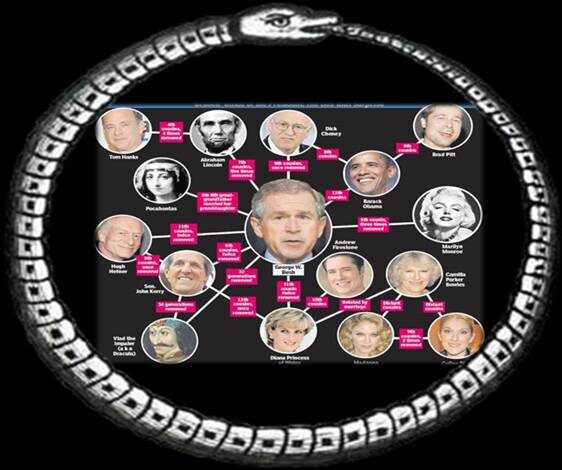
The point being that the text Zen quotes appears to be very much literal apocrypha with no one knowing anything about its author nor date or authorship (any info on this would be appreciated). Now, I certainly have no problem whatsoever in urging researches to read such texts as we can derive some historical and cultural context as well as to discern what sorts of theological speculations were afoot at the time of authorship. My problem with Zen Garcia is that he has turned discernment on its head. One is to read such texts and judge them by the Bible but Zen judges the Bible by such texts. This is evidence in many, many ways such as, for example, his claim that Adam and Eve were disembodied beings of light who did not have bodies and did not live on Earth until after the fall—based on apocryphal texts. But why make such claims when the Bible states very, very clearly that this was simply not the case. Genesis 1 references the earth 21 times and Genesis 2 references it 6 times (with it sometimes referring to the planet and other times to the soil/dirt upon the planet). Moreover, Genesis 2 specifies that Eve was made from Adam’s rib and that when he saw Eve he said, “bone of my bones, and flesh of my flesh” and Jesus elucidated “spirit hath not flesh and bones” (Luke 24:39).
Yet, Zen does not allow the Bible to correct his conclusions that he bases on apocrypha rather, he contradicts the Bible based on the apocrypha.
Worse yet, much, much worse; Zen has actually told his audience to read the Nag Hammadi and the problem is not that the told them that they should merely read them but that they should do so because they are, or so he claimed, the writings of the apostles.
This is an utterly shocking claim as the Nag Hammadi texts represent some of the purest forms of literally Satanic doctrine. Now, in making this claim I am not merely offering a random opinion but am appealing to someone with whom Zen Garcia has some acquaintance. Dr. Joye Jeffries Pugh is a fellow (to Zen) believer in the serpent seed of Satan theory and in her book “Eden: The Knowledge of Good and Evil 666” (which I reviewed here) devotes an entire section to the Nag Hammadi texts which she calls “Satanic.” Here is some of what she has to say on the matter (emphasis added for emphasis):
…hypnotic vibration allowed Satan, envisioned as a bright light, to enter their souls and possess their minds. Gnostics believe that once a person accepts the light, they have become illuminated. Those possessing this illumination declare that they have received a divine spark that has given them a god-like status, thereby making them equal to the Angels. Those who practice Gnosticism today follow teachings from texts that were found buried in Egypt.
These texts, called the Nag Hammadi, are believed to have been written by their god. The Nag Hanunadi is a library of books that include a total of 51 texts called Codices…a closer look at the Gnostic Codices so we can further distinguish their differences from Christianity’s biblical accounts.
Codex One uses New Testament language. It records that secret books were written regarding the resurrection of Jesus and were given to the Apostles. These secret books explained to the Disciples the ‘Craft’ of Black Magic…They were apparently written in an effort to downplay the true resurrection of Jesus.
Codex Two rejects what is in the Genesis account of the Bible. It totally magnifies Satan as the good god of mankind. The texts composing his Codex explain that it was Jehovah who was the deceiver in the Garden of Eden…Therefore Satan, not Jehovah, is applauded as the ‘Bringer of Light and Truth’ to mankind…
The Texts also taught that mankind was capable of re-incarnation so that he could, eventually, obtain god-hood through successive visits to earth.
In the Gospel of Phillip contained within this Codex, Mary Magdalene is referred to as the most loved Disciple of Jesus. She is recorded as being Jesus’ favorite companion, whom He often kissed…Jesus loved her more than anyone else.
If Zen takes issue with this, he can contact Dr. Pugh and report back their discussion. It is a fact that the Gnostic Nag Hammadi texts turn the Bible upside-down, inside out and backwards. For some details see Gospel of Judas, part 5 of 7 : AEON SOTER – Some Gnosis of Gnosticism.
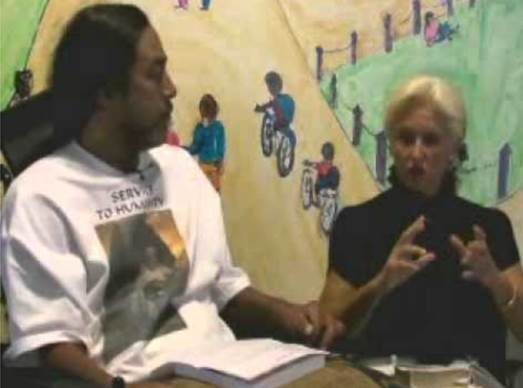
Zen Garcia and Dr. Joye Jeffries Pugh
Now back to Zen, who wrote the following citing chapters 11-13 (which The Messianic Evangelicals cite as 2 Abraham 5-7).
The determination of whether one was a seed of the woman or a seed of the serpent was elaborately kept up with in the early annals of scripture. This is why there is an elaborate attempt by old Testament patriarchs to keep up with lineage and whom begat whom.
I would cite that this is the reason in the Writings of Abraham it says this:
3. Eight years later Noah begat a son of his wife Naamah, who was of the seed of Cain, and he called his name Ham, for he said, Through him will the curse be preserved in the land.CHAPTER 12
NOW Noah had taken a wife of the seed of Cain, and she was a righteous woman; nevertheless, the curse remained with her seed according to the word of God.
2. And Noah took her on this wise: For the word of the Lord came unto Noah, saying, Take unto thyself Naamah, the daughter of Lamech, who dwelleth here in the city of thy fathers, for she hath been faithful to my gospel, wherefore I shall preserve through her the seed of Cain through the flood.
Let us pause for a moment as this is very interesting indeed. One of Zen’s main points is that Cain was a sinning murderer since, essentially, he could not help being otherwise as his genetics were, literally, Satanic. Yet, here we learned that even though, Naamah was “of the seed of Cain” she was, nevertheless and somehow going against her Satanic genetics, “a righteous woman” and “hath been faithful to my gospel” (the usage of the term “gospel” mey be a hint of a very, very late dating for this text) even though “the curse remained with her seed” and this was “according to the word of God” even though it was “the Lord” himself who told Noah to “Take unto thyself Naamah” from the genetically Satanic and cursed seed of Cain which YHVH wanted to ensure was preserved and not wiped out in the flood.
Also, by the way, the Bible does not mention the name of Noah’s wife.
Back to the quote:
3. This Lamech who was the father of Naamah was of the seed of Cain being the son of Methusael, the son of Mahujael, the son of Irad, the son of Enoch, the son of Cain. 4. Lamech had married Adah and Zillah, the daughters of Cainan, the son of Enos, the son of Seth, the son of Adam. Adah bare children unto Lamech, but Zillah was barren until her old age when the Lord opened her womb, and she conceived and bare a son and a daughter. 5. Her son she named Tubal Cain, saying, After I had withered away have I obtained him from the Almighty God.
6. Her daughter she named Naamah, saying, After I had withered away have I obtained pleasure and delight.
CHAPTER 13
WHILE Naamah was yet a child, great consternation fell upon the seed of Cain, for Irad the Son of Enoch, the son of Cain, had become a member of the secret combination and was privy to all it secrets until one night when the Lord appeared to him in a dream saying, Irad, thou hast done evil instead of good and hast followed after Satan rather than God; wherefore, I shall destroy thee and thine house when I send in the floods upon the earth.
Pausing again, note that Genesis 6 states the reason for the deluge, the great worldwide flood:
The earth also was corrupt before God, and the earth was filled with violence. And God looked upon the earth, and, behold, it was corrupt; for all flesh had corrupted his way upon the earth. And God said unto Noah, The end of all flesh is come before me; for the earth is filled with violence through them; and, behold, I will destroy them with the earth.
Yet, the Writings of Abraham contradict this as it states that YHVH will “send in the floods upon the earth” because Irad “become a member of the secret combination and was privy to all it secrets” and thereby “hast done evil instead of good and hast followed after Satan rather than God.” Zen would do well to discredit the Writings of Abraham for such contradictions of the Bible rather than appealing to it because it make a few statements he finds favorable to his theory.
I close now by quoting the rest of the text with which Zen Garcia ended his reply:
2. But Irad was pricked in his heart and pled with the Lord to show mercy and preserve his seed through the great flood.
3. Seeing that his penitence was true, the Lord said to him, Irad, if thou wilt repent and reveal the evils of the secret combination unto the sons of Seth, I will have mercy upon thee and I will join thy seed unto the seed of Seth that it may be preserved through the great flood.
Zen, my friend, are you even reading this stuff which you are quoting? 1) YHVH was going to floo the entire planet because of that which Irad did. 2) Irad repents and so YHVH forgive him and yet, He still floods the entire plants because of what Irad did. 3) The qualifier to the forgiveness is that Irad “reveal the evils of the secret combination unto the sons of Seth”; secrets, you will readily recall, that resulted in having done “evil instead of good” and amount to having “followed after Satan rather than God.” For some odd reason, the Godly seed of Seth had to be let in on this Satanic doctrine and practices.
4) This was so that YHVH “will join thy” Satanic serpent “seed unto the seed of Seth” so that “it may be preserved through the great flood.” But then, pray tell, since the seeds, the seed Godly seed of Seth and the Satanic seed of Satan, were joined; what does this do to the claim that there is a seed of Seth and a completely separate seed of Cain that are at enmity with one another? It does away with it, that is what is does.
Recall that the reason for, the premise upon, which Zen quoted the Writings of Abraham was that the “old Testament patriarchs” made “elaborate attempt[s]” to “keep up with lineage and whom begat whom” due to seeking to determine “whether one was a seed of the woman or a seed of the serpent” for which reason Zen stated, “I would cite that this is the reason in the Writings of Abraham it says this…”
But why quote a text that refers to seedline intermixing in order to back your claim that the very reason for “keep up with lineage and whom begat whom” was in order to determine “whether one was a seed of the woman or a seed of the serpent”; there is no reason to do so post flood as the lines were mixed and there was nothing more to track; the two became of—the ultimate Satanic trick of literally mixing Godly genetics with Satanic genetics.
So, in the end it is case closed: the two feuding seed lines are now mixed and mingled into one and the serpent seed of Satan theory is null and void.
Satanic ritual crimes in the news?
Calling for occult city art
Rose Bowl Parade and same-sex marriage
MK-Ultra Monarch and the Bible: Matthew Wright and Erin Hicks
Massimo Pigliucci, Jerry Coyne and Richard Dawkins: a three way atheist fracas
Richard Dawkins – The Biologist Who Fills the Gaps in Our Knowledge With Faith
This essay consists of the writing that we did on Professor Richard Dawkins in our essay The Gap Filler. Atheists claim that theists fill the gaps in our knowledge with God. The point of that more encompassing essay is that atheists likewise fill the gaps in our knowledge, they do so by appealing to time, chance, matter, faith and imagination.
Professor of biology, Prof. Richard Dawkins, provides some interesting observations regarding the concept of faith.1
“Faith is the great cop-out, the great excuse to evade the need to think and evaluate evidence. Faith is belief in spite of, even perhaps because of, the lack of evidence.”
“The patient typically finds himself impelled by some deep, inner conviction that something is true, or right, or virtuous: a conviction that doesn’t seem to owe anything to evidence or reason, but which, nevertheless, he feels as totally compelling and convincing. We doctors refer to such a belief as ‘faith.'”
Yet, these criticism’s appear to be applicable only to the faith of those with whom he disagrees. We claim this because Richard Dawkins himself has stated that his adherence to Darwinism is a “matter of faith on my, on my part since the theory is so coherent and so powerful.” We will discuss this comment and provide its context in some detail below. For now, it is fascinating to note that he appears to be virtually quoting Charles Darwin (just short of book, chapter and verse) who wrote of “my faith in natural selection,” and “the power of natural selection.”2
The following quotes, unless specified by additional footnotes, come from an interview of Richard Dawkins by Jonathan Miller.3 Please note that there are ellipses points (“_”) written into the transcript of the interview to denote Prof. Richard Dawkins’ halting way of speaking. Moreover, where we have added ellipses points for the normative purpose, in order to demarcate where we have made the quote succinct, in these cases we have placed the ellipses points within brackets (“[_]”).
Jonathan Miller asks Richard Dawkins “to give a summary of the most persuasive version,” of Darwinian theory.Richard Dawkins responds thusly:
“First I would make a distinction between the fact of evolution and the actual change from generation to generation that has led from bacterial ancestors to all the creatures we have today by gradual, gradual change such that you wouldn’t have noticed it, um, in any particular generation. That is a matter of fact that can be observed – not directly – but by it’s [sic] aftermath in the form of fossils and the pattern of living creatures. Then ask, what is the guiding force for it being like that? Natural selection[_]”
What we will attempt is to viably read between the lines in order to ascertain what is actually being stated by Prof. Richard Dawkins. We would also like to point out that when discussing evolution it is of the utmost important to define the terminology. For now we will stick to Prof. Richard Dawkins’ definition which is the weaving of a story about how things could have happened that disproves the existence of God. Here is one example:Jonathan Miller states, “So when, at the age of 16, you became acquainted with Darwin, was it because you were taught about Darwin, or you began reading The Origin of Species?”Richard Dawkins responds, “No, it was because I was taught.”
“JM: And were you taught by people who, as it were, were aware, or seemed to be aware of the fact that it would have theological consequences?”
“RD: No, I don’t think so. I mean_that wasn’t the terms in which they put it anyway.”
“JM: How soon in the lessons did you begin to see that it did have theological consequences – that it more or less knocked the idea of design on the head?”
“RD: I do remember that I understood the principle of Darwinism before I really believed it was big enough to do the job. So I understood the principle of it and realised that yes, that is a candidate explanation for doing this job but I still don’t think it’s a big enough one_it was only later that I decided yes – it is big enough.”
Richard Dawkins makes reference to the biological “digital code.” When asked to discuss the “novelties upon which natural selection exerts its pressures,” Richard Dawkins responds:
“There’s nothing very inventive or ingenious about those novelties. I mean, they are random. And, um, they mostly are deleterious – most mutations are bad. And so you really need to focus on natural selection as the positive side, and it’s only natural selection that produces living things that have the illusion of design. The illusion of design does not come from the novelty, it comes from what happens to the novelty as it is filtered through[_]there cannot have been intermediate stages that were not beneficial. It’s_there’s no room in natural selection for the sort of foresight argument that says, ‘Well, if we’re going to persist for the next million years it’ll start becoming useful.’ That doesn’t work, there’s got to be a selection pressure all the way.”
We note that this discussion is focused on living organisms that, obvious, already exist. In other words, we are far away from why there is something instead of nothing and how life came to be in the first place: we already have a digital code-we have an illusion of design. But why call such obvious design an illusion? The design is so obvious that atheists, in the guise of science, have to talk themselves, and their students, into not engaging the issue in an honest and intelligent manner:Richard Dawkins, “The Blind Watchmaker,” p. 1,
“Biology is the study of complicated things that give the appearance of having been designed for a purpose.”
Francis Crick, “What Mad Pursuit,” p. 138,
“Biologists must constantly keep in mind that what they see was not designed, but rather evolved.”
Thus, the obvious is a digital code, the obvious is design, yet we are to constantly deny the facts and concoct a story that will replace evidence. Beginning with the presupposition that all of life is related “from bacterial ancestors” we must ask how today’s diversity came to be. Since the scientific fact is that “most mutations are bad,” atheism must find a way to support its presupposition. Thus, we turn to natural selection and recall that “there cannot have been intermediate stages that were not beneficial” because “there’s no room in natural selection for the sort of foresight argument.” This is because there is no God, no intelligence, guiding the process and because the design that is readily visible is a mere illusion.
Note that Richard Dawkins stated that there is no “foresight” but in Part I of this essay we quoted him as stating that “there is a mechanism for guiding each step in some particular direction.” How is it that natural selection has no foresight but does guide in a particular direction? This would imply a long term plan.
Mr. Miller then states, “So there isn’t a process as it were going on in the cell saying, ‘Look, be patient. It’s going to be a feather, believe me.'”To which Richard Dawkins responds:
“Um, there’s got to be a series of advantages all the way in the feather. If you can’t think of one then that’s your problem, not natural selection’s problem. Natural selection, um, well, I suppose that is a sort of matter of faith on my, on my part since the theory is so coherent and so powerful. You might mentioned feathers. I mean it’s perfectly possible that feathers began as fluffy, um, extensions of reptilian scales to act as heat insulators. And so the final perfection of the sort of, wing feathers that we see in flying birds might have come very much later. And the earliest feathers might have been a different approach to hairiness among reptiles keeping them warm.”
By now the point is very clear: since there is no design, no foresight, then there is nothing, or no one, that knows that a change is advantageous and will eventually become something useful in a different way. Thus, “there’s got to be a series of advantages all the way.” But what are those advantages? Well, you don’t know, I don’t know and Richard Dawkins doesn’t either and “that’s your problem.” But then how do we know that there were a “series of advantages” that, after all, we “wouldn’t have noticed in any particular generation”? Because it simply must be true. Understand very carefully, it must be true because the story that we invented, that does away with God, demands that certain things be true and therefore, they are true by necessity.
Keep in mind that Prof. Richard Dawkins, professor of biology and champion apologist for atheism, was asked to offer his most persuasive argument. Now, when it comes to the focal point upon which his argument is premised he states that he is relying on “a sort of matter of faith” because “the theory is so coherent and so powerful.” This, as we saw, was Darwin’s sentiments virtually word for word and it is also akin to a doxology. The theory, the story, tells me what I want to hear and it is therefore coherent in that it allows me to replace evidence with imagination (or lack thereof, “if you can’t think of one then that’s your problem”) and powerful enough to discard God.
Also, consider Prof. Richard Dawkins’s answer to the question posed by “Edge The World Question Centre”:
“What do you believe is true even though you cannot prove it?“
“I believe that all life, all intelligence, all creativity and all ‘design’ anywhere in the universe, is the direct or indirect product of Darwinian natural selection. It follows that design comes late in the universe, after a period of Darwinian evolution. Design cannot precede evolution and therefore cannot underlie the universe.”
Richard Dawkins has also written:
“The theory of the blind watchmaker is extremely powerful given that we are allowed to assume replication and hence cumulative selection. But if replication needs complex machinery, since the only way we know for complex machinery ultimately to come into existence is cumulative selection, we have a problem.”4
This time the theory is powerful because it allows us to make advantageous assumptions (even though they may lead to problems).
We have made several references to story telling and now we get a first hand example. Richard Dawkins does something that is very common to Darwinian evolution, something upon which Darwinian evolution may be premised. Rather than offering evidence he tells us a “just so” story. Did you notice it in the statement above? “_perfectly possible_might have_might have_” “Possible” and “might have” are very far removed from we know and can prove that it happened in this particular manner.
Michael Shermer, editor of “Skeptic” magazine, likewise appealed to the power of imagination in his debate with Jonathan Wells-“Why Darwin Matters,” CATO Institute 2006 (video and audio of the debate):
“My criticism of intelligent design theory is: at the very moment when it gets really interesting, where we can’t figure something out, this is where these guys quit and they say, ‘Beats me, I don’t know, I think, you know, a miracle happened,’ or ‘the designer did it,’ or something like that. Well, instead of that why don’t we roll up our sleeves and get to work.”
Referring to “the problem of incipient stages” he states:
“Let’s take the wing, for example, what good would half a wing do? I could see what good a fully aerodynamic wing would be, what good would half a wing do? Well, this is the problem of exaptation in which a feature which originally evolved for one purpose is co-opted for a different purpose. Incipient stages in wing evolution had uses other than for aerodynamic flight. Half wings were not poorly developed wings, they were well developed something elses. Perhaps, thermal regulating devices_since modern birds probably descended from bipedal theropod dinosaurs, wings with feathers could’of been employed for regulating heat.”
Once again, the gaps a filled with imagination: “perhaps,” “probably” and “could’of” are proof enough, if you can imagine it then it must be true. In fact, Mr. Shermer stated, “Science matters because it is the preeminent story of our age, an epic saga about who we are, where we came from, and where we are going.”
For this particular, and perhaps peculiar, sort of evolutionary atheist science is the greatest story ever told and a practical guide to human affairs the answer to all of mankind’s ultimate questions.
Is it any wonder then, that Michael Denton has written:
“Ultimately the Darwinian theory of evolution is no more nor less than the great cosmogenic myth of the twentieth century. Like the Genesis based cosmology which it replaced, and like the creation myths of ancient man, it satisfies the same deep psychological need for an all embracing explanation for the origin of the world which has-motivated all the cosmogenic myth makers of the past, from the shamans of primitive peoples to the ideologues of the medieval church.”5
Richard Dawkins then makes the following polemical point:
“it’s not useful to challenge an individual biologist’s ingenuity in thinking up what particular intermediates might have looked like because we don’t_I mean maybe we’re not ingenious enough to think what they are[_]we shouldn’t in any case be saying, ‘Oh, I can’t think what the explanation for it is, therefore it must have been designed.’ There’s a fatal weakness in any argument which says, ‘I cannot understand how X could have happened, therefore it must have been designed'[_]It’s that element of giving up. It’s that element of defeatism. Saying, ‘I can’t understand how it works. Well, let’s fall back on the design explanation.'”
Richard Dawkins appears to be arguing against his own view. He claims that there were useful advantages in intermediate stages but demands that we not ask what they were nor what they did, what the purpose was nor how they were advantageous. But we also should not think that it must have been designed since that would be “a fatal weakness, an element of giving up, an element of defeatism.” But what is his view? It appears to be that since his theory calls for useful advantages, then they existed. But do not ask for proof, if you want proof then we will claim that the most persuasive proof is faith. In other words, where there are gaps in Prof. Richard Dawkins’ knowledge he fills them with a story, with “possible,” with “might have,” with his faith-“I can’t understand how it works.” Well, let’s fall back on the faith in natural selection explanation.
Please recall that Richard Dawkins made reference to “gradual, gradual change such that you wouldn’t have noticed it” but that it is “a matter of fact that can be observed – not directly – but by it’s [sic] aftermath.” Note very carefully that this does not deal with the raw facts of the evidence in and of itself, but with interpretation of evidence.
For example, we may find a fossil of a reptile and a fossil of a bird. We find that the reptile fossil has a certain bone and we find that the fossil of the bird has a certain bone. These are the facts of the matter, the evidence is clearly observable. However, Darwin’s adherents would state that the bone of the reptile eventually became a different bone in the bird. But how do they know this? They do not. But it is a statement of faith because their theory calls for it to be thus. Some scientists, such as Scott C. Todd from Kansas State University’s Department of Biology, have taken their faith to such an extreme that they openly proclaim that they will purposefully deny any evidence that interferes with their beliefs, “Even if all the data pointed to an intelligent designer, such a hypothesis is excluded from science because it is not naturalistic.”6
Richard Dawkins stated,
“A leap of faith that just means that a person has a_a sort of inside, internal feeling of_revelation, which is not sharable with anyone else and which can’t be demonstrated to anybody else, to me that just sounds like a mental delusion.”
But is this not the very thing that he has presented us with? The theory is so coherent and powerful that it must be true. Therefore, all evidence must be interpreted through, or manipulated by, its tenets. Richard Dawkins appeals to his faith in order to fill in the gaps while he expected us to believe something “hat can’t be demonstrated to anybody else,” he is, in this case, a victim of his own “mental delusion.”
Richard Dawkins has written:
“Chance, luck, coincidence, miracle_events that we commonly call miracles are not supernatural, but are part of a spectrum of more-or-less improbable natural events. A miracle, in other words, if it occurs at all, is a tremendous stoke of luck.”7
But what of his own view of origins?:
“It is as though, in our theory of how we came to exist, we are allowed to postulate a certain ration of luck.”8
Rev. Dr. Mel White on Christian Homosexuality, part 9 of 21
- Rev. Dr. Mel White on Christian Homosexuality, part 1 of 21
- Rev. Dr. Mel White on Christian Homosexuality, part 10 of 21
- Rev. Dr. Mel White on Christian Homosexuality, part 11 of 21
- Rev. Dr. Mel White on Christian Homosexuality, part 12 of 21
- Rev. Dr. Mel White on Christian Homosexuality, part 13 of 21
- Rev. Dr. Mel White on Christian Homosexuality, part 14 of 21
- Rev. Dr. Mel White on Christian Homosexuality, part 15 of 21
- Rev. Dr. Mel White on Christian Homosexuality, part 16 of 21
- Rev. Dr. Mel White on Christian Homosexuality, part 17 of 21
- Rev. Dr. Mel White on Christian Homosexuality, part 18 of 21
- Rev. Dr. Mel White on Christian Homosexuality, part 19 of 21
- Rev. Dr. Mel White on Christian Homosexuality, part 2 of 21
- Rev. Dr. Mel White on Christian Homosexuality, part 20 of 21
- Rev. Dr. Mel White on Christian Homosexuality, part 21 of 21
- Rev. Dr. Mel White on Christian Homosexuality, part 3 of 21
- Rev. Dr. Mel White on Christian Homosexuality, part 4 of 21
- Rev. Dr. Mel White on Christian Homosexuality, part 5 of 21
- Rev. Dr. Mel White on Christian Homosexuality, part 6 of 21
- Rev. Dr. Mel White on Christian Homosexuality, part 7 of 21
- Rev. Dr. Mel White on Christian Homosexuality, part 8 of 21
- Rev. Dr. Mel White on Christian Homosexuality, part 9 of 21