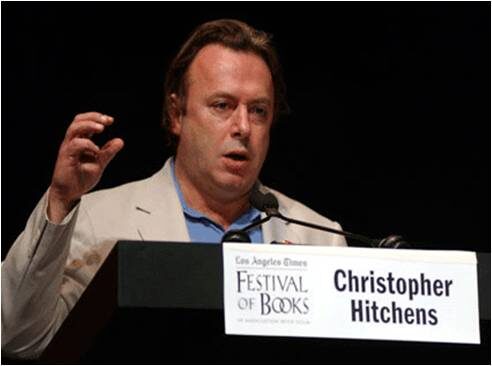
Hitler's Rabbi

Recently, Professor Richard Dawkins compared Rabbi Shmuley Boteach to Adolf Hitler. Although, Richard Dawkins was later careful to qualify his comparison of a Jewish Rabbi to Hitler it was surely a qualification that could only be justified in the mind of Richard Dawkins who has invested a large portion of his life directing his particular and peculiar prejudice towards those with whom he disagrees.

He wrote thusly in responding to Rabbi Boteach’s shock at being compared to Hitler:

“I did not say you think like Hitler, or hold the same opinions as Hitler, or do terrible things to people like Hitler. Obviously and most emphatically you don’t. I said you shriek like Hitler. That is the only point of resemblance, and it is true. You shriek and yell and rant like Hitler. Not all the time, of course. You also tell very good jokes, and tell them brilliantly. You deservedly get lots of laughs, as a good comedian should. But throughout your speeches you periodically rise to climaxes of shrieking rant, and that is just like Hitler.”

That certainly clarified matters: Rabbi Boteach is only somewhat like Hitler yet, more like a clown. Makes one wonder: what is worse, a shrieking rant or very calmly comparing a Rabbi (or anyone) to Hitler?

Rabbi Boteach wrote an open letter to Richard Dawkins in which, amongst other things, he directed Richard Dawkins to video footage of a debate between the two of them which Richard Dawkins denied having ever ocurred. This was a debate at St. Catherine’s College, Oxford (10-23-96) between Richard Dawkins and chemistry Prof. Peter Atkins on one side and Prof. Keith Ward, Oxford’s Regius Professor of Divinity and Rabbi Shmuley Boteach on the other.

487px-richard_dawkin_kepler_talk5b15d-5000537

Richard Dawkins appears to have a serious memory loss problem at least with regards to debates which he lost. In this case, he initially wrote, “Are you, perhaps, in the habit of fantasizing about debates that never took place?” but then excused himself thusly, “If we really did have a debate in St. Catherine’s I am happy to apologize for forgetting it, although I don’t think it is much to apologize for” and “what was at worst a trivial slip of my memory, I said that you had always been chairman in your debates, never a debater.” [italics in original]
Another memory lapse occurred in relation to the 2-14-86 “Huxley Memorial Debate” at Oxford University. The debate was entitled: “That the Doctrine of Creation is more valid than the Theory of Evolution.” The participants were the then “Dr.” Richard Dawkins, and Prof. John Maynard-Smith against Prof. Edgar Andrews and Dr. Arthur Wilder-Smith (if you are interested in this debate, its controversy and Richard Dawkins’ memory lapse see here, here and here).

Moreover, Rabbi Boteach challenged Richard Dawkins to another debate.
Richard Dawkins responded by not even responding but completely ignored the request.

Furthermore, Rabbi Boteach called into question Richard Dawkins professorship.
Richard Dawkins responded by not even responding but completely ignoring the issue.

Also, Rabbi Boteach mentioned that Oxford does not recognize an official Jewish chaplain and proposed the following, “Perhaps, as a man of liberal ideology, Richard, you will use your influence at the university to have them recognize an official Jewish chaplain in due course and I would view this as ample atonement for your outrageous Hitler comment.”
Richard Dawkins responded by not even responding but completely ignoring the request.

hitler-7592327

Lastly, it may be of interest to note that one of Richard Dawkins’ “New Ten Commandments” (of which he lists 15) reads as follows:

“Never seek to censor or cut yourself off from dissent; always respect the right of others to disagree with you.”1

However, part of Richard Dawkins’ reluctance to further engage Rabbi Boteach is his refusal to debate “Creationists,” a term under which he fallaciously places Intelligent Design proponents as well (see here for more on this issue). Here are some reasons as to why Richard Dawkins does not keep to his own commandment:
A creationist group called Answers in Genesis interviewed Richard Dawkins in 1997, eventually this interview was included in a video entitled “From a Frog to a Prince.” Much controversy has ensued form this event-Richard Dawkins’ point of view can be found here and Answers in Genesis’ here. Let us grant Richard Dawkins’ retelling as it appears in ch. 2, essay 3 of his book of essays entitled “A Devil’s Chaplain.” There he wrote, in part:

“In September 1997, I allowed an Australian film crew into my house in Oxford without realizing that their purpose was creationist propaganda_they issued a truculent challenge_only a creationist would ask_it was the point I tumbled to the fact that I been duped into granting an interview to creationists – a thing I normally don’t do, for good reasons. In my anger I refused to discuss the question further, and told them to stop the camera. However, I eventually withdrew my peremptory termination of the interview, because they pleaded with me that they had come all the way from Australia specifically to interview me.”

Clearly, censorship and cutting off dissent are Richard Dawkins’ modis operandi. But he did claim to have “good reasons.” Before getting to those reasons, perhaps he should have edited the commandment to read, “Never seek to censor or cut yourself off from dissent, unless you have a good reason for doing so” (read the qualifier as “A good and convenient subjective reason”) in which case the commandment is null and void.

boteach-5490579
But what are those good reasons? Richard Dawkins has answered that question in Why I Won’t Debate Creationists. In that article he addresses all practitioners of “real science,” those who have “a passionate conviction that such wonders [the wonders of the natural world] deserve nothing less than a purely natural explanation.” I must admit that I am not quite certain what passion and conviction have to do with real science. The long and short of Richard Dawkins’ reason is encapsulated in his following remark as he mockingly plays the creationist, “Look at me, I’m having a debate with one of the big boys. Doesn’t that just prove that creationism is being taken seriously in the universities?”
Incidentally, he was specifically referring to Philip Johnson who is not a creationist (surely such factual accuracy is beyond Richard Dawkins’ concerns although they did share some very interesting correspondence in which Johnson urged Richard Dawkins to become active in science and assist the public understanding thereof).
Referring to himself and Steven Jay Gould reference is made to “our refusal to engage in public debates with creationists,” and they seek to encourage others to censor and cut off dissent, “we don’t do debates with creationists, and encouraging other scientists to refuse for the same reason,” they “encourage others to refuse all debating invitations from pseudoscientists avid for publicity.”

Another person whom Richard Dawkins refuses to debate is Dinesh D’Souza. And no wonder, considering that Christopher Hitchens (who has debated D’Souza) described him to Richard Dawkins as “one of the much more literate and well-read and educated of our antagonists” (see the “Cosmology and the Pathetic Bible” portion of this essay).

It is difficult to discern why Richard Dawkins would compare anyone at all, much less a Rabbi, to Hitler. Surely, there are been many well know people who shriek, yell and rant. So why choose Hitler? Richard Dawkins has also correlated creationism with Nazism and any evolutionist who is not as fundamentalistic as himself as an appeaser of creationists, whom he correlates with Hitler (“the Neville Chamberlain school of evolutionists” as he terms these evolutionists2). Having had some experience with people who are saturated with prejudice, I am lead to suspect that his thoughts occur to him through a murky cloud of prejudice that obscured a natural tendency that is present in most people to moderate ourselves. Ultimately, only Richard Dawkins trully knows.

Rabbi Boteach’s open letter is found here and Richard Dawkins’ response here.
Part I of Rabbi Boteach’s Canadian presentation (the one that earned him the Hitler label) is found here and Part II here.
The full, two-hour, video of the debate from 1996 at Oxford University are available on shmuley.com and beliefnet.com.Two articles of interest are:

Evolutionist compares rabbi to Hitler! Religious leader responds with challenge to debate, again

Rabbi reveals video of debate that “didn’t happen” Says “man as honorable as Dawkins will correct the error”

Atheism's Sales Pitch to Children

Once Philip Pullman attempted to popularize his books, and the movie based one of them, in the USA he realized that he was no longer preaching to the Euro-Secular choir and decided to slow his roll (as they say in common parlance). Thus, the New York Magazine article entitled, Philip Pullman Realizes ‘Killing God’ Not the Ideal Sales Pitch. His books include “His Dark Materials” and the movie was “The Golden Compass.”

philippullman-1172923

A shift in his sales pick to children is evidenced by the fact that first he denied that his works are “anti-religious” and stated, “As for the atheism, it doesn’t matter to me whether people believe in God or not, so I’m not promoting anything of that sort.”

Certainly, after all we are just dealing with mere fiction right? So what is the big deal? While the story is fiction the premise is Philip Pullman’s atheism spiked worldview,

“I was telling a story which would serve as a vehicle for exploring things which I had been thinking about over the years_Despite the armoured bears and the angels, I don’t think I’m writing fantasy. I think I’m writing realism. My books are psychologically real.”

For instance, his writes of friendly daemons, homosexual angels and claims that “‘The Fall’ is to be celebrated as the defining moment of mankind, rather than the source of all worldly evil” (Steve Meacham, The shed where God died).
Speaking of dealing with mere fiction I cannot help but recalling Dan Brown of The Da Vinci Code fame who stated, “How historically accurate is history itself?”1 Dan Brown claims to have based his novel on historical facts. His substandard double standard appears to be that whatever point he wants to make against Christianity is historically reliable but any correction of his errors are based on inaccurate history.

Continuing the line of evidence of a shift in his sales pick to children, please note that he had previously stated, “I’m trying to undermine the basis of Christian belief,” and “Mr. Lewis would think I was doing the Devil’s work.” “Mr. Lewis,” refers to C. S. Lewis who was an atheist before becoming a Christian.

Furthermore, he had stated, “My books are about killing God.”

Speaking of killing God in children’s books-Philip Pullman was asked by an eight year old, whose class was reading “The Golden Compass,” how he came up with the concept of “daemons.” To which he responds that it “came to me very suddenly and from nowhere_this daemon idea just came into my mind.” He describes a “daemon” as “a companion to speak to and share things with.”
In a more presupposition mood I might wonder what a daemon is, if we remove the letter “a” from the word? Really though, why not refer to them by a takeoff of the term Oompa Loompa, for example (they are certainly the stuff of nightmares, and I mean the original Loompas not that CG multiplied guy in the new movie)? Why not say, “Well little child, I got the idea from the fact that I base my books on undermine the basis of Christian belief. By the way, say hi to your public school teacher and tell her that I will send her autographed copies of my books about killing God.”

oompaloompa-5047677

But why rehash outdated press about The Golden Compass? Because this is not about one movie nor a set of books, but about Philip Pullman as author and atheist activist. He wants to teach children about atheism in the classroom:

“For the first time, pupils are to be taught about atheism as part of religious studies in a course devised by two of the UK’s leading children’s writers_authors celebrated for their work for children, Philip Pullman and Michael Rosen, have produced a course on atheism for schools.”

There are two points of interest for me at this juncture:Atheists claim that atheism is not a religion (although some do, such as the atheist activist Michael Newdow). So why should atheism be taught in a religion class? It may belong in a philosophy, or logic, or history of ideas class but not religion class. Religion class is meant to teach about religions and not to pit one against the other.

Also, what would such a lesson look like? Inferring from what I am constantly told by atheists the class would last about two seconds and would run thusly, “Atheism is a lack of God belief, the end.” Or, “Atheism is not a worldview, not a belief, not a philosophy and oh, by the way-atheists are right and everyone else is wrong.”

Well, Philip Pullman draws a distinction between atheism and agnosticism, a distinction that many atheists deny,

“If we’re talking on the scale of human life and the things we see around us, I’m an atheist. There’s no God here. There never was. But if you go out into the vastness of space, well, I’m not so sure. On that level, I’m an agnostic.”

The UK’s The Independent noted,

“anyone who saw the stage translation of the books knows his appeal to teenagers_As the plays progressed, the average age of audiences at the National Theatre crashed to unprecedented levels.”

Atheists often appeal to children, teenagers and the youth in general because the youth are naturally rebellious and atheism encourages them to rebel against the ultimate authority-God. Moreover, atheism offers the consoling delusion of absolute autonomy and ultimate lack of accountability. Thus, Philip Pullman has produced a DVD entitled “Why Atheism?” which is geared towards children that are 11 years old and above. Elsewhere, I have chronicled that Prof. Richard Dawkins has also sought to push atheism into the classrooms: see Neo-Atheist Preacher.

whyatheism-3776693

One thing that I can agree with Philip Pullman about is the need for discussion and fair play understanding. For instance, he states,

“Science is not a matter of faith, and too many people are being allowed to get away with claiming that it is, and that my ‘belief’ in evolution is a thing of the same kind as their ‘belief’ in miracles.”

It is these sorts of generalization and misunderstandings that need ironing out. For example, it is far too generalized to state, “Science is not a matter of faith” since the term “science” ranges from observation and repeatable experimentation to mere worldview, or school of thought, based speculation (see my essay Scientific Cenobites for many examples of this). Likewise with the term “evolution” ranges from a bio-organism undergoing changes over time to the claim that life began when lightning struck a swamp and that God is therefore superfluous. When atheist activists, in the guise of scientists, make baseless claims such as that science leads to atheism it is no wonder why people begin to equate science with atheism (I mused on this topic in my essay Omni-Science). For example, PZ Myers stated that atheism and science are inseparable. Also, note that many atheist activists have snuck atheism into the back door of classrooms in the guise of science.

Sophie Kirkham (Atheism set to be taught in RE) reported,

“‘It is very much the intention that young people in the context of religious education should be studying non- religious beliefs,’ a spokesman for the QCA said [The Qualifications and Curriculum Authority (QCA), which regulates what is taught in schools].”

Yes, and they should do so in a class that is not meant to teach them about religions.

“The QCA’s proposals come as a left-wing think tank publishes a report tomorrow, calling for RE [Religious Education] to be renamed ‘spiritual education’ with less time spent on the life of Jesus and the Ten Commandments.”

Atheism would still not fit into the category (except, perhaps the Sam Harris sect).Yet, ultimately and obviously, this is not about furthering religious education but undermining it. The attempt is to water down “religion” and “God” and to overemphasize non-religious and non-God beliefs to the level of spiritual. For example “_environmentalism should also be added to the school curriculum, it [The Institute for Public Policy Research].”Moreover, “The think tank believes children as young as five should be told that there are people in the world who do not believe in God.”Furthermore, “The think tank believes children as young as five should be told_that there are alternatives to marriage and that those children with strong religious beliefs could be urged to question them and look at the reasons for their faith. Instead of referring to God they should be taught that there is a ‘divine being whose moral judgments are significantly more reliable than ours.'”

Thus, this new course is not meant to teach about religion but it is mean to undermine religion and elevate atheism, environmentalism and alternate lifestyles.2

thegoldencompassandphilippullman-7665860

Professor Emeritus C. A. Russell (Emeritus Professor of the History of Science, The Open University and University of Cambridge. Writing in Atheism on the curriculum) notes:

“Topics like the proper evaluation of evidence, the skilful use of argument, even the critical analysis of allegedly historical propositions would surely be much more appropriate. Such questions would be welcomed by sceptics but also by faith systems which have nothing to fear at the bar of reason.It is interesting that only a few days ago a step was taken in that direction by reinstating the Boyle Lectures at St Mary-le-Bow in the City of London. These have always been concerned with rational arguments about Christianity and its relationship with other knowledge, especially natural science. At a suitable level that kind of approach has much to be commended, even in schools.

However, lessons in atheism would be quite a different matter. They seem to me to be singularly pointless: lessons in nothing.”

The UK’s The Independent also noted, “What the pupils say…” and, perhaps unbeknownst to them, demonstrated just how faulty atheist propaganda is:

“Religion:
It makes it ‘them and us’, doesn’t it? And once you can see yourself as separate from another person it’s easier to inflict cruelty on them. Look at the British Empire. It was very much the tribesmen, they had their gods, while we were ‘civilised Christians’. And once you’ve got that, almost a way of believing that you’re better than somebody because you believe in the right god and they believe in the wrong god, it’s easier to justify your actions against them. Often powerful leaders use it as part of their way of getting into government or as a way of fighting their war, saying that you can kill but only for a just cause, and then they make that just cause their cause. So I think a lot of people can use it as a weapon for power and money.”

May one retort thusly?:

“Atheism:
It makes it ‘them and us’, doesn’t it? And once you can see yourself as separate from another person it’s easier to inflict cruelty on them. Look at the Communist Empires. It was very much the faithful, they had their God, while we were ‘civilised secularists’. And once you’ve got that, almost a way of believing that you’re better than somebody because you believe in the right science and philosophy and they believe in superstition, it’s easier to justify your actions against them. Often powerful leaders use it as part of their way of getting into government or as a way of fighting their war, saying that you can kill but only for a just cause, and then they make that just cause their cause. So I think a lot of people can use it as a weapon for power and money.”

What else is to be expected form an atheist activist? My only request would be to just come right out and be honest: do not pretend to write mere fiction when your goal is to discredit one particular religion and kill God. Do not pretend that atheism belongs in a religion class when its only purpose would be to criticize and claim to be the only truth. Quit attempting to smuggle atheism into the back doors of bookstores and classrooms, just come right out and be as honest in the USA as you are across the pond.

Was Timothy McVeigh a God Believing Catholic and a “Christian Terrorists”? – Part 1 of Dan Barker and the Alien Rape Voyeurs

Wherein we consider how Dan Barker utterly discredited himself and solved the “problem of evil.”

This essay will commence a critique of various points made by the Freedom From Religion Foundation‘s Dan Barker during his debate with Peter Payne on the topic of ethics. Below, when I transcribe Dan Barker’s statements I will refer to how many minutes and seconds into the debate a certain statement was made and will refer to part 1 or part 2.
The Freedom From Religion Foundation was co-founded by Dan Barker and Annie Laurie Gaylor in the USA, a country premised upon the concept of freedom of religious expression.

This essay is parsed as follows:

Part 1: Timothy McVeigh as “Christian Terrorist” Part 2: Introductory Conclusion Part 3: How To Be Ethical Without a God Part 4: Threats and Promises / Punishment and Reward Part 5: Selfish Morality Part 6: The Alien Rape Voyeurs Part 7: The “Problem of Evil”

Addendum: The Desperation of the Deicidal, Memetic Eugenics and the Evolutionary Watchmen parts 1 and 2

Timothy McVeigh as “Christian Terrorist”:
My post Was Timothy McVeigh a Christian Terrorist? was basically an experiment of sorts, I was honestly wondering what sorts of answers people would concoct.
Let us recap and review:

Back in the day; Dan Barker has posed the following statement and question:

Timothy McVeigh, a God believing Catholic, blew up that Federal building. And,Why is no one calling the Oklahoma City bombing suspects “Christian terrorists”?

Some responses in the comments section were emotive and apparently, right off of the top of the person’s head.

Someone stated that it was because McVeigh did not “shout ‘Jesus is great!!!” and another that it is because the USA is a Christian nation there was no reason for mentioning it that he was a Christian. Someone actually read up on McVeigh a bit and concluded that “his theology was at best confused and inconsistent” and “had virtually nothing to do with his heinous act of terrorism.”

Someone even took a shot at me in stating that I was obviously “just embarrassingly unable to check his facts.” They concluded this based on the fact that I posed the question when I reality I was employing the tactic of a good lawyer-I did not ask a question without first already knowing the answer.

Those who got it right stated that naming “him Christian is another mistake!” that he “was not even a christian [sic] at all. He was not a god believing catholic. He was basically an agnostic. The answer to the riddle is that he was not a christian [sic] at all” and that “he “took Last Rites before his death just in case”-which actually shocked those who knew him.

So what did we learn?1. Honest skepticism pays off as it alleviates us of the burden of making emotive polemical and fallacious points.2. Dan Barker certainly made emotive polemical and fallacious points.3. If we were to “argue” like Dan Barker we would ask, “Why is no one calling the Oklahoma City bombing suspects ‘Agnostic terrorists’?”

Prediction: someone will surely not bother mentioning Dan Barker’s fallacious statements but will besmirch me for whatever reason.

Indeed it was during his debate with Peter Payne that Dan Barker made the following statement at 28:58 into part 1,

Timothy McVeigh, a God believing Catholic, blew up that Federal building

Granted, it would not necessarily say anything about Catholicism, the Bible, or God if McVeigh was a believing Catholic. But again, we are interested in Dan Barker’s accuracy. Was McVeigh a believing Catholic?

It is ironic that during the debate Dan Barker claimed that morals are not absolute because “I can think of an exception in any case.” In this sense he appears to agree with Timothy McVeigh. Certainly, when he “blew up that Federal building” McVeigh must have thought of “an exception.” Thus, his goals outweighed the lives of men women and children. How then can Dan Barker condemn McVeigh?

timothymcveigh2-2206123

Townhall‘s Maggie Gallagher researched “years of press clippings probing the mind of McVeigh.” She concludes:

In contemporaneous accounts, McVeigh was never described as killing out of religious motives. Nor was there any evidence that, at the time of the bombing, he even considered himself a Christian. On the two great state occasions McVeigh had, at his sentencing and his execution, Jesus made no appearance in his rhetoric. At the sentencing, McVeigh quoted from Louis Brandeis’ 1928 decision:

“Our government is the potent, the omnipresent teacher. For good or for ill, it teaches the whole people by its example.” McVeigh’s last public act before he was executed was to distribute copies of the 1875 poem “Invictus.” It begins: “I thank whatever gods may be for my unconquerable soul,” and ends “I am the master of my fate: I am the captain of my soul” – sentiments that to a Christian are at least vaguely blasphemous_
the Atlanta Journal-Constitution described McVeigh as “an avowed agnostic” whose sudden last-minute decision to see a Catholic priest just before his execution surprised everyone who knew him. As recently as July 2001, even a lefty like Barbara Ehrenreich (writing in the Progressive) did not portray McVeigh as having religious motives. She called McVeigh a “homegrown neo-Nazi mass murderer,” yes; Christian fundamentalist, no.1

timothymcveightime2-3832839

The UK newspaper, The Guardian, reported, “McVeigh said he was an agnostic but that he would ‘improvise, adapt and overcome.'”2

CNN reported, “McVeigh is agnostic. He doesn’t believe in God, but he won’t rule out the possibility. I asked him, “What if there is a heaven and hell?” He said that once he crosses over the line from life to death, if there is something on the other side, he will – and this is using his military jargon – “adapt, improvise, and overcome.” Death to him is all part of the adventure.3

Dan Barker and the Alien Rape Voyeurs, part 2 of 7 ›

Atheism, EvilBible.com, “Theists Suck” and Christians are Hypocrites, part 4 of 6

In this portion we will finish off the New Testament portion of Charlotte’s 22 side dishes and begin to get a tasted of her fallacy of attempting to talk atheist into believing that New Testament Christians are supposed to follow Old Testament laws.

8) Believers are supposed to hate their parents when they follow Jesus (“If any man come to me, and not hate his father, and mother, and wife, and children, and brethren, and sister, yet, and his own life also, he cannot be my disciple” (Luke 14:26). Well, considering that Christians do not abandon their families but usually attempt to brainwash them they are all guilty of not following this verse. “It’s symbolic”, yeah, I know your lame *** defense to this one already. [expletive censored]

Note that, again, even if we grant her misconception her example is still faulty. Assuming that Jesus, who taught that we were to honor our parents, taught that we were supposed to hate them it is a non sequitur to consider that “Christians do not abandon their families” since they could hate someone with whom they live-I have had some roommate_anyhow.

Now, what is wrong with not only claiming that “It’s symbolic” but inferring from the context of the Bible and the fact that no one, not Jesus, not the apostles, not the disciples, not the early church nor any Christians has ever, in two millennia, understood Jesus to be speaking of the same sort of seething emotional despising hatred which Charlotte displays against Christians. Apparently, it took 2,000 years for us to really understand this text and only via the erudite elucidation of the atheist propaganda de jour.

9) They are not to oppose evil (“But I say unto you, that ye resist not evil; but whosoever shall smite thee on the right cheek, turn to him the other also”— Matthew 5:39). If this were followed one might just as well abolish law enforcement.

This is another very, very common misconception that discredit not the Bible but whoever gives voice to it. Adolf Hitler was a victim of this misconception when he wrote,

“turning of both cheeks is not a very good recipe for the front”1

What is the evil being done in this case? Adolf Hitler and Charlotte fail to note the obvious fact that the text is referring to a slap in the face. What is a slap in the face? It is not correlative to military conflict or to the stuff of law enforcement. A slap in the face is an insult thus, do not return insult for insult.

10) Biblicists are not allowed to call anyone “father” (“And call no man your father upon the earth: for one is your Father, which is in heaven” (Matthew 23:9). Not only is this rule ignored on a DAILY BASIS, but Catholicism uses “father” as a specific title.

The issue in the text appears to be the overuse, abuse, of authority and thus appears to say “Do not apply these labels in order to get a big head” or as David Brown put it in commenting on this text, “that itch for ecclesiastical superiority which has been the bane and the scandal of Christ’s ministers in every age”:

Jesus spoke to the multitudes and to His disciples, saying: “The scribes and the Pharisees sit in Moses’ seat_They love_greetings in the marketplaces, and to be called by men, ‘Rabbi, Rabbi.’ But you, do not be called ‘Rabbi’; for One is your Teacher, the Christ, and you are all brethren. Do not call anyone on earth your father; for One is your Father, He who is in heaven. And do not be called teachers; for One is your Teacher, the Christ. But he who is greatest among you shall be your servant. And whoever exalts himself will be humbled, and he who humbles himself will be exalted” (Matthew 23:1-2, 6-12).

The text is a reminder to not consider any clergypersonage; Pope, High Priest, Imam, Guru, Michael Newdow (who claims that atheism is a religion), etc. the one true and ultimate “Rabbi_Teacher_Father.”

11) Christians are not supposed to plan or prepare. God will provide (“Take no thought for your life, what ye shall eat, or that ye shall drink; nor yet for your body, what ye shall put on… Behold the fowls of the air: for they sow not, neither do they reap, not gather into barns; yet your heavenly father feedth them. Are ye not much better than they?” –Matthew 6:25-34 & Luke 12:22-31 inclusive). I see Christian conservatives plot on a daily basis how to screw their employees so they can reap more profits.

Again, by disregarding the context, the complete thought, she is falling into folly.The text is dealing with the idea that (v. 24),

No one can serve two masters. For either he will hate the one and love the other, or else he will hold to the one and despise the other. You cannot serve God and mammon.

So how do we keep from serving two masters? “Do not be anxious” for what good is being anxious? “Therefore do not be anxious” since “your heavenly Father knows that you have need of all these things.” Yet, even the most Bible-thumpin’-born againer-fundie-evang-YECists knows that this does not mean that these various good magically appear but that we must make and take opportunity.Thus, the point is:

1) Delineation: “No one can serve two masters”

2) Priority: “But seek first the kingdom of God and His righteousness”

3) Because: “all these things shall be added to you”

4) Thus, and again, “do not be anxious about tomorrow” (see Matthew 6:25-34)

Now we come to the area in which Charlotte somehow manages to top herself in demonstrating both her lack of knowledge of the most basic contents and concepts in the Bible and her belligerent prejudice against Christians.

This is where she cannot seem to distinguish between the, not the key words here, “Old” testament/covenant and “New” testament/covenant. The greater problem is that she does think that she understands it very well, certainly better than “these idiots.” This is problematic because it is prideful zeal without knowledge as she attempts to offer the militant activist anti-Christian atheist a combination of punches whereby to knock out any opposition to her views.

Let us consider this recipe which appears at the very end of her “sermon” and then backtrack to those side dishes in which she attempts to apply the “Old” testament/covenant to “New” testament/covenant Christians:

I’d like to close this essay with how to catch a Christian in the act. When you see them expounding a verse and ignoring another, call them on it. I know what you’ll hear. They’ll say, “that’s from the Old Law and we aren’t under the Old Law anymore”. Trip them with this: “But aren’t the Ten Commandments part of the Old Law?” “Yes, but we are obligated to follow them because they are reported in the NT” (Matthew 19:16-18, Mark 10:17-19 & Luke 18:18-22). Immediately point out to them that Jesus omitted half of the Ten Commandments and invented a new one, “though shall not defraud” ! Before they can get a word in edge wise finish them off with: “According to scripture it is easier for heaven and earth to pass, than one tittle of law to fail” (Luke 16:17 & Matthew 5:18-19). If sin is transgression of the law, as 1 John 3:4 says, then you should be following all of the Old Law. This, from experience, is the best way to shoot down these idiots and bar them from getting away with their hypocrisy.

Let us now parse this recipe and consider its various aspects carefully:

I’d like to close this essay with how to catch a Christian in the act.When you see them expounding a verse and ignoring another, call them on it. I know what you’ll hear.They’ll say, “that’s from the Old Law and we aren’t under the Old Law anymore”.Trip them with this: “But aren’t the Ten Commandments part of the Old Law?”

“Yes, but we are obligated to follow them because they are reported in the NT” (Matthew 19:16-18, Mark 10:17-19 & Luke 18:18-22).

Although she does not describe the scenario very well, apparently she is asserting to Christians that they are ignoring the Old Testament Law and they rightly respond. Next, she offers the next punch,

Immediately point out to them that Jesus omitted half of the Ten Commandments and invented a new one, “though shall not defraud” !

I am not quite certain what to make of this; Charlotte appears to think that any mention of the Commandments must be followed by a neat list of the ten and in the original order. Yet, this is simply not the case as exampled by the following texts in which Jesus explains:

You shall love the Lord your God with all your heart, and with all your soul, and with all your mind. This is the first and great commandment. And the second is like it, You shall love your neighbor as yourself. On these two commandments hang all the Law and the Prophets (Matthew 22:37-40).

The first of all the commandments is, “Hear, O Israel, the Lord our God is one Lord; and you shall love the Lord your God with all your heart, and with all your soul, and with all your mind, and with all your strength.” This is the first commandment. And the second is like this: You shall love your neighbor as yourself. There is no other commandment greater than these (Mark 12:29-31).

I would imagine that Charlotte would apparently not even recognize the Sh’ma, “Hear, O Israel_” as a “commandment.”

Thus, did “Jesus omitted half of the Ten Commandments and invented a new one, ‘though shall not defraud’ !”The text in question reads:

And when He had gone out into the way, one came running up and kneeled to Him, and asked Him, Good Master, what shall I do that I may inherit eternal life? And Jesus said to him, Why do you call Me good? No one is good except one, God.You know the commandments: Do not commit adultery, do not kill, do not steal, do not bear false witness, do not defraud, honor your father and your mother.And he answered and said to Him, Teacher, all these I have observed from my youth.Then Jesus, beholding him, loved him and said to him, One thing you lack. Go, sell whatever you have and give it to the poor, and you shall have treasure in Heaven. And come, take up the cross and follow Me.

And he was sad at that saying and went away grieved, for he had great possessions (Mark 10:17-22).

How do you get to Carnegie Hall? Practice, practice, practice.What is the first rule of real estate? Location, location, location.How do you understand any text at all, biblical or not? Context, context, context.Is the text not clear, is the message not coming through, is the point not being made?Jesus discerns what is holding this man back; he is known to have great possessions and is generally known as the “rich young ruler.” Thus, Jesus repeats to him the commandments that denote that which he lacks: the commandments which deal with human to human interaction. Upon having these repeated to him he claims that he has always followed these yet, when he is put to the test on this point he goes away grieved. Thus, Jesus does not “omitted half of the Ten Commandments” but demonstrated that this self-professed keeper of them did not in reality follow them.But what about inventing “though shall not defraud”?Comparing Exodus 20:12-17 with Mark 10:19 we note the following correlations:

“Honor your father and your mother”-in both.”You shall not murder”-in both.”You shall not commit adultery”-in both.”You shall not steal”-in both.”You shall not bear false witness”-in both.

“You shall not covet your neighbor’s house_wife_manservant_maidservant_ox_ass_nor anything that is your neighbor’s”-in Mark as “You shall not defraud.”

In other words: “covet” is being rendered as “defraud” which is simply covet to the extreme.

But remember that Charlotte’s advice was:

Before they can get a word in edge wise finish them off with: “According to scripture it is easier for heaven and earth to pass, than one tittle of law to fail” (Luke 16:17 & Matthew 5:18-19). If sin is transgression of the law, as 1 John 3:4 says, then you should be following all of the Old Law. This, from experience, is the best way to shoot down these idiots and bar them from getting away with their hypocrisy.

I must admit to being flummoxed by what she is quoting since the Luke text does not contain the words “According to scripture” and the Matthew text does not state, “it is easier for heaven and earth to pass, than one tittle of law to fail.”Yet, even if we grant the text, which with the exception of “According to scripture” does appear in Luke, how does that no part of the law will fail amount to “you should be following all of the Old Law”? A law that pertains to the site of road construction does not fail simply because it is fulfilled once the road work is completed. As we shall see, this is the key; it does not have to fail in order to be fulfilled.

Do not think that I have come to destroy the Law or the Prophets. I have not come to destroy but to fulfill.
For truly I say to you, Till the heaven and the earth pass away, not one jot or one tittle shall in any way pass from the Law until all is fulfilled (Matthew 5:17-18).

Jesus came to fulfill and ultimately fulfilled upon the cross when He stated, “It is finished” (or paid in full John 19:30).

Therefore, what have we learned? Christians do not have to follow the minutia of the Old Testament Law. In fact, neither do any Jews who do not live millennia ago, in the area of Israel, in the theocratic nation whose inhabitants had agree to live by it. The Ten Commandments are reiterated in various ways, primarily as indicative of the spirit of the law and not just the word. The Old Testament, the Law and the Prophets, were ultimately fulfilled by Jesus’ life, death and resurrection. And thus, Charlotte has punched herself out even whilst merely shadow boxing with her own lack of knowledge.

Next we will consider the manners in which she attempted to vilify Christians for not following laws that were not meant for them.

Atheism, EvilBible.com, “Theists Suck” and Christians are Hypocrites, part 6 of 6

Let us pick up where we left off last time:

15) Tattoos are anathema: (“You shall not make any cuttings in your flesh on account of the dead or tattoo any marks upon you. I am the Lord”–Leviticus 19:28) Despite this teaching I manage to see Mexican Catholics daily with tattoos of the Virgin Mary, Jesus or a set of praying hands on their forearms and shoulder blades.

Not much more to say except: OT=NT. This and many other laws were meant to differentiate the Israelites from the Gentile Pagans (whom evilbible.com’s author did not condemn for sex slavery, temple prostitution or human/child sacrifice; see here). Back then, tattoos were not about being hip or “Hey! Look at me!” attention begging but where ritualistic and indicative of false idolatrous god worship.

16) Money cannot be lent at interest to your brother, only to foreigners (Deuteronomy 23: 19-20) Ahhh, I’m recalling all the Christian banking corporations…. [ellipses in original-for whatever reason]

OT=NT.

17) Eating pork is forbidden (Deuteronomy 14:8). Hmm, I’ve never met a Christian who DIDN’T enjoy bacon and eggs.

OT=NT via another example of Charlotte’s lack of knowledge of even the most basic of biblical concepts and contents:

Peter went up on the housetop to pray, about the sixth hour. And he became very hungry and desired to eat. But while they made ready, an ecstasy fell on him.And he saw the heaven opened and a certain vessel like a sheet coming down to him, being bound at the four corners and let down to the earth; in which were all the four-footed animals of the earth, and the wild beasts, and the reptiles, and the birds of the heaven.And a voice came to him, saying, Rise, Peter! Kill and eat! But Peter said, Not so, Lord, for I have never eaten anything that is common or unclean. And the voice spoke to him again the second time, What God has made clean, you do not call common.

This happened three times, and the vessel was received up again into the heaven (Acts 10:9-15, also see 11:5-10).

Charlotte continues thusly,

18) A man must marry and have relations with his dead brother’s wife (Deuteronomy 25:5-6). This goes without explaining of course.

OT=NT. To state that this goes without explaining is basically a Dan Barker tactic meant to imply something completely false as there were careful regulations in this regard; for example, the entire book of Ruth is premised upon the concept of the kinsman redeemer (for an example of the Barkerian tactic see here).

19) A seducer must marry an unengaged virgin whom he seduces (Exodus 22:16-17)

I am quite impressed with this one, I must admit, as Charlotte is the only atheist I have ever encountered who read a text such as the one cited here and did not spend their time imagining rape (see here and here for copious examples of atheists obviously spend tremendous amounts of time fantasizing about rape).
This is a case in which an unengaged virgin consents to engaging upon unmarried fornication and so a shotgun wedding ensues.

20) A raped, unengaged virgin must marry her rapist and they can never divorce (Deuteronomy 22:28-29). What justice the “moral majority” advocates!

Oh well, I guess that I will take my compliment back. Now I understand why Charlotte cited the two texts but did not bother quoting then. This way she can both: merely propagandize while hiding what the texts actually states and knowing that atheists are generally far too pseudo-skeptical to actually look up the texts, read them, read the context and seek to actually understand them she could get away with it. Both the Exodus 22:16-17 and the Deuteronomy 22:28-29 are equivalent. Since I have dissected this issue in responding to evilbible.com’s authors fallacious assertions I will direct the interested reader to the post: Atheism, the Bible, Rape, EvilBible.com and Dan Barker.

21) There are several petty and silly little verses in the O.T., but none the less, they are to be followed. I guess it’s okay to disobey the lord for fashion’s sake. Beards can’t be rounded (Leviticus 19:27); A garment composed of wool and linen can’t be worn (Deuteronomy 22:11); Note: this explains why you will commonly see orthodox Jews with the long beards and black clothing. I say Christians should do this too so we can identify their stupidity upon first impression.

Interesting that the reason why orthodox Jews wear long beards and black clothing is Deuteronomy 22:11 while the text refers to not mixing fabrics and nothing about the color of the clothing-did I miss something? Moreover, if Deuteronomy 22:11 is the reason why orthodox Jews, meaning certain Hasidic sects, wear black clothing why did they not wear that sort of black clothing until the 18th century AD?

22) Bastards can’t enter the Lord’s congregation. (Deuteronomy 23:2) Hey, I know this is harsh, but God commands it, hence it must be “just”.

This is perhaps best understood by realizing that it has been by maintaining a lineage, a peoplehood, a nationhood (even whilst occasionally not technically a “nation”) that the Jews have survived as a people for millennia while others have so readily come and gone.

Having presented the 22 side dishes to her beef, Charlotte launches this salvo before ending with the statement with which we ended part 4:

All of these rules are part of the Old Covenant and of equal import. Why quote the Ten Commandments and ignore other tenets? A believer’s obligation to one is no less than his obligation to all. In fact, if under the New Covenant Christians have stepped into the shoes of the Israelites and become, in effect, the new Chosen People, then they should inherit all the privileges and duties of that office. They seem to want the former but not the latter. Biblicists teach, preach, and attempt to reach others with moralism, but are not averse to selectively using that which suits their interests.

By now we know that this is merely the old and tired OT=NT fallacy but with a new unbiblical element thrown in for further discrediting of Charlotte, “if under the New Covenant Christians have stepped into the shoes of the Israelites and become, in effect, the new Chosen People, then they should inherit all the privileges and duties of that office.”
Paul writes, “Did not God put away His people? Let it not be said! For I also am an Israelite, of the seed of Abraham, of the tribe of Benjamin_” and goes on to explain that God is in no way done with the Jews and that Christians should be very careful to not become prideful in thinking that they have, as Charlotte puts it, “become, in effect, the new Chosen People.”

Thus, we have presented copious examples of how evilbible.com and Charlotte are a perfect match since:

1) Both are very good at taking advantage of pseudo-skeptical atheists.2) Both rain down condemnation and brimstone without providing a premised beyond arguments from impotent outrage.3) Both demonstrate a stunning lack of scholarship.4) Both demonstrate a shocking level of ignorance of even the most basic concepts and contents of the Bible.

5) Both leave God, Jesus, the Bible and Judeo-Christianity unscathed whilst discrediting themselves.

Evilbible.com and Charlotte; I have one question for you both: Where’s the beef?

atheismandevilbibleandchristianityandwhere27sthebeef-7449428

Atheism, EvilBible.com, “Theists Suck” and Christians are Hypocrites, part 3 of 6

At this point I must parse Charlotte’s 22 side dishes as she begins to make the fallacy which I mentioned at the beginning of part 1 which discredits the overwhelming majority of all of her arguments from impotent outrage. These are the texts that seek to apply Old Testament laws to Christians. We will group these at the end since it is at the end of her “sermon” that she lays it out in toto.

Let us continue:

4) Ever watch these Christians on television and notice how their bowed heads uniformly shake amen while some evangelist goes on and on in prayer for a ******* hour? Well, repetitious and monotonous praying is in violation of Matthew 6:7. “But when ye pray, use not vain repetitions, as the heathen do: for they think that they shall be heard for their much speaking.” [expletive censored]

Strictly speaking, if she wants to condemn repetitive prayer based on this text all I can say is AMEN!!! (I did that myself here).
However, her reasoning is faulty. The text states “when ye pray, use not vain repetitions_for they think that they shall be heard for their much speaking.”Yet, her example is twofold:

1) Christians who bow their heads and while I am not sure what “shake amen” is I suppose that it is a word picture for nodding whilst saying amen numerous times: this is not repetitive prayer; “amen” denotes repetitive agreement with the various portions of the prayer that they are hearing.
2) The evangelists goes on and on in prayer yet, a long prayer is not condemned it is a prayer that is repeated over and over like a mantra. This is her example, a long prayer, she does not even state that it was repetitive. She wants to condemn it for being “monotonous” yet, the texts says nothing about monotony. There is a complete thought which indicates that the reason that “they think that they shall be heard for their much speaking” is because they are employing “vain repetitions.”

5) Christians are not supposed to take their disputes before non-Christian courts or judges. (“If any of you has a dispute with another, dare he take it before the ungodly for judgment instead of before the saints?” — 1 Corinthians 6:1 NIV) How interesting! Considering that state is separate from church all courts are supposedly “ungodly”. Does this stop Christians from tying up the supreme court with law suits concerning school prayer, abortion, or numerous other absurdities? Hell no it doesn’t, and my taxes are paying the ******* bill for their hypocrisy! [expletive censored]

Apparently, Charlotte does not know the difference between the Constitution’s “Establishment Clause” and a letter written by Thomas Jefferson but in any regard she may think that she is shaming Christians but she is 2,000 years later as in that very text Paul stated v. 5, 7, 8, “For I speak to your shame_there is already on the whole a failure among you_you do wrong and defraud.”

6) Christian women are supposed to dress discreetly (“…that women should adorn themselves modestly and sensibly in seemly apparel, not with braided hair or gold or pearls or costly attire” –l Timothy 2:9 RSV; and “Let not yours be the outward adorning of braiding of hair, decoration of gold, and wearing of fine clothing”— 1 Peter 3 :3). Violations of these rules are too numerous to mention. Just visualize Tammy Faye Baker’s mascara laden eyes and gold encrusted wrists.

This is certainly a good point to which, again, we can say AMEN!!!

7) Here is perhaps the mother of verses ignored: “Judge not, that ye be not judged” (Matthew 7:1) and “Judge not, and ye shall not be judged, condemn not and ye shall not be condemned: forgive, and ye shall be forgiven” (Luke 6:37). I have yet to meet a Christian who has not judged my atheism. The whole world is chalk full of judges, juries, voters, employers, teachers, etc. which are all constantly judging others.

This succinct comment is saturated with fallacy. To begin with; are we really to not judge? Anything? In any way? At all? Ever? How could we judge that the text means?This is another very, very common misconception which arises when people such as Charlotte conveniently selectively quote self-serving portions of texts, she is removing a text from it context to make a pretext for a prooftext.

But first, let us ask whether she missed noticing that two previous texts that she quoted stated, “Judge for yourself” and “dare he take it before the ungodly for judgment instead of before the saints?” Well, then; let us just say that this is not only hypocrisy but contradiction. Or is it?

Before resolving this issue let us note that even if we grant her misconception it is illogical to apply it to a whole world that is “chalk full of_all constantly judging others” because the whole world is not Christian.Note that Charlotte quoted Matthew 7:1 but if she had read as far as the very next verse her misconception would have been remedied. Perhaps, she did read it but chose not to quote it so as to not let meddlesome facts get in the way of good a nice side of propaganda. In any case, let us read from v. 1 all the way to v. 2,

Judge not, that you be not judged. For with the judgment you judge, you will be judged; with the measure you use, it will be measured back to you.

Obviously, judge not is in reference to the manner in which you yourself will be judged, v. 3-5 makes this clear,

And why do you look on the splinter that is in your brother’s eye, but do not consider the beam that is in your own eye? Or how will you say to your brother, Let me pull the splinter out of your eye; and, behold, a beam is in your own eye? Hypocrite! First cast the beam out of your own eye, and then you shall see clearly to cast the splinter out of your brother’s eye.

I guess that in calling Christian hypocrites Charlotte was quoting Jesus!

Or consider Luke 6:37,

Judge not, and you shall not be judged. Condemn not, and you shall not be condemned. Forgive, and you shall be forgiven.

Jesus makes this point all the clearer when He, Himself, commands us to judge,

Do not judge according to appearance, but judge with righteous judgment (John 7:24).

Paul also elucidates this point in writing,

Therefore you are without excuse, O man, everyone who judges; for in that in which you judge another, you condemn yourself, for you who judge do the same things (Romans 2:1).

Furthermore, we are clearly called to discern, test, and judge, prophets, spirits and all things,

“Let two or three prophets speak, and let the others judge” (1st Corinthians 14:29).One of the gifts of the Holy Spirit is “discerning of spirits” (1st Corinthians 12:10).

“Test all things; hold fast what is good. Abstain from every form of evil” (1st Thessalonians 5:19-22).

Thus, we cannot judge according to appearance nor judge a person’s motivations since only God knows the heart,

for the Lord searches all hearts and understands all the intent of the thoughts (1st Chronicles 28:9).

Above, Charlotte had missed that Jesus calls us to judge our own conflicts rather than going before the courts,

And why, even of yourselves, do you not judge what is right? For as you go with your adversary to the judge, give pains in the way to be set free from him, lest he drag you to the judge, and the judge deliver you to the officer, and the officer cast you into the prison. (Luke 12:57-58).

Moreover, we are called to judge doctrine and hold false teachers accountable by making them known by name,

But if we, or an angel from heaven, preach any other gospel to you than what we have preached to you, let him be accursed. As we have said before, so now I say again, if anyone preaches any other gospel to you than what you have received, let him be accursed (Galatians 1:8-9).

Now I urge you, brethren, note those who cause divisions and offenses, contrary to the doctrine which you learned, and avoid them (Romans 16:17).

And their messages will spread like cancer. Hymenaus and Philetus are of this sort (2nd Timothy 2:17).

Alexander the coppersmith did me much harm. May the Lord repay him according to his works (2nd Timothy 4:14).

I wrote to you in my epistle no to keep company with sexually immoral people. Yet I certainly did not mean with the sexually immoral people of this world, or with the covetous, or extortioners, or idolaters, since then you would need to go out of the world. But now I have written to you not to keep company with anyone named a brother, who is sexually immoral, or covetous, or an idolater, or a reviler, or a drunkard, or an extortioner; not even to eat with such a person. For what have I to do with judging those also who are outside? Do you not judge those who are inside? But those who are outside God judges. Therefore put away from yourselves the evil person (1st Corinthians 5:9-13).

Thus, Charlotte’s atheism may be judged as it denotes a falsehood and Christians are allowed to pass judgment within the parameters laid out in the Bible.

And so we will trod on next time-stay tuned.

Atheism, EvilBible.com, “Theists Suck” and Christians are Hypocrites, part 5 of 6

Now, let us consider the manners in which she attempted to vilify Christians for not following laws that were not meant for them.

3) A third tenet prohibits men and women from wearing each other’s clothing (“The woman shall not wear that which pertaineth unto a man, neither shall a man put on a woman’s garment: for all that do so are abomination unto the Lord thy God” –Deuteronomy 22:5). Funny thing, two female Jehovah Witnesses came over this morning, they coffee clutched [sic] with my neighbor Jenny, a fellow Christian and ALL THREE of these women were wearing pant suits!

This is confused on various levels: primarily the aforementioned attempted application of the Old Testament to Christians. Although, the spirit of this law still stands in that males are to appear as males and females as females. She refers to her neighbor as a fellow Christian of Jehovah Witnesses yet, Jehovah Witnesses are “Jehovah Witnesses” and not biblical Christians due to their denial of Jesus’ divinity, the Trinity, that Jesus created “all things,” they are basically polytheistic, and deny virtually any and every biblically Christian doctrine as the Bible itself defines it.

12) Lastly, Jesus, who clearly is of greater importance than Paul, said the Old Law was to remain in force until heaven and earth passed away and all is accomplished (“For truly, I say to you, till heaven and earth pass away, not an iota, not a dot, will pass the law until all is accomplished. Whoever then relaxes one of the least of these commandments and teaches men so, shall be called least in the kingdom of heaven; but he who does them and teaches them shall be called great in the kingdom of heaven”-Matthew 5:18-19 RSV).

This leads Charlotte to comment thusly,

Heaven and earth still exist and many prophecies are not yet fulfilled. How many times have you heard some lame ass Christian say “the Old testament doesn’t matter, Jesus was the lamb and abolished it”? Don’t let them get away with this **** for even the bible says that they should still be following the Old Law.

It is from here that the rest of her “sermon” fallacy progresses (or regresses).Charlotte is a tricky one; not tricky enough to trick the discerning biblical skeptic (as per Acts 17:11) but just tricky enough to trick pseudo-skeptical atheists and even trick herself. Note how she argues that “New” testament/covenant Christians are supposed to follow “Old” testament/covenant laws. Yet, she argues that “many prophecies are not yet fulfilled.” What about prophecies, I thought that were discussing laws?Moreover, note that she is missing the point even while quoting it and commenting on it. Note her comment and quotation,

until heaven and earth passed away and all is accomplished (“For truly, I say to you, till heaven and earth pass away, not an iota, not a dot, will pass the law until all is accomplished_

Did you note both the manipulation and also the solution?
She wrote that it would be “until heaven and earth passed away and all is accomplished” but the text does not state that the law will be in place until both heaven and earth pass away AND all is fulfilled. Rather, the text states that it will be until “till heaven and earth pass away_until all is accomplished.” Is the difference clear? In Charlotte’s reinterpretation the law being fulfilled and heaven and earth passing away go together but in the biblical text it hinge is the law being accomplished. This is how the hyperbole works: for all of time “till heaven and earth pass away” the law will not pass away “until all is accomplished.” Thus, when all is accomplished the passing away of heaven and earth are not relevant as they were mentioned to denote until such a time-as the accomplishment occurs.
Lastly, note that Charlotte wrote that “Christian say ‘the Old testament doesn’t matter, Jesus was the lamb and abolished it’?” Well, I would love to have a word with such Christians since Jesus specifically stated, “Do not think that I came to destroy the Law or the Prophets. I did not come to destroy but to fulfill.” The word “destroy” is precisely indicative of “abolish” which He did not do.

After her above quoted misunderstanding, rewritings, and propaganda Charlotte wrote “Among the scores of verses they enjoy and employ are those which teach the following:” and so on we go:

13) Contact with mediums or wizards is forbidden (“Do not turn to mediums or wizards; do not seek them out to be defiled by them. I am the Lord your God”— Leviticus 19:3 1 RSV, see also: Leviticus 20:6 & Deuteronomy 18: 10-12). Here’s an interesting little stat; Christians more then [sic] any other faith consult mystics and self-proclaimed oracles.

Again, she is equating the Old Testament with the New Testament (hereinafter OT=NT). Although, she is quite right that Christians ought not do such things. Note that she asserts that “Christians more then any other faith consult mystics_” while not providing any citations to the effect. Christians are less likely to do such things.
The Wall Street Journal provided the following report:

“From Hollywood to the academy, nonbelievers are convinced that a decline in traditional religious belief would lead to a smarter, more scientifically literate and even more civilized populace. The reality is that the New Atheist campaign, by discouraging religion, won’t create a new group of intelligent, skeptical, enlightened beings. Far from it: It might actually encourage new levels of mass superstition. And that’s not a conclusion to take on faith – it’s what the empirical data tell us.’What Americans Really Believe,’ a comprehensive new study released by Baylor University yesterday, shows that traditional Christian religion greatly decreases belief in everything from the efficacy of palm readers to the usefulness of astrology. It also shows that the irreligious and the members of more liberal Protestant denominations, far from being resistant to superstition, tend to be much more likely to believe in the paranormal and in pseudoscience than evangelical Christians_

While 31% of people who never worship expressed strong belief in these things [dreams foretelling future, existence of Atlantis, haunting, necromancy, Bigfoot and Nessie], only 8% of people who attend a house of worship more than once a week did_In fact, the more traditional and evangelical the respondent, the less likely he was to believe in, for instance, the possibility of communicating with people who are dead.

This is not a new finding. In his 1983 book “The Whys of a Philosophical Scrivener,” skeptic and science writer Martin Gardner cited the decline of traditional religious belief among the better educated as one of the causes for an increase in pseudoscience, cults and superstition. He referenced a 1980 study published in the magazine Skeptical Inquirer that showed irreligious college students to be by far the most likely to embrace paranormal beliefs, while born-again Christian college students were the least likely.

Surprisingly, while increased church attendance and membership in a conservative denomination has a powerful negative effect on paranormal beliefs, higher education doesn’t. Two years ago two professors published another study in Skeptical Inquirer showing that, while less than one-quarter of college freshmen surveyed expressed a general belief in such superstitions as ghosts, psychic healing, haunted houses, demonic possession, clairvoyance and witches, the figure jumped to 31% of college seniors and 34% of graduate students.”1

Charlotte continues thusly:

14) People should give one-tenth of their income to the Lord, which Biblicists equate with church (“And all the tithe of the land, whether of the seed of the land, or of the fruit of the tree, is the Lord’s…And concerning the tithe of the herd, or of the flock, even of whatsoever passeth under the rod, the tenth shall be holy unto the Lord”–Leviticus 27:30-32)

I was unaware that “Biblicists equate” “Lord” “with church.” She again discredits herself while leaving Christians unscathed. Had she knowledge of the subject she is writing about she would have noted that the one-tenth tithe was not only of income but all sorts of goods; grains, herbs, etc. This is OT=NT; even though some still, un-problematically, consider it a good guide while others, problematically, demand that it is the law for Christians.

The fact is that the New Testament presents a scenario according to which all you have is yours and you decide how much to give. With particular reference to the money gained from the sale of property which a couple sold and pretended to give all the money to the church, it is stated, “While it remained, was it not your own? And after it was sold, was it not in your own authority?” (Act 5:4). The answer to the rhetorical questions is clearly, “Yes.”Then there is the story of the poor widow who conceptually gave more than others when she “threw in two mites, which is a farthing”-fractions of a penny. Jesus,

called His disciples and said to them, Truly I say to you that this poor widow has cast in more than all those who have cast into the treasury. For all cast in from their abundance. But she, out of her poverty, has cast in all that she had, all her livelihood (Mark 12:42-44).

Her little bit was worth more than lots more from those who had lots more.

Next time we will bring our dissection of evilbible.com and Charlotte to a conclusion.

Christopher Hitchens and Daniel Dennett The Dynamic Duo of Demonstrably Deleterious Delusion, part 2 of 3

Parsing Statements

With this in mind, let us consider the specific examples offered by Daniel Dennett:
Al Queda and Hamas terrorism is still Islam’s responsibility—this is tricky since the problem that Islam has in dealing with terrorism in its name is the doctrine of abrogation whereby the peaceful proclamations of the early preaching of Muhammad are abrogated by his later militant preaching.

Abortion-clinic bombing is still Christianity’s responsibility—there are no examples of Jesus, His apostles, His disciples, or the early church either teaching the committing of violence or engaging in violence. In fact, the exact opposite was taught and practiced. Thus, any violence done in the name of Jesus, the Bible, Christianity etc. is a repudiation of the teachings of Jesus, His apostles, His disciples, and the early church and cannot be placed at their feet.
It may be of interest to note that both Richard Dawkins and Daniel Dennett uncritically and without providing statistics, correlate Islamic and Hindu terrorism with “Christian” abortion-clinic bombings. I provide some of the statistics in this regard in my essay The Dawkins Correlation.

christopher20hitchens2c20daniel20dennett2c20atheism2c20true20freethinker-8317186

The murderous activities of Hindu extremists are still Hinduism’s responsibility—while “Hinduism” is actually a term that encompasses a wide range of theologies. However, generally speaking, and hopefully not as grossly general as is the New Atheist habit, Hinduism has a problem in this area that is perhaps best described in the following statement:

“In the most popular dialogue on karma, read by all devout Hindus in The Bhagavad Gita, Arjuna is given no option on the specific issue of war. Arjuna begs his charioteer, the god Krishna, for a reason why he should go into battle against his teachers, members of his family and friends: ‘Should not we whose eyes are open turn away from so great a crime? If you deem the path of understanding more excellent than the path of action, O Krishna, why do you urge me to do this savage deed?’ The god Krishna gives Arjuna no sops against desolation, not even the easy answers of a martial or proselytizing culture—a just war, a pious war, a war of liberation. Krishna answers Arjuna’s plea with the implacable words: ‘Because you are bound to act. Only action will save you from the bondage of action.’”1

Thus, savage deeds are merely an outworking an inevitable and irresistible wooing by karma.

christopher20hitchens2c20daniel20dennett2c20atheism2c20true20freethinker-9764784

But what of the issue of weighing good and wicked on a balance and the suggestion and conclusion, “I think you’ll find that those don’t quite equal as at the margin”?
This is another case of a stunningly obvious but conveniently overlooked retort: regardless of chronology, geography or theology the fact is that the overwhelming majority of religious people, by a long shot, have been perfectly peaceful do-gooders. Let us consider the example the Crusades when while fighting for the cause of stopping conquering Muslims shockingly violent abuses were done in the name of Christianity. Weight in the balance the whole planet’s Christian population vs. those who actually took part in the Crusades and you will readily perceive that the overwhelming majority had nothing to do with it. Even if some did not partake but did support it, such as the Roman Catholic hierarchy, the majority of the world’s Christian population at that time not only did not partake but may have even been absolutely unaware, depending on how far away they lived.

“The Copernican Myths”

Having mentioned Mano Singham’s Physics Today article “The Copernican myths” in a few of my posts, I thought to reproduce it here.1 Following is the text of the article:
Atheism and scienceThe real story of how the scientific and religious establishment greeted the Copernican revolution is quite different from the folklore. And it’s a lot more interesting.

Atheism and science

Perhaps the most famous of all scientific revolutions is the one associated with Nicolaus Copernicus (1473-1543). The popular version of the story goes as follows:

The ancient Greeks, although they were great philosophers and good at mapping the motions of stars and planets, tended to create models of the universe that were more influenced by philosophical, aesthetic, and religious considerations than by observation and experiment. The idea that Earth was the stationary center of the universe, and that the stars and planets were embedded in spheres that rotated around Earth, appealed to them because the circle and the sphere were the most perfect geometric shapes. In the Christian era, the model also pleased religious people because it gave pride of place to human beings – God’s special creation. The prestige of Greek philosophers like Aristotle was so great, and commitment to religious doctrine so strong, that many scholars stubbornly tried to retain Ptolemaic astronomy even though increasingly complicated epicycles had to be added to make the system work even moderately well. So when Copernicus came along with the correct heliocentric system, his ideas were fiercely opposed by the Roman Catholic Church because they displaced Earth from the center, and that was seen as both a demotion for human beings and contrary to the teachings of Aristotle. Therefore the Inquisition persecuted, tortured, and even killed those who advocated Copernican ideas. Because of the church’s adherence to philosophical and religious dogma, scientific progress was held back for a millennium. It was the later work of Tydto Brahe (1546-1601), Johannes Kepler (1571-1630), Galileo Galilei (1564-1642), and Isaac Newton (1642-1727) that finally led to the acceptance of heliocentrism.

Atheism and science
Variations on this breezy version of the Copernicus story are common in science textbooks.2 How much of the story is true? Apart from the final sentence, not much. But it’s a good illustration of how scientific folklore can replace actual history.

Let us start with the myth that the Copernican model was opposed because it was a blow to human pride, dethroning Earth from its privileged position as the center of the universe. Dennis Danielson, in his fine article on the subject3 shows how widespread that view is by quoting the eminent geneticist Theodosius Dobzhansky. With Copernicus, Dobzhansky contends, “Earth was dethroned from its presumed centrality and preeminence.” Carl Sagan described Copernicanism as the first of a series of “Great Demotions. . .delivered to human pride.” Astronomer Martin Rees has written, “It is over 400 years since Copernicus dethroned the Earth from the privileged position that Ptolemy’s cosmology accorded it.” And Sigmund Freud remarked that Copernicus provoked outrage by his slight against humankind’s “naa&#af;ve self-love.”
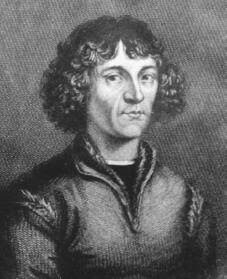
nicolauscopernicus-6397426

Nicolaus Copernicus

Atheism and science
The squalid basement
Danielson, however, points out that in the early 16th century, the center of the universe was not considered a desirable place to be. “In most medieval interpretations of Aristotelian and Ptolemaic cosmology, Earth’s position at the center of the universe was taken as evidence not of its importance but. . . its grossness.” In fact, ancient and medieval Arabic, Jewish, and Christian scholars believed that the center was the worst part of the universe, a kind of squalid basement where all the muck collected. One medieval writer described Earth’s location as “the excrementary and filthy parts of the lower world.” We humans, another asserted, are “lodged here in the dirt and filth of the world, nailed and rivetted to the worst and deadest part of the universe, in the lowest story of the house, and most remote from the heavenly arch.” In 1615 Cardinal Robert Bellarmine, a prominent persecutor of Galileo, said that “the Earth is very far from heaven and sits motionless at the center of the world.”4

In Dante Alighieri’s The Divine Comedy, hell itself is placed in Earth’s inner most core. Dante also speaks of hell in ways consistent with Aristotelian dynamics – not full of flames, which would be displaced skyward by the heavier Earth, but as frozen and immobile.By contrast, heaven was up, and the further up you went, away from the center, the better it was. So Copernicus, by putting the Sun at the center and Earth in orbit around it, was really giving its inhabitants a promotion by taking them closer to the heavens.

Atheism and science

When and why did the history become distorted? Danielson doesn’t pinpoint when the erroneous view gained supremacy, But he says that from 1650 onward one can find some writers making this revisionist claim. By the late 18th century it had taken hold completely. Johann Wolfgang von Goethe (1749-1832), for example, wrote: “Perhaps no discovery or opinion ever produced a greater effect on the human spirit than did the teaching of Copernicus. No sooner was the Earth recognized as being round and self-contained, than it was obliged to relinquish the colossal privilege of being the center of the world.” Here Goethe managed to propagate another major distortion: the notion that before Copernicus (and Columbus) it was not known that Earth was a sphere.5

Aristotle’s cosmology
Even Aristotle did not believe Earth to be the center of the universe. He thought it rather to be at the center. This fine distinction was not driven by religious dogma or human self-importance but by physics arguments: In Aristotle’s cosmology the universe was finite and the heavens existed beyond its outermost sphere. The universe had a center-defined as the center of the large outer sphere in which the stars were embedded – and matter was drawn to that center. In that cosmology, “up” and “down” were well defined. “Down” was toward the center of the universe and “up” was away from it, toward the sphere containing the stars.

The elements were earth, air, water, and fire, and each element had its natural affinity for a location in the universe.As could be seen from the fact that rocks fell to the ground, earth, being heavy, was drawn to the center. Flames leaping upwards showed that fire, being lif’t, was drawn towards the heavens. The model explained many things, such as why objects fell to the ground when released from any point and why Earth’s surface was spherical. It also explained why Earth was motionless at the center. For it to move there would have to be something that took it away from the center. And no such agent was in evidence.

Atheism and science

In his book The Copernican Revolution, historian Thomas Kuhr1 pointed out that Aristotle was clearly saying that Earth was at the center of the universe not because it was especially important but simply because it was massive: “It so happens that the Earth and the Universe have the same center, for the heavenly bodies do move towards the center of the Earth, yet only incidentally; because it has its center at the center of the universe.”6
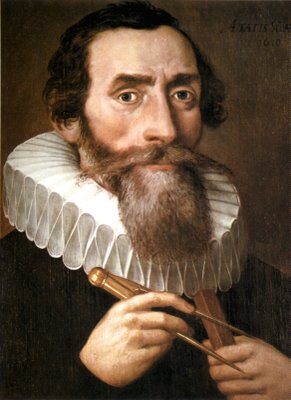
johanneskepler-9829584

Johannes Kepler

Atheism and science
Problems with heliocentricity
Copernicus’s heliocentric model, on the other hand, created all manner of difficulties. It required Earth to be in motion, but it did not say what caused it to move away from the center. If Earth was not stationary at the center but was midway in the sequence of planetary orbits around the Sun, how could you define “up” and “down”? Why would objects fall “down” if Earth were not at the center of the universe? How could objects thrown upward fall back to the same point if Earth was not at rest? Earth was still believed to be the most massive object in the universe. So if it was riot drawn to a fixed point at the center, did that mean that the universe had no center? Could that mean that the universe was infinite?

Kuhn argues that there were thus excellent reasons for rejecting the upstart Copernicus and retaining Aristotelian cosmology and its elaboration in Ptolemaic astronomy. Accepting Copernicus would not simply replace one astronomical model with another. It also meant that a whole class of physics problems that had been considered solved were now suddenly unsolved. Therefore much of the initial resistance came from within the physics and astronomy communities rather than from the church.
Atheism and science
In fact, awareness of Copernicus’s work was at first largely restricted to the community of astronomers. Only they were interested in improving the calculation of planetary motions. Copernicus was widely respected as one of Europe’s leading astronomers, and reports about his work, including his heliocentric hypothesis, had been circulating since 1515. So when his De Revolutionibus Orbium Coelestium (On the Revolutions of the Celestial Spheres) was published 28 years later, it was hardly a surprise to other astronomers. They accepted it as the most comprehensive account of celestial motions since Ptolemy.
Atheism and science
But most astronomers also felt that the Ptolemaic system, although complicated, could ultimately be made to work. So while they hailed Copernicus’s work and used his tables and methods, they were skeptical of his central idea of a moving Earth. They dismissed it as an ad hoc trick (much as Max Planck’s quantum hypothesis was initially viewed centuries later) that turned out to be a useful tool for calculations. The idea that the motion described by some artificial model was a convenient fiction was not unprecedented. Ptolemy himself had said that not all of his epicycles had to be considered physically real. Some were to be thought of as merely mathematical devices that gave sound results.

galileogalilei-7943121

Galileo Galilei

Atheism and science
Initially, however, the Copernican system did not give better numerical results than the Ptolemaic. Part of the problem was that some of the existing astronomical observations were simply erroneous, a problem that plagued Ptolemaic and Copernican astronomy alike. Although better observations soon eliminated some of those problems, other problems remained obdurate for a long time. Furthermore, at the level of accuracy available to Copernicus, the introduction of ellipses in place of circular orbits would not have helped. What Copernicus needed to do, as historian Owen Gingerich puts it, was to “treat Earth and Mercury the same way as the other planets.”

Kuhn says of Copernicus: “His full system was little if any less cumbersome than Ptolemy’s had been. Both employed over thirty circles; there was little to choose between them in economy. Nor could the two systems be distinguished by their accuracy. When Copernicus had finished adding circles, his cumbersome sun-centered system gave results as accurate as Ptolemy’s, but did not give more accurate results. Copernicus had failed to solve the problem of the planets.”7
Atheism and science
Advantages
The Copernican model did have some aesthetic and qualitative advantages. It provided a more natural qualitative explanation for the zigzag motion of planets like Mars as observed from Earth, and it answered some important questions about the ordering of the planets. That’s why heliocentrism was eventually accepted. As Kuhn puts it, “De Revolutionibus did convince a few of Copernicus’ successors that sun-centered astronomy held the key to the problem of the planets, and these men finally provided the simple and accurate solution that Copernicus had sought.” [see footnote 6]
Atheism and science
That’s an important point about scientific revolutions. At the start, the new theory rarely gives convincingly better results than its predecessor. What usually happens is that it has some appeal, often aesthetic, that attracts others to work within the new model. And if, over time, the new model proves fruitful in resolving many puzzles, it gains adherents. [see footnote 7]

The success of the Copernican model was aided by the work of the Danish astronomer Tycho Brahe, who died a few years before the invention of the telescope. Tycho is considered the greatest of the naked-eye observers. His wide ranging and accurate observations had an enormous impact.
Atheism and science
Although Tycho’s pivotal role is recognized, what is less well known is that he, like most astronomers at the time, rejected Copernicus’s ideas of a movin8 Earth. It created more problems, he thought, than it solved. But despite Tycho’s opposition, his observations provided two major benefits for the heliocentric model: They got rid of some erroneous old data that had plagued all the earlier models and thus helped to remove some of the anomalies that the Copernican system couldn’t explain. More important, the precision of Tycho’s data provided puzzles that enabled Kepler, a convert to Copernicanism, to come up with the key idea that the motions of the planets were not circular – as Ptolemy; Copernicus, and Tycho had all assumed – but elliptical.

In the folklore that surrounds Copernicus, the introduction of elliptical orbits is rightly recognized as a crucial development that led to ultimate acceptance of his model. The pre-Keplerian astronomers, however, are unfairly characterized as insisting on circular motion because of aesthetic considerations, slavish adherence to the authority of the Greeks, and so forth. But at the time, the reasons for assuming circular motions were quite sensible. Because there were no good theories of force or gravity, one needed to have an explanation of motion. Circular motion could be explained by a plausible hand-waving argument. One could say that it was an initial condition – that once an object had been set in circular motion it would, if w1disturbed, continue circling forever.
Atheism and science
More complicated motions like elliptical orbits would mean that the planets’ speeds and distances from the Sun were constantly changing. But that required a dynamical theory that simply did not exist in those pre-Newtonian times. Just introducing the idea of a moving Earth created all kinds of unsolved problems for the physical theories of the day. Adding noncircular motion would have compounded those problems, providing even stronger grounds for rejecting Copernicus.

Kepler’s innovative idea of elliptical orbits, coupled with his law of areas, did let the Copernican, model dispense with cumbersome epicycles. But his accurate Rudolphine Tables for planetary motion, published in 1627, were difficult to use. It was Newton’s theories of motion and gravity, not published until 60 years later, that sealed the scientific case in favor of Copernicus by putting his model on a firm theoretical footing.
Religious objections The actual religious reaction to the heliocentric model also differs from the folklore. For one thing, Copernicus did not seem to fear religious opposition to his ideas. After all, he was a reputable cleric himself. He even dedicated his book to Pope Paul ill with a letter in which he apologized for the seeming outlandishness of his suggestion that the Earth moved. He explained that he was forced to that hypothesis by the inadequacy of the Ptolemaic system for constructing calendars and predicting the positions of stars. A cardinal and a bishop were among those who urged him to publish his book. In fact, for 60 years after Copernicus’s death just two months after its publication, De Reuolutionibus was read and at least partially taught at leading Catholic universities.
Atheism and science
In 1600 the church did burn at the stake the philosopher Giordano Bruno, an adherent of Copernicus, for heresy. But Bruno was condemned for other heresies against Christian doctrine rather than explicitly for being a Copernican. However, the fact that Bruno had been an advocate and popularizer of heliocentrism may have led to the later perception that he was the first martyr of the new science.
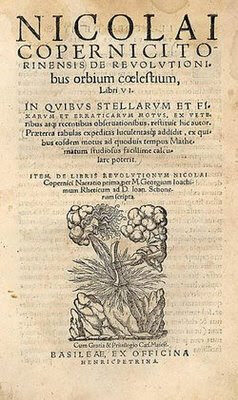
nicolaicopernicito-2563982
“Frontispiece of a 1566 edition of Copernicus’s De Revolutionibus Orbium Coelestium, published in Basil, Switzerland. The work was first published a few months before the author’s death in 1543”

Atheism and science

For many years after the publication of De Reuolutionibus, while Copernicus’s ideas remained within the mathematical astronomy community, authors of more popular books on astronomy and cosmology were either unaware of his work or chose to ignore it. A few nonastronomers did ridicule it – not for being heretical but for promulgating the patently absurd idea of a moving Earth.

It was through popularizers, some of them poets, that Copernicus’s ideas eventually became more widely known and began to spark religious opposition. But here too, the actual history is surprising. Opposition arose initially among Protestant groups rather than from the Roman Catholic Church.
Atheism and science
Kuhn suggests that this was because Martin Luther (1483-1546) and other leaders of the Reformation were emphasizing the Bible as the fundamental source of Christian knowledge and authority. And there were manifest contradictions between the Bible and Copernicus. The Catholic Church), by focusing more on doctrinal issues, actually had greater flexibility in dealing with science.

Luther spoke out against heliocentrism in 1539, saying that the idea of a moving Earth going around a stationary Sun clearly went against the account in the book of Joshua that says Joshua commanded the Sun to stand still. Luther’s deputy Philipp Melanchthon followed up by finding other biblical verses that described Earth as stationary.
Atheism and science
The conflict between scripture and Copernicanism was not limited to verses that involved the motion of Sun or Earth. The realization was growing that acceptance of Copernicanism raised other profound theological difficulties as well. As Kuhn points out, the problems just kept multiplying:

When it was taken seriously, Copernicus’ proposal raised many gigantic problems for the believingChristian. If, for example, the Earth were merely one of six planets, how were the stories of the Fall and of the Salvation, with their immense bearing on Christian life, to be preserved? If there were other bodies essentially like the Earth, God’s goodness would surely necessitate that they, too, be inhabited. But if there were men on other planets, how could they be descendants of Adam and Eve, and how could they have inherited the original sin?…Again, how could men on other planets know of the Savior who opened to them the possibility of eternal life?Or, if the Earth is a planet and therefore a celestial body located away from the center of the universe, what becomes of man’s intermediate but focal position between the devils and the angels? If the Earth; as a planet, participates in the nature of celestial bodies, it cannot be a sink of iniquity from which man will long to escape to the divine purity of the heavens. Nor can the heavens be a suitable abode for God if they participate in the evils and imperfections so dearly visible on a planetary Earth. Worst of all, if the universe is infinite, as many of the later

Copernicans thought, where can God’s Throne be located? In an infinite universe, how is man to find God or God man? [see footnote 6]

Atheism and science
giordanobruno-4344427“Giordano Bruno, burned at the stake as a heretic in 1600, was honored in 1887 with the erection of this statue at the site of his execution in Rome’s Campo dei Fiori. Although Bruno was condemned by the Inquisition primarily for theological heresies rather than for his advocacy of heliocentrism, he is widely regarded as the first martyr of the scientific revolution”

Atheism and scienceAs time went on, Copernicus’s ideas were seen as seriously disturbing to Christianity; they had to be countered.Soon the Bible became the main weapon used against Copernicus. Protestant and Catholic clerics in the 17th century started combing through it for ammunition. People started calling the Copernicans infidels and atheists and urged their repression. But the new Protestant churches did not have the powers of suppression and enforcement that the long established Catholic Church had.

Atheism and science

Kuhn argues that it was probably the menace of burgeoning Protestantism that caused the Catholic hierarchy in 1616 to switch abruptly from tolerance of Copernicanism to repression. “Copernican doctrines were, in fact, condemned during the Counter Reformation, just when the Church was most convulsed by internal reforms designed to meet Protestant criticism. Anti-Copernicanism seems, at least in part, one of these reforms. Another cause of the Church’s increased sensitivity to Copernicanism after 1610 [the year Galileo first turned a telescope to the heavens] may well have been a delayed awakening to the fuller theological implications of the Earth’s motions. In the 16th century those implications had rarely been made explicit.” [see footnote 6]

The idea of the Copernican model being a demotion for humanity probably first developed around 1650, after the scientific community had already accepted heliocentrism. Religious bodies undertook what was essentially a propaganda war against Copernicus. What probably happened was that after the heliocentric model had been well established, the location of the Sun did come to be perceived as a privileged place. So people read back into history the newly believed excellence of the center and attributed that belief respectively to the pre-Copernicans. The demotion idea may have been introduced as part of the effort to rally nonscientific religious people to turn against Copernicanism by appealing to their pride as human beings.
Atheism and science
The Protestant churches abandoned their opposition to Copernicanism fairly quickly when it – became clear that the evidence in favor of a Sun-centered system was overwhelming. But the Catholic Church, being a much larger and more tradition – bound and bureaucratic institution, was left clinging to its anti-Copernican views for a long time. Its ban on Copernicus remained until 1822, and his book remained on the forbidden list until 1835. In fact it was only in 1992 that Pope John Paul n lifted the edict of inquisition against Galileo. Thus the Roman Catholic Church is now generally regarded as the principal villain in perhaps the most notorious episode in the history of science.

What can we learn from all this? The story of the Copernican revolution shows that the actual history of science often bears little resemblance to the popular capsule versions that are learned in school or college or portrayed in textbooks and the popular media. Steven Weinberg calls them “potted history.” The true story is much more complicated, but it’s also a lot more interesting.
Atheism and science
My thanks to Owen Gingerich for an enlightening discussion and many helpful suggestions.