ExChristian.Net Has Been X’d, part 7

“I checked your website, but didn’t get very far before it caused my computer to crash”ExChristian.Net commentator

Now, betwixt the baseless arguments from vegetarianism, which we considered in the previous segment, a very odd and very troubling statement was made,

The Aztec God, Huitzilopochtli, also demanded human flesh but for a practical reason: Huitzilopochtli’s priests engaged in cannibalism during a time of famine…a much more “honorable” scenario.

I should be used to it but I cannot help to still be shocked that so very many people ignore, or in this case excuse, Gentile Pagans for performing human sacrifice and cannibalism but then turn around and condemn the Jews—only the Jews! Simply shocking. This is one of the points that I made whilst considering Atheism, Ritual Human Sacrifice in the Bible, and EvilBible.com

Lastly, I had also stated,

While I cannot understand you attacking the Jews—and only the Jews—I can empathize with the reference to “gag reflex” even though you are mistaken about the scenario. Once, at a State Fair I ordered a bean filled sopapilla, was given one filled with beef instead, did not know it and bit into it and “gag reflex” felt violated.

All of the above has been, mostly, from the five year old webpage; the following is from the three year old one:

Hey, religious person/spammer,You’ve posted your drivel on a 3 year-old article that begins with some examples of what we nonbelievers hear from “True Christians”….”…It’s too bad that you’re going to Hell…””…Hope you enjoy your special place in HELL…””…Hope you have an asbestos suit, cause you’re going to HELL…”So?….what on earth does refuting the “Evil Bible” website have to do with anything? Are you saying we’re not really going to “hell”? Do you refute “hell” on your little blog? What point are you trying to make? In the mean time, I don’t believe in “hell”, “heaven”, or any of the other unconfirmed/unproven ******** spawned by your religion. Moreover, I couldn’t give a rusty **** less if you “refute” every charge on “Evil Bible dot com”. I see no evidence for your invisble [sic] biblegod [sic]. ‘Got any? You’re the one promoting honest “discourse”, remember? Stop spamming and start proffering some evidence, or ****. ‘K? [expletives removed]

Since within the 3 year-old article they did not provide citations to the supposed “True Christians” making such statements to them about hell I cannot contact those “True Christians” in order to rebuke them. What I can do is to state that this is a perfect example of people who, if they are Christians at all, need to keep their hate filled mouth closed and pray deeply and often for the humility which being forgiven should inspire in them—shame, deep shame, on anyone who speaks thusly! As Nathan said to David, “by this deed you have given great occasion to the enemies of the LORD to blaspheme” (2nd Samuel 12:13-14) sadly, this scripture been fulfilled again.

Back to the point that they are missing and serving up more red herrings: someone brought up evibible.com and I informed them of evidence contrary to that which they were asserting. An interesting question may be, “If you do not believe in hell then why are you so angry with people who tell you that you are going there?” If someone told me that I was condemned to eternal damnation in Bionic-Demonic-Chinchilla-Land I would not be the least bit bothered.

Another comment stated:

evilbible.com, blah, blah, blah, evilbible.com, blah, blah, blah, evilbible.com, blah, blah, blah, evilbible.com, blah, blah, blah… Dumb-*** — we are not going to defend another website.Your issue is with them.That would be like if we bombarded you with other websites and asked you to prove they were wrong or right.Here you go have at them. [expletives removed]

They are going to cite another website, they are going to rely on it, they are going to advertize it, they are going to encourage others to get their information from it—unquestioningly—but they will not defend it.
And what if they bombarded me with other websites and asked me to prove if they were wrong or right? I did that with evilbible.com and to a much lesser extent Capella’s Guide to Atheism and Positive Atheism.
Oddly, they did recommend a few including richarddawkins.net—well I have written quite a bit about Richard Dawkins; Pharyngula—well I have written a bit about PZ Myers; skepticsannotatedbible.com which I have not written about yet but I am aware that Dr. Jason Gastrich wrote a point by point response to it as The Skeptic’s Annotated Bible Corrected and Explained; and one odd recommendation carm.org which is the “Christian Apologetics & Research Ministry.”

~~~~~~~~~~~~~~~~~~~~~~~~

A plea: I have to pay for server usage and have made all content on this website free and always will. I support my family on one income and do research, writing, videos, etc. as a hobby. If you can even spare $1.00 as a donation, please do so: it may not seem like much but if each person reading this would do so, even every now and then, it would add up and really, really help. Here is my donate/paypal page.

Due to robo-spaming, I had to close the comment sections. However, you can comment on my Facebook page and/or on my Google+ page.

ExChristian.Net

“evilbible.com, blah, blah, blah, evilbible.com, blah, blah, blah, evilbible.com, blah, blah, blah,

evilbible.com, blah, blah, blah”

ExChristian.Net commentator

I again attempted to communicate that no one was bother to deal with the issue at hand:

Scientific Cenobites, part 2 of 9

Scott C. Todd, Department of Biology, Kansas State University made the following proclamation:

“Even if all the data pointed to an intelligent designer, such a hypothesis is excluded from science because it is not naturalistic.”1

This is an example of scientific dogmatism whereby if the theory conflicts with the evidence one does not augment the theory but rather, proclaims that something is wrong with the evidence. If all the data (whatever “all” means) to an intelligent designer science would progress as ever and would develop new methodologies and would develop a new fields of research as it has done time and time again. I have dealt more specifically with Scott Todd’s statements in my essay Omni-Science, contextually his statement is somewhat sober, considering.

Richard Lewontin (Harvard University Professor of zoology and biology):

“Our willingness to accept scientific claims that are against common sense is the key to an understanding of the real struggle between science and the supernatural…we have a prior commitment, a commitment to materialism. It is not that the methods and institutions of science somehow compel us to accept a material explanation of the phenomenal world, but, on the contrary, that we are forced by our a priori adherence to material causes to create an apparatus of investigation and a set of concepts that produce material explanations, no matter how counter-intuitive, no matter how mystifying to the uninitiated. Moreover, that materialism is absolute, for we cannot allow a Divine Foot in the door….

scientists transgress the bounds of their own specialty they have no choice but to accept the claims of authority, even though they do not know how solid the grounds of those claims may be. Who am I to believe about quantum physics if not Steven Weinberg, or about the solar system if not Carl Sagan? What worries me is that they may believe what Dawkins and Wilson tell them about evolution…In the end we must trust the experts and they, in turn, exploit their authority as experts and their rhetorical skills to secure our attention and our belief in things that we do not really understand.”2 [see here and here for the full text and more details]

Lord Solly Zuckerman on the furor regarding Homo habilis:

“The debate in the press seemed to me less like a scientific discussion than a public auction of anatomical speculations.”3

[Some of the greats of paleoanthropology in the 1920s and 1930s,] “considered themselves to have written scientific analyses of human evolution, they had in fact been telling stories. Scientific stories, to be sure, but stories nevertheless.”4

“Scientists are generally aware of the influence of theory on observation. Seldom do they recognize, however, that many scientific theories are essentially narratives.”5

“Paleoanthropology, like all sciences, is an activity done by people and is therefore prey to the same kinds of subjective interpretations and personal interests that influence other activities done by people.”6

Anthropologist, David Pilbeam wrote:

“A major change is a growing realization that many evolutionary schemes are in fact dominated by theoretical assumptions that are largely divorced from data derived from fossils, and that many assumptions have remained implicit.”7

Misia Landau has made commented on the,

“usually unmentioned aspect of paleoanthropological description: ‘namely, that it is thick with interpretation not about what the fossils look like but also about what they mean.”8

Michael Hammond, a sociologist of science at the University of Toronto, commenting on Piltdown:

“‘what could have led so many eminent scientists to embrace such a forgery?’9 How is it that trained men, the greatest experts of their day, could look at a set of modern human bones-the cranial fragments-and ‘see’ a clear simian signature in them; and ‘see’ in an ape’s jaw the unmistakable signs of humanity? The answers, inevitably, have to do with scientists’ expectations and their effect of the interpretation of data.”10

Paleontologist Marcellin Boule’s,

“interpretations of the Neanderthal fossils he was studying were entirely erroneous, powered as they were by a particular set of preconceptions of his own.”11

“the weight of authority in any science, but particularly so in paleoanthropology, a science that is often short on date and long on opinion.”12

“It is, in fact, a common fantasy, promulgated mostly but the scientific profession itself, that in the search for objective truth, data indicate conclusions. If this were the case, then each scientist faced with the same data would necessarily reach the same conclusion. But as we’ve seen earlier and will see again and again, frequently this does not happen. Data are just as often molded to fit preferred conclusions. And the interesting question then becomes ‘What shapes the preference of an individual or group of researchers?’ not ‘What is the truth.'”13

[Sir Arthur Keith] “considered the human brain to be so special that only a very long period of slow evolution could have fashioned it from a more a more primitive state. As mentioned earlier, his obsession with the idea led him erroneously to accept two modern skeletons, Galley Hill Man and Ipswich Man, as being of ancient origin. When Piltdown Man Came along, once more it seemed to offer evidence in support of his cherished theory. ‘By 1912, Keith was definitely looking for evidence in this regard, and was obviously ready to suspend much critical judgment on almost any fossil which gave more weight to his idea.'”14

“the power of preconceptions, of seeing in the anatomy what you expect to see. ‘Contrary to Simons’ and my original view, Ramapithecus itself does not have a parabolic dental arcade,’15 says Pilbeam. ‘I ‘knew’ Ramapithecus, being a hominid, would have a short face and a rounded jaw-so that’s what I saw.’16 Pilbeam and Simons were not uniquely guilty of this error. It occurs often, such is the uncertainty of interpreting fragmentary anatomy in fossils….

The clearest message of the Ramapithecus affair, however, is the power of preconceptions, which in this case led competent scientists to ignore the evidence of other competent scientists because the conclusions drawn from the evidence were at variance with established ideas. All scientists are guided to some degree by a set of assumptions, usually implicit rather than explicit. ‘I try hard to detect them in my own thinking,’ says Pilbeam, ‘to isolate those assumptions that are not articulated because they are so ‘obvious,’ yet will seem so silly a few years from now. I am also aware of the fact that, at least in my own subject of paleoanthropology, ‘theory’-heavily influenced by implicit ideas-almost always dominates ‘data’…

Ideas that are totally unrelated to actual fossils have dominated theory building, which in turn strongly influences they way fossils are interpreted.'”17

~~~~~~~~~~~~~~~~~~~~~~~~

A plea: I have to pay for server usage and have made all content on this website free and always will. I support my family on one income and do research, writing, videos, etc. as a hobby. If you can even spare $1.00 as a donation, please do so: it may not seem like much but if each person reading this would do so, even every now and then, it would add up and really, really help. Here is my donate/paypal page.

Due to robo-spaming, I had to close the comment sections. However, you can comment on my Facebook page and/or on my Google+ page. You can also use the “Share / Save” button below this post.
Gospel of Judas, part 5 of 7 : AEON SOTER – Some Gnosis of Gnosticism

Let us begin by granting that various qualifications must be assumed for each mention of a Gnostic tenet. This is because of the variety of doctrine amongst the various Gnostic schools such as the Syrian or Semitic, Hellenistic or Alexandrian, dualistic and antinomian-and phases such as the Basilides, Valentinus, Marcion, Docetae and Demiurge.

One of Gnosticism’s tenets is that spirit is good and matter is evil, which is why they believed that Jesus either could not have been a real life person, in the flesh, but was some sort of ethereal entity or that He had manifested in the flesh but was some spiritual being (the aeon soter) that was certainly not the true God of Gnosticism. Since matter, as manifested in our physical bodies, is evil, then for the Gnostic there was a lifestyle choice to be made. They would either neglect, despise and suppress every bodily need and pleasure or they could indulge in every conceivable fleshly excess as mentioned above by Irenaeus.

They hold to an entropy of being whereby the supreme God caused pure spirit beings to emanate (proballei). These, in turn, produced the aeons, the immaterial hypostatic ideas (principle, essence, substance). The emanations and aeons form the pleroma (the immortal realm, from whence comes the material from the immaterial, due to various causes such as an aeon’s sin). Thus, Gnosticism seeks repentance (metanoia) by which they mean an end to material existence and a return to pleroma. Note that each successive emanation was further removed from God until one of them was removed so far from the pure spirit of God that it was able to create matter. This creator emanation was both ignorant of, as well as hostile to, the true God. This evil and ignorant emanation’s name is Yahweh, the God of the Bible. Since matter was manifest in the context of utter ignorance of the ways of God (pure spirit) it is man’s responsibility to seek the hidden knowledge-gnosis.

The National Geographic Society states that Gnostics:

“_believed that everyone has a divine connection with God and that such knowledge can be revealed to a select few by divine inspiration_.Gnostics regarded Jesus as an enlightened teacher whose message could enable an elite group of humans to find the divine spark within their own inner beings and rediscover the connection and become divine themselves, rising above the imperfection of the material world.”1

Moreover, they state:

“The Gnostics ‘believed that there is an ultimate source of goodness, which they thought of as the divine mind, outside the physical universe. Humans carry a spark of that divine power, but they are cut off by the material world all around them’-a flawed world, as the Gnostics saw it, the work of an inferior creator rather than the ultimate God.”2

Succinctly stated, Gnosticism sought to change the message of Christianity from go out into all the world and proclaim the gospel to withdraw and keep these teachings hidden. They rejected the concept of judgment, denied the second coming, they claimed that the Apostles were false teachers and that the Bible is not complete since they were constantly uncovering new knowledge.

Gnostics claim to offer gnosis that they keep hidden while Christianity offers epi-gnosis (liken to epi-center) according to Thayer this world refers to precise and correct knowledge used in the New Testament of the knowledge of things ethical and divine. It is found in texts such as:

“Grace and peace be multiplied to you through the knowledge of God and of Jesus our Lord, according as His divine power has given to us all things that pertain to life and godliness, through the knowledge of Him who has called us to glory and virtue” (2nd Peter 1:2-3).

What the Gospel of Judas offers is not gnosis about the reality of what happened between Jesus and Judas. Rather, it is gnosis about how people who lived about a century and a half after the time of Jesus, and after the eyewitnesses had passed away, sought to rewrite history in the image of their peculiar beliefs.

Another favorite Gnostic gospel of the liberal/skeptical clan is The Gospel of Thomas. Far from mystical wisdom, this gospel demonstrates Gnosticism’s peculiar, and in this case, male-chauvinistic doctrines:

v. 114, “Simon Peter said to them, ‘Make Mary leave us, for females don’t deserve life.’ Jesus said, ‘Look, I will guide her to make her male, so that she too may become a living spirit resembling you males. For every female who makes herself male will enter the domain of Heaven.'”

How many women’s rights groups, or civil rights groups, or any liberal groups, or any group of any kind or sort have you heard speaking out against such hate-speech? The correct answer is that only Christians have spoken out against such malicious corruptions of the teachings of Jesus Christ and corruptions of good ‘ol fashion common sense. Yet, this is one of the most beloved gospels of The [anti]Jesus Seminar and their anything but the fact ma’am admirers.

Jesus is such an undeniable personage that virtually all world-views have sought to appropriate Jesus for themselves:

1-To the Hindus Jesus was the an Avatar.

2-To the Buddhists Jesus was a Bodhisattva or the Matreya Buddha.

3-To the Reiki practitioners Jesus was a Reiki Master.

4-To the Taoists Jesus revealed the eternal Tao.

5-To ECKANKAR Jesus was an ECK Master.

6-To the Jews Jesus was a prophet or a Rabbi (or a false prophet).

7-To Islam Jesus was a prophet.

8-To atheist and secularists Jesus demonstrated the highest morals.

9-To the Gnostics Jesus was the revealer of the gnosis, the aeon soter.

10-And to many more Jesus was much more, yet Jesus is who and what He is-the savior, Lord and God.

~~~~~~~~~~~~~~~~~~~~~~~~

A plea: I have to pay for server usage and have made all content on this website free and always will. I support my family on one income and do research, writing, videos, etc. as a hobby. If you can even spare $1.00 as a donation, please do so: it may not seem like much but if each person reading this would do so, even every now and then, it would add up and really, really help. Here is my donate/paypal page.

Due to robo-spaming, I had to close the comment sections. However, you can comment on my Facebook page and/or on my Google+ page. You can also use the “Share / Save” button below this post.

Is the Bible Skeptical About Miracles? – Malta's Viper

In Acts chapter 28 we learn that Paul was on the island called Malta.

“…when Paul had gathered a bundle of sticks and laid them on the fire, a viper came out because of the heat, and fastened on his hand. So when the natives saw the creature hanging from his hand, they said to one another, ‘No doubt this man is a murderer, whom, though he has escaped the sea, yet justice does not allow to live.’ But he shook off the creature into the fire and suffered no harm. However, they were expecting that he would swell up or suddenly fall down dead. But after they had looked for a long time and saw no harm come to him, they changed their minds and said that he was a god” (v. 3-6)

Note that the natives recognized that the viper was poisonous and expected Paul to die. Also, note their particular and peculiar theology: he must have been bitten as divine retribution.

atheismsigmundfreud-8836075Sometimes a Viper Bite is Just a Viper Bite

In fact, Paul was a murderer, or at least had approvingly presided over the murder of the first Christian martyr, Stephen. But if God had anything to do with the viper bite it seems to have been done so as to get the native’s attention. The text does not indicate that God caused the bite but He appears to have nullified the venom’s deadly effects. I love how Paul just shakes it off and continues doing what he was doing-the natives and he kindled a fire because they were wet and cold (v. 2).

paulmaltaviperacts-9165523

The native’s reaction is shared by many, and many who should know better. The considered it divine retribution and surely many would curse God had they been bitten by a viper, particularly a deadly one. Yet, just as Joseph told his malicious brothers, “But as for you, you meant evil against me; but God meant it for good, in order to bring it about as it is this day, to save many people alive” (Genesis 50:20). This is a case of the fallacy of presumed arbitrary evil/suffering.

~~~~~~~~~~~~~~~~~~~~~~~~

A plea: I have to pay for server usage and have made all content on this website free and always will. I support my family on one income and do research, writing, videos, etc. as a hobby. If you can even spare $1.00 as a donation, please do so: it may not seem like much but if each person reading this would do so, even every now and then, it would add up and really, really help. Here is my donate/paypal page.

Due to robo-spaming, I had to close the comment sections. However, you can comment on my Facebook page and/or on my Google+ page. You can also use the “Share / Save” button below this post.

Trinity : Are there Biblical Examples of the Trinity and of the Godhead Consisting of More than One Person?

This summary of scriptures relevant to the biblical statements that God is a Triune being, a Trinity, and that the Trinity consists of more than one person will be followed by the actual quotations:

Job 33:4; Matthew 3:16-17, 28:19; Luke 1:35, 3:22; John 14:17, 20-21, 14:26, 15:26; Colossians 2:2; 2nd Corinthians 13:14; 1st Peter 1:2

Job 33:4 “The Spirit of God has made me, and the breath of the Almighty gives me life.”

Matthew 3:16-17 “When He had been baptized, Jesus came up immediately from the water; and behold, the heavens were opened to Him, and He saw the Spirit of God descending like a dove and alighting upon Him, and suddenly a voice came from heaven, saying, ‘This is my beloved son, in whom I am well pleased.'”

Matthew 28:19 “Go therefore and make disciples of all the nations, baptizing them in the name of the Father and of the Son and of the Holy Spirit.”

Luke 1:35 “And the angel answered and said to her, ‘The Holy Spirit will come upon you, and the power of the Highest will overshadow you; therefore, also, that Holy One who is to be born will be called the Son of God.'”

Luke 3:22 “And the Holy Spirit descended in bodily form like a dove upon Him, and a voice came from heaven which said, ‘You are my beloved Son; in you I am well pleased.'”

John 14:17, 20-21 “The Spirit of truth, whom the world cannot receive, because it neither sees Him nor knows Him; but you know Him, for He dwells with you and will be in you_At that day you will know that I am in my Father, and you in me, and I in you.”

John 14:26 “But the Helper, the Holy Spirit, whom the Father will send in my name, He will teach you all things, and bring to your remembrance all things that I said to you.”

John 15:26 “But when the Helper comes, whom I shall send to you from the Father, the Spirit of truth who proceeds from the Father, He will testify of me.”

Colossians 2:2 “in order that they may know the mystery of God, namely, Christ(1).”
NIV Footnote: (1) some manuscripts have: God, even the Father, and of Christ.

2nd Corinthians 13:14 “The grace of the Lord Jesus Christ, and the love of God, and the communion of the Holy Spirit be with you all. Amen.”

Hebrews 9:14, “how much more shall the blood of Christ, who through the eternal Spirit offered Himself without spot to God, cleanse your conscience from dead works to serve the living God?”

1st Peter 1:2 “Elect according to the foreknowledge of God the Father, in sanctification of the Spirit, for obedience and sprinkling of the blood of Jesus Christ: Grace to you and peace be multiplied.”

Rev. Dr. Mel White on Christian Homosexuality, part 1 of 21

This is part one of an twenty-one part essay which provides a biblical response to a publication written by Rev. Dr. Mel White that was distributed door-to-door by “Soulforce Inc.” The publication is entitled “A Biblical Response to the Question People Often Ask…’How can you consider yourself a Christian when you are also gay?’ What the Bible Says-and Doesn’t Say-about Homosexuality.”1

Twenty-one parts may seem like a lot yet, the purpose of posting it thusly is so as to make the information bite-sized and easily digested. I believe that you will find that while this parsed essay is about homosexuality it is premised upon hermeneutics. It is a lesson in being like the Bereans who checked what they were being taught against what the scripture stated and they were praised for doing so (see Acts 17:11). This is a lesson in how to think about what is being asserted and how to conduct research and discern truth from falsehood or accuracy from error.

The topics that I will cover in the entirety of these posts are as follows:

Part 1: The Premises Part 2: Scant Mention of Homosexuality and Solomon’s 1,000 Concubines? Part 3: Bible Silent on Homosexuality Part 4: Non-Child Baring Not Abnormal Part 5: It’s All Good…in the Beginning Part 6: The Men of Sodom Part 7: Galileo and Copernicus vs. Luther, Calvin and Melancthon? Part 8: Too Literal or Not Literal Enough? Part 9: The Holiness Code and Moral Relativism Part 10: Did Jesus Address Homosexuality? Part 11: To Judge or Not to Judge Part 12: Turning the Truth of God Into a Lie Part 13: The Fertility gods and goddesses Part 14: Assumed That All Are Created Heterosexual? Part 15: To Choose or Not to Choose-Impulse and Action Part 16: When Widows Are “Ordered” to Have Intercourse Part 17: The HIV/Aids Culture Part 18: Homosexuals Are a “Distinct Class” Part 19: Paul, Greek, Malaokois and Arsenokoitai Part 20: Could You Be Wrong?

Part 21: In Conclusion

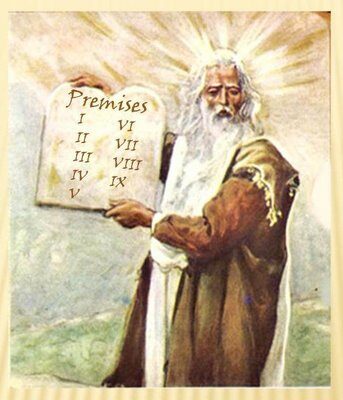
The Premises
Let us summarize the stated premises upon which Rev. Dr. Mel White has founded his statements.

MY FIRST PREMISE: Most people have not carefully and prayerfully researched the biblical texts often used to condemn God’s lesbian, gay, bisexual, and transgender children.”

This premise is simply devoid of meaning since we are not made privy to what is meant by “most.” Has he performed some great survey of the world’s 2.5 billion Christians and 14 million Jews? Perhaps many people tell Rev. Dr. Mel White, “I never knew that the Bible really meant…” But as we will see in these essays this would not be due to what the Bible really says or does not say but due to Rev. Dr. Mel White’s misrepresentations, misinterpretation, misapplications and redefinitions. Keep in mind that “most” can mean 99% but “most” can also mean 51% and yet 51% is awfully close to half—we should not be impressed by an undefined appeal to “most.” The point being that the first premise is a baseless generic statement the point of which appears to be to impress us with the important work that Rev. Dr. Mel White is doing in vanquishing ubiquitous ignorance.

MY SECOND PREMISE: Historically, people’s misinterpretation of the Bible has left a trail of suffering, bloodshed, and death.”

While tragically sad, this is accurately qualified as a reference to “misinterpretation.” This, however, does not mean that whenever the Bible condemns that for which we have a passion we ought to feel free to cry “Misinterpretation!”

MY THIRD PREMISE: We must be open to new truth from Scripture.”

While it may be true that the more we learn the more we can understand Scripture’s accuracy and wisdom it is simply faulty to claim “new truth” whenever we want to justify something for which we have a passion but that the Scripture condemns.

MY FOURTH PREMISE: The Bible is a book about God – not a book about human sexuality.”

May we likewise state, “The Bible is a book about God – not a book about human relationships” and thus we now understand that we do not have to love our neighbor? Firstly, the Bible is not “a book” it is 66 books. Yes, the Bible is a set of books about God and it defines God’s relationship with humanity and humanity’s relationship with God and each other through God’s guidance. I discuss the issue of God’s concern for human sexuality in my essay Too Sexy for My Theology?. Sex affects the lives of virtually every single human being who has ever lived and has done so in very, very many ways. Sex is not at all unimportant enough to ignore as an issue since sex is greater than the individual. It is more important than mere enjoyment or procreation. God would be neglectful if He did not address sexuality in its many, many forms from joy and procreation to abuse.

MY FIFTH PREMISE: We miss what these passages say about God when we spend so much time debating what they say about sex.”

premises1-4997831Rather, in learning what God has to say about sex and the implied human interaction we learn a great deal about God, His character and his concern for a very, very important and powerful aspect of humanity.
MY SIXTH PREMISE: The biblical authors are silent about homosexual orientation as we know it today. They neither approve it nor condemn it.”

Throughout Rev. Dr. Mel White’s text you will surely notice constant qualifications. It would appear that he knows very well that the Bible condemns homosexuality and so he attempts to sidestep the obvious by referring to homosexuality “as we know it today.” And how does he propose we know it today? As normal, natural and a God approved and endorsed civil right.

MY SEVENTH PREMISE: Although the prophets, Jesus, and other biblical authors say nothing about homosexual orientation as we understand it today, they are clear about one thing: As we search for truth, we are to ‘love one another.'”

Here is another wording of the qualifier “as we understand it today.” I would whole heartedly agree with the statement that “As we search for truth, we are to ‘love one another.'” Anyone who mistreats homosexuals for their homosexuality is hypocritically violating the manner in which Jesus dealt with the common person. After all “the wrath of man does not produce the righteousness of God” (James 1:20).

MY EIGHTH PREMISE: Whatever some people believe the Bible says about homosexuality, they must not use that belief to deny homosexuals their basic civil rights. To discriminate against sexual or gender minorities is unjust and un-American.”

There is also room for agreement here with the qualifier that homosexuals ought to enjoy the same civil rights and not have special privileges. However, in part 18 we will see that Rev. Dr. Mel White claims that homosexuals are “a distinct class of individuals.”

Perhaps the premise which Rev. Dr. Mel White is most animated by is one that he does not list as a premise but one that is a comment which he refers to in the following statement:

“it’s important to remember that in every age, people of faith are responsible for setting moral and ethical standards that honor God. But we people of faith must be very careful not to allow our own prejudices to determine what those standards should be. Instead of selecting one item from an ancient Jewish holiness code and using it to condemn sexual or gender minorities, let’s talk together about setting sexual standards that please God – standards appropriate for heterosexuals and homosexuals alike, standards based on loving concern, health, and wholeness for ourselves and for others.”

This statement is very telling as revealing the mindset from which Rev. Dr. Mel White addresses the issue. His assertions are precisely reverse from the biblical worldview. Rev. Dr. Mel White appears to be preaching humanism with God, the Bible and Christianity as a facade.

This is the very epitome of eisegesis since he is coming to the texts with a particular desired outcome in mind. His ultimate premise is that “people of faith are responsible for setting moral and ethical standards that honor God.” Yet, the Bible teaches that it is God Himself who sets the standards and informs humanity as to what those standards are. He stated, “let’s talk together about setting sexual standards that please God.” Again, note the humanistic point “let’s,” meaning “let us,” or “us human beings,” set the standard. This view turns revelation on its head whereby instead of God revealing His will to humanity it is humanity that reveals its will to God, demands that God adhere to our morality de jour and besmirches any segment of humanity that disagrees.

Let us now begin our survey of Rev. Dr. Mel White’s assertions. I wish to make this essay into an exercise of sorts: let us set aside our opinions—let us proceed by making what I, you, and Rev. Dr. Mel White thinks about homosexuality irrelevant and let us focus on discerning his accuracy and simply ask “Are his claims accurate or not?”

~~~~~~~~~~~~~~~~~~~~~~~~

A plea: I have to pay for server usage and have made all content on this website free and always will. I support my family on one income and do research, writing, videos, etc. as a hobby. If you can even spare $1.00 as a donation, please do so: it may not seem like much but if each person reading this would do so, even every now and then, it would add up and really, really help. Here is my donate/paypal page.

Due to robo-spaming, I had to close the comment sections. However, you can comment on my Facebook page and/or on my Google+ page. You can also use the “Share / Save” button below this post.

Rev. Dr. Mel White on Christian Homosexuality, part 10 of 21 ›

Atheist Circular Alogic – “Who Designed the Designer?”

I am not here referring to circular logic or illogicality but to alogic which is not merely illogical, not logical, but simply lacking in logic. Furthermore, by alogic I am referring to an argument that is a very popular talking point of certain atheists. There are a plethora of alogical arguments that certain atheists consider devastating, cleaver or “unanswerable” because they are being made and uncritically repeated by atheist who are, apparently, engaging in well-within-the-box-groupthink.

Put any search engine to the task of finding references to “Who designed the designer?” and you will uncover two things: 1) Atheists are all too pleased to repeat this talking point and consider it a fatal blow to theism.

2) Theists, from philosophers to pajama clad cyber-John Does blogging from their mother’s basement are picking this alogical argument apart as the carrion that it is.

Some examples of this alogical pseudo-argument are as follows:

Richard Dawkins (in The Blind Watchmaker) wrote, “To explain the origin of the DNA/protein machine by invoking a supernatural Designer is to explain precisely nothing, for it leaves unexplained the origin of the Designer.”

Christopher Hitchens (in God Is Not Great) wrote, “who designed the designer or created the creator. Religion and theology have consistently failed to overcome this objection.”

Daniel Dennett (in Darwin’s Dangerous Idea) references Prof. Richard Dawkins’ text and declares that it is an “unrebuttable refutation, as devastating today as when Philo used it to trounce Cleanthes in Hume’s Dialogues two centuries earlier.”

And of course, Richard Dawkins (in The God Delusion) quotes Daniel Dennett who is quoting Richard Dawkins and proclaims that Daniel Dennett is correct in approving of Richard Dawkins.

atheismatheistcosmologyuniversegod-5029850

It is rather odd that such self-professed sharp minds are, in their middle ages, promulgating as unrebuttable objection that which Sunday School children rebut in their most tender years.

That Dawkins make this the very center piece of The God Delusion tell you something about what a tel of fallacies that book is. That he prefers referring to “luck” as a viable option is another matter altogether and one that reeks of desperation—well then, carpe despero.

Let us consider two other examples as the physicist Milton Rothman wrote,

All of the God theories collapse when three serious questions are asked: Where did God come from, where did God exist before the universe existed, and how did this God learn how to create?[1]

Stephen Hawking wrote,

Even if there is only one possible unified theory, it is just a set of rules and equations. What is it that breathes fire into the equations and makes a universe for them to describe?…Why does the universe go to all the bother of existing? Is the unified theory so compelling that it brings about its own existence? Or does it need a creator, and, if so does he have any other effect on the universe? And who created him?…So long as the universe had a beginning, we could suppose it had a creator. But if the universe is really completely self-contained, having no boundary or edge, it would have neither beginning nor end: it would simply be. What place, then, for a creator?[2]

Interesting that the universe could simply be but God would require a maker.

Let us note that these objections are premised upon atheistic atheology. That is to say that they presuppose knowledge of God and demand that their theological presuppositions are met. For example, Richard Dawkins presupposes that the supernatural Designer had an origin and both he, Christopher Hitchens, Daniel Dennett, etc. presupposes that the designer was designed.

I previously explained how the creator, the designer, is not only uncaused but uncausable in a parsed post entitled: On the Flying Spaghetti Monster, the Invisible Pink Unicorns, et al.

The point of this essay was merely to point out:

1. That theology has consistently overcome this “objection.”

2. That it is an objection that is premised upon the atheist’s own theological presuppositions.

3. That even if the designer did have an origin and we did not know its origin, did not know who designed the designer, it would say nothing about its existence or lack thereof.

4. That this brand of atheism is quite pleased unskeptically repeating popular talking point but fail to note that there is no field of scientific or philosophic inquiry that uncovers a cause for a certain effect but then rejects the cause when it cannot explain the cause’s origins.

That we cannot explain the explanation and so the explanation ought to be rejected would be an inquiry stopper, a science killer as it would cause scientific and philosophic inquiry to cease. Rather, we either continue our inquiry or we reach a finite regress.

If I hold a ball in my hand and let it go stating, “Gravity did it, gravity caused it to fall” is a perfectly valid explanation even though I cannot fully account for gravity or answer as to what caused gravity. If we find that on the dark side of the moon the words, “Earthling go home!” had been written we could conclude the activity of aliens even if we cannot explain the aliens nor whence they came.

Lastly, let us note that, that which is considered nonsense when promulgated by Judeo-Christianity is considered the utmost in erudition when promulgated by atheists. Here are some examples:

It is ignorant and superstitious to believe that God made everything out of nothing.
It is rational and scientific to believe that nothing made everything out of nothing.

It is ignorant and superstitious to believe that God is eternal.
It is rational and scientific to believe that matter is eternal.

God is an effect and must have had a cause.
Matter is the uncaused first cause.

If God made everything, then who made God?
Matter made everything and nothing made matter.

[1] Milton Rothman, “What Went Before?,” Free Inquiry (Winter 1992/93), p. 12
[2] Stephen Hawking, A Brief History of Time (New York: Bantam Books, April, 1998), p. 174

~~~~~~~~~~~~~~~~~~~~~~~~

A plea: I have to pay for server usage and have made all content on this website free and always will. I support my family on one income and do research, writing, videos, etc. as a hobby. If you can even spare $1.00 as a donation, please do so: it may not seem like much but if each person reading this would do so, even every now and then, it would add up and really, really help. Here is my donate/paypal page.

Due to robo-spaming, I had to close the comment sections. However, you can comment on my Facebook page and/or on my Google+ page.

Mormons controversial proxy baptism for the dead Hitler, Stalin, Mao, Buddah, et al. and the coverup

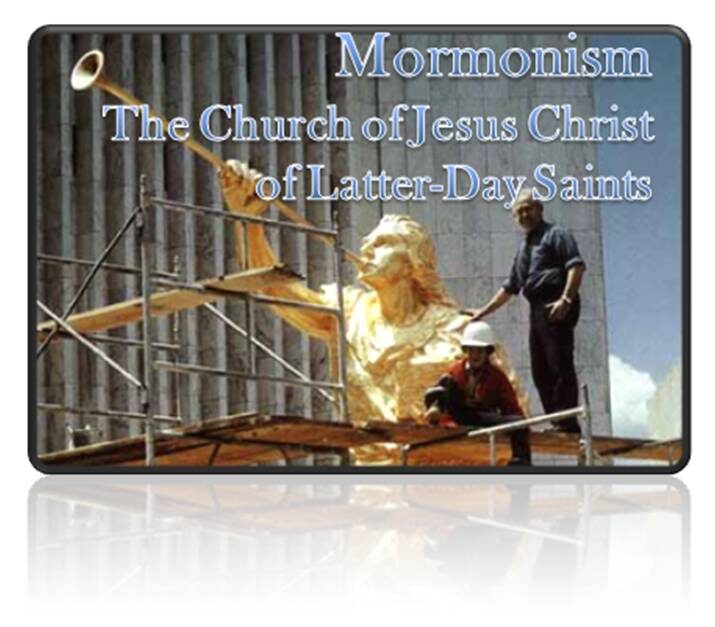
Just finished posting a tripartite essay on the odd fact surrounding the proxy baptism for the dead by the Mormons (LDS church) of Adolf Hitler, Joseph Stalin, the Buddha, and many others including Jewish victims of the Holocaust.

Mormons baptized Hitler, Stalin, Mao, Buddah, et al.

Mormons cover up controversial proxy baptism for the dead

Where Mormon baptisms for the dead Hitler, Stalin, Buddha valid?

mormonism2c20mormon2c20moroni2c20church20of20jesus20christ2020of20latter-day20saints2c20true20freethinker-1569392

~~~~~~~~~~~~~~~~~~~~~~~~

A plea: I have to pay for server usage and have made all content on this website free and always will. I support my family on one income and do research, writing, videos, etc. as a hobby. If you can even spare $1.00 as a donation, please do so: it may not seem like much but if each person reading this would do so, even every now and then, it would add up and really, really help. Here is my donate/paypal page.

Due to robo-spaming, I had to close the comment sections. However, you can comment on my Facebook page and/or on my Google+ page.

Scientific Cenobites, part 10 of (what used to be just) 9

Jonah Lehrer—“journalist who writes on the topics of psychology, neuroscience, and the relationship between science and the humanities. He served as a research assistant at Columbia University in Eric Kandel’s lab”:

It’s as if our facts were losing their truth…claims that have been enshrined in textbooks are suddenly unprovable…it’s occurring across a wide range of fields, from psychology to ecology.1

Dominic Statham notes “the ‘human aspects’ of the problem”:

According to Lehrer, these include selective reporting of results, publication bias by journal editors, fashions and illusions nurtured by a priori beliefs.2

John Ioannidis—Professor of Medicine at Stanford University and author of Why most published research findings are false (Plos Medicine, 2(8):e124, 30 August 2005):

It feels good to validate a hypothesis…it feels even better when you’ve got a financial interest in the idea or your career depends upon it. And that’s why, even after a claim has been systematically disproven, you still see some stubborn researchers citing the first few studies that show a strong effect. They really want to believe that it’s true.3

Richard Palmer—Professor of biology at the University of Alberta—referencing, selective reporting of results4:

We cannot escape the troubling conclusion that some—perhaps many—cherished generalities are at best exaggerated in their biological significance and at worst a collective illusion nurtured by strong a priori beliefs often repeated… scientists find ways to confirm their preferred hypothesis, disregarding what they don’t want to see.5

Dominic Statham provides the following example:

In the early 1990s, the Danish ornithologist Anders Møller proposed a correlation between the genetic quality of a bird and the symmetry and length of its feathers. He concluded that this confirmed the view that feather ornaments in birds arose through an evolutionary process and that birds chose eachother for mating based on such symmetries.

Based on this theory, “a number of scientists published data supporting his findings. Not only did some confirm the role of symmetry in sexual selection in barn swallows, but others demonstrated the principle with fruit flies and even humans.”

As an example of someone who supported the “symmetry theory” is evolutionary biologist Professor Leigh Simmons of the University of Western Australia. Yet, whilst enthusiastic, he eventually came to oppose it based on his own research and found that “when he submitted his results to the scientific journals, he had difficulty getting them published”:

[They] only wanted confirming data…It was too exciting an idea to disprove.

Jonah Lehrer notes:

For Simmons, the steep rise and slow fall [of the symmetry theory] is a clear example of a scientific paradigm, one of those intellectual fads that both guide and constrain research; after a new paradigm is proposed, the peer review process is tilted towards positive results.

Dominic Statham notes:

One study reported in the Journal of the American Medical Association showed that, of thirty-four tests that had been subjected to replication, the results of forty-one per cent of them had either been directly contradicted or had been shown to be significantly exaggerated.6

This was in reference to “controlled experiments—where tests can be carefully replicated by others” yet, “how much more will it be true of evolutionary speculations about what happened many years outside of living memory, and for which there is no possibility of replication?

‹ Scientific Cenobites, part 1 of 9 up Scientific Cenobites, part 2 of 9 ›