The BOBA Digest, part 3: Atheism's Chihuahua

While this is not exactly a BOBA, as it does not necessarily deal with an argument per se, it did seem to qualify for entry into the BOBA Digest nonetheless.

Last night, on the Charlie Rose show, as Bill Maher and Larry Charles pontificated about their own brilliance in the face of those people-you know, the religious folk-I could not help but think that on the opening weekend of their atheism movie “Religulous” they came in far behind the number one movie “Beverly Hills Chihuahua.”

Yes, that little pint-sized puppy scrapped with the big dog and showed him that a little nice beats a whole career built on expressing personal prejudice.

On its opening weekend the atheism movie Religulous‘ box office rank was ten with Beverly Hills Chihuahua coming in at number one the “Christian movie” Fireproof came in at number 8 and a comedy that utterly demolishes the far left liberal movement, particularly Michael Moore, entitled An American Carole came in at number 9.

atheismreligulousbillmaher-5080221

I would think, I would imagine, I would hope that both atheists and Christians are more than read to abscond from Bill Maher’s style of arguments from outrage and make attempts to engage in civil discourse.

anamericancarole-4814423

from An American Carole

A more apt title for the atheism movie I could not imagine as the term “Religulous” so succinctly capture’s Bill Maher’s modis operandi and is a great appeal to the particular New Atheist sect of atheism which espouses belligerence over substance.

fireproof-movie-1332228

Bill Maher stated that he is getting email from people telling him that at the end of his atheism movie people actually clapped and he asked when the last time people clapped at the end of a movie. Well, let’s see…what day is it? Just last week when I went to see An American Carole people clapped when the movie was over. And yet, in both cases there sympathetic audiences-so what of it?

rosie-3560048

Review of John Loftus, “Why I Rejected Christianity: A Former Apologist Explains”, part 2 of 2

We continue and conclude, from part 1, considering John Loftus’ debate with Dinesh D’Souza.

Audio of the debate is being made available via Apologetics 315 at this link.

It appears that John Loftus was less than successful and has actually been taken to task by other atheists such as may be found at Skeptic Money, Le Cafe, UCIC Atheists. Loftus attempted some self defense at his blog here, here, here and here. And yet continues to be unconvincing to other atheists, as can be seen here.

Also, note that Marcus from WHHW has posted a video starring Loftus affirming the absurdity of atheism. And there is a follow up from Marcus wherein Loftus claims that atheist is actually only “seemingly absurd” (and, by the way, proves yet against that no one misunderstands Ockham’s Razor like the atheist apologist).

Let us conclude IrishFarmer’s review of a John Loftus book which deals with The Beginning of the Cumulative Case.

Following is the text of IrishFarmer’s review (with very minor stylistic changes and a succinct addendum):

~~~~~~~~~~~~~~~~~~~~~

Poor Logic in the Bible?
After a short introduction to his “Cumulative Case”, John attacks the logic of the Bible; which is a pretty good idea, if it works. If Jesus is really God, then we should expect Him to be able to reason properly. The same goes for any inspired writers.

First, however, John makes an interesting statement. Essentially, he believes that historical proofs only give us a probability of truth, and even if the historical evidence backs up Christianity, science (somehow) proves that the doctrinal aspects of Christianity are not true and therefore the historical proof should be dismissed [1, page 37]. This seems rather strange.

If the historical evidence leads us to believe that Jesus actually rose from the dead (thus vindicating the faith of the Church), I would think the first thing we should question are the “scientific” presuppositions which are leading us to reject Christian doctrine.

After that, there are some examples of alleged poor reasoning in the New Testament. Namely Mark 12:26-27 where John says Jesus does a poor job of arguing for the resurrection:

But concerning the dead, that they rise, have you not read in the book of Moses, in the burning bush passage, how God spoke to him, saying, “I am the God of Abraham, the God of Isaac, and the God of Jacob”? He is not the God of the dead, but the God of the living. You are therefore greatly mistaken.

The strange thing is that it’s obvious that Jesus is doing no such thing. In Mark 12:20-23 Jesus is being questioned about a hypothetical woman who married three brothers and had no children, and who she would end up with in the resurrection. The question being asked of Jesus assumes the truth of the future resurrection.

Now there were seven brothers. The first took a wife; and dying, he left no offspring. And the second took her, and he died; nor did he leave any offspring. And the third likewise. So the seven had her and left no offspring. Last of all the woman died also. Therefore, in the resurrection, when they rise, whose wife will she be? For all seven had her as wife.

Ken’s addendum:
It seems that elucidation is required in order to not create confusion. IrishFarmer wrote that “The question being asked of Jesus assumes the truth of the future resurrection.” This is true of the question itself. It should be noted that it was asked by people who did not believe in the resurrection but who where employing the concept of resurrection to challenge Jesus. Verse 18 reads,

Then some Sadducees, who say there is no resurrection, came to Him; and they asked Him, saying…

Their question was meant to imply the illogicality of a physical resurrection to the effect of “Since you claim a physical resurrection [the only sort held by Jews] whose physical wife will she be when she physically resurrects?”
Jesus begins His answer by stating, v. 24-25,

Are you not therefore mistaken, because you do not know the Scriptures nor the power of God? For when they rise from the dead, they neither marry nor are given in marriage, but are like angels in heaven.

Firstly, mistaken because certain relationships which life on Earth necessitate for the stability and fidelity of the family and society are not necessary in the resurrection. Secondly, they are mistaken because the scripture, which was the premise upon which their question was based in the first place, makes reference to the present existence of those who have already passed away. Jesus was basing His answer upon their premise.

The second example John Loftus uses isn’t as bad. I just don’t see what’s so crucial about it. I don’t understand the background of Jewish belief in a future resurrection and so forth, so I’ll lay off this one.

I suppose the argument doesn’t have much force as it stands, but if this is what John considers a “cumulative case” against Christianity, then his argument is weak as it stands as well.
However, it appears from these two logical examples John concludes that the NT was written by people who’s cognitive skills were “infantile” and whom we should reject the word of because of their meager scientific standards [1, page 38].

The problem should be obvious, however, since this reasoning would cause us to reject more than just the Bible. We would have to reject the works of reliable historians, simply on the basis that we’re so much smarter and more advanced than they were. That’s just silly, and often simply isn’t true.

Ken’s addendum:
Let us take a moment to consider John Loftus’ own logic. He writes that “There just aren’t any ultimacies” (except this one?) and then notes that “what ultimately matters…” as well as “life is ultimately meaningless.” Thus, there are no ultimacies except those ultimacies upon which he relies for arriving at his ultimacies.
Not only this but he wrote,

Nature is ultimate. According to the late Carl Sagan, “The cosmos is all there is, was, or ever will be.” According to Bertrand Russell the universe is simply “a brute fact.” I am an atheist. There is no God. And there is at least one reason for me not to believe in God, and that is because the universe is absurd when we try to figure it out [266].

Let us parse this monkey fist of fallacies:
Nature is ultimate
Even though he claims that “There just aren’t any ultimacies.” Let us ask John: how do you know?

According to the late Carl Sagan
Thus saith Carl? What does Carl Sagan know that we do not? Well…

“The cosmos is all there is, was, or ever will be”
Let us ask John and Carl: how do you know?

According to Bertrand Russell
Thus saith Bertrand? What does Bertrand Russell know that we do not? Well…

the universe is simply “a brute fact”
Let us ask John and Bertrand: how do you know? This is a science stopper; is we simply deem things to be brute facts well, then they are brute fact—period.

I am an atheist.
And to which sect of atheism does he adhere?

There is no God.
Let us ask John: how do you know?

And there is at least one reason for me not to believe in God, and that is because the universe is absurd when we try to figure it out This is certainly the oddest epistemology I have ever encountered. Granting this “logic” and employing it I will conclude that there is no John Loftus and there is at least one reason for me not to believe in John Loftus, and that is because his claims are absurd when we try to figure them out.

If we simply declare that a cause does not exist because the effect appears to be absurd when we try to figure it out this, again, is a science, and philosophy, stopper.

The Chauvinistic Cat is out of the Bag
Having revealed his superiority over the ignorant authors of the Bible, John really harps on this point. That is, he proceeds to dismiss anything that seems strange to him. From the hermeneutical methods of the NT writers, to their reasoning skills [1, page 39]. Which is fine, but I’ll note again that I’ll believe the word of a small child so long as the evidence backs up their case. I’m not going to throw out any corroborating evidence simply because I feel superior to the child.

Ken’s addendum:
Just in case: “hermeneutical” refers to the art and science (as it has been called) of interpreting texts by taking into consideration things such as grammatical context, historical context, cultural context, asking who, what, when, where, why, how, etc., etc., etc. This is done so as to not take a text out of context to make a pretext for a prooftext. This is basic exegesis which is allowing the text to tell us what it is telling us rather than eisegesis (or, isogesis) which is coming to a text with preconceived notions and reading them into the text.
The New Testament writers often applied an interpretive method which was, of course, culturally and historically in keeping with their times: the midrash method (one of various forms that the Jews traditionally employ). This consisted of drawing parallels, making homilies, moralizing, etc.

Again, he uses what I see as a bit of backwards reasoning: saying that since the NT authors were so darned stupid, we shouldn’t believe their word on the resurrection. Which is fine, you don’t have to take their word for it. The evidence, even the evidence we have almost 2000 years later, still supports the resurrection.

For now, John Loftus does nothing to interact with any evidence. He merely dismisses the NT authors as cognitively deficient. We’ll come back to this in a later chapter, however.

Interestingly, John then makes the claim that essentially Jesus’ life was written to reflect the OT. I haven’t the expertise to argue on this front, but clearly neither does John. Nor does he back up his case. Though, this has been more of an “intro” than anything, so we can give him the benefit of the doubt, for now.

Ken’s addendum:
IrishFarmer wrote, “We’ll come back to this in a later chapter, however” and “for now” but he was not able to continue his review and so all we have is parts 1 and 2 in which case Norm Geisler’s review may be of interest.

Bart Ehrman’s Millions and Millions of Variants, part 2 of 2

We will now continue and conclude considering Bart Ehrman’s millions and millions of variants.

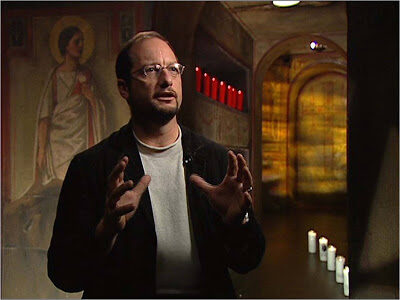
Let us continue from the first segment and consider Ehrman as a teacher, as he:

is energetic and possessed of a gregarious personality that endears him to the student body…as he paces back and forth across the stage, Ehrman ruthlessly pounces on the anomalies…Ehrman reels them off, rapid-fire, shell bursts against the bulwark of tradition…“Most of the students have never heard anything like this in their lives,” says Ben White, a graduate student. “For a lot of them, it’s very threatening.”1

Note the emotive and adrenaline spiked description. That “Most of the students have never heard anything like” is surely true for various reasons including 1) there are Christians who have lived all but cloistered lives and have never practiced the true and honest skepticism which the Bible enjoins2, 2) there are indifferent or rebellious students who take Ehrman’s words for it and also do not practice the skepticism which would challenge Ehrman’s views, 3) what they are hearing is not true.

Let us consider option 3 (the following combines statements by an interviewer with Ehrman’s):

in this Gospel, Jesus isn’t born in Bethlehem, he doesn’t tell any parables, he never casts out a demon, there’s no last supper. “None of that is found in John!”

The crucifixion stories are different — in Mark, Jesus is terrified on the cross; in John, he’s perfectly composed…

“In Matthew, Mark and Luke, you find no trace of Jesus being divine,” he says, his voice urgent. “In John, you do.”

He points out that in the other three books, it takes the disciples nearly half of Christ’s ministry to learn who he is. John says no, no, everyone knew it from the beginning.

Now, imagine all this and more being presented to you, a captive audience whose grades depend on it, by an energetic, endearing, ruthless, urgent, pouncer reeling them off, rapid-fire, shell bursts against the bulwark of tradition.

No wonder the New Atheist movement targets the college youth: they are naturally rebellious, have left home and are on their own, their libidos are on overdrive and along come the New Atheists, the Bart Ehrmans urging them to rebel against the authority of their parents and traditions, assist them in confusing rebellion against “religion” with rebellion against God and emphasize that traditional “religious” morality is oppressive so basically “Do what thou wilt shall be the whole of the law.”

No wonder that studies show that atheists are generally well “educated” as by the time they graduate college they have been through the atheist catechism numerous times. Every subject they study makes no reference to God, as that would be all but illegal, often if God is mentioned it is in order to condemn and confuse between God and “religion,” and the convenient side effect of treating others as the animals which they are told they are with liberty and fornication for all.
bartehrmanmisquotingjesusatheismchristianitychristianapologeticsgodbiblejesus-2107801

Let us momentarily wipe the stars from our eyes, let the adrenaline subside and actually skeptically consider the statements each in turn:
in this Gospel, Jesus isn’t born in Bethlehem, he doesn’t tell any parables, he never casts out a demon, there’s no last supper. “None of that is found in John!” That something is not found in one Gospel over another one amounts to nothing. Let us imagine that two authors write two books on tennis: one on how to play the actual game and the other describing and recommending the equipment and apparel that one will need in order to play tennis. It is no refutation of the one over the other to state, “In one book the tennis player is described as wearing certain apparel and utilizing certain equipment; none of that is found in the other book!” or “From one book we can actually learn how to play the game; none of that is found in the other book!” Would you really conclude from the one book that a person would purchase equipment and apparel and not play tennis or from the other that one would play tennis without a racket and disrobed?

That different authors emphasize different things as they write for different purposes and to different audiences is so very obvious, as it is done by every author (of fiction, non-fiction, books, novels, newspapers, websites, etc.) that one cannot help but discern emotive excuses for rebellion and rejection.

John’s emphasis is Jesus eternality as deity and so he begins by stating, reminiscent of Genesis 1:1, “In the beginning was the Word, and the Word was with God, and the Word was God.” Just because John does not mention where Jesus was born does not mean that in John’s gospel “Jesus isn’t born in Bethlehem.”

Does “he doesn’t tell any parables” mean that in John, Jesus does not say, “Hey guys, I am now going to tell you something that shall hereafter be categorized as ‘parable’?” Well, just in case, in John, Jesus makes parabolic statements: 3:8 (blowing wind), 3:29 (bridegroom’s friend), 4:35-38 (fields ripe for harvest), 5:19-20 (father and son), 8:35 (slave and the son), 10:1-5 (good shepherd), 11:9-10 (twelve hours of daylight), 12:24 (kernel of wheat), 12:35 (walking in the light), 14:2-4 (preparing a place), 15:1-8 (the vine and the branches), 16:20-24 (women in travail).

I suppose that it is true that in John “there’s no last supper” unless you count the last supper that is found in John ch. 13,

Now before the Feast of the Passover, when Jesus knew that His hour had come that He should depart from this world to the Father, having loved His own who were in the world, He loved them to the end. And supper being ended…rose from supper…

The last one.

The crucifixion stories are different — in Mark, Jesus is terrified on the cross; in John, he’s perfectly composed.
This is simply not so, this gives the impression of contradiction whereby Mark and John claim to describe the same time and place but one denotes that Jesus was terrified and the other perfectly composed. The fact is that while Mark more fully describes the scene in the Garden of Gethsemane, John mentions that they went there and goes directly into a description of what happened when Judas (John ch. 18). Jesus was “terrified” before this as He anguished alone, then he became “perfectly composed” and then Judas and company arrived.

“In Matthew, Mark and Luke, you find no trace of Jesus being divine,” he says, his voice urgent. “In John, you do.”
I wonder what he means by “trace”? I wrote an essay entitled Did Jesus Say “I am God”? – The Faulty Premise because some people seem to think that unless Jesus stated the word “I” followed by the word “am” followed by the word “God” (in 21st century North American English grammar, mind you) then He did not claim to be God when, in fact, He did claim to be God and was claimed to be God in very many ways.
For the interested reader I have just begun an entire series on God’s Nature and Trinitarian Doctrine. Let us consider the claim that “In Matthew, Mark and Luke, you find no trace” not even a trace mind you “of Jesus being divine”:
Jesus is omnipresent in: Matthew 18:20, 28:20

Jesus is omnipotent in: Matthew 19:26 & Mark 10:27; Mark 4:39-40; Mark 11:13-14 & 20-21

Jesus is identified as God via doing things which only God could do in: Matthew 1:23; Isaiah 9:6; Matthew 9:2-3, 6, 28:18; Mark 2:7, 10, 14:61-64; Luke 5:21, 24

For an example of the above; Jesus forgives sin in: Mark 2:5-11; Matthew 6:12 & Luke 11:14; 6:14-15, 9:2-3; Matthew 9:6 & Mark 2:10 & Luke 5:24; Matthew 26:28; Mark 2:7 & Luke 5:21, 7:48-49, 23:34

Jesus is worshipped, which pertains to God, in: Matthew 2:2, 9:18, 14:33, 20:20, 28:9, 17-18; Mark 5:6; Luke 24:51-52

Jesus is the Ruler of the Kingdom of Heaven and Earth in: Matthew 25:31, 27:37 & John 19:12; Matthew 27:42; Mark 9:1

Jesus is said to be the judge of humanity as ruler in: Matthew 19:28, 25:31-34, 41, 46

And these purposefully restrict us to Matthew, Mark and Luke without citing the rest of the New Testament.

He points out that in the other three books, it takes the disciples nearly half of Christ’s ministry to learn who he is. John says no, no, everyone knew it from the beginning.
This is simply not the case. The Gospel writer, the apostle John, states is that John the Baptist stated,

I did not know Him, but He who sent me to baptize with water said to me, “Upon whom you see the Spirit descending, and remaining on Him, this is He who baptizes with the Holy Spirit.” And I have seen and testified that this is the Son of God (John 1:33-34).

From this point it is John the Baptist who identified Jesus for others and this was due to the very fact that everyone did not know from the beginning,

John bore witness of Him and cried out, saying, “This was He…The next day John saw Jesus coming toward him, and said, “Behold! The Lamb of God who takes away the sin of the world! This is He of whom I said, ‘After me comes a Man who is preferred before me, for He was before me’… (John ch. 1).

Much, much, much more could be said in responding to Bart Ehrman’s assertions. It is fascinating to note that there are people reading his works who would never even imagine reading anything on the subject of textual criticism from the other side. It is no wonder that it was his 19th book, published upon the shoulders of the New Atheist movement, which became a popular best seller and brought Ehrman fame, wealth and empty happiness.

~~~~~~~~~~~~~~~~~~~~~~~~~~~~

Further information:

Bart Ehrman debated Michael Licona twice; found here Is the Resurrection of Christ Provable? and here Can historians really prove Jesus rose from the dead?

Debate with James White Did the Bible Misquote Jesus?

James White review of Misquoting Jesus.

James White comments on Bart Ehrman’s appearance on The Infidel Guy’s radio show.

Plus an intreivew with Licona.

Bart Ehrman and Darrell Bock on National Geographic’s The Lost Gospel of Judas

John Warwick Montgomery responding to Bart Ehrman’s Misquoting Jesus.

Ben Witherington considers Ehrman’s book Jesus Interrupted in a five part essay Part 1, Part 2, Part 3, Part 4, Part 5

William H. Willimon’s review Ehrman’s book God’s Problem

Peter Williams critique of Ehrman’s Misquoting Jesus.

Also see Dillon Burroughs’ book, Misquotes in Misquoting Jesus and Timothy Paul Jones’, Misquoting Truth – A Guide to the Fallacies of Bart Ehrman’s Misquoting Jesus.

~~~~~~~~~~~~~~~~~~~~~~~~

A plea: I have to pay for server usage and have made all content on this website free and always will. I support my family on one income and do research, writing, videos, etc. as a hobby. If you can even spare $1.00 as a donation, please do so: it may not seem like much but if each person reading this would do so, even every now and then, it would add up and really, really help out. Here is my donate/paypal page.

Due to robo-spaming, I had to close the comment sections. However, you can comment on my Twitter
page
, on my Facebook page, on my Google+ page and/or the “Share/Save” button below the tags.

‹ Accurately Quoting Bart Ehrman, part 4 up Bart Ehrman’s Problem, part 2 ›

From Zeitgeist to Poltergeist, Part 10 of 13

“the right of the stronger, a right which, as we see in Nature, can be regarded as the sole conceivable right, because it is founded on reason”
-Adolf Hitler1

The Topics Covered in This Essay Are As Follows:
Imagine Utopia

Imagine Utopia
From Stephen Sackur’s interview with Richard Dawkins:

“‘Stalin, Mao – maybe they happen to be atheists. But they did not do their deeds in the name of atheism. They were kind of religious in a way, in the sense that they had a belief system which was idealistic, which was utopian in a warped kind of way. They really believed that the end justified the means.’ After offering the additional analysis that religious fanaticism motivated the September 11th terrorist attacks in 2001, Dawkins went on: ‘I would challenge you to find a single case where anybody has done something like that, motivated specifically by atheism. They happen to be atheists, but that is different.'”2

It is interesting to note that Richard Dawkins is religious in a way, in the sense that he has a belief system which is idealistic, which is utopian in a warped kind of way. Consider that he wrote the following:

“Imagine, with John Lennon, a world with no religion. Imagine no suicide bombers, no 9/11, no 7/7, no Crusades, no witch-hunts, no Gunpowder Plot, no Indian partition (religious riots between Hindus and Muslims where more than a million people were massacred), no Israeli/Palestinian wars, no Serb/Croat/Muslim massacres, no persecution of Jews as ‘Christ-killers’, no Northern Ireland ‘troubles’, no ‘honour killings’, no shiny-suited bouffant-haired televangelists fleecing gullible people of their money (‘God wants you to give till it hurts’). Imagine no Taliban to blow up ancient statues, no public beheadings of blasphemers, no flogging of female skin for the crime of showing an inch of it.”

John Lennon also stated (March 4, 1966 interview with Maureen Cleave for the London Evening Standard),
“Christianity will go. It will vanish and shrink. I needn’t argue with that; I’m right and I will be proved right. We’re more popular than Jesus now; I don’t know which will go first – rock ‘n’ roll or Christianity. Jesus was all right but his disciples were thick and ordinary. It’s them twisting it that ruins it for me.”

Imagine, with reality and history, a world with no religion. Actually, forget imagination and know for a fact that a world without religion would still be a world in strife, pain and suffering due to riches, poverty, territory, material goods/resources, politics, racism, emotions, abortion, sexism, science, rage, jealousy, envy, lust, hopelessness, domestic violence, gang violence, freedom, atheism, natural disasters, disease, insanity, mass/serial murders, drug abuse, etc., etc., etc. In a world without religion we would still have everything that we have today but done in the name of _____________ (fill in the blank). It is no less than astonishing that Richard Dawkins can even entertain such a thought after the 20th century, the most secular and the bloodiest century in human history.

Michael Shermer, editor of Skeptic magazine, Arguing for Atheism

“I am not convinced by Dawkins’s argument that without religion there would be ‘no suicide bombers, no 9/11, no 7/7, no Crusades, no witch-hunts, no Gunpowder Plot, no Indian partition, no Israeli/Palestinian wars, no Serb/Croat/Muslim massacres, no persecution of Jews as ‘Christ-killers,’ no Northern Ireland ‘troubles’_.’ In my opinion, many of these events-and others often attributed solely to religion by atheists-were less religiously motivated than politically driven, or at the very least involved religion in the service of political hegemony.”

Not that Richard Dawkins is unaware of the various completely unreligious causes, for instance he wrote “war might be motivated by economic greed, by political ambition, by ethnic or racial prejudice, by deep grievance or revenge, or by patriotic belief in the destiny of a nation.”3 So then, why imagine an irreligious utopia?

It may be of interest to not that the Encyclopedia of Wars (New York: Facts on File, 2005) was compiled by nine history professors who specifically conducted research for the text for a decade in order to chronicle 1,763 wars. The survey of wars covers a time span from 8000 BC to 2003 AD. From over 10,000 years of war 123, which is 6.98 percent, are considered to have been religious wars.

Indeed, in his 30 Worst Atrocities of the 20th Century Matthew White writes:

“We’ve got rich countries and poor countries; industrial and agrarian; big and small. We’ve got people of all colors – white, black, yellow and brown – widely represented among both the slaughterers and the slaughterees. We’ve got Christians, Moslems, Buddhists and Atheists all butchering one another in the name of their various gods or lack thereof. Among the perpetrators, we’ve got political leanings of the left, right and middle; some are monarchies; some are dictatorships and some are even democracies.”4

The organization Jews for Jesus has made the following statement:

“The reality of anti-Semitism should not be discounted, but the reality of true Christian love should not be written off, either. Those who have God’s peace in their hearts will follow the example of Jesus and show love, not hate, for Jewish people and for all people_Perhaps no one is facing the fact that the problem is not one religion, one political system, or one philosophy which is so warped and perverted that it causes a holocaust. Perhaps the most horrible fact of the Holocaust is that it serves as further evidence that man’s very nature is warped and perverted, carrying within it mankind’s greatest curse.”5

Angels in Philo of Alexandria, part 2

Herein we continue, from part 1, providing quotations and citations on Angels from Philo of Alexandria (20 BC-50 AD). The fuller complete result consists of quotations of those sections within the text that refer to Angels, Cherubim, Seraphim, Devil, Satan, demons, serpent and dragon. The point is not to elucidate these references but to provide relevant partial quotations and citations. See my section on Angels here, Cherubim and Seraphim here, Satan here and Demons here.

Angels in Philo of Alexandria’s Allegorical Interpretation and On Dreams, that they are God-Sent.

Allegorical Interpretation, III
LXII But these men pray to be nourished by the word of God: but Jacob, raising his head above the word, says that he is nourished by God himself, and his words are as follows; “The God in whom my father Abraham and Isaac were well-pleased; the God who has nourished me from my youth upwards to this day; the Angel who has delivered me from all my evils, bless these Children.” This now being a symbol of a perfect disposition, thinks God himself his nourisher, and not the word: and he speaks of the Angel, which is the word, as the physician of his evils, in this speaking most naturally… good things have been given to him by the Angels and by the word of God…a deliverance from evil, he gives by means of his Angels and his word.

On Dreams, that they are God-Sent Book 1

I “And Jacob dreamed, and behold a ladder was firmly planted on the Earth, the head of which reached up to heaven; and the Angels of God were ascending and descending on it…”

XII For God, not condescending to come down to the external senses, sends his own words or Angels for the sake of giving assistance to those who love virtue.

XIII When this light shines upon the mind, the inferior beams of words (that is of Angels) set.

XIX the archetypal and incorporeal beams of the rational spring of the all-perfecting sun; but when it descends and becomes unproductive, then it is again illuminated by those images of those beams, the immortal words which it is customary to call Angels.

XXII “And he dreamed a dream. And behold a ladder was planted firmly on the ground, the head of which reached to heaven, and the Angels of God were ascending and descending along It”…Now philosophers in general are wont to call these demons, but the sacred scripture calls them Angels, using a name more in accordance with nature. For indeed they do report (diAngellousi) the injunctions of the father to his children, and the necessities of the children to the father.

XXIII But the Angels–the words of God–move about in the minds of those persons who are still in a process of being washed, but who have not yet completely washed off the life which defiles them, and which is polluted by the contact of their heavy bodies, making them look pure and brilliant to the eyes of virtue.

XXV But the dream also represented the Archangel, namely the Lord himself, firmly planted on the ladder.

XXXIII “The Angel of God spake unto me in a dream…”…those also which are seen through the operation of his interpreters and attendant Angels, who are thought by the father who created them to be worthy of a divine and blessed lot.

XXXIV And he said unto him, Take now thy beloved son Isaac, whom thou lovest, and offer him up.” And when he had brought the victim to the altar, then the Angel of the Lord called him out of heaven, saying, “Abraham, Abraham,” and he answered, “Behold, here am I. And he said, Lay not thy hand upon the child, and do nothing to Him.” Also the practiser of virtue is also called one of this company dear to God, being deservedly accounted worthy of the same honour; for, says the scripture, “The Angel of God said to me in my sleep, Jacob: and I answered, and said, What is It?”

XL …those souls which are still in the body he must appear in the resemblance of the Angels, though without changing his nature.

XLI Why then do we any longer wonder, if God at times assumes the likeness of the Angels, as he sometimes assumes even that of men, for the sake of assisting those who address their entreaties to him? so that when he says, “I am the God who was seen by thee in the place of God;” we must understand this, that he on that occasion took the place of an Angel, as far as appearance went, without changing his own real nature…those who are unable to bear the sight of God, look upon his image, his Angel word, as himself. Do you not see that encyclical instruction, that is, Hagar, says to the Angel, “Art thou God who seest Me.

In the next segment, we will consider Philo’s On the Life of Moses, On the Confusion of Tongues, Questions and Answers on Genesis, On the Migration of Abraham and On the Giants.

~~~~~~~~~~~~~~~~~~~~~~~~

A plea: I have to pay for server usage and have made all content on this website free and always will. I support my family on one income and do research, writing, videos, etc. as a hobby. If you can even spare $1.00 as a donation, please do so: it may not seem like much but if each person reading this would do so, even every now and then, it would add up and really, really help. Here is my donate/paypal page.

Due to robo-spaming, I had to close the comment sections. However, you can comment on my Facebook page and/or on my Google+ page. You can also use the “Share / Save” button below this post.

Angels in Philo of Alexandria, part 1

Herein are quotations and citations on Angels from Philo of Alexandria (20 BC-50 AD). The fuller complete result consists of quotations of those sections within the text that refer to Angels, Cherubim, Seraphim, Devil, Satan, demons, serpent and dragon. The point is not to elucidate these references but to provide relevant partial quotations and citations. See my section on Angels here, Cherubim and Seraphim here, Satan here and Demons here.

Angels in Philo of Alexandria’s The Cherubim, On Flight and Finding and On the Unchangableness of God.

The Cherubim Part 1

I …she returned to see her master’s house, having been met by an Angel, as the holy scriptures read: but the second time, she is utterly cast out, and is never to be brought back again.

On Flight and Finding
I And Sarah afflicted her, and she fled from before her face. And the Angel of the Lord found her sitting by a fountain of water in the wilderness, by a fountain which is in the way to Shur. And the Angel of the Lord said unto her: æThou handmaiden of Sarah, whence art thou come? and whither art thou going?’ And she answered and said: æI am fleeing from the face of Sarah, my mistress.’ And the Angel of the Lord said unto her: æReturn unto thy mistress, and be thou humbled beneath her hands.’ And the Angel of the Lord said unto her: æBehold, thou art with child, and thou shalt bring forth a son, and shall call his name Ishmael, because the Lord has heard the cry of thy humiliation…And a proof of this is, that the Angel, that is the word of God, met her, with the intent to recommend her what she ought to do, and to guide her in her return to her mistress’s house…But this Angel, who is reproof, at the same time friendly and full of advice, out of his goodwill teaches her not to feel only shame, but also to entertain confidence, for that modesty is but half a virtue, when separated from proper boldness.

XIII And the practicer of virtue, Jacob, bears his testimony in support of this doctrine of mine, where he says, “The God who has nourished me from my youth up, the Angel who delivered me from all my Evils.”

XXII Having now, therefore, said what was proper on the subject of fugitives, we will proceed with what follows in the regular order of the context. In the first place it is said, “The Angel of the Lord found her in the Way,”{28}{#ge 16:7.} pitying the soul which out of modesty had voluntarily committed the danger of wandering about, and very nearly becoming a conductor of her return to opinion void of error.

XXXII Having now said thus much on the subject of discovery, we will proceed in due order to what comes next in the context. Moses proceeds, “Therefore the Angel of the Lord found her sitting by a fountain of water.”

XXXVII Therefore its convicter, speaking to the soul, says, “Whence comest thou, and whither goest thou?” And it says, not because it doubts, and not so much by the way of asking a question, as in a downcast and reproachful spirit, for an Angel cannot be ignorant of anything that concerns us, and a proof of this is, that he is well acquainted even with the things that are in the womb, and which are invisible to the creature.

XXXVIII But the Angel describes the characteristics of the disposition which is born of Hagar, by saying that he will be a rude man…And the Angels are the servants of God, and are considered actual gods by those who are in toil and slavery; on this account, says Moses, she called the well, “The well where I saw in front of me.”

On the Unchangableness of God
I “And after this,” says Moses, “it came to pass that the Angels of God went in unto the daughters of men, and they bore children unto them.”1 It is worth while, therefore, to consider what is meant by the expression, “And after this.” It is therefore a reference to something that has been said before, for the purpose of explaining it more clearly; (2) and a mention of the divine spirit has already been made, as he has already stated, that it is very difficult for it to remain throughout all ages in the soul, which is divisible into many parts, and which assumes many forms, and is clothed with a most heavy burden, namely its bulk of flesh; after this spirit, therefore, the Angels of God go in unto the daughters of men.

XXXIV Nor therefore would he drink out of a cistern to whom God gives draughts of unmixed wine; at one time, by the ministrations of some Angel whom he has thought worthy to act as cupbearer, and at another time by his own means, placing no one between the giver and the receiver.

XXXVII Balaam…”saw the Angel of God standing against him in the way”…this is the word of God, coming as his Angel and as our guide, and removing the obstacles before our feet.

On the Change of Names
XIII But it was an Angel who altered the name of Jacob, being the Word, the minister of God.

In the next segment, we will consider Philo’s Allegorical Interpretation and On Dreams, that they are God-Sent.

~~~~~~~~~~~~~~~~~~~~~~~~

A plea: I have to pay for server usage and have made all content on this website free and always will. I support my family on one income and do research, writing, videos, etc. as a hobby. If you can even spare $1.00 as a donation, please do so: it may not seem like much but if each person reading this would do so, even every now and then, it would add up and really, really help. Here is my donate/paypal page.

Due to robo-spaming, I had to close the comment sections. However, you can comment on my Facebook page and/or on my Google+ page. You can also use the “Share / Save” button below this post.

Serpent in the Targumim

Herein are quotations and citations on Serpent (within a Satanic context) in the Targumim. The Targumim, plural of Targum (Strong’s H8638 meaning interpret as in Ezra 4:7), are Aramaic paraphrases of the Old Testament that began to be produced beginning at the time of the Second Temple period (530 BC and 70 AD). The fuller complete result consists of quotations of those sections within the text that refer to Angels, Cherubim, Seraphim, Devil, Satan, demons, serpent and dragon. The point is not to elucidate these references but to provide relevant partial quotations and citations. See my section on Angels here, Cherubim and Seraphim here, Satan here and Demons here.

Serpent in the Targumim.

Targum of Palestine aka Targum of Jonathan Ben Uzziel
From the Genesis portion:

III And the serpent was wiser unto evil than all the beasts of the field which the Lord God had made. And he said to the woman, Is it truth that the Lord God hath said, You shall not eat of every tree of the garden? And the woman said to the serpent, From the rest of the fruits of the trees of the garden we have power to eat; but of the fruit of the tree which is in the midst of the garden the Lord hath said, You shall not eat of it, nor approach it, lest you die. In that hour the serpent spake accusation against his Creator, and said to the woman, Dying you will not die; for every artificer hateth the son of his art: for it is manifest before the Lord, that in the day that you eat of it, you will be as the great Angels, who are wise to know between good and evil…
And the woman said, The serpent beguiled me with his subtilty, and deceived me with his wickedness, and I ate. And the Lord God brought the three unto judgment; and He said to the serpent, Because thou hast done this, cursed art thou of all the cattle, and of all the beasts of the field: upon thy belly thou shalt go, and thy feet shall be cut off, and thy skin thou shalt cast away once in seven years; and the poison of death shall be in thy mouth, and dust shalt thou eat all the days of thy life. [JERUSALEM…Nevertheless there shall be a medicine for the sons of the woman, but for thee, serpent, there shall be no medicine: but it is to be that for these there shall be a remedy for the heel in the days of the king Meshiha]…And the Lord God made to Adam and to his wife vestures of honour from the skin of the serpent, which he had cast from him, upon the skin of their flesh, instead of that adornment which had been cast away; and He clothed them.

From the Isaiah portion:

XIV:29 …from the children of Jesse shall come forth the Messiah, and His works among you shall be as a flying serpent.

Targum Onkelos From the Genesis portion.

III And the serpent (chivja) was more crafty than all the animals of the field which the Lord God bad made. And he said to the woman, Is it in truth (that) the Lord said, You shall not eat of every tree of the garden? And the woman said to the serpent, Of the fruit of the trees of the garden we may eat; but of the fruit of the tree which is in the midst of the garden, the Lord hath said, You shall not eat of it, nor approach to it, lest you die. And the serpent said to the woman…And the woman said, The serpent led me astray, and I did eat. And the Lord God said to the serpent, Because thou hast done this, more accursed art thou than all cattle, and than all the beasts of the held; upon thy belly shalt thou go, and the dust shalt thou eat all the days of thy life.

Targum on Psalms
Psalm 58:5 Poison is theirs like the poison of the serpent; like the deaf adder that stops up his ears.

Targum on Ruth
4:22 He lived a long time, until the serpent’s counsel to Eve, Adam’s wife, to partake of the fruit of the tree, the eating of which resulted in wisdom to distinguish between good and evil, was recalled before God.

In the next segment, we will consider Angels in Philo of Alexandria.