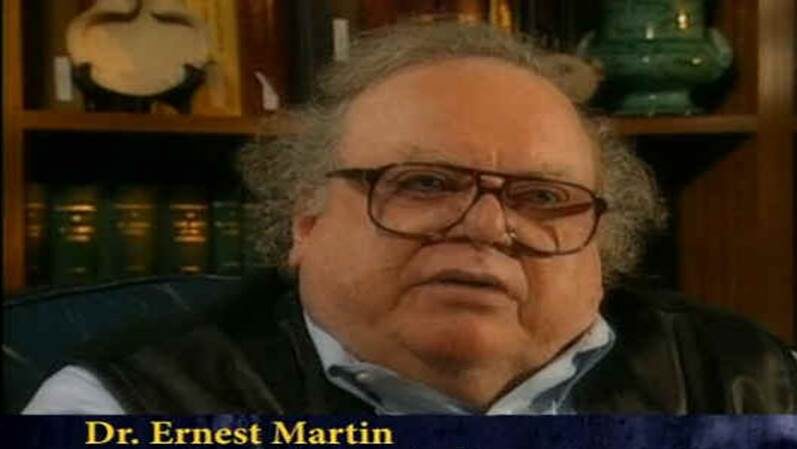
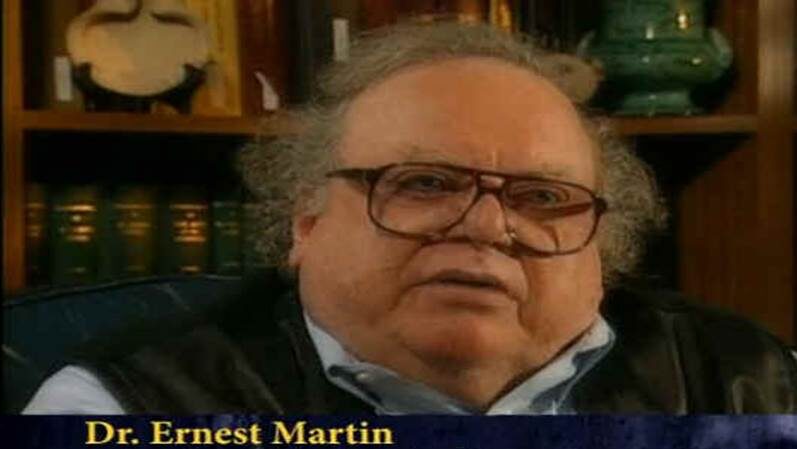
AskELM’s Ernest L. Martin on Cherubim images as idols

We continue, from part 1, part 2, part 3, part 4, considering Ernest L. Martin, Ph.D.’s article titled, “Lingering Idolatry in the Temple of God,” AskELM (as in Ask Ernest L. Martin about whom I previously wrote Nightmare on AskElm Street – angelic “Sons of God”?), September 1, 2000 AD which contains some interesting point, some thought provoking speculations and some very serious errors.

We come back to Ernest Martin’s misunderstanding of the commandment against treating images as idols as he writes:

…those commands of God to make images of Cherubim and place them in the Tabernacle were given to the Israelites in spite of the Second Command of the Ten Commandments which stated: “You shall not make unto you any graven image, or any likeness of any thing that is in heaven above, or that is in the earth beneath, or that is in the water under the earth.” Exodus 20:4

The rest of the Second Command states that Israelites should not bow before such images or idols nor to serve them.

askelm2c20ernest20l-20martin-6152939

I previously claimed that he was mistaken in breaking a complete thought, the commandment as a whole, into two thought fragments based on it being written out as two verses. Yet, here we see that even though he only quotes the first portion of the thought, he recognizes that it does not end there as “The rest of the Second Command states that Israelites should not bow before such images or idols nor to serve them.” Thus, again, images are not the problem, idols are. Therefore, “those commands of God to make images of Cherubim and place them in the Tabernacle were given to the Israelites in spite of the Second Command of the Ten Commandments” because making of images is commanded and it is idolatry that is condemned.

Ernest L. Martin has a modus operandi whereby his article emphasizes the same point over and over and over and over again. In this case, this only leads him in to greater error, contradiction and results in an emphasis on his misunderstandings. He continues by stating, “God gave these later commands even though He had just deposited the Ten Commandments into their hands that proscribed such idolatrous acts.” This is a non sequitur as that “God gave these later commands” to merely make mere images when the commandment “proscribed such idolatrous acts” which the mere making of mere images is not. Martin is now clearly claiming that God contradicted Himself.

He continues along this mistaken line of thought by noting that God commands the making of “cherubim of gold” for the Ark’s mercy seat (Exodus 25:18-20), that “even more images of cherubim and to place them on the veil in the Temple (Exodus 26:31) and on the curtains (Exodus 36:8)” and, again, wrongly concludes that “These images were forbidden by the Second Command of the Ten Commandments.” Worse yet, Ernest Martin claims to know that it was these specific “commands God later said were “NOT GOOD”: when we come to Amos we will see how and why he claims to know this.

He also notes, in keeping with his God contradicting Himself presupposition, that “About 39 years after God gave Moses the Ten Commandments…God then commanded Moses to make a brazen image of a snake (which is also a clear violation of the Second Command of the Ten Commandments).” Apparently realizing that he is getting himself in hot (as hell) water he seeks to take a step back by allowing God free reign:

It should be understood that if God wishes to change (or even to violate) a former command that He made (even if it were one of the Ten Commandments) God has the power and authority to do such actions…He has the right and the prerogative of changing or eliminating such laws at any time He chooses. So God…gave a command that was contrary to the Second Command of the Ten Commandments…God can change any law He wishes and at any time He chooses. He has done so in the past and He can do it in the future. If God wishes to introduce idolatry into the Tabernacle (His divine Temple) even though it is a violation of the Second Commandment, God can do as He jolly well pleases. This is a principle that must always be understood and recognized by God’s own children and His people. God is in charge, not us!

This is only a great point to make by and for people who believe that God can do anything which is an unbiblical view. For example, “God is not a man, that he should lie” (Numbers 23:19) which is even more strongly worded in Hebrews 6:18 which stated that it is “impossible for God to lie.” This is because God is holy and cannot commit unholy acts. In fact, this is that upon which His commandments to us is premised. We humans are commanded to not lie and it is not because lying is bad, deceitful, wrong, evil or even sin rather, we are commanded to not lie because we are made in God’s image and God is not a liar: He cannot lie as that would violate His very nature and essence and God is holy.

Yet, Ernest Martin keeps insisting in stating, “God decided to adopt some idolatrous ways” for the purposes, or so he claims, “to teach the immature Israelites what calamitous consequences would develop by their insistence on having images of Cherubim in the Temple and also having an idolatrous brazen snake on a pole.”

AskELM’s Ernest L. Martin on God commanding paganized sacrifices

We continue, from part 1, part 2, part 3, considering Ernest L. Martin, Ph.D.’s article titled, “Lingering Idolatry in the Temple of God,” AskELM (as in Ask Ernest L. Martin about whom I previously wrote Nightmare on AskElm Street – angelic “Sons of God”?), September 1, 2000 AD which contains some interesting point, some thought provoking speculations and some very serious errors.

In Ernest L. Martin’s mind “God gave them commandments that were not good…led the Israelites…into presenting paganized sacrifices.” Yet, as we have seen, “not good” refer to God specifying to them that which they should have never done, “judgments whereby they should not live.”

Apparently not liking the conclusion of his own speculation, Martin takes a step back from his own claims and notes, “God did not intend that introducing those images into the Tabernacle rituals would lead to infant sacrifice. But they did!” In order to, rightly, emphasize this, he quotes Jeremiah 32:35 which refers to “the high places of Baal” and human-child sacrifice “unto Molech; which I commanded them not, neither came it into my mind, that they should do this abomination.”

askelm2c20ernest20l-20martin-6045633

Martin notes that “Ezekiel chapter 20 is the appraisal of God Himself (stated through His prophet) that His initial commands in some contexts proved in later times to be ‘commands that were not good.’” His next point is to discern “what were those commands that God at first gave to the Israelites that turned out to be so very bad for them?” (emphasis added for emphasis).

He then does a form of one step forward and two steps back in noting that “God did not mean in Ezekiel chapter 20 that He simply ALLOWED the Israelites to continue in their heathen ways,” but Romans 1 refers to those times when “God GAVE THEM OVER to a reprobate mind” (emphasis by Martin), so that “God ALLOWED the Gentiles to do wrong WITHOUT THE PERMISSION of God. But in the section of Ezekiel chapter 20, the texts state…that GOD COMMANDED (not simply “ALLOWED”) the Israelites in the wilderness to practice the commands of God that led them finally into idolatry.” Such is Ernest L. Martin’s miscomprehension of this whole issue that he actually refers to “These odious and bad commands given by God…were given in the precise manner (and with the same wording in the Hebrew — even the vowel points are identical)” to the commandments by which they were to live: the positive ones, “These commands that were NOT GOOD were also written in the Scriptures (with the exact Hebrew words and even the same vowel points) as when God gave Israel His positive commands that they should keep His sabbaths…In the same manner (and with the same wording in the Hebrew) God gave the Israelites commandments that WERE NOT GOOD.”

Martin actually gets close to the truth by noting the “positive commands” but alas, he continues basing his comments on his overall misunderstanding and thus, misinterpretation; he never reaches the point of recognizing the positive versus negative dichotomy in the theological point of view of do versus do not do. In his continuous to and fro manner Martin claims that “God finally gave them commandments that were NOT GOOD that led them into further debauchery with those images.”

We next come to a section asking and answering “What was it that God commanded that turned out to be very bad commands to the Israelites?” He asserts that the contexts of Ezekiel, Jeremiah and Amos conclude that “it was God’s command to place images within the Holy of Holies in the Tabernacle” which is simply not the case and Martin provide no such specific quotations or citations although Amos comes as close as we get and to Amos we shall get.

Nightmare on AskElm Street – angelic “Sons of God”?

Herein, Ask refers to the organization which calls itself The Associates for Scriptural Knowledge whose website is askelm.com. It appears to be a group of people whose purpose is to promulgate the teachings of the late Dr. Ernest Martin (1932-2002 AD) who founded the group.

Getting directly to the point; we will consider the content of their article Who Are the Sons of God? which is quite interesting and thought provoking. However, as seems common with askelm material; they mix biblical theology with philosophy and this gets them into trouble.

Right off the bat, the article states that the “Sons of God” (“mentioned in Genesis 6:2, 4; Job 1:6; 2:1; 38:7 and Psalm 89:6”) “are NOT angels.” They state that the “phrase ‘Sons of God’ can refer to one of two things…ordinary human beings” and “spiritual beings” who, nevertheless, are “NOT angels.”

Part of the confusion and fascination about the phrase Sons of God is that, just as is common in any language and literature, a phrase/term/word can mean more than one thing; ultimately, context determines meaning.

Thus, Adam is called a son of God, Jesus is a Son of God, redeemed humans are sons of God and the Genesis/Job/Psalms beings are sons of God. However, note that there is a difference between the Old Testament usage and the New Testament usage as we are dealing with different cultural contexts, historical contexts and grammatical contexts. Yet, in either case, the term appears to be a reference to a direct creation by YHVH.

elm-9677328

Adam was created from dust. Jesus was conceived without a human father and thus Mary is told “The Holy Spirit will come upon you, and the power of the Most High will overshadow you; and for that reason the holy Child shall be called the Son of God” (Luke 1:35; note that since the Holy Spirit came upon her and Jesus is the Son of God this means that the Holy Spirit is God). Redeemed humans are a direct re-creation born anew. And, by implication, the Genesis/Job/Psalms beings are likewise created directly.

So, askelm holds that the Sons of God are not humans and are not angels but are; something else. The article states that “These ‘Sons of God’ are described by Paul in Hebrews 1:9 as being Christ’s ‘fellows’…And so” it is “these ‘Fellows’ in Psalm 45” which is what the Hebrews text is quoting.

They develop this identification as follows:
“They are actually equals of Christ in the sense of being Family members, though Christ has the superiority by being reckoned the firstborn. Equals of Christ? Yes, equals by token of being Christ’s brothers in heaven, while Christ is the Firstborn and has a designation rank over them because of His Firstborn position.

Indeed, this is precisely what Paul stated they were. He referred to them as the ‘Fellows’ of Christ. They were associated with Christ even before His birth in Bethlehem. They were His brothers as far back as when Psalm 45 was written…they are in many ways like Christ…being equal partners to one another….

Christ, however, is the firstborn of the ‘Fellows’ (see Colossians 1:15). He was created before the rest of these ‘Sons of God.’”

Well, all of this reasoning aside; it is not proven that the fellows are the Sons of God who are not angles; but we will continue, as their argument thickens. Also, note the reference to Jesus having been “created”; this may refer to His incarnation but considering that askelm states that the biblical doctrine of the Trinity is an “absurdity,” they may think that Jesus is not eternal—for biblical facts about the Trinity and Jesus’ eternality see Trinity : God’s Nature and Trinitarian Doctrine.

In fact, the article states, “And remember, Christ ‘thought it not robbery to be equal with God’ (Philippians 2:6)” but keep in mind that the verse begins by stating that Jesus was “being in the form of God” and that is why He “thought it not robbery to be equal with God” because He has always been God, eternally. The article states:
“These other ‘Sons of God’ of the Old Testament are parallel to the ‘Morning Stars’ referred to in the Book of Job as rejoicing when the earth was created.[1] These ‘Morning Stars’ are not angels because they have the same designation as Christ who is certainly not an angel.”

The footnote reads “See Job 38:7 where the ‘and’ in Hebrew parallels ‘Morning Stars’ with ‘Sons of God.’” The verse refers to “When the morning stars sang together and all the sons of God shouted for joy” and yet, the Hebrew reads boqer (morning) kowkab (stars) ranan (sang) yachad (together) ben (son) Elohiym (God) ruwa (shouted). There is no word for “and”; it is merely implied. Yet, this does, indeed, mean that there is a parallel between the Morning Stars and the Sons of God as the article goes on the emphasize, “These ‘Morning Stars’ (similar to if not identical with the term ‘Sons of God’).”

That the Morning Stars “have the same designation as Christ” is in reference to the fact that:
“Christ is called ‘the Bright and Morning Star’ (Revelation 22:16). Christ is also called the ‘day spring’ (Luke 1:78) and the ‘day star’ (2 Peter 1:19), terms synonymous with the phrase ‘Morning Star.’”[2] The footnote reads:

“Even the King of Babylon (traditionally considered Lucifer) named himself the ‘Morning Star,’ erroneously, but God would not allow the Babylonian King to retain such an exalted title (which actually refers to Christ Jesus). The King of Babylon tried to usurp the role of Christ, but he failed to become such a ‘star’ (Isaiah 14:12–16).”

However, Isaiah 14 says nothing whatsoever about a morning star but refers to heylel (which came to be translated as lucifer) ben (son) shachar (morning/dawn). There is no reference to star at all. Also, askelm does not believe that Isaiah 14 is referring to “the dragon, that old serpent, which is the Devil, and Satan” (Revelation 20:2) but to some other cherub. Well, satan is not a fallen angel but a fallen cherub and you can know that by reading Isaiah 14 and other texts—I elucidated this entire issue in the article Is lucifer a fallen angel? (contra Jim Brayshaw).

Now, we can finally come to the main point as to why the article repeatedly emphasizes that the Sons of God are “NOT angels”:
“It is by physical birth that human Sons of God are now created, but it is by their resurrection from the dead that humans assume a divine status as spiritual Sons of God…

Some of these ‘Sons of God’ in the Godhead are referred to in Genesis 6:1–4 and Job 1:6, 2:1 and 38:7. Remember, they are NOT angels! They are higher in power than any angel. And though angels can carry the general name ‘stars’ (Revelation 1:20), they are NOT the ‘Morning Stars’…Remember, NO angel has been elevated by God to be a ‘Son of God’ (Hebrews 1:4–14) nor to be a ‘Bright and Morning Star’ (Revelation 22:16).”

Well, make what you will about the assertion that there are “‘Sons of God’ in the Godhead.” It is accurate that angels are referred to as stars in certain texts. Yet, the key point is that they claim that the Sons of God are “NOT angels” based on Hebrews 1:4-14.

That text notes that “in these last days [God] has spoken to us in His Son” with Jesus “having become as much better than the angels” and then comes the key factor:
“For to which of the angels did He ever say, ‘You are My Son, Today I have begotten You’? And again, ‘I will be a Father to Him And He shall be a Son to Me’?

And when He again brings the firstborn into the world, He says, ‘And let all the angels of God worship Him.’”

FYI: the NASB, from which I have been quoting, writes quotation of the Old Testament within the New in all caps.

Thus, it seems pretty clear; since God did not say to any of the angels that they are His sons, are not Sons of God, then the Sons of God cannot be angels. This seems like a good point, on the surface. However, all things were created by Jesus:
“For by Him all things were created, both in the heavens and on earth, visible and invisible, whether thrones or dominions or rulers or authorities—all things have been created through Him and for Him. He is before all things, and in Him all things hold together” (Colossians 1:16-17)

Again, see Trinity: God’s Nature and Trinitarian Doctrine for many other texts which affirm Jesus’ eternality and deity. Note that the Jehovah’s Witnesses insert “[other]” into this text as they believe that Jesus is not eternal God. Thus, in their translation reads “by means of him all [other] things were created…All [other] things have been created through him…he is before all [other] things and by means of him all [other] things were made to exist” in order to hide and confuse the text.

In any regard, the reason why this seems like a good point, on the surface but only on the surface is that there is a context and the context defines that to which Hebrews is referring.

The Hebrews text states, “through whom also He made the world…He is the radiance of His glory and the exact representation of His nature.” But how, pray tell, is an eternal being also a begotten being? Well, because Jesus is eternal and was incarnated thus, begotten. Also, Jesus is the only begotten of God. But how could that be since others are referred to as sons of God?
Because, Jesus is the only eternal person within the Godhead, or otherwise celestial beings, who incarnated.

The Hebrews text is quoting Psalm 2 which states, in part:
“The kings of the earth take their stand and the rulers take counsel together against the Lord and against His Anointed…He will speak to them in His anger and terrify them in His fury, saying, ‘But as for Me, I have installed My King upon Zion, My holy mountain.’ ‘I will surely tell of the decree of the Lord: He said to Me, ‘You are My Son, Today I have begotten You…

Worship the Lord with reverence and rejoice with trembling. Do homage to the Son…”

Considering that the text references 1) “the Lord” and 2) “His Anointed” it may be that “the Lord” is the one saying “I have installed My King…” and “His Anointed” is the one saying, “He said to Me, ‘You are My Son, Today I have begotten You…” Yet, in any regard this text is also quoted in Acts 13:30-38 which states, in part:
“God raised Him from the dead…He raised up Jesus, as it is also written in the second Psalm, ‘You are My Son; today i have begotten You’…He raised Him up from the dead, no longer to return to decay…He also says in another Psalm, ‘You will not allow Your Holy One to undergo decay’…He whom God raised did not undergo decay.”

Firstly, as an important side note, the New Testament states that the Father raised Jesus from the dead, that the Holy Spirit raised Jesus from the dead and that Jesus raised himself from the dead; ergo, the Trinity raised Jesus from the dead (see Acts 2:24, Romans 4:24 & 8:11, 1st Thessalonians 1:9-11, 1st Peter 1:21 & 1st Peter 3:18, or simply go to Trinity : Various Resurrection Related Issues).

Secondly, note the emphasis of the Acts text, “God raised Him from the dead…He raised up Jesus…He raised Him up from the dead, no longer to return to decay…WILL NOT ALLOW YOUR HOLY ONE TO UNDERGO DECAY…He whom God raised did not undergo decay.” This, in the context of “as it is also written in the second Psalm, ‘YOU ARE MY SON; TODAY I HAVE BEGOTTEN YOU.’”

Thus, taking Palms, Hebrews and Acts together we conclude that “to which of the angels did He ever say, ‘You are My Son, Today I have begotten You’?” does not pertain to the identification of who the Sons of God are in Genesis 6, Job, etc. but contextually, both immediate and greater context, it pertains to asking “which of the angels did” YHVH ever beget by incarnating and raise from the dead? None. Ergo, Jesus is unique.

The article references “spirit entities” who are:
“So much like humans are they in appearance and function that these ‘Sons of God’ were able to have sexual intercourse with the daughters of men and produce offspring called Nephilim.”

As per Genesis 6, this is accurate. However, how can spirit entities have sexual intercourse? The article answers this thusly:

“those ‘Sons of God’…were able to have sexual intercourse with human females and impregnate them with semen that came from their bodies. Indeed, they have the same body characteristics and somatic functions as ordinary human beings. That is right, those ‘Sons of God’ had (and have) bodies. They look and perform like humans though their bodies are composed of spirit substance…

God the Father is a Spirit, but He still has shape and substance…The truth is, God has a body composed of elements that are spirit in substance…‘Spirit,’ we are shown in the Bible, can manifest itself in a solid state that can have definite form and shape.”

With this view in mind they further states, “Romans 8:26–27, Paul shows that Christ is called the ‘Spirit.’” However, while that chapter of Romans does reference Jesus, it references, in verse 11 “the Spirit of Him who raised Jesus from the dead.” However, askelm must dismiss this because the text of vss. 26-27 states:
“the Spirit Himself intercedes for us with groanings too deep for words; and He who searches the hearts knows what the mind of the Spirit is, because He intercedes for the saints according to the will of God.”

The issue is that 1 Timothy 2:5 which states:
“For there is one God, and one mediator also between God and men, the man Christ Jesus.”

Thus, regardless of context, askelm insists that Jesus is referred to as a spirit because there is one mediator but the spirit is said to be the intercessor (this identification of their view is also based on other articles of theirs as well). However, note that even in the English of the NASB there is a difference between Jesus being the “mediator” and the Spirit who “intercedes.” Indeed, the Greek specifies that “the Spirit Himself hyperentygchano for us with groanings…because He entygchano for the saints” and Jesus is said to be the “one mesites also between God and men.” Also, for whatever reason, the article states that:
“God considers the genitalia of male and female humans to be unashamedly the most ‘comely’ (the most beautiful and attractive parts) of our bodies. See 1 Corinthians 12:22–24.”

For whatever it is worth, the text states that “If the foot says, ‘Because I am not a hand, I am not a part of the body,’ it is not for this reason any the less a part of the body” and goes on to give examples of various body parts either considering themselves unnecessary or being considered the only vital part:
“it is much truer that the members of the body which seem to be weaker are necessary; and those members of the body which we deem less honorable, on these we bestow more abundant honor, and our less presentable members become much more presentable, whereas our more presentable members have no need of it. But God has so composed the body, giving more abundant honor to that member which lacked, so that there may be no division in the body, but that the members may have the same care for one another. And if one member suffers, all the members suffer with it; if one member is honored, all the members rejoice with it.”

Askelm takes it upon themselves to interpret those members of the body which we deem less honorable to be genitalia; and they may be right. However, they miss the point that the physical human body is being employed as a metaphor for the body of Christ; believers. The relevant text begins by stating, “to each one is given the manifestation of the Spirit for the common good. For to one is given the word of wisdom through the Spirit, and to another the word of knowledge,” and give other examples of various gifts. It then states:
“But one and the same Spirit works all these things, distributing to each one individually just as He wills.

For even as the body is one and yet has many members, and all the members of the body, though they are many, are one body, so also is Christ. For by one Spirit we were all baptized into one body, whether Jews or Greeks, whether slaves or free, and we were all made to drink of one Spirit.

For the body is not one member, but many. If the foot says, ‘Because I am not a hand, I am not a part of the body,’ it is not for this reason any the less a part of the body.”

And then follows the statement about various body parts considering their usefulness. Some of you may have been thinking; what about Peter and Jude? Indeed, they are both very clear on this matter. Well, the articles deal with that:
“Angels were created to minister to those in the Family of God…It appears, however, that many angels associated in some fashion with the ‘Sons of God’ when those ‘Sons of God’ married and had sexual relations with the Daughters of Men. Peter and Jude indicated that many angels were in rebellion to God during the times when the ‘Sons of God’ had intercourse with the Daughters of Men. The apostles mention the actions of those angels within a context that shows * their ‘filthy behavior’ (2 Peter 2:7), * their ‘lust of uncleanness’ (verse 10), even

* their ‘lusts of the flesh, through much wantonness’ (verse 18).

We are told that these rebels were ‘angels which kept not their first estate [their normal authorized activities], but left their own habitation [their proper dwelling place]’ and participated somehow with the ‘Sons of God’ in their sexual intercourse with human females (Jude 6).

Those angels were mentioned by the apostles in the context of rebelliousness in which the ungodly gave ‘themselves over to fornication and going after strange flesh [flesh that was foreign to them]’ (verse 7). They were walking ‘after their own ungodly lusts’ (verse 18), ‘who separate themselves, sensual, having not the Spirit’ (verse 19)…it seems from the context of Peter and Jude that the spiritual powers were the ones who influenced the humans to do those terrible deeds.” [brackets in original]

Some of the qualifying terms are “It appears…in some fashion…participated somehow” which are meant to imply lack of clarity or confusion as to the texts’ meaning. However, the lack of clarity or confusion is only within askelm’s interpretation as they must force the texts to not apply the Genesis 6 action to angels but to non-angelic Sons of God with some angels on the side. Those interested in the details pertaining to this issue should read As in the days of Noah – the eschaton and the Nephilim. For now, we will simply quote the relevant texts.

The 2 Peter 2 text:
“For if God did not spare angels when they sinned, but cast them into hell and committed them to pits of darkness, reserved for judgment; and did not spare the ancient world, but preserved Noah, a preacher of righteousness, with seven others, when He brought a flood upon the world of the ungodly; and if He condemned the cities of Sodom and Gomorrah to destruction by reducing them to ashes, having made them an example to those who would live ungodly lives thereafter; and if He rescued righteous Lot, oppressed by the sensual conduct of unprincipled men…especially those who indulge the flesh in its corrupt desires and despise authority.”

The Jude 6-8 text:
“And angels who did not keep their own domain, but abandoned their proper abode, He has kept in eternal bonds under darkness for the judgment of the great day, just as Sodom and Gomorrah and the cities around them, since they in the same way as these indulged in gross immorality and went after strange flesh, are exhibited as an example in undergoing the punishment of eternal fire. Yet in the same way these men, also by dreaming, defile the flesh, and reject authority, and revile angelic majesties.”

The actions of the rebellious angels are correlated with those of the citizens of Sodom and Gomorrah and sexual immorality is among those actions. There is no mention, reference or hint within these texts of the term Sons of God and certainly not a distinction between them and angels. Yet, the article continues along these lines to state:
“The angels also received a severe judgment, as we will soon see. However, there is not one word in the Holy Scriptures that tell us what the Father did to the ‘Sons of God’ who were also involved in the matter.”

Of course, by now you realize that this statement is simply erroneous through and through as it is premised on faulty philosophy and not on the text which tells us exactly that which YHVH did to the angels who did this as they are the Song of God of Genesis 6. While denying that the angles married and copulated with human women, askelm states:
“these angels apparently approved of the actions of the ‘Sons of God’…and joined the ‘Sons of God’ in their revelry, they are presently undergoing a punishment for a period of time for their rebellion (1 Peter 3:18–21; 2 Peter 2:4–5; Jude verses 6 and 7).”

While the citations are relevant, the reasoning is faulty philosophical guess work. One must remain vigilant when reading articles such as that by askelm as, for example, they go on to state:
“both Peter and Jude specifically state that the time of Sodom and Gomorrah was like that before the Flood, when sexual activities took place between celestial beings and human beings (2 Peter 2:6–9; Jude 6–7).

Now, they generically stated that it was “celestial beings” but the texts specifically and exclusively stated that it was “angels.” And while they go on to state, “But Peter and Jude made a distinction between the ‘Sons of God’ and the angels that sinned” this is utterly inaccurate yet, they emphasize this point thusly:
“Unlike the ‘Sons of God,’ Jude clearly indicated that the angels who cooperated with the ‘Sons of God’ in their revelry were going after ‘strange flesh,’ after humans who were foreign or strange to them in their body substance. See Jude 6–7.”

But we did see Jude 6-7 above and the only identifying terms within it is “angels.” They then state:
“angels…cannot interbreed with humans, though it is possible to have sex with them…That type of sexual relationship is precisely what Peter and Jude stated did occur between angels and human beings.”

They are just burring themselves deeper and deeper as the Peter and Jude texts make no distinction between Sons of God and angels and most certainly not between Sons of God having sex and producing offspring and angles only having sex. And they go on:
“Let us look at this matter more carefully. We are informed by Christ Jesus that angels in heaven do not marry (Matthew 22:30). That is right. Angels are not meant to marry as human beings do.”

Indeed, good point. They go on to state that some people take this text to mean that “angels are neuter” and reply thusly:
“We have the express teaching by Peter and Jude to the contrary. What Christ meant was that they were not intended to marry like humans because angels (if they do not sin) can live forever and the state of marriage always has death associated with it.”

More to the point; the issue is much simpler. Jesus states, specifically, that “angels in heaven do not marry” as the text puts it, “For in the resurrection they neither marry nor are given in marriage, but are like angels in heaven.” Thus, angels “in heaven” do not marry which is why those involved in the Genesis 6 affair are fallen angels who were punished for leaving heaven in order to marry.

Lastly, note that along the way, askelm stated that “all descriptions that we have of angels in the Holy Scriptures show them to look like human beings” which is true. They also noted that, as per Genesis ch. 19 the two angels “did not have wings on their backs” which is also true. Thus, angels look just like human males and do not have wings. However, then for some odd reason, they state, “By the way, ‘wings’ on angels are metaphorical.” But what wings and whereabouts is such a statement made? Wings on angels are only seen in historical art and pop-occulture and they are simply and un-biblically inaccurate (cherubim and seraphim have wings, four and six respectively, but they are not angels nor kinds of angels; they are other categories of being).

Overall, one must attempt to reckon the payoff; just what is it that askelm is getting out of denying that the Sons of God are “NOT angels.” Yet, in any regard; their article is interesting and thought provoking but peppered with inaccuracies and thus, fails.
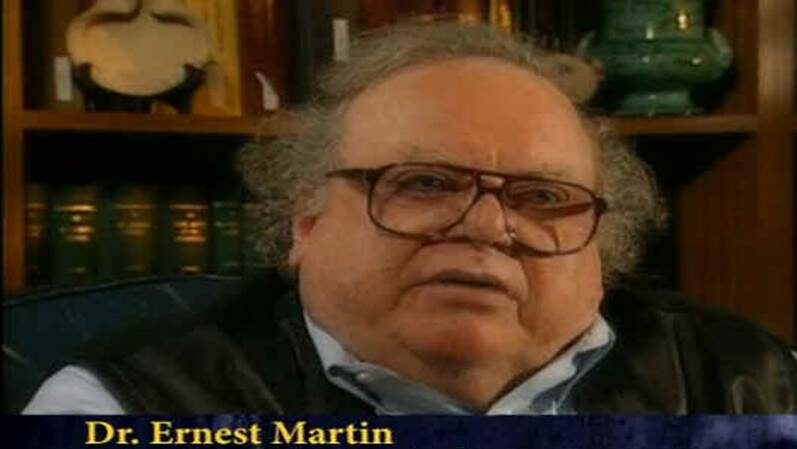
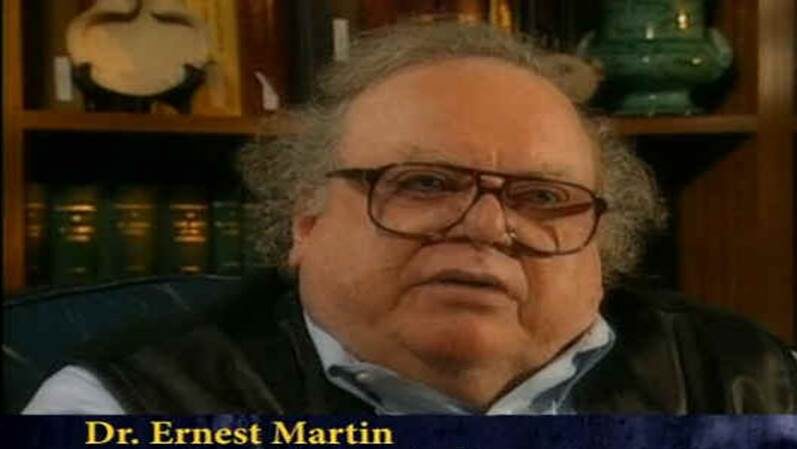
AskELM’s Ernest L. Martin on “Lingering Idolatry in the Temple of God”

Ernest L. Martin, Ph.D. wrote an article titled, “Lingering Idolatry in the Temple of God,” AskELM (as in Ask Ernest L. Martin about whom I previously wrote Nightmare on AskElm Street – angelic “Sons of God”?), September 1, 2000 AD which contains some interesting point, some thought provoking speculations and some very serious errors.

The article begins with statements posted/printed in bold which makes me think that they may an intro by the editor David Sielaff. In any case, it begins by stating, “The Sanctuary of God contained idolatrous images that God commanded to be included in the Tabernacle!” This denotes the entirety of the article’s miscomprehension as Ernest L. Martin erroneously dichotomizes the commandment against idolatry. The intro notes the Bible’s, “widespread condemnation of idolatry and its outward teaching of God’s adamant strictures against depicting Him in any physical fashion” and yet, the Sanctuary contained no such image as one depicting God.”

askelm2c20ernest20l-20martin-9499967

Finally, the intro states:

So stringent is the biblical theme of avoiding idolatry (or, idolatrous ways) that the Israelites were ordered even in the Ten Commandments NOT to make similitudes of ANYTHING in the heavens, of ANYTHING in the earth or of ANYTHING under the earth (that is, of ANYTHING within the seas and oceans) and they were ordered NOT to devote those images to any religious activity in any ritualistic manner.

The problem comes in the form of the little and simple word “and.” This statement dichotomizes the commandment by asserting that 1) the Israelites were ordered…NOT to make similitudes 2) and they were ordered NOT to devote those images. Such thinking is the result of mistakenly thinking in terms of verses rather than complete thoughts. Here is the relevant commandment:

Exodus 20:4: Thou shalt not make unto thee any graven image, or any likeness of any thing that is in heaven above, or that is in the earth beneath, or that is in the water under the earth:
Exodus 20:5: Thou shalt not bow down thyself to them, nor serve them: for I the LORD thy God am a jealous God, visiting the iniquity of the fathers upon the children unto the third and fourth generation of them that hate me;

Verse divisions are not inspired and, as in this case, they tend to break complete thoughts into disjointed fragments. Yet, the complete thought is clear as it consists of one complete comman which is that images are not to be made into idols. That is to say, images are not condemned (except for images of God which are never allowed) but employing them as idols is condemned. For details on the images that were commanded to be made, etc., see: On the Treatment of Images, part I and part II.

Ernest L. Martin then begins by noting that “the introductory statement of this research article is absolutely true” (whether written by himself or David Sielaff) since “we read throughout the Bible that God loathes idolatry in any form” but that “God actually commanded the Israelites to accept idolatrous rituals in the time of Moses that led the Israelites directly into the practice of idolatry (at least that is how Israel interpreted those commands of God).”

But is it the case the either 1) God actually commanded the Israelites to accept idolatrous rituals or 2) that this was not the case but that is how Israel interpreted those commands? Martin then points out:

…one of His most powerful prophets in the Old Testament, made the judgmental appraisal that the Israelites were commanded by Him to perform certain rites and to involve certain images that caused them to commit idolatry. And, even God admitted that those commands of His were NOT GOOD. Furthermore, the prophet who stated these things was backed up by another…those images that became idolatrous were ordered by God to be located within the very Temple of God.

We will see whether these things are so as we progress. The problem is continuous and confused references to for example, “That command of God concerning the introduction of those images into the Tabernacle and later Temple” which are not problematic as images are not condemned along with that “the Israelites were practicing a form of idolatry that involved certain spiritual beings that God had commanded to be used in His worship in the Sanctuaries” which is that which is condemned.

Ernest Martin writes that “Only later, in the time of Jeremiah and Ezekiel do we find God finally having such images banished from the Temple.” He claims that they “got rid of much of the idolatry that stemmed from initiating the earlier commands of God…God felt He had to give them some idolatrous teachings.”

AskELM’s Ernest L. Martin on God commanding idolatry

We continue, from part 1, part 2, considering Ernest L. Martin, Ph.D.’s article titled, “Lingering Idolatry in the Temple of God,” AskELM (as in Ask Ernest L. Martin about whom I previously wrote Nightmare on AskElm Street – angelic “Sons of God”?), September 1, 2000 AD which contains some interesting point, some thought provoking speculations and some very serious errors.

Now comes a key point of Martin’s article:

Wherefore I gave them also statutes that were not good, and judgments whereby they should not live; And I polluted them in their own gifts, in that they caused to pass through the fire all that openeth the womb, that I might make them desolate, to the end that they might know that I am the LORD.

Ernest Martin seems to think that God giving them statutes that were “not good, and judgments whereby they should not live” means that God purposefully, for example, tempted them towards idolatry and overall commanded them to perform acts that are against God’s very will—go figure. Yet, note that the context has been that His commandments were ignored, broken, He was rebelled against, etc.
Ernest L. Martin wrote of this text, “That is, God gave them commands which resulted in them NOT living in a righteous and proper manner.” Yet, note that it was “in their own gifts” which were clearly not given to the true God nor according to His law that “I polluted them” as a result as one example of that which they did was human-child sacrifice, “pass through the fire.”

askelm2c20ernest20l-20martin-2652047

Thus, “statutes that were not good, and judgments whereby they should not live” seems to mean that which theology terms “positive commandments” versus “negative commandments,” in other words: positive as in things that are to be done and negative as in things that are not to be done—thou shall and thou shall not.
This specific portion of the text seems to have God stating that He told them to not do certain things “statutes that were” pertaining to things that were “not good” statutes that were negative, statutes that were about things to not be done and “judgments whereby they should not live” which seals the interpretive deal. This is another case of a complete thought which is just that; to reiterate: “statutes that were not good, and judgments whereby they should not live.” Those things they should not have done which God specified to them were not to be done such as the example of human-child sacrifice.

Now, keep in mind that the text continued referring to the old corrupt ungodly ways of the past generation, the fathers, and it continues emphasizing this:

…in this your fathers have blasphemed me, in that they have committed a trespass against me…when I had brought them into the land…they offered there their sacrifices…say unto the house of Israel, Thus saith the Lord GOD; Are ye polluted after the manner of your fathers? and commit ye whoredom after their abominations?
For when ye offer your gifts, when ye make your sons to pass through the fire, ye pollute yourselves with all your idols…ye say, We will be as the heathen, as the families of the countries, to serve wood and stone.

Finally, God gives them over to idolatry as they have so rebelled against Him, “As for you, O house of Israel, thus saith the Lord GOD; Go ye, serve ye every one his idols, and hereafter also, if ye will not hearken unto me: but pollute ye my holy name no more with your gifts, and with your idols.” Yet, God notes that “in mine holy mountain, in the mountain of the height of Israel…all the house of Israel, all of them in the land” can still serve Him, “there will I accept them.” Also:

I bring you out from the people, and gather you out of the countries wherein ye have been scattered; and I will be sanctified in you before the heathen….I shall bring you into the land of Israel…there shall ye remember your ways, and all your doings, wherein ye have been defiled; and ye shall lothe yourselves in your own sight for all your evils that ye have committed….your wicked ways…your corrupt doings

Do you see how much richer the meaning becomes when kept, understood and elucidated within a greater context?

VIDEO: Glenn Danzig (Misfits, et al.) – making Satanism hip since 1977 AD

CHRISTIANITY
Christianity

Christian Apologetics

Bible

God – Theology

Problem of Evil – Theodicy

Jesus

Nephilim – Giants

Book of Enoch

Serpent Seed

Satanic Serpent & Dragon

Angels

Cherubim & Seraphim

Satan / Devil

Demons

Miracles

Inspirational

Unbelievers Compliment Christianity

Da Vinci Code / Angels and Demons / Templars, etc.

Gospel of Judas

The Lost Tomb of Jesus

————-
ATHEISM
Atheism

New Atheists

Project-Answering Atheism

Richard Dawkins

Sam Harris

Christopher Hitchens

Dan Barker

Daniel Dennett

Bart Ehrman

Bill Maher

PZ Myers

Quentin Smith

Michael Shermer

John Loftus

Ricky Gervais

Raphael Lataster

Carl Sagan

Atheism’s Public Relations Problems

Atheist Bus Ads and Billboards

Atheist Child Rearing

Atheist Charity

American Atheists

American Humanist Association

The Skeptic Arena

ExChristian.Net

PositiveAtheism.org

Evilbible.com

Science Club of Long Island

Skeptic’s Annotated Bible

Capella’s Guide to Atheism

The BOBA Digest

————-
RELIGIONS
Judaism (Rabbinic, Messianic, etc.)

Baha’i

Islam

Jehovah’s Witnesses

Mormonism

Catholicism

Scientology – Dianetics – L. Ron Hubbard

Unitarian Universalism

Misc. Religions

————-
FRINGE-OLOGY
Transhumanism

UFOs and Aliens

Conspiracy theories, Illuminati, New World Order (NWO), etc.

Occult, Witchcraft, Magick, satanism, etc.

Satanic Crime

Postgender Androgyny, Hermaphroditism & Beyond

Alchemical Hollywood

Transhuman Hollywood

————-
SCIENCE
Science

Creation Science

Intelligent Design

Cosmology

Evolution

The Wedgie Document

————-
MISC.
Adolf Hitler / Nazism / Communism

The Crusades

Morality / Ethics

Abortion

Rape

Meaning and Purpose

Homosexuality

Debates

Pop Culture and Politics

————-
RESOURCES
Fitness

Audio

Books

TFT essay “Books”

Debate

Links

Video

Movies

Find it Fast – Fast Facts

Visuals – Illustrations and Photos

~~~~~~~~~~~~~~~~

VIDEO: Transhumanism & evolution in German commercial: Saturn wir lieben technik wir hassen teuer

CHRISTIANITY
Christianity

Apologetics

Bible

God – Theology

Problem of Evil – Theodicy

Jesus

Nephilim – Giants

Serpent Seed

Satanic Serpent & Dragon

Angels

Cherubim & Seraphim

Satan / Devil

Demons

Miracles

Inspirational

Unbelievers Compliment Christianity

Da Vinci Code / Angels and Demons / Templars, etc.

Gospel of Judas

The Lost Tomb of Jesus

————-
ATHEISM
Atheism

New Atheists

Project-Answering Atheism

Richard Dawkins

Sam Harris

Christopher Hitchens

Dan Barker

Daniel Dennett

Bart Ehrman

Bill Maher

PZ Myers

Quentin Smith

Michael Shermer

John Loftus

Ricky Gervais

Raphael Lataster

Carl Sagan

Atheism’s Public Relations Problems

Atheist Bus Ads and Billboards

Atheist Child Rearing

Atheist Charity

American Atheists

American Humanist Association

The Skeptic Arena

ExChristian.Net

PositiveAtheism.org

Evilbible.com

Science Club of Long Island

Skeptic’s Annotated Bible

Capella’s Guide to Atheism

The BOBA Digest

————-
RELIGIONS
Judaism (Rabbinic, Messianic, etc.)

Baha’i

Islam

Jehovah’s Witnesses

Mormonism

Catholicism

Scientology – Dianetics – L. Ron Hubbard

Unitarian Universalism

Misc. Religions

————-
FRINGE-OLOGY
Transhumanism

UFOs and Aliens

Conspiracy theories, Illuminati, New World Order (NWO), etc.

Occult, Witchcraft, Magick, satanism, etc.

Satanic Crime

Postgender Androgyny, Hermaphroditism & Beyond

————-
SCIENCE
Science

Creation Science

Intelligent Design

Cosmology

Evolution

The Wedgie Document

————-
MISC.
Adolf Hitler / Nazism / Communism

The Crusades

Morality / Ethics

Abortion

Rape

Meaning and Purpose

Homosexuality

Debates

Pop Culture and Politics

————-
RESOURCES
Fitness

Audio

Books

TFT essay “Books”

Debate

Links

Video

Movies

Find it Fast – Fast Facts

Visuals – Illustrations and Photos

~~~~~~~~~~~~~~~~

Review of John Loftus, “Why I Rejected Christianity: A Former Apologist Explains”, part 1 of 2

Having reposted a long lost and ancient manuscript of IrishFarmer’s essay Can Christians be Freethinkers? (ok, maybe it is not ancient) I thought to continue reposting some of his writings in the form of his review of a John Loftus book.

Following is the text of IrishFarmer’s review (with very minor stylistic changes and a succinct addendum):

~~~~~~~~~~~~~~~~~~~~~~

One Infidelity Often Leads to Another
I’m purposefully skipping chapter 1 and 1:1 because they have little to respond to. John simply explains his conversion and the grounding for his faith.
It is important to note, however, that John Loftus was involved with the Church of Christ, which in some cases is known for being overly literal and rigid in its Christian beliefs. This often leads to some intellectual crisis where none is needed. John’s case, of course, will stand on its own, however.

Chapter 2 is where things start to get interesting. Titled, “Why I Changed My Mind: My Deconversion”, it explains the beginning of his doubt, and the events that led to his rejection of Christianity. At this point, any Christian should be challenged in their faith. At least if we’re truly being given valid reasons to reject the faith. This is where the Christian reader’s faith should begin to crumble like so much dry bread.

I want to encompass the entirety of John Loftus’ reasoning, while still keeping this down to a decent length. With that in mind, I’ll try to list the main ideas of the chapter, and respond when necessary.

1) Loftus explains that he wasn’t afraid of any idea, being convinced that Christianity could withstand any intellectual attack. I agree, but I didn’t start with this assumption. When I was younger, before I knew what apologetics was and before I had encountered a single fundy atheist, I honestly can say I didn’t know that my faith could stand up to any attack.

I developed the attitude that my beliefs were invincible by encountering weak argument after weak argument, as well as familiarizing myself with the stronger arguments for Christianity.
There were times when, like Loftus, “I wasn’t smart enough to answer the critics,” p. 21. At those times I simply admitted that I personally didn’t have an answer, and I set that argument aside. Ten times out of ten, I’ve found a proper answer, or discovered that I was hinging too much on rigid beliefs and that I didn’t have to have an answer.

The reason I’m blabbing on about that is that I think John Loftus confuses two issues here. John’s lack of an answer, with the lack of an answer altogether. John explains that his desire to understand all sides of the argument eventually led him to doubt the faith he defended.

2) Three people were responsible for setting him down the path towards atheism. Linda, who represents a crisis for John; Larry, who represents knowledge; and finally Jeff, who took away his sense of a loving, caring Christian community.

The story is certainly a sad one, but certainly not challenging to my faith.

Linda. This is a woman whom John had an affair with (he was married at the time) while working for Operation Shelter. Clearly a low-point in anyone’s life. However, John Loftus makes some interesting observations: quoting from Richard Taylor’s book, Having Love Affairs, John points out that,

Though a wife may be ever so dutiful, faultless, and virtuous in every skilled required in the making of a home, if she lacks passion, then in a very real sense she already is without a husband, or he, at least, is without a wife…
What has to be stressed is that the first infidelity may or may not have been committed by the one who is having an affair. The first and ultimate infidelity is to withhold the love that was promised, and which was originally represented as the reason for marriage to begin with.

I’m not going to spend much more time on this point, because ultimately I want to address his arguments against Christianity itself, but I think this sort of reasoning is important to note.

Ken’s addendum:
IrishFarmer failed to provide an interesting, revealing and very odd statement in this regard as John Loftus wrote the following about Linda and his psyche,

She practically idolized me. She did everything I said to do….What man doesn’t want to be worshiped? I guess I did. I was having problems with my own relationship with my wife at the time, and Linda made herself available. I succumbed and had an affair with her [p. 21].

This appears to call for a “Speak for yourself.”
Note also, that now, as an atheist, he states,

I am living life to the hilt everyday. I’m living without the guilt that Christianity threw on me, too! Life is good–very good! I feel better about it now than I ever have! [p. 273].

What he means by “hilt,” “without the guilt,” and “good” remain a mystery. Yet, one thing is certain: he decides what “good” is and what is “good” (an atheist rendition of the Euthyphro Dilemma seems applicable). Living without the guilt is wonderful if you have nothing for which to be guilty but living without the guilt is monstrous when you have something for which to be guilty.

Also, note that with regards to committing adultery John Loftus’ “logic” runs thusly, 1) he committed adultery (which his faith commitment; the Bible, Christianity, etc. forbid) 2) the Holy Spirit was dwelling within him (this is questionable as per 1st John 2:19, “They went out from us, but they were not of us; for if they had been of us, they would no doubt have continued with us: but they went out, that they might be made manifest that they were not all of us.”) 3) God, through His Holy Spirit, did not stop John from exercising free will.

4) therefore, it is God’s fault that John committed adultery.

After he is accused of raping his woman-on-the-side, and discovers that she was some kind of habitual liar, he reflects on his infidelity and thinks,

I was supposed to be smarter than that… [1, p. 22]

Ken’s addendum:
True story: once, a friend admitted to me that he was a compulsive liar—I did not know whether I should believe him.

I think this might be a reflection of John Loftus’ general state-of-mind, in the sense that John has a poor means of dealing with what he perceives to be personal failure. From reading the later chapters in John’s book, it seems that John definitely takes his beliefs very personally, and was probably overly rigid with them.

I think that the difference in his and my own way of approaching challenges to the faith is in John’s tendency to react poorly to personal failure. That is, when he lacked an answer to an objection, it couldn’t be that there was an answer that he simply didn’t have. Instead, it seems that John had the attitude that he “was supposed to be smarter than that,” and if he wasn’t smarter than that, then (to put it bluntly) he seemed to think (and seems to think) that no one can possibly be smarter than that.
Just a theory, I could be wrong.

I find it rather interesting, even if it seems to be a non sequitur to me, that one of the catalysts in John Loftus’ loss of faith was a personal crisis.
One would hope that given the nature of the issue there would be some intellectual reasoning. If there is, it certainly can’t be found in a personal crisis. So I’ll move on…

3) Larry, John’s cousin, led John to question his literal belief in Genesis. Ultimately John says – and I agree – that this is irrelevant to the truth of Christianity. But if that’s true, then I have to wonder what this has to do with his deconversion? Was it his decision that he was going to believe the humanity had evolved?

While I certainly think evolution is not an easy thing to hold to as a Christian, it doesn’t seem to follow from evolution the Christianity is false.

Ken’s addendum:
IrishFarmer did not define what he meant by “evolution” so let us consider it to mean something to the likes of life just happened to have happened and thus, God is, at best, superfluous.

John speaks of skeptics on page 24, but I have to think that his allegiance to so-called skeptics isn’t as truthful as he would like people to think. Recently, on his blog, I expressed my skepticism of a writer named John Shelby Spong, and I brought up solid examples of poor reasoning on Spong’s part and I was told that the likely reason I rejected Spong’s writing is that I didn’t like the fact that he was a liberal Christian.

Ken’s addendum:
If rejecting every Christian tenet that one can imagine makes one a “liberal Christian” then Spong is definitely a “liberal Christian.” But there are perhaps other terms for people who rejecting every Christian tenet such as “non-Christian” or CINO (Christian in name only).

Apparently skepticism is a worthy trait, unless you’re disagreeing with a “skeptic”, then you’re not really a skeptic, you just have some deep-seeded psychological reason that invalidates your skepticism.

Regardless, this chapter was supposed to be about John Loftus’ deconversion but I haven’t seen any reason for why John deconverted, except vague references to how information caused him to reject his beliefs.

4) His local branch of the Church of Christ kicked John out, essentially for political reasons, which is rather pathetic as far as the church is concerned. This sort of pulled the rug of Christian community out from underneath John’s feet.

5) John’s first of many fallacious arguments comes in this next section. Jeff, another of John’s cousins, for whatever reason thought John was trying to usurp his position as pastor and so left his church.

From this familial misunderstanding, John Loftus doubts that it is possible to correctly interpret the Bible. I honestly wish I were kidding. But a non sequitur like that was one of the links in the chain that pulled John from Christianity.

As a parallel example, John says that in trying to solve a dispute, both sides of the dispute at John’s church used the Bible to back up their position. Ultimately, the dispute was over a woman who had yelled at someone else out of anger.

John Loftus uses this as evidence that the Bible cannot possibly be interpreted by modern people. Of course, a plurality of interpretations does not mean that none of them is correct. This is the same mistake atheists make when they claim that a plurality of mutually exclusive religions proves that none of them is true.

6) John wonders why Christians, who claim to have the Holy Spirit can’t act better than other people. I would think the answer is obvious. That is, Christians aren’t some kind of “superhuman”, and further I don’t remember which Bible verse it was that claims the Holy Spirit does your thinking for you. We’re still allowed to stumble and make mistakes.

But, John says this was basically the final nail in the coffin of his faith.

None of these reasons is anything other than flimsy. Nothing John outlined in this chapter of his book has disproved Christianity, and based on John’s lengthy discussion of his “life crisis” and the like, I think the issue was (as it is with all apostates) more emotional than anything.

In a telling expose of his supposed move to “free thinking”, John Loftus cites Robert Price. If John wanted to add credibility to those who take these issues seriously, he could have avoided using Price as a source.

That’s essentially the chapter. It was light on arguments, but some of the later chapters are more interesting.

Find part 2 here.

Prove “god”

A seemingly rather picante atheist has asked theists to Prove “god”.

I am afraid that my first reaction is that the challenge in question should not have been worded Prove “god” but “Prove” god as for all of his demanding he does not define what he would consider proof.

This is his challenge:

I saw this on another forum and figured it was too good to pass up, so I took it and tweaked it a bit. Here’s the jist: I want you to PROVE; without a shadow of a doubt, that there is a “god”

However, there are a few ground rules.1. Can not use the bible for proof, it’s been changed around so much that it’s moot as evidence.2. “Miracles” do not count as evidence, as random anomalies in the natural world happen. Plus we’re trying to keep things factual, not using fantasy-world magic. This includes “visions,” near-death experiences, supposed afterlife-visits, or supposed visits by “angels”.

3. Can not use personal opinion as that’d be too biased. Only hard, actual facts are usable.4. Try to have evidence for all the points you make. I.e post URLs to sites or quotes that prove your point.So, have at it then. PROVE that “god” exists, without delving into all the fantasy-crap

In a response, I succinctly alerted him to On the Flying Spaghetti Monster, the Invisible Pink Unicorns, et al. so that he could have his non-Bible, non-miracle cake and eat it too.

Here I wanted to consider his challenge point by point: He does not merely ask for evidence or even just proof but to “PROVE; without a shadow of a doubt.” Well, this is quite a tall order and you can certainly imagine that no matter what you come up with, he could always simply retort that it still leaves the shadow of a doubt.

Being a skeptic, I could even argue against a global appearance of God by claiming that aliens or the Illuminati were attempting to manipulate us via holograms or some such thing.

In fact, the criterion of the challenge means that the challenge is simply unanswerable as there is nothing that we can “PROVE; without a shadow of a doubt”: not God, not subatomic particles, not that you are not merely a brain in a vat being manipulated to believe that matter is solid, not that ______________ (fill in the blank). We do not believe in that which we believe due to having things proved “without a shadow of a doubt.”

Also, whose doubt; mine or his?

1. Can not use the bible for proof, it’s been changed around so much that it’s moot as evidence.

This is a common misconception and one that I will refute via this succinct essay: The Book of Eli – the movie and the Bible and anything that will end up in my Bart Ehrman archive.

2. “Miracles” do not count as evidence, as random anomalies in the natural world happen. Plus we’re trying to keep things factual, not using fantasy-world magic. This includes “visions,” near-death experiences, supposed afterlife-visits, or supposed visits by “angels”.

This is fascinating as he admits that “miracles” do indeed occur but that they are random natural anomalies. I have long argued that I did not see how atheist could deny what is referred to as miraculous events for this very reason. For example, why deny that Jesus resurrected? He could have had a genetic mutation or experienced a rare combination of natural laws that could have brought about His resurrection.

The problems with this view are, at least, twofold: 1) he is paining with a broom and making it so that supernatural miracles would be simply impossible, by definition; he defines them out of existence—they are generically discounted as mere “random natural anomalies” without having been determined to be such and 2) he is not providing any evidence that a claimed miracle was actually random natural anomaly; this is merely a “faith” based materialistic presupposition.

Note that he is asking for proof of a fantasy-world magic God without allowing fantasy-world magic evidence such as verifiable, if there be such things, “‘visions,’ near-death experiences, supposed afterlife-visits, or supposed visits by ‘angels.’” You see, he is asking for proof without providing proof that proof is required. The challenge is also tantamount to asking for wet proof of a dry object? Do we seek physical proof of a non-physical being? In this regard, the essay On the Flying Spaghetti Monster, the Invisible Pink Unicorns, et al. may be useful.

3. Can not use personal opinion as that’d be too biased. Only hard, actual facts are usable.

Again, the challenge is premised upon his “personal opinion” that proof “without a shadow of a doubt” is required. Moreover, the fact that he does not define what it means to offer such proof means that he is virtually forcing one into expressing nothing but personal opinion. He needs to define proof that would count as not leaving “a shadow of a doubt” and also define “hard, actual facts.”

I took care of # 4 in my essay cited above. As to his last statement challenging us to “PROVE that “god” exists, without delving into all the fantasy-crap” he is: 1) Excluding certain sorts of evidence, as in his 1, 2 and 3.

2) And, he is delving into “fantasy-crap” even whilst condemning and not allowing “fantasy-crap.”

To elucidate these: 1) Obvious and elucidate above. 2) Any and every, all worldviews, philosophies, theologies, concepts or even the hardest of hard sciences ultimately come down to being based upon certain axioms which are assumed, intuited and thus, not evidenced, not proven nor provable. These are properly basic beliefs which no worldviews, philosophies, theologies, concepts or even the hardest of hard sciences proves. For example, nature cannot account for nature, we cannot reason to reason via reason. Since at the bottom of whatever view he holds rests upon a foundation which is held by “faith,” is un-evidenced, unproved, assumed, intuited, accepted as fact, his worldview is also rooted in metaphysics and is thus “fantasy-crap.” For an elucidation of this last point see the parsed essay:

Atheism and Science – Is There a Relation?, part 1

Atheism and Science – Is There a Relation?, part 2 – On the Difference Between Science and Philosophy: Massimo Pigliucci

Atheism and Science – Is There a Relation?, part 3 – On the Difference Between Science and Philosophy: Richard Dawkins

Overall, the challenge is answerable but the answer will surely not be accepted as “PROVE” is undefined and the proof has to rise to the level of not leaving “a shadow of a doubt.” This is tantamount to asking someone to “PROVE; without a shadow of a doubt” that yellow tastes like 264.

Richard Dawkins – “Outraged atheists lose faith in Dawkins as he censors website”

[FYI: this post was just moved over from its previous cyber home]

This may be occasion for presenting Richard Dawkins with the Can Dish it Out But Cannot Take it award.
Except that Phillip Pullman has already deserved it as shown here.

Indeed, following on Phillip Pullman’s steps, Richard Dawkins suddenly turned into the prim and proper English gentleman and reacts towards disparaging remarks made towards him with a Oh, my! attitude.

Hannah Devlin and Ruth Gledhill reported in The Times that Outraged atheists lose faith in Dawkins as he censors website

Richard Dawkins is accustomed to provoking the wrath of religious communities, but now a schism seems to have opened up within the atheist community who make up his fan-base.
The split occurred after he announced that a discussion section on his website, considered one of the busiest online atheist forums, would in future be tightly moderated and “irrelevant postings and frivolous gossip” would no longer be allowed.

This is utterly fascinating since if you read The God Delusion (that funny and amusing book) you will note that if you remove the personal anecdotes from it—the irrelevant asides and frivolous gossip—you are left with about enough material to fill a pamphlet (a pocket sized one; that little pocket above the big pocket on the right hand side of your jeans).

Writing on RichardDawkins.net yesterday, in a posting entitled “Outrage”, he said that there was “something rotten” in internet culture and pledged to rid his website of its abusive element. “Imagine seeing your face described by an anonymous poster, as ‘a slack-jawed turd-in-the-mouth mug’,” he wrote. “Surely there has to be something wrong with people who can resort to such over-the-top language, overreacting so spectacularly to something so trivial. “Even some of those with more temperate language are responding to the proposed changes in a way that is little short of hysterical.”

The cloak of anonymity under which many people contributed to discussions had led to a culture of extreme language that would not be possible if people wrote under their name.

Also, fascinating; Richard Dawkins has literally built the New Atheist movement upon vociferously pouring down abusive language based derision upon anyone who dares to disagree with him and now…the monster which he created, nurtured and let lose upon the word has come home to roost. Actually, it has come home to burn down the laboratory of its creator.

Dawkins promulgates the mere that I, a Jew, am to be likened to a Holocaust denier because I doubt that human beings are related to “bananas and turnips” and he takes offence at an admittedly uncalled for description of his visage. Please get over yourself professor.

Unwilling to be silenced, however, the members of the website and the 15 moderators, some of whom worked unpaid, vented their own outrage elsewhere. “A lot of people have lost respect for Dawkins after this, although I do still support the work that he does,” said Peter Harrison, a former moderator. “Thousands of loyal, intelligent, rational forum members have been misrepresented as a bunch of foul-mouthed, vitriolic thugs by the man who so inspired them.”

Another former fan said: “It may sound ridiculous to those not involved with online communities, but I feel hurt and displaced. It was like coming home to find the locks have been changed. My respect for Richard’s work is still intact but my respect for him as a person is in tatters.”

In short, Richard Dawkins is upset at experiencing the very same things that those of us who critique his views have been dealing with for decades. How do you like the taste of your own porridge professor?

Professor Dawkins now faces a confrontation with his adversaries at the Global Atheist Convention in Melbourne in two weeks.

No shortage of fascination for me with regards to this issue as Dawkins now faces a confrontation with his adversaries at the Global Atheist Convention in Melbourne even whilst he refused to face a confrontation with Creation Ministries International—he refused to debate them; he specifically selected to reject their debate challenge (see here).

He denied that the forum was closing but said that it was being improved. “The forum is going to be more tightly controlled and will be under more central control. So it won’t be available for anyone who wants to sound off freely,” he said. He conceded that there was a good case for anonymity for some contributors and such contributions would still be allowed. “I can see why people in America who lost their faith and do not want their families to know, or perhaps people of an Islamic background who have lost their faith or become Christian, have every reason to be anonymous,” he said.

The forum’s implosion has been jumped on by Christian groups as a sign that the Dawkins community is not as free-thinking as it is claimed.

He makes a good point about improvement and control; perhaps his next book, lecture, TV/radio appearance, article, etc. will be subject to the same improvement and control that will keep him from spewing forth his usual brand of malicious statements.

~~~~~~~~~~~~~~~~~~~~~~~~~~

Now, I do not know about “slack-jawed…” and all of that but…is it just me or does his photo from The Times bare a striking resemblance to the video game that is being advertised right along side of it?—you be the judge.

richarddawkinsatheism-1141534

richarddawkinsatheism-8521589