Adolf Hitler / Nazism / Communism
Da Vinci Code / Angels and Demons / Templars, etc.
Judaism (Rabbinic, Messianic, etc.)
Worldviews in view reviewed: Atheism, Theology, Occult, UFOs, Cultural Commentary, etc.
Open my eyes, so that I will
see wonders from your Torah
-Psalm 119:18
Let us consider why the Jewish people, as a whole, have not accepted Jesus as Messiah.
Part 1: The Premise
Part 2: The Premise (continued) and The New Testament Explains Part 3: The New Testament Explains (continued) Part 4: This Blindness, This Stumbling, This Veil, is Not PermanentPart 5: This Blindness, This Stumbling, This Veil, is Not Permanent (continued and concluded)
A Jewish man once asked me if I, a Jewish-Christian, really thought that the Rabbis who study the Scripture every day had made a mistake and missed the Messiah? Firstly, consider that some of them did accept Jesus as Messiah. Moreover, ever since Jesus’ time those who believe that Jesus is the Messiah have study the Scripture every day; did they make a mistake and choose a false Messiah?
Studying the Scripture every day in and of itself does not answer the question. What about the fact that the Jews have had God’s word for millennia longer than Christianity? No one person has been alive for millennia and so in every generation finite human beings take up the study of the Scripture. There is no knowledge of Scripture by mere birth. Rather, each person has but one lifetime to study; although we stand on the shoulders of giants. Both Jews and Christians stand on the shoulders of those scholarly sages who have come before us.
Also, be very careful to note something about the Rabbis of Jesus’ time, who studied the Scripture every day, they are some of the most well known and respected of Judaism’s sages. These men did not accept Jesus but many of them did accept Shimeon Bar Kochba as Messiah. Would we have been better off having followed their sagely advise?
The question of why the Jewish people, as a whole, have not accepted Jesus as Messiah is not merely answered by appeal to academia, reason or stubbornness; it is ultimately a spiritual issue. I offer the following as an explanation.

The Premise:
The Old and New Testament teach that the Messiah, as an obstacle, will cause the Jewish people to stumble; He would be rejected and the Jews will be temporarily blinded from the truth.
Rabbi Saul of Tarsus, later known as Paul the Apostle, wrote:
“Therefore, since we have such a hope, we are very bold. We are not like Moses, who would put a veil over his face to keep the Israelites from gazing at it while the radiance was fading away. But their minds were made dull, for to this day the same veil remains when the old covenant is read. It has not been removed, because only in Christ is it taken away. Even to this day when Moses is read, a veil covers their hearts. But whenever anyone turns to the Lord, the veil is taken away” (2nd Corinthians 3:12-16 referring to Exodus 34:34).
Lest the above quote seem like Christian arrogance or ignorance please note some interesting cases in which Rabbis and other Jewish authors also use the term veil and the obvious meaning hidden in describing the writings of the prophets.
Rabbi Moses ben Maimon, aka The Rambam, aka Maimonides:
“Among the sages there are some who say Elijah will come before the Anointed. But concerning these things and others of the same kind, none knows how they will be until they occur. For the prophets veil these things, and the sages have no tradition concerning them, save what they have deduced from the Scripture, and so herein their opinion is divided_The sages said: ‘Let the spirit of those breath its last, who seek to calculate the end’ (Sanhedrin 97b).”1
Yehuda Liebes; Jewish Mysticism teacher in the Department of Jewish Thought at the Hebrew University of Jerusalem:
“Zohar II, 68a: ‘But the words of the Master will light up the world until the Messianic king comes, as it is written: ‘And the Earth shall be filled with the knowledge of God_’ [Isaiah 11:9].
Similar passages are found in Zohar III, 23a & III, 236b, the latter referring specifically to the Shema‘:
‘A secret which was given only to the sages and must not be revealed. R. Simone fell silent. He laughed and cried, and said: I will say that this is certainly the hour of grace and there is none like this generation until the Messianic king comes.”2
We will now see that the idea that the Messiah is the LORD originates with Judaism and not with Christianity.
Jeremiah 23:6, as translated by the Jewish Publication Society-1917, reads:
“Behold the days are coming, saith the Lord, that I will raise unto David a righteous shoot, and he shall reign as king and prosper, and shall execute justice and righteousness in the land.
In his days Judah shall be saved, and Israel shall dwell safely; and this is the name whereby he shall be called, THE LORD OUR RIGHTEOUSNESS.”
From the line of David will come the LORD, not “lord” or “Lord,” not a generic “El,” but the Tetragrammaton. Yes many people have “El,” “Jah” or “Yah” in their names but never, ever, the unpronounced name of HaShem, The Name, The LORD, etc. Astonishing as it is; the infinite-eternal God is prophesied to come through a mere human lineage.
Alfred Edersheim comments thusly regarding Rabbinic application of Jeremiah 23:5-6:
“the Targum has it: ‘And I will raise up for David the Messiah the Just.’This is one of the passages from which according to Rabbinic views, one of the Names of the Messiah is derived, viz: Jehovah our Righteousness.
So in the Talmud (Babba Bathra 75 b), in the Midrash on Ps. xxi. 1, Prov. xix. 21, and in that on Lamentations i. 16.”1
The above referred to Talmud-Baba Bathra 75b reads thusly:
“R. Samuel b. Nahmani said in the name of R. Jonathan: Three were called by the name of the Holy One; blessed be He, and they are the following: The righteous, the Messiah and Jerusalem. [This may be inferred as regards] the righteous [from] what has just been said.
[As regards] the Messiah-it is written: And this is the name whereby he shall be called, The Lord is our righteousness.(1)
[As regards] Jerusalem-it is written: It(2) shall be eighteen thousand reeds round about; and the name of the city from that day shall be ‘the Lord is there.’ (3) Do not read, ‘there’ but ‘its name.'(4)”
Footnotes: (1) Jer. 23:6.
(2) Jerusalem.
(3) Ezek. 48:35.
(4) ‘There,’ Heb. [Hebrew font not available] ‘Its name,’ Heb. [Hebrew font not available] These consonants [Hebrew font not available: shin-mem-heh] are the same. The relevant text is accordingly to be rendered: And as to the name of the city, from that day, ‘The Lord’ shall be its name.
Minor Tractates of the Talmud-Soferim 40b reads:
“Gladden us, O Lord our God,(1) with Elijah the prophet, Thy servant, and with the kingdom of the house of David, Thine anointed.Soon may he come and rejoice our hearts. Suffer not a stranger to sit upon his throne, nor let others any longer inherit his glory; for by Thy holy name Thou didst swear unto him, that his light should not be quenched forever.
In his days Judah shall be saved, and Israel shall dwell safely; and this is his name whereby he shall be called: the Lord is our righteousness.(2) Blessed art thou, O Lord, Who causest the horn of salvation to flourish from Thy people Israel.(3)”
Footnotes: (1) From ‘with Elijah’ to ‘swear unto him’ is represented in V by ‘etc.’ M and H cite benediction in full.
(2) ‘In his days_righteousness’ is a quotation from Jeremiah 23:6 and is now omitted from the benediction.
(3) The present custom (in accordance with Pes. 117b, Sonc. ed., p. 603) is to conclude, ‘Blessed art Thou, O Lord, the shield of David’
Midrash on Psalm 21 states:
“This is the Messiah, the Son of David, who has been hidden until the last days. Rabbi Tanhuma says, ‘The Messiah-King will come only to give the world six commandments, such as the Feast of Tabernacles, (the use of) the palm fronds, and the phylacteries, but all Israel will learn the Torah_and why so?Because the Gentiles will seek him.'” [After this the Midrash asks] “Who is this king?_God will not crown a king of flesh and blood, but the Holy One-may he be praised-will give his own crown to the Messiah-King, because it is said of him, ‘You placed a crown of pure gold on his head.’
God will not dress an earthly king in his own purple robe, rather he has given it to the Messiah-King, for it is said, ‘You have bestowed on him splendor and majesty’_And he will call the Messiah-King by name, for it is said, ‘This is the name by which he will be known: The LORD our Righteousness.'”
Recently, Professor Richard Dawkins compared Rabbi Shmuley Boteach to Adolf Hitler. Although, Richard Dawkins was later careful to qualify his comparison of a Jewish Rabbi to Hitler it was surely a qualification that could only be justified in the mind of Richard Dawkins who has invested a large portion of his life directing his particular and peculiar prejudice towards those with whom he disagrees.
He wrote thusly in responding to Rabbi Boteach’s shock at being compared to Hitler:
“I did not say you think like Hitler, or hold the same opinions as Hitler, or do terrible things to people like Hitler. Obviously and most emphatically you don’t. I said you shriek like Hitler. That is the only point of resemblance, and it is true. You shriek and yell and rant like Hitler. Not all the time, of course. You also tell very good jokes, and tell them brilliantly. You deservedly get lots of laughs, as a good comedian should. But throughout your speeches you periodically rise to climaxes of shrieking rant, and that is just like Hitler.”
That certainly clarified matters: Rabbi Boteach is only somewhat like Hitler yet, more like a clown. Makes one wonder: what is worse, a shrieking rant or very calmly comparing a Rabbi (or anyone) to Hitler?
Rabbi Boteach wrote an open letter to Richard Dawkins in which, amongst other things, he directed Richard Dawkins to video footage of a debate between the two of them which Richard Dawkins denied having ever ocurred. This was a debate at St. Catherine’s College, Oxford (10-23-96) between Richard Dawkins and chemistry Prof. Peter Atkins on one side and Prof. Keith Ward, Oxford’s Regius Professor of Divinity and Rabbi Shmuley Boteach on the other.
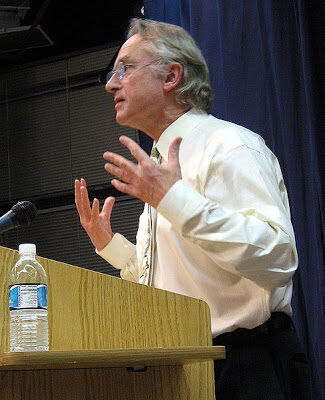
Richard Dawkins appears to have a serious memory loss problem at least with regards to debates which he lost. In this case, he initially wrote, “Are you, perhaps, in the habit of fantasizing about debates that never took place?” but then excused himself thusly, “If we really did have a debate in St. Catherine’s I am happy to apologize for forgetting it, although I don’t think it is much to apologize for” and “what was at worst a trivial slip of my memory, I said that you had always been chairman in your debates, never a debater.” [italics in original]
Another memory lapse occurred in relation to the 2-14-86 “Huxley Memorial Debate” at Oxford University. The debate was entitled: “That the Doctrine of Creation is more valid than the Theory of Evolution.” The participants were the then “Dr.” Richard Dawkins, and Prof. John Maynard-Smith against Prof. Edgar Andrews and Dr. Arthur Wilder-Smith (if you are interested in this debate, its controversy and Richard Dawkins’ memory lapse see here, here and here).
Moreover, Rabbi Boteach challenged Richard Dawkins to another debate.
Richard Dawkins responded by not even responding but completely ignored the request.
Furthermore, Rabbi Boteach called into question Richard Dawkins professorship.
Richard Dawkins responded by not even responding but completely ignoring the issue.
Also, Rabbi Boteach mentioned that Oxford does not recognize an official Jewish chaplain and proposed the following, “Perhaps, as a man of liberal ideology, Richard, you will use your influence at the university to have them recognize an official Jewish chaplain in due course and I would view this as ample atonement for your outrageous Hitler comment.”
Richard Dawkins responded by not even responding but completely ignoring the request.
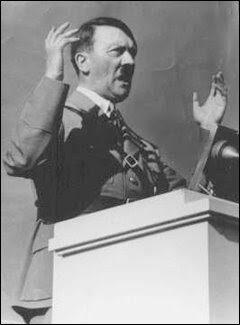
Lastly, it may be of interest to note that one of Richard Dawkins’ “New Ten Commandments” (of which he lists 15) reads as follows:
“Never seek to censor or cut yourself off from dissent; always respect the right of others to disagree with you.”1
However, part of Richard Dawkins’ reluctance to further engage Rabbi Boteach is his refusal to debate “Creationists,” a term under which he fallaciously places Intelligent Design proponents as well (see here for more on this issue). Here are some reasons as to why Richard Dawkins does not keep to his own commandment:
A creationist group called Answers in Genesis interviewed Richard Dawkins in 1997, eventually this interview was included in a video entitled “From a Frog to a Prince.” Much controversy has ensued form this event-Richard Dawkins’ point of view can be found here and Answers in Genesis’ here. Let us grant Richard Dawkins’ retelling as it appears in ch. 2, essay 3 of his book of essays entitled “A Devil’s Chaplain.” There he wrote, in part:
“In September 1997, I allowed an Australian film crew into my house in Oxford without realizing that their purpose was creationist propaganda_they issued a truculent challenge_only a creationist would ask_it was the point I tumbled to the fact that I been duped into granting an interview to creationists – a thing I normally don’t do, for good reasons. In my anger I refused to discuss the question further, and told them to stop the camera. However, I eventually withdrew my peremptory termination of the interview, because they pleaded with me that they had come all the way from Australia specifically to interview me.”
Clearly, censorship and cutting off dissent are Richard Dawkins’ modis operandi. But he did claim to have “good reasons.” Before getting to those reasons, perhaps he should have edited the commandment to read, “Never seek to censor or cut yourself off from dissent, unless you have a good reason for doing so” (read the qualifier as “A good and convenient subjective reason”) in which case the commandment is null and void.
But what are those good reasons? Richard Dawkins has answered that question in Why I Won’t Debate Creationists. In that article he addresses all practitioners of “real science,” those who have “a passionate conviction that such wonders [the wonders of the natural world] deserve nothing less than a purely natural explanation.” I must admit that I am not quite certain what passion and conviction have to do with real science. The long and short of Richard Dawkins’ reason is encapsulated in his following remark as he mockingly plays the creationist, “Look at me, I’m having a debate with one of the big boys. Doesn’t that just prove that creationism is being taken seriously in the universities?”
Incidentally, he was specifically referring to Philip Johnson who is not a creationist (surely such factual accuracy is beyond Richard Dawkins’ concerns although they did share some very interesting correspondence in which Johnson urged Richard Dawkins to become active in science and assist the public understanding thereof).
Referring to himself and Steven Jay Gould reference is made to “our refusal to engage in public debates with creationists,” and they seek to encourage others to censor and cut off dissent, “we don’t do debates with creationists, and encouraging other scientists to refuse for the same reason,” they “encourage others to refuse all debating invitations from pseudoscientists avid for publicity.”
Another person whom Richard Dawkins refuses to debate is Dinesh D’Souza. And no wonder, considering that Christopher Hitchens (who has debated D’Souza) described him to Richard Dawkins as “one of the much more literate and well-read and educated of our antagonists” (see the “Cosmology and the Pathetic Bible” portion of this essay).
It is difficult to discern why Richard Dawkins would compare anyone at all, much less a Rabbi, to Hitler. Surely, there are been many well know people who shriek, yell and rant. So why choose Hitler? Richard Dawkins has also correlated creationism with Nazism and any evolutionist who is not as fundamentalistic as himself as an appeaser of creationists, whom he correlates with Hitler (“the Neville Chamberlain school of evolutionists” as he terms these evolutionists2). Having had some experience with people who are saturated with prejudice, I am lead to suspect that his thoughts occur to him through a murky cloud of prejudice that obscured a natural tendency that is present in most people to moderate ourselves. Ultimately, only Richard Dawkins trully knows.
Rabbi Boteach’s open letter is found here and Richard Dawkins’ response here.
Part I of Rabbi Boteach’s Canadian presentation (the one that earned him the Hitler label) is found here and Part II here.
The full, two-hour, video of the debate from 1996 at Oxford University are available on shmuley.com and beliefnet.com.Two articles of interest are:
Evolutionist compares rabbi to Hitler! Religious leader responds with challenge to debate, again
Hot on the heels of Joe Keysor’s book “Hitler, the Holocaust, and the Bible” California State University Associate Professor Richard Weikart has recently published a new book.True Freethinker reviewed “Hitler, the Holocaust, and the Bible” in two posts:
The new book is entitled “Hitler’s Ethic: The Nazi Pursuit of Evolutionary Progress” and is described thusly at Amazon:
In this book, Weikart helps unlock the mystery of Hitler’s evil by vividly demonstrating the surprising conclusion that Hitler’s immorality flowed from a coherent ethic.Hitler was inspired by evolutionary ethics to pursue the utopian project of biologically improving the human race.
This ethic underlay or influenced almost every major feature of Nazi policy: eugenics (i.e., measures to improve human heredity, including compulsory sterilization), euthanasia, racism, population expansion, offensive warfare, and racial extermination.
We touched upon this theme in the post From Zeitgeist to Poltergeist, Part 12 of 13

From Darwin to Hitler: Evolutionary Ethics, Eugenics, and Racism in Germany
From Darwin to Hitler elucidates the revolutionary impact Darwinism had on ethics and morality throughout history.
This book is a provocative yet balanced work that addresses a wide range of topics, from the value of human life to sexual mortality, to racial extermination.
Pervious works by Richard Weikart include the following:
From Darwin to Hitler: Evolutionary Ethics, Eugenics, and Racism in Germany
From Darwin to Hitler elucidates the revolutionary impact Darwinism had on ethics and morality throughout history.
This book is a provocative yet balanced work that addresses a wide range of topics, from the value of human life to sexual mortality, to racial extermination.
This important new study is an intellectual history exploring the reception of Darwinism by prominent German socialist theoriests: Karl Marx, Friedrich Engles, Friedrich Albert Lange, Ludwig BŸchner, August Bebel, Karl Katusky, and Eduard Bernstein.
It relies not only on published books, articles, and speeches by these men, but also on some unpublished correspondence. In addition, one chapter covers the anti-socialist stance of prominent Darwinian biologists, including Charles Darwin and the foremost champion of Darwinism in Germany, Ernst Haeckel. Darwinism’s effect on German socialism’s view of eugenics, race and religion are also discussed.
Argument for God’s Existence from Jewish Folklore
Helen Thomas, Israel and the Jews
Jewish / Judaism : A Jew Never Had to Keep 613 Commandments
Jewish / Judaism : A Jewish Book Called “The New Testament”
Jewish / Judaism : Biblical Messianic Symbolism, part 1 of 4
Jewish / Judaism : Jewish Messianic Concepts, part 1 of 5
Jewish / Judaism : Jewish View of Jesus
Jewish / Judaism : Proselytism, part 1 of 4
Jewish / Judaism : Reinterpretation of Ancient Teachings, part 1 of 4
Jewish / Judaism : The Isaiah 9 Controversy, part 1 of 4
Jewish / Judaism : The Messiah Will Be “The LORD”, part 1 of 3
Jewish / Judaism : the Psalm 22 Controversy, part 1 of 4
Jewish / Judaism : The Suffering of the Servant, part 1 of 7
Jewish / Judaism : The Truth is Veiled – For a Time, part 1 of 5